
It is very true that, frequently, we act like a complexed country. We have proof of this, for example, in how we let ourselves be played by the Italians and their mediocre Prosecco. A sparkling wine that, without the base and rigor of cava, of Corpinnat or Clàssic Penedès, has burst a part of the export market for Catalan sparkling wines. A worse product, at a better price. How is it possible? This is one of the mysteries that no one has yet clarified for me. As our beloved José Mourinho would say: "Why?".
Nor has the phenomenon of the enthusiastic loyalty of many Catalans to DO Rioja wines ever been studied. It is true that for many years the absence or reduced number of Catalan wines that could compete head-to-head favored Rioja. But for years now, thanks to DO Priorat, things have been leveling out. However, it should be known that in terms of internal consumption, in Catalonia, only the sum of wines from all Catalan DOs manages to surpass the quantity of the appreciated Basque-Spanish wine.
Another mystery: Why, after so many millions and millions of tourists entering and leaving through our roads, airports, and ports, have we not been able to sell them our wine and cava, as well as many other healthy products and vices? Fortunately, this problem is beginning to have a solution, since, since 2007, the Catalan Wine Association, made up of several designations of origin and sommelier associations with the support of the Generalitat, awards the Cartaví prizes. These awards recognize Catalan restaurants and restaurateurs who have the best wine lists from the country's Designations of Origin.
Someone might say it's a small thing, but capturing the attention of tourists who come to our country and imprinting the brands and varieties of our wines on their conscious and unconscious minds is the best investment we can make to guarantee optimal export. How many times have we been in regions like Baix Empordà or Tarragonès and seen in many restaurants how the best white wines on their menus were from DO Rueda? Or, how many times have they tried to force an Albariño on us? Not to mention the nonsense that happened a few years ago with Beaujolais nouveau. Most of this young wine that reached our tables did not reach the quality of a young Empordà wine.
It is fundamental that we know the country's products, local products, that we know the added value they have behind them, the technique, the origin, the unique history within each bottle of wine. And, without a doubt, the best prescribers of our products are restaurateurs, their waiters, head waiters, and, of course, sommeliers. Only then will we take advantage of the potential of tourism that lands in our home. Tourism, now in low hours, but which, without a doubt, like swallows, will return.
It is fundamental that we know the country's products, local products, that we know the added value they have behind them, the technique, the origin, the unique history within each bottle of wineThe initiative to recognize Catalan restaurants that make an effort to have the best wine list representative of the country is more than laudable. It is an example of how to work to achieve excellence and the promotion of local products. The annual awards bring together hundreds of restaurants, but it is not enough. The idea is so good that it needs much more dissemination and to become an essential celebration. And what applies to wine, applies to all products of the country, starting with a sector that is slowly awakening, such as cheese producers.
It is a sin not to take advantage of the showcase to the world that tourism represents. A well-made sale on a restaurant's menu is equivalent to more than half a commercial promotion abroad. The Swede or German who enters a wine shop in Stockholm or Mainz will recognize, at first glance, the Catalan DOs. They will know what they are talking about. They will identify the varieties. Work well done always has its reward.
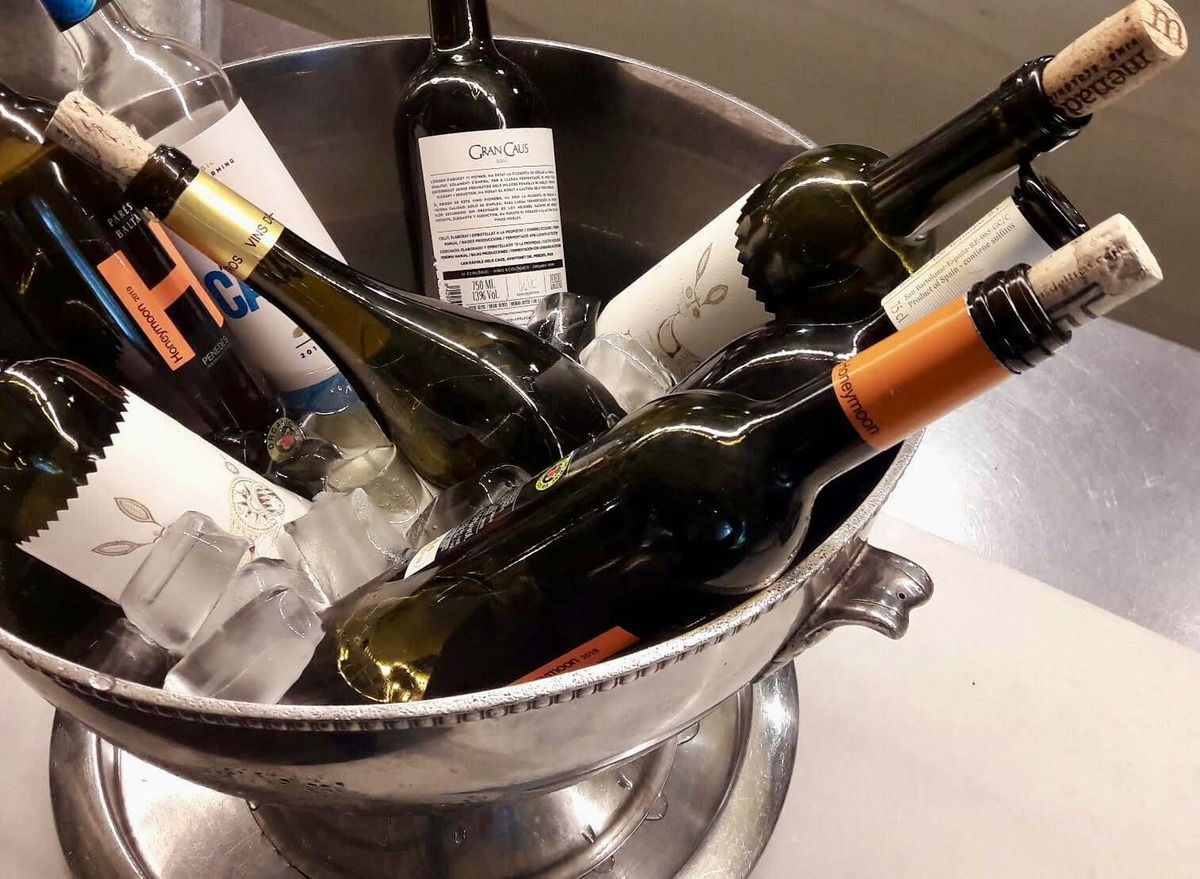
Is this applicable to all tourism? Can anyone imagine some Englishmen from Newcastle, red as prawns, in shorts and flip-flops on a terrace of the Rambla de las Flores in Barcelona tasting a glass of Pansa Blanca from Alella? Or having a white Grenache from Terra Alta on the table instead of a bucket of sangria? Why not? When we talk about the need to dignify the tourism model, we don't know exactly what making this change entails. It entails changes like this. If the Barcelona City Council, rightly, wants to change the Ramblas model, we must start by making these kinds of small changes.
The sum of small changes ends up generating a revolution. This is the example Malcom Gladwell uses to explain how the New York City Council managed to spectacularly reduce violence in the subway in the nineties. It started by cleaning all the windows and subway cars of graffiti. This is the so-called broken window theory. If subway cars and stations are clean, spotless, users think twice before throwing a piece of paper on the floor.
The initiative to recognize Catalan restaurants that make an effort to have the best wine list representative of the country is more than laudableThe day that in airport restaurants and on the terraces of Las Ramblas in Barcelona, as well as those in Salou or Blanes, to give an example, the country's wine is offered and promoted by restaurateurs and their staff, we will be closer to having quality tourism.Tourism, restoration, and local products must go hand in hand. We all win, there's no doubt. For this reason, it is necessary to salute, promote, and magnify this magnificent proposal of the Cartaví awards, which are already in their tenth edition. More initiatives like this are needed, and surely, there are plenty of studies and sectoral plans.
Add The New Barcelona Post as your preferred Google source for free
Stay informed with the latest news.