Many are the doubts about what will be the final destination of the battery plant that the Volkswagen group wants to build in southern Europe. It is also not yet known whether the Government's project to develop with Seat and Iberdrola a battery plant "near" Martorell will mean in Barcelona or somewhere in Catalonia or the rest of Spain, and if it will end up going ahead with the help of European funds. The race to position itself as the recipient of this millionaire investment began the same day that the Minister of Industry, Reyes Maroto, announced it.
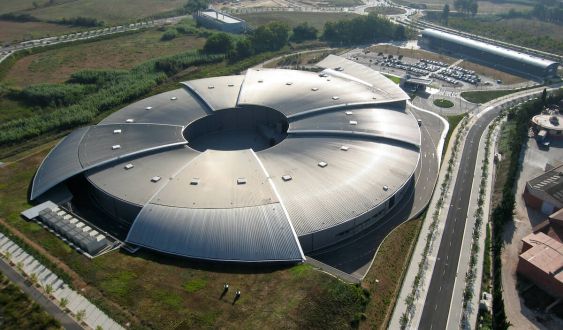
Beyond territories, scientific infrastructures such as the Alba synchrotron, located in Cerdanyola del Vallès, also want to position themselves in this race. Its director, Caterina Biscari, highlights the benefits of having a complex like this for the automotive industry. "To be able to have a battery production plant, you have to master the scientific-technical part and, for that, you need to research," she argues. That is, it is not only about having an assembly line, but it is also essential to integrate research and development (R&D). "A battery plant that not only manufactures and has R&D departments needs instruments like the one we offer," defends Biscari, remarking that the synchrotron is the only facility of these characteristics in Spain and one of the few in Europe.
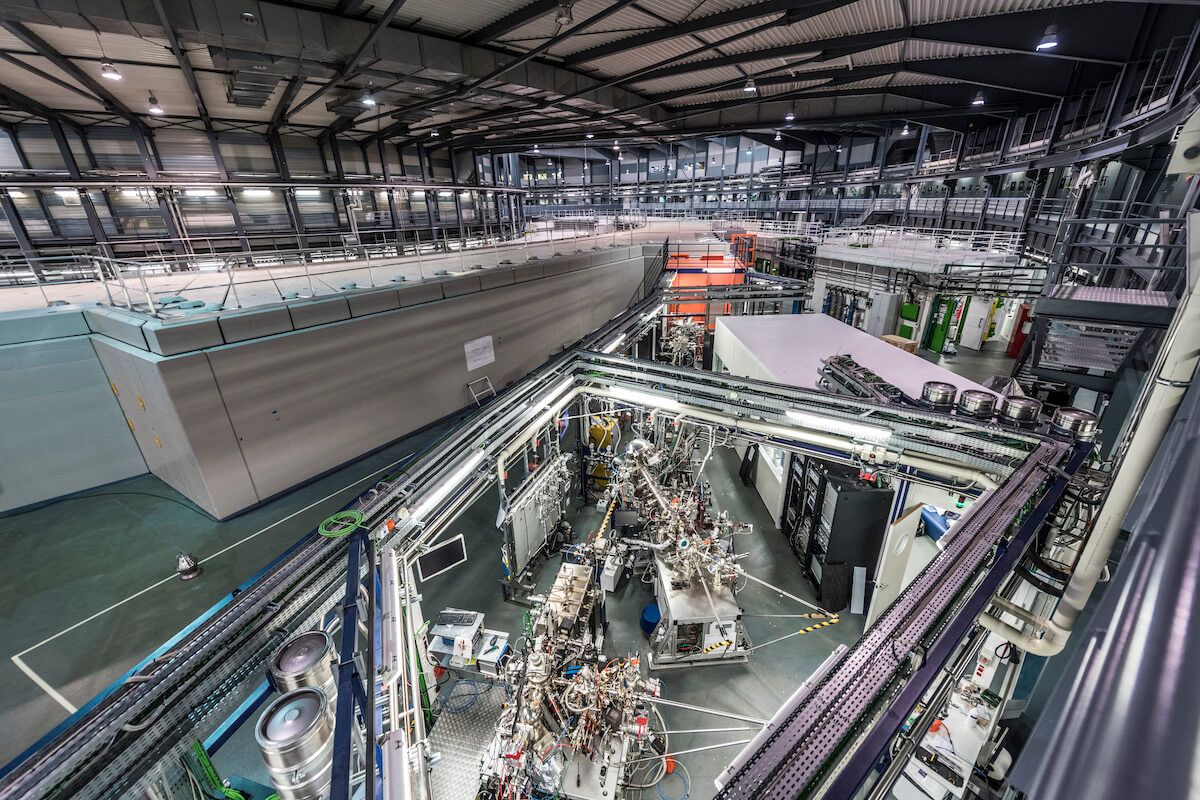
The light produced by Alba functions as a large microscope and can be used to investigate the possibilities of using new materials to make electric car batteries, such as sodium and calcium, which are cheaper and more abundant than lithium, which is currently predominant. But it also allows studying how to make batteries have a greater storage capacity or how to produce them more easily.
Biscari emphasizes that Spain is not one of the leading countries in battery research, but that there are already some researchers at the synchrotron who study this issue, such as those from the Institute of Materials Science of Barcelona (ICMAB). ICMAB research professor Rosa Palacín explains that Alba allows them to observe the characteristics that new materials like those mentioned by Biscari can have, but also to analyze how they behave when they are already in operation and how they age, a key issue for electric cars, which need batteries that last longer compared to those of a mobile phone, which is renewed more frequently.
In this sense, ICMAB has already worked with car manufacturers such as the Japanese Toyota. Specifically, it did so to evaluate the virtues of calcium batteries, explains Palacín. This type of research is at the origin of the battery production value chain, which is why Palacín emphasizes that it is necessary to advance in the level of technological development to be able to research with end users who buy them for their electric cars, such as Seat.
Alba's commitment to batteries
In a context where many actors are committed to developing more sustainable mobility through electric cars, the research of new materials for batteries will benefit from the renovation of the Alba facilities, which will go from being a third-generation synchrotron to a fourth-generation one. The transformation will allow generating a more precise and focused light, increasing the knowledge that can be obtained from the samples being studied.It will also serve to boost the Astip project, which aims to develop a new research hub in Cerdanyola del Vallès, near the synchrotron, with the help of European funds. The new hub aims to mobilize more resources to investigate issues such as new ways of obtaining energy and the use of new materials for electric car batteries. It will be able to do so through the creation of new synergies between Alba, research groups from the Universitat Autònoma de Barcelona and research centers such as the Institute of Molecular Biology of Barcelona (IBMB), the Institute of High Energy Physics (IFAE) and the Catalan Institute of Nanoscience and Nanotechnology (ICN2), in addition to the ICMAB. In this regard, the synchrotron is also working on the creation of laboratories for the preparation of samples such as those used by the ICMAB.
Add The New Barcelona Post as your preferred Google source for free
Stay informed with the latest news.
