
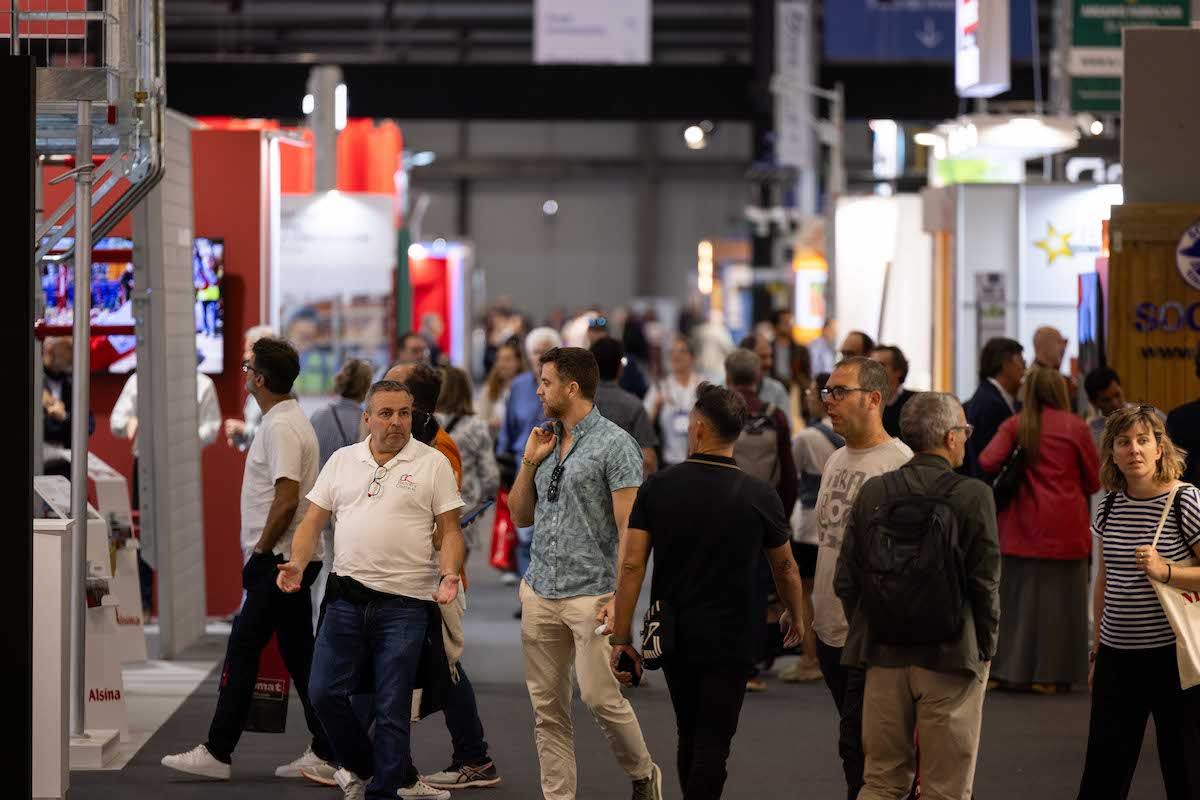
From machinery for laying the first stone to cutting-edge solutions for controlling the quality of the resulting structure, including the most innovative construction materials and processes, Construmat has landed at Fira de Barcelona's Gran Via venue with proposals linked to all areas of construction. Positioned as the most representative and transversal event in the sector in Spain, the exhibition has turned the fairground into the epicenter of construction at a national level.
The transversality of the exhibitors is underpinned by an underlying element in the exhibition: sustainability, which is pursued through both more efficient processes and new materials, obtained from the most unexpected raw materials. Date seeds, mussel shells, plastic waste, textile materials, algae, old newspapers, plastic bottles, cork, and olive pits are the basis of new materials, gathered in Construmat's innovation area. However, the novelties go further and include proposals such as geopolymer bricks made from demolition waste, and panots (tiles) that collect real-time data on pedestrian and vehicle flow to manage mobility and build patterns, both projects from the Institute for Advanced Architecture of Catalonia.
Innovation is also the protagonist of the exhibition area focused on startups linked to the field of construction and property. Included for the first time in Construmat, the PropCon Hub space gives visibility to contech and proptech companies, such as Cosmos Engineering, which monitors concrete resistance in real-time to increase structural quality and safety, and Enerlind, which offers blinds converted into solar panels. The digital platform for buying and selling tools and materials Ok Clinker; the optimization of concrete structures by Holedeck; the software for management by Trowelapp; 3D scanning for measurements by Dronica, and the AI tool by Diip IA are also exhibited in this area of the exhibition, which accommodates the most cutting-edge innovation while being the longest-running in the construction sector in Spain.
3D printing is also not left out of construction, with companies like Aridditive, for 3D printing in concrete for prefabricates and urban furniture, and Be More 3D, which develops and sells machinery for printing buildings and concrete structures, through a technology that allows printing 70-square-meter homes in less than 24 hours.
Short deadlines also characterize wood options, which stands as one of the trending materials in the exhibition hall, and proposals such as Casa Martevida, which offers modular homes built with aerospace aluminum. These prefabricated houses are built and set up in a month, with a system that allows them to adapt to diverse terrains. To capture this diversity and characteristics of a terrain, the exhibition hall also showcases options, such as that proposed by the British Moasure, with its motion-based measurement tool, using a small device that, despite having the same shape and size as a conventional tape measure, exponentially facilitates and speeds up measurement.
Its product complements many others that have come to the exhibition hall to gain visibility among professionals in the sector, which include proposals such as companies selling and renting scaffolding and construction machinery; masonry with natural stones from Dispiedra, multiple proposals from Cementos Molins, the smart glass and projector from Glass Tech, and even playgrounds from Kompan, as well as facade ventilation systems from the Japanese Kmew and options to definitively combat humidity from Murprotec. On its third occasion exhibiting its solutions at Construmat, the Franco-Belgian multinational seeks to maximize the visibility of its patented treatments, developed in its own laboratories for exclusive use, as explained by Murprotec's director in Catalonia, Ignacio Lago.
In an edition marked by innovation, Construmat demonstrates that avant-garde is not at odds with traditionThe Danish company Rockwool, specialized in thermal, acoustic, and fire insulation made of rock wool, also focuses its activity on walls. The multinational, which participated in the fair under the umbrella of the Col·legi d'Arquitectura Tècnica de Barcelona (Cateb), produces a circular material based on melting rock, waste, and surpluses from other industries and its own, which it sells in 120 countries. With 12,000 employees globally and offices in Barcelona, its 51 factories "are like a volcano," in which the stone is melted to generate a mineral fiber using a method that does not deplete resources, according to the head of Public Affairs at Rockwool Peninsular, Albert Grau.
In an edition marked by innovation, Construmat has shown that the avant-garde is not at odds with tradition. This is demonstrated by proposals and trajectories such as that of Ascensors Camprubí, founded in 1929. In addition to carrying out new installations, the third generation of the company specializes in the modernization of period elevators. This is illustrated by a 1920s cabin planted in the middle of the hall. At first glance, it is a typical and noble elevator taken from an Eixample estate with modernist touches, but with relevant differences: it has automated doors that keep the original ones preserved, which allows for increased accessibility, and it has push buttons with buttons adapted to current regulations, as detailed by the company's engineer Pol Marimon.
Tradition that transcends generations is also evident in the hall through intricate designs by Forja Montseny. Marc Herrero, fifth generation of this artisan workshop, works to position it as artistic and design forging among architects and builders. To do this, he has landed in the hall with more than diverse proposals and models, ranging from undulating doors to design structures, including a unique model that attracts the attention of those who wander around his stand.
The exhibition, which this edition featured Morocco as a guest, also reserves spaces for interior design, from vinyl floors to bathroom equipment, such as Roca's original toilet with sink and the proposal from the company Santimar, which replaces traditional shower drains with a larger one that allows for its disassembly in case of breakdown or blockage, without the need to lift the shower tray. The product will be launched soon, after its promoters conceived it due to problems often encountered by their construction company.
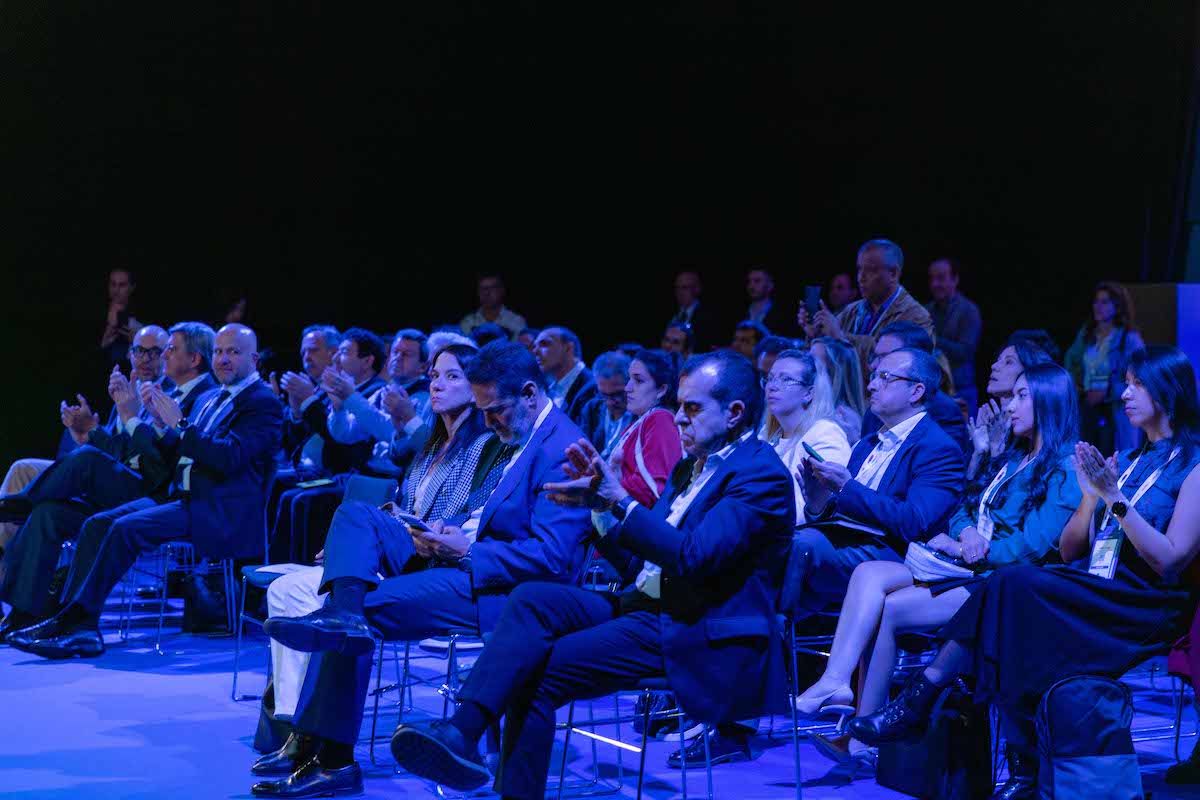
Its promoters have explained it to The New Barcelona Post from their stand, in a conversation mixed with the voices of the presentations that are held simultaneously in the hall. And it is that Construmat complements the exhibition offer with a program with multiple activities, among them those of the Sustainable Building Congress, which includes 50 presentations by more than 120 speakers, in 15 round tables and two auditoriums. In addition to these conferences, the fair offers workshops and workshops, as well as a forum on innovation and the unavoidable Construmat Awards. Curated by the Mies van der Rohe Foundation, this edition has recognized the project of 85 social housing units by the Peris+Toral studio in the old Pisa cinema in Cornellà de Llobregat, built in wood and with a modular approach. The awards, created in 1985, have included this year for the first time a public award, which has gone to another wood and modular project: a student residence by DGJ Architektur located in the German city of Heidelberg.
This wooden construction plays a prominent role in the fair, which has reserved a specific space for it. This area is presided over by an unusual construction that stands in the middle of the hall: a real two-story house that, designed by the architect Alba Lucila Gutierrez, has been erected with three main elements: wood, cork and straw, in addition to other vegetable fibers. The objective of this peculiar construction is to demonstrate the usefulness of sustainable, organic and reusable materials, looking towards a future of construction that is already present. And it is that materials such as wood and other innovations have arrived in the sector to stay and merge with other more traditional elements and methods, to advance towards a sustainability called to be inherent to construction.
Add The New Barcelona Post as your preferred Google source for free
Stay informed with the latest news.
