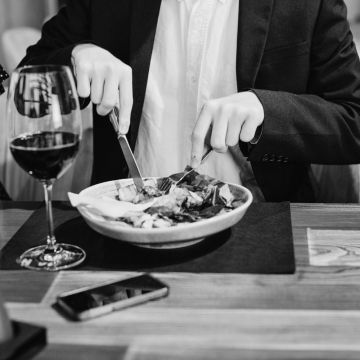
Something happens between seducers and carbonara. Not exactly with eating it, but with announcing that they know how to cook it. It's enough to spend a reasonable amount of time on dating apps to come across one of its variants. "I'll make you a delicious carbonara." "It's my signature dish." "When you taste my carbonara, you won't want any other." In English, the phrase sounds even more self-assured: "I make a mean carbonara."
In the UK, in fact, carbonara has become one of the recurring recipes on dating apps, and the phrase also often appears in somewhat clueless DMs, especially in response to posts about Italian food. The problem is that when too many people try to seem original in exactly the same way, originality deflates like a soufflé. Traveling, drinking negronis, knowing how to find hidden restaurants, and being outraged by a "carbonata" are already part of a certain contemporary romantic identity.
The relationship between carbonara and seduction even has precedents in surveys. According to the British newspaper The Standard, a survey commissioned by Oxo of 1,000 women placed this recipe at the top of the dishes that participants considered most conducive to awakening romantic feelings, ahead of lasagna, quiche, ravioli, and risotto. It's not exactly scientific proof of its aphrodisiac power, but it does suggest that carbonara has long played with an advantage when dinner has ulterior motives.
Carbonara has become one of the recurring recipes on dating apps,
In Spain, this character has even received a name: the "carbonara man," a concept popularized by a Beata Pasta campaign based on a surprising fact, to say the least. In many groups of friends, the same archetype appears again and again, promising to prepare this recipe. And it has a certain logic. When someone announces in the midst of the conquest phase that they really know how to make "a real carbonara," they are not just talking about pasta.
They are also saying that they know how to distinguish the original from the copy, that they have learned to pronounce guanciale, and that, gastronomically, they know a little more than the average person. And here appears a second, much more convenient interpretation on a date. If mastering a recipe serves as a credential, it also invites one to think that this competence might not end in the kitchen.
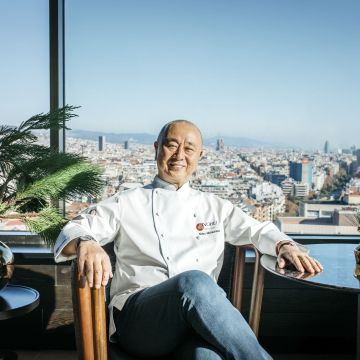
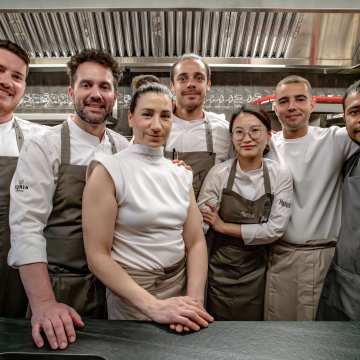
To check if this seductive fame has any gastronomic foundation, I ask for advice from Gabriele Milani, chef and owner of Algrano, an Italian restaurant with two locations in Barcelona. And no joking about his carbonara: they only serve it two days a week, Wednesdays at the Sant Antoni location and Thursdays at the Casp street location, and there are customers who go specifically to taste it. "What's up with carbonara?" I ask him one night, determined to solve the mystery of love once and for all.
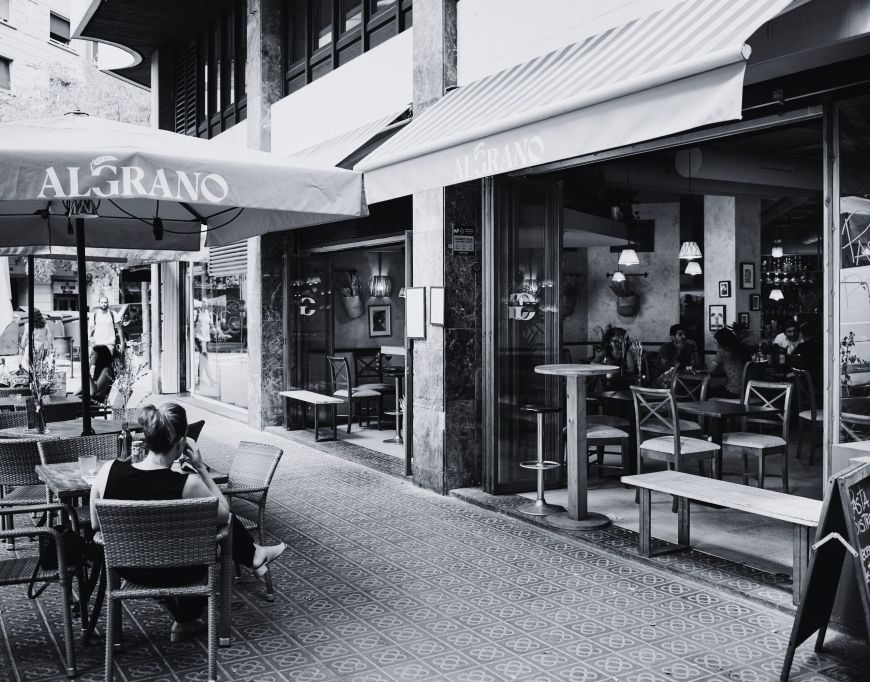
"A good carbocrema, well made, has something very attractive: creamy, shiny, silky… it's visually appealing," explains the chef. "It seems like a simple dish, with few ingredients, but it has much more technique than it seems and a few tricks that need to be controlled. If it turns out perfect, you look like a real pro, it shows you know what you're doing."
Here appears another of carbonara's virtues as a weapon of seduction: making it really well is not so simple. The difference between a brilliant sauce and a plate of pasta with scrambled egg is small enough that mastering it allows for a bit of bragging. At this point, the question is inevitable: what is the secret? And here Milani gives me a response too good not to use: "To make a top carbonara, you have to take good care of the 'preliminaries'."
"To make a top carbonara, you have to take good care of the 'preliminaries'."
"The first is knowing how to choose a good guanciale and knowing how to cut it. I prefer to cut it into cubes and cook it slowly: that way it's crispy on the outside, but tender on the inside. Then, be careful with pecorino romano: if you overdo it, it can be too strong. I balance it with a little grana padano." And then comes the point where the technique no longer allows much margin for error.

"The mantecatura is another key moment: always off the heat and controlling the temperature very well to achieve a creamy carbocrema, without the egg curdling. And, finally, the choice of pasta. I'm a fan of mezza manica: the cream adheres very well to it and, when it also gets inside the pasta… that's when carbonara becomes even sexier."
Seen this way, it's a little easier to understand why carbonara has earned its own place in the imaginary of seduction. We will not be the ones to forbid using it with ulterior motives; we only ask that, if it must be done, it be done well. And if at home the preliminaries fail, the egg curdles or the carbocrema resists, don't worry: we'll always have Algrano.
Add The New Barcelona Post as your preferred Google source for free
Stay informed with the latest news.