
In July 2020, in the midst of the pandemic, the Gallardo family, owners of the pharmaceutical company Almirall, decided to acquire 53% of the capital they did not control in Sercotel and take full ownership of the Barcelona hotel chain through Landon, their investment holding company. The operation was led by José Rodríguez Pousa, one of the Gallardo family's most trusted executives, as he had been the secretary of their family council, the highest management and decision-making body of their family office, for over 20 years.
Recently recognized by the Col·legi d'Economistes de Catalunya with the Economist of the Year award, Rodríguez was appointed, after closing the purchase, president and CEO of Sercotel with the aim of ushering in a new stage of growth based on two pillars: the commitment to grow with hotels directly operated by the company and a strong investment in technology with the challenge of being at the forefront of the sector.
Three and a half years after the operation, Sercotel has made a significant leap in the number of self-managed hotels, going from 18 establishments to 51 (48 under lease and three under management). To this figure must be added another 9 hotels under construction for which a lease agreement has already been signed, so it will soon have a network of 60 directly operated hotels. In parallel, Sercotel has 35 franchised hotels, meaning it does not manage them directly, but it does license its brand and technology to them, in addition to providing other services such as a purchasing center and a booking center.
As Rodríguez explains in an interview with The New Barcelona Post, Sercotel's goal is to increase its number of owned hotels from 60 to 100 by 2025 and become part of the Top 5 of the Spanish hotel sector by number of establishments. "Today, we are already one of the top ten chains, but we aspire to be among the top five thanks to our specialization in city hotels and in managing properties owned by independent hoteliers or family offices," explains Rodríguez, who assures that the new post-pandemic environment benefits the Sercotel model.
Thus, before the Covid-19 crisis, Sercotel invoiced 45 million euros [amount equivalent to the 18 owned hotels], a figure that the new management team has more than doubled thanks to the incorporation of new hotels, with the forecast of closing 2023 with revenues of more than 120 million euros, which will represent a growth of 35% compared to the previous year. After the blow of the health crisis, the chain managed to record a positive ebitda of 9 million in 2022 and, according to Rodríguez, this figure will rise to 15 million this year. These good results will be achieved thanks to having increased the average price of rooms by 10% (90 euros) and placing the occupancy rate for 2023 at an average of 75%.
According to the CEO, the company has already managed to repay the ICO loans it requested during the pandemic and has also started to remunerate its shareholder, Landon. "We have a positive financial position; our model is 100% asset light, meaning we do not own the properties, which allows us to operate without debt and gives us a competitive advantage. This is a very important characteristic of the Sercotel model," highlights the financier.
In 2019, before the health crisis, Sercotel had come to have under its umbrella a network of more than 160 hotels, but only 18 were directly operated by it, as most were part of the chain through a commercialization model that Rodríguez considers to be of "low added value and low commitment." "What has more value, what generates more margin, are the hotels in operation ---where we assume the risk--- or in management ---where the risk and the income statement are still held by the owner---, and, for that reason, our commitment has been to focus on this area," explains the executive.
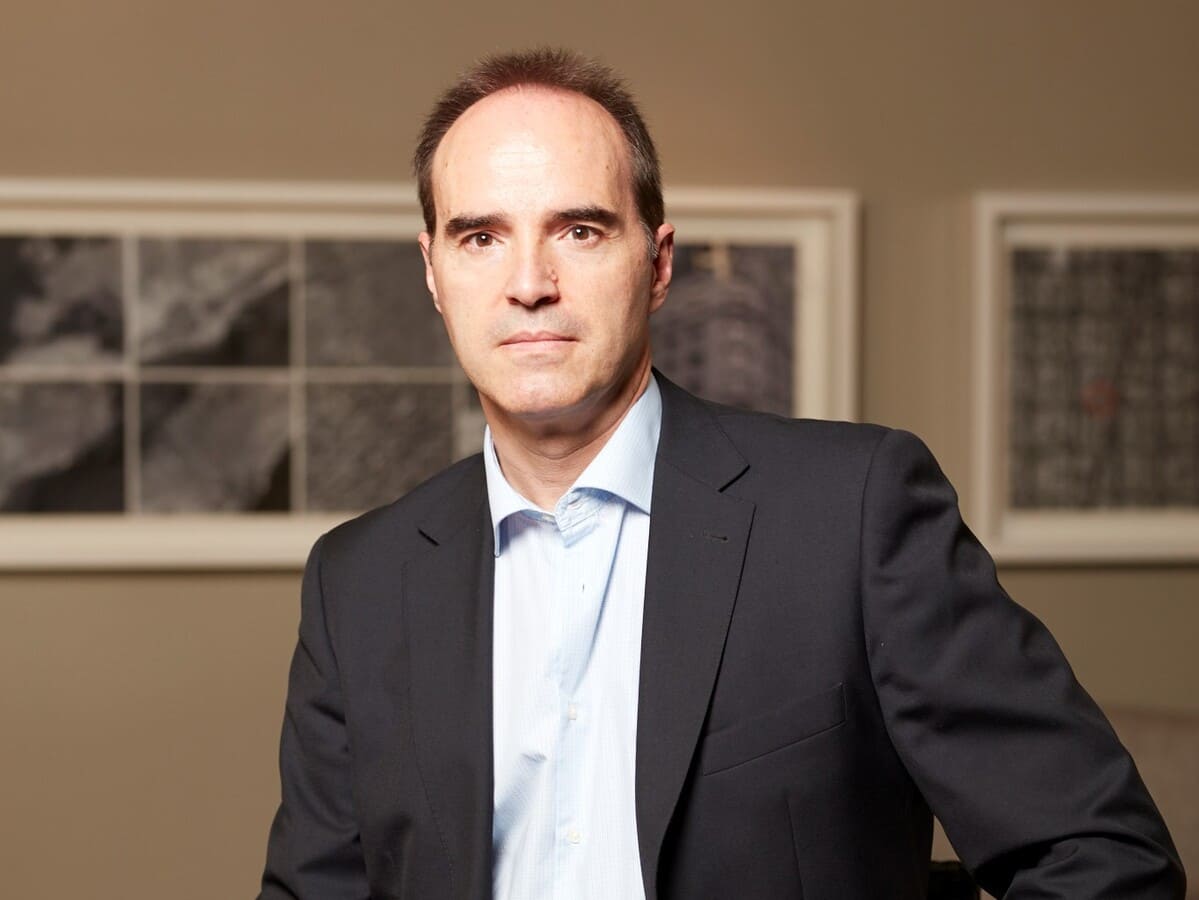
"In three years we have made a very important leap, going from 18 to 60 hotels under management, which has required a great effort to create a good leadership team capable of structuring the company to face this new stage. The talent challenge has been the most important, along with the technological one, as we have replaced the entire previous technological structure, with an investment of three million euros," adds Rodríguez. The executive practically renewed the entire management team, with the incorporation of professionals not only from the hotel sector, but also from mass consumption and retail. "60% of the central services team is new. I have opted for a transversal model, with people who bring business visions from other sectors, something I consider fundamental. Sercotel has incorporated young profiles, with absolutely open mindsets, to break with the usual dynamics of the sector. And, above all, people-oriented profiles. We are a company that has a very important humanist component. What I am most proud of at Sercotel is the leadership team we have created," he reflects with satisfaction.
Along with rental and management contracts, the CEO assures that Sercotel will also continue to promote franchised hotels because between 45% and 50% of the Spanish hotel market is still in the hands of independent hoteliers, who need "powerful brands like Sercotel that also provide them with the best technology."
The nine hotels that the group has under construction are promoted, mostly, by family offices, that is, by patrimonial offices of private investors, an area in which the company feels very comfortable because these are investors who share its long-term vision of the business and do not seek immediate profitability. The contracts have a duration of between 20 and 25 years, with fixed rents that may also include a variable fee depending on the evolution of results. Three of the nine hotels under construction are located in Valencia and the rest will open in El Prat de Llobregat, Chipiona, Lugo, Seville, Alicante, and Malaga. On average, each of them will have about 100 rooms, a figure higher than the average of 85 rooms of the current Sercotel network, in line with the strategic plan's desire to increase the size of the establishments.
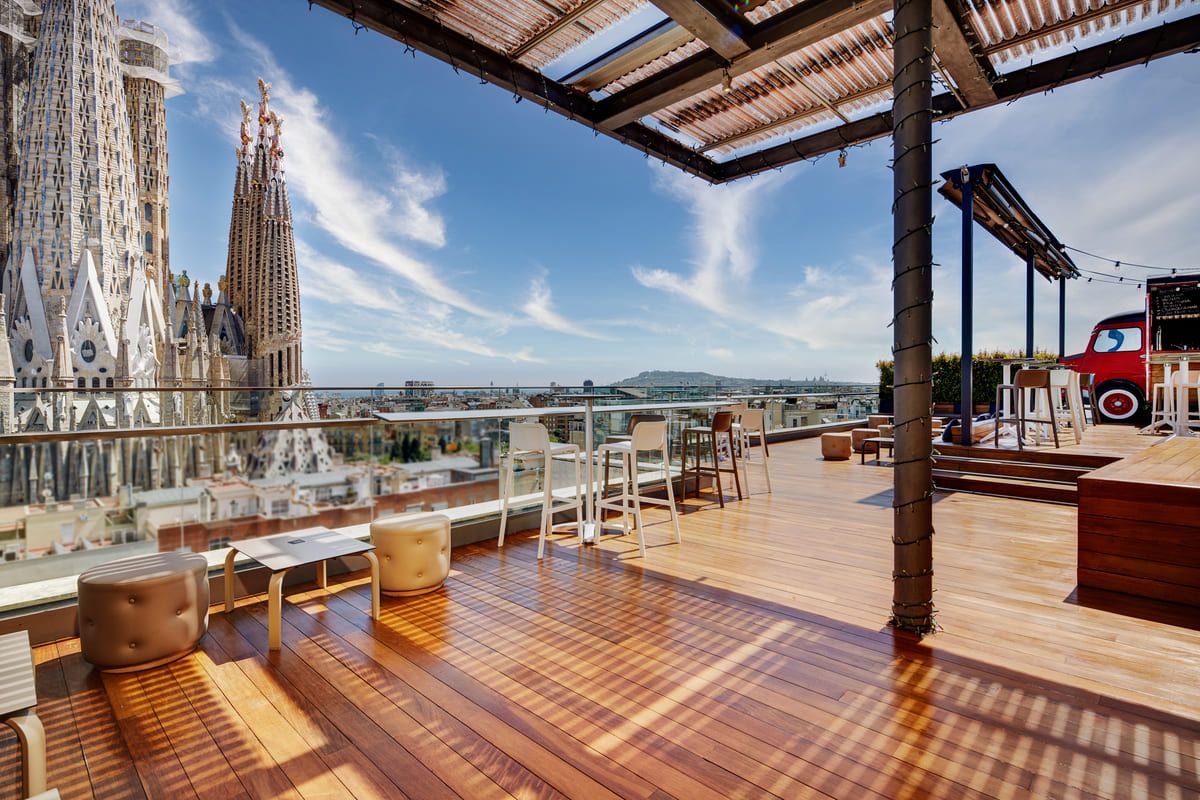
The vast majority of Sercotel hotels (85%) are 4-star, a segment in which the chain feels very comfortable and in which they will remain. "Large chains have a marked tendency to move towards luxury, a segment with higher margins, but it is a very narrow market. In parallel, some brands have gone towards low cost, so we are delighted to remain in the 4-star segment, as they have left us a market niche in which we are very well positioned," argues the executive. 40% of Sercotel's bookings are made through large online agencies (OTAs), such as Booking, and the other 60% through their own website (25%) and bookings from groups, conventions, travel agencies, and tour operators.
Another distinctive sign of Sercotel's DNA is that it operates urban hotels and has a presence in all Spanish capitals. "Being urban does not mean that we only focus on the business segment; for us, the leisure tourist who visits all these cities where we are present throughout Spain is key, and they present a spectacular resilience factor that allows us to maintain very adequate average prices and that leave you with fantastic profitability," highlights Rodríguez.
Upcoming entry into coastal hotels
Sercotel, however, is not closed to entering the sun and beach segment, that is, coastal hotels. This is a topic that is on the CEO's table, who anticipates that the decision will be made throughout 2024:"Most likely, we will enter sun and beach. And, if we do, we will do it in an absolutely decisive way, we are not going to do experiments; but we will evaluate it in 2024. It is a natural evolution. I believe that Sercotel has to make that journey, just as all beach chains have done by entering cities."And will hotels open outside of Spain? "The first thing we have to do is complete our plan to reach 100 hotels in the Spanish market by 2025 and then, enter the beach segment. The third natural step is internationalization, but it is important to respect this order. The internationalization phase is the most difficult to do," assures the CEO.
In the previous stage, Sercotel had already made the international leap with the creation of a chain in Latin America, fundamentally based in Colombia. "All the Latin American business was loss-making, we sold it during the pandemic," Rodríguez recalls.
First hotel in Andorra
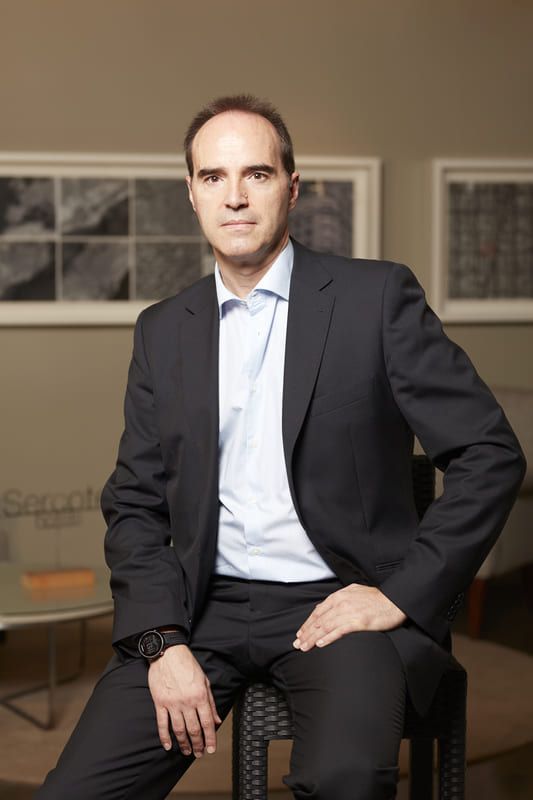
Sercotel, however, has already set foot outside the country again this December thanks to the opening of a hotel in Andorra, the Hotel Delfos, located in Escaldes-Engordany and owned by a local family. It is an establishment with 180 rooms, one of the largest in the Pyrenean country. "We will operate the hotel throughout the winter season and, starting in May, the property will begin a comprehensive renovation that will involve an investment of 5 million euros," announces Rodríguez, who states that if an opportunity arises in Portugal "we will also enter", with the aim of gaining international experience.After acquiring 100% of Sercotel, Landon's new managers evaluated the possibility of changing the chain's brand, but, in the end, they opted to maintain and revitalize it (the slogan Welcome to your best was launched), as a study revealed that 70% of citizens know the brand.
New corporate headquarters on Urgell Street
With a staff of 1,200 employees, Sercotel has just opened new offices of 1,700 square meters in Barcelona, located in the attic of the Urgell with Paris building that had housed the Mahou San Miguel headquarters in the Catalan capital. Rodríguez is very confident in the present and future tourism of Barcelona, a city that this year "has shone thanks to fairs and concerts," with occupancies of up to 95% and a 25% price increase since 2019. "These data are very significant.Barcelona needs to rethink many things, such as the hotel moratorium or the issue of tourist apartments... but the city is in a very good moment, without a doubt", he testifies.Sercotel doubled its presence in Barcelona in 2022 with the incorporation into its network of two hotels from the Ayre chain, now transformed into the Sercotel Casp and the Sercotel Rosselló; both in buildings owned by Landon. Rodríguez would like to be able to increase this network of four hotels in the city with new acquisitions, but admits that there is "price inflation" derived from the moratorium, which means that "the numbers don't add up on the spreadsheet." "From our long-term and conservative vision, those prices cannot be paid. We would like to gain presence in Barcelona, but we have a clear problem with the price," he laments.
The chain, which is present in Sant Boi, Cornellà, Sant Just, Montcada i Reixac and Sabadell, is also very interested in continuing to grow in the metropolitan area, where it plans to open a 100-room hotel in El Prat in February. It will also grow in the rest of Spain, where it believes there is room for 100 Sercotel hotels, taking advantage of the good moment the sector is experiencing: "The expansion of the weight of families' disposable income allocated to leisure ---he explains--- has clearly benefited us. Cities that previously had a very important business component have now started to attract many leisure clients. This is the case of Barcelona, where leisure already accounts for 85%. Madrid is now at 60% - 40% in favor of leisure. And there are cities in full boom like Valencia and Malaga and, for us, important places like San Sebastián and Bilbao, and cities where other chains do not pay much attention, such as Logroño, Toledo or Seville."
According to Rodríguez, "the Christmas campaign will be very good," with an occupancy in Barcelona "between 92% and 95% and an average price 10% above 2022." In his opinion, "there are zero clouds for 2024", both due to the estimates of Spanish GDP growth and two other factors he considers decisive: there is still accumulated family savings and good expectations for maintaining employment. "The hotel sector is in full boom; all international chains and investors want to enter Spain, expectations are very good," he concludes.
"The hotel sector is in full boom; all international chains and investors want to enter Spain, expectations are very good"
Landon does not foresee divestment in the short term
Sercotel is one of the oldest portfolio companies of Landon, as the first shares in the hotel company founded by MarisolTurró, Javier GarroandBenjamin Sanz were acquired in 2005. According to Rodríguez,Landon "continues to bet long-term" on the chain, because it is an investee company that is not venture capital, but "business diversification" outside the pharmaceutical and real estate sectors, so the shareholder "feels very comfortable." "Landon is clear that it has invested in one of the sectors with the greatest growth potential and, furthermore, in a leading country where all international chains and funds want to invest. Right now, Landon has no intention of getting rid of Sercotel," he emphasizes.A graduate in Economics from the University of Barcelona, José Rodríguez joined Grupo Corporativo Landon in 1993, so he has a clear financial and business profile and is knowledgeable about multiple sectors, having been involved in all operations and in all the investee companies that the Gallardo investment group has entered in the last three decades. For 23 years he was the secretary of the family council and is very proud to have acquired all the knowledge he has thanks to the opportunities given to him by being part of this important Barcelona-based family office. "I am very grateful for the trust placed in me by appointing me CEO of Sercotel. It was a critical moment, in the midst of a pandemic, with much uncertainty about the future of the tourism sector. In addition, the company had become indebted due to COVID and the transformation project we had on the table represented a very important challenge. I loved being able to take it on and have the opportunity to turn the company around as we have done," he states.
On Sercotel's board of directors, chaired by Rodríguez Pousa, there are two Landon executives (Nicolás Ruiz and Manuel Estrelles) and four external directors: Aleix Valls (technology expert and co-founder of the Liquid Lab consultancy), Jorge Melero (former NH and Marriott executive), Ignacio Moreno (president of Metrovacesa), and Hugo Arévalo, founder of ThePower Business School, entrepreneur and successful investor in companies such as Hawkers, Tuenti, Colvin, Jobandtalent, Deporvillage, Glovo, Verse, Auro and Cabify.
Add The New Barcelona Post as your preferred Google source for free
Stay informed with the latest news.
