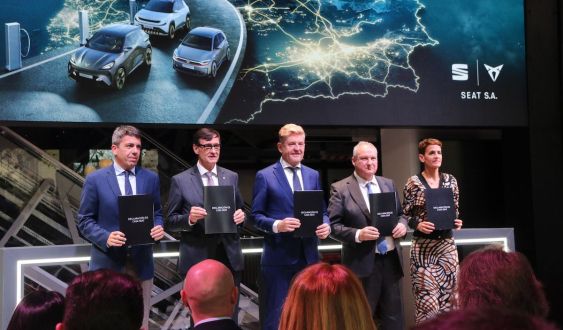
In less than a decade, vehicles sold in Europe must be electric or use synthetic fuels. This is because, starting in 2035, only zero-emission vehicles can be sold in the European Union, to reduce greenhouse gases and curb the effects of climate change. However, Spain is very far from reaching this goal, as only 5% of the vehicles sold in 2024 are electric. To reverse this situation and promote the widespread use of electric vehicles, Seat and representatives of the central government and the executives of Catalonia, Navarre, and the Valencian Community have joined forces to implement "agile and effective measures."
"Public-private collaboration is essential to take urgent measures that position Spain as a benchmark for electric cars. The automotive industry is making a great effort to electrify vehicles, but the market is not taking off and there are still no signs of improvement," remarked Seat CEO, Wayne Griffiths. He said this at the presentation of the Casa Seat Declaration, a pact signed by the President of the Generalitat, Salvador Illa; the President of the Generalitat Valenciana, Carlos Mazón; the President of Navarre, María Chivite, and the Minister of Industry and Tourism, Jordi Hereu.
The pact includes measures to "guarantee success" towards electrification, such as incentives for the purchase of electric vehicles, with aid at the time of vehicle acquisition and tax bonuses. In addition, the document also points to an improvement in charging infrastructure to increase charging points, especially ultra-fast ones in large cities, as well as streamlining administrative management to implement these new points.
Furthermore, the signatories also commit to renewing the public fleet with electrified vehicles to "lead by example to citizens" and implement "proactive and positive" communication campaigns about the benefits of using electric vehicles. With all these measures, Spain, the second-largest car producer in Europe, could become a "positive example and a benchmark for all of Europe," according to the CEO of Seat.
Griffiths recalled that, since 2021 and together with its automotive group, Volkswagen, Seat has been working with PowerCo and its partners to lead Spain towards electrification with its Future: Fast Forward plan, investing more than 10,000 million euros so that in 2026 the manufacturing of four vehicle models will begin in the Martorell and Landaben (Navarra) factories, using electric batteries produced in Sagunt (València). However, Griffiths pointed out that progress cannot be made without collaboration with administrations and stressed that this Monday's declaration represents a "historic step."
Political representatives agreed to highlight that electrification is "a magnificent irreversible reality." Hereu remarked that "there is no turning back" and that the Government "will work hand in hand to make electrification a reality," as he considers that betting on the electric vehicle is also "betting on the Spanish industrial future." For his part, Illa recalled that "prosperity must be shared prosperity, and electric cars should not be a luxury, but should be within reach of all families and workers." The president believes that "the electric vehicle concentrates everything that is currently at stake: climate change, health, prosperity, and Europe."
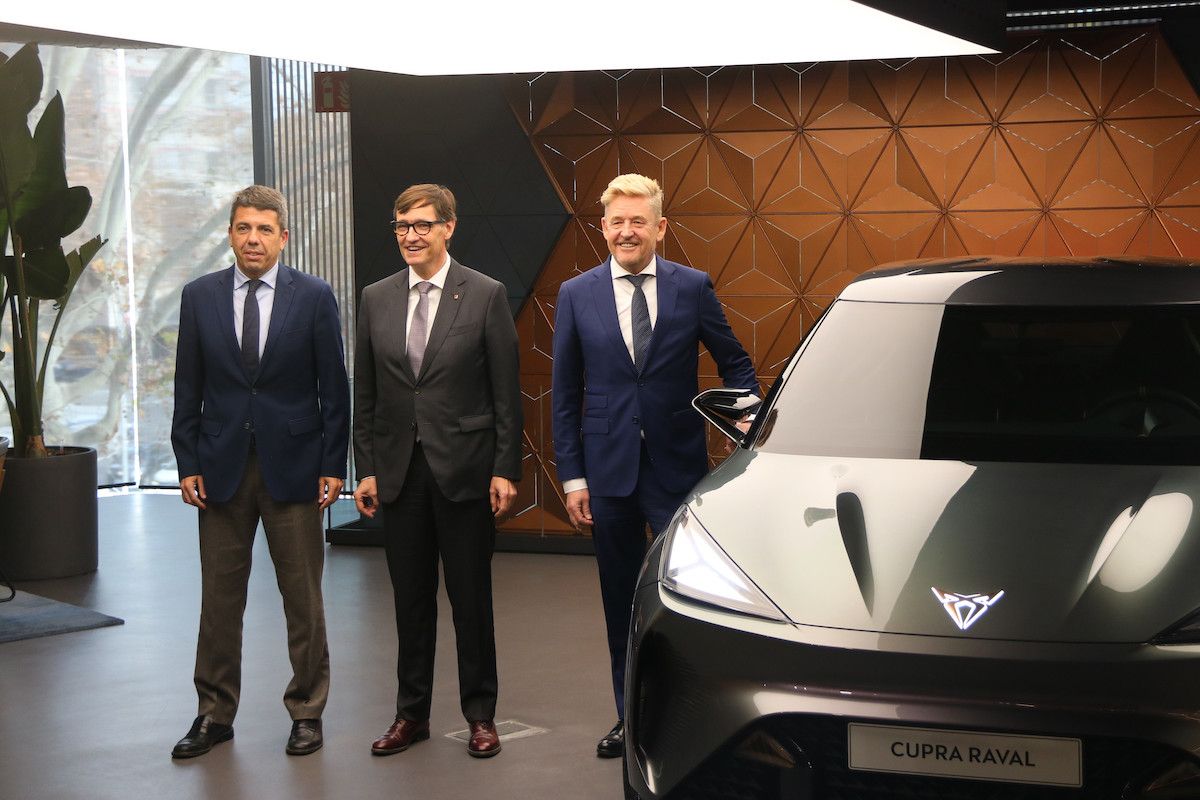
Mazón considered that the commitment to the electric car and the manufacturing of these batteries in the Sagunt plant can become "a lever for the recovery that Valencia needs" after the DANA. The president of Navarra also affirmed that this agreement represents a step to "make Spain a hub for electric mobility" and recalled that in her community there are already more than 3,500 electric charging points, but that this network must be expanded even further.
The promotion of the electric vehicle also represents a necessity for the sector itself. As the president of the Seat works council, Matías Carnero, pointed out in statements to the press after the event, production could be reduced by 10% compared to what is planned for 2026 if sales are not increased. One more reason to redouble the commitment to the electric car and to promote incentives to facilitate its penetration into the market.
Add The New Barcelona Post as your preferred Google source for free
Stay informed with the latest news.
