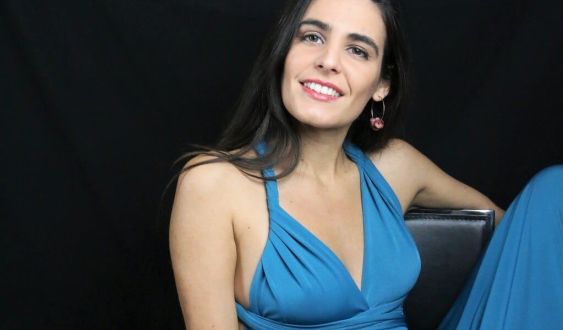
For scheduling reasons, we spoke telematically with soprano Sara Bañeras. She attends us from Valencia, where the pianist who will accompany her in the recital at the Palau de la Música Catalana resides, with whom she is finalizing rehearsals. Although she has already performed in Barcelona, a part of the audience that frequents the Palau or the Liceu will hear her for the first time in the coming weeks. In a way, it can be said that this is her official presentation, the beginning of a career that promises to be successful.
---Listening to you sing, the spectator senses that you are having a great time. How did you discover your love for singing?
---Well, I remember that already in school, if there was a Christmas concert, I always sang. When they asked me ---at all parties and even communions--- I sang. Well, in fact, I started singing at two years old!
---Perhaps because someone in your family was professionally dedicated to music?
---No, not really, but it's true that my mother studied piano for many years, and there was one at home. The thing is, I was very shy and found it very difficult to interact with people. So my parents thought that music, singing lessons, and going on stage could help me socialize and open up. I started studying singing and later piano through the Suzuki method.
---It's not the first time I've heard of seemingly shy people who, when they go on stage, completely leave their shyness behind.
---Sometimes, even today, I find it hard to be sociable. For example, at parties, I'm the girl who barely speaks. But on stage... there I feel at home. It's not the everyday Sara, the one who exposes herself, but Sara the opera singer. And, of course, Sara the opera singer is not shy; she is someone who has a great time singing and performing.
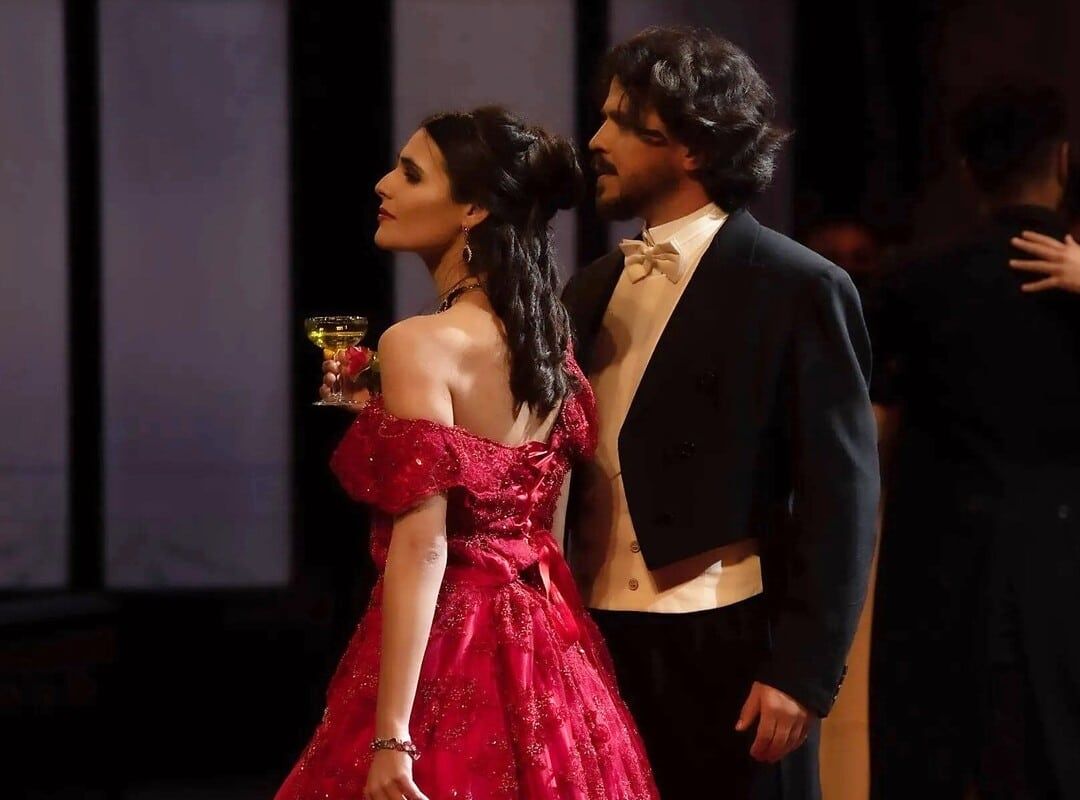
---It would seem that, by putting oneself in someone else's shoes, one can better connect with oneself, and thus with the audience...
---Absolutely, on stage I am myself but in my artist facet, and it is much easier for me to transmit everything I feel to the audience.
---And in the auditions or tryouts you usually do, does shyness not appear there either?
---Well, no, although it's true that when you do auditions and competitions ---which in our profession must be done no matter what because it's the platform, the showcase to be able to work--- I have less fun. Because you don't have an audience in front of you, but a jury.
The key to giving your best is to abstract yourself from the fact of being judged, to put yourself into the character and sing---It costs more to let go, surely…
---It's that you are more in self-critical mode, more focused on singing well... In reality, this is counterproductive, because it's harder to enjoy and put yourself in the shoes of the character you are playing. But in the end, I think the key to giving your best is to abstract yourself from the fact of being judged, put yourself inside the character and sing. That's when you can express yourself best.
---And, therefore, how do you approach your recital at the Palau de la Música?
---Well, very happy to perform in the Primer Palau cycle. Normally, each year they choose a young performer from each discipline, or from each format: a string quartet, a pianist... And they selected me in the singing modality. Afterwards, among all the participants, a competition is held. But beyond that, I take it as an opportunity to star in a whole program at the Palau, with the repercussion that press events imply and that it be broadcast by Catalunya Música. It's a place to be seen, and of course to enjoy singing in the concert hall.
---Although, in fact, this is your official recital debut, you had already performed in operatic representations adapted to the Palau stage.
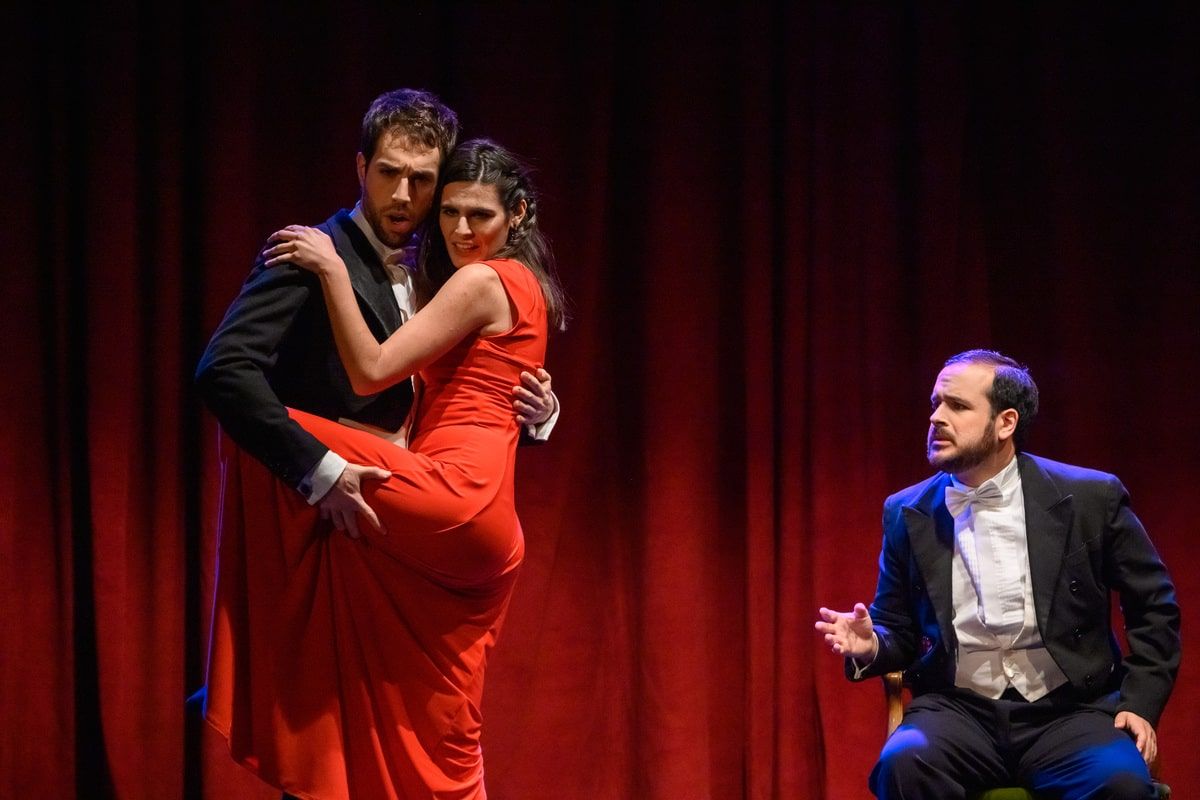
---It's true, I've been lucky enough to perform thanks to the opera company NovAria Artists, taking on the main role of La Traviata. In addition to playing Violetta Valery, I also sang other secondary roles, such as Frasquita in Carmen, Papagena in Die Zauberflöte, or Musetta in La Bohème. And sometimes, longer ago, I had sung with the Cors Clavé, invited as a soloist.
https://www.youtube.com/watch?v=awjMu1padzc
---In fact, fifteen days after your recital, you play Violetta again. Spectators who want more will be able to see you performing. What is your relationship with such a demanding role?
---Always, my whole life had been the role I dreamed of singing someday. And, in fact, when I was younger, I wasn't at all sure I would ever be able to sing it. Vocally, it requires the voice to be able to handle both the lighter and the more lyrical passages, all the way to the most dramatic ones. It's difficult to find voices that can go from one extreme to the other, not just because of vocal technique, but because of physical nature. Fortunately, and quite naturally, the truth is that I feel very comfortable, and that, coupled with a lot of work, allows me to tackle this role, which is so beautiful musically and so fascinating dramatically.
---Regarding the most immediate, the program of your recital at the Palau is very interesting and brave.
---Some pieces I have sung and they have accompanied me for a long time, but others are new, and I wanted to prepare them thinking that they could suit my voice well. I agree that it is a powerful program, especially there are two very complex Liszt songs: Pace non trovo and Die Loreley. The program consists of some very well-known Strauss lieder for the public, an aria by Charpentier ---Depuis le jour, extracted from the opera Louise--- and some songs by Toldrà. I will also be able to sing Romance de la luna, luna, by Miguel Ortega, a contemporary composer whom I was lucky enough to meet a few years ago, he fascinated me, and I had not yet been able to sing anything of his.
---I understand that throughout 2021 you are also starring in other projects.
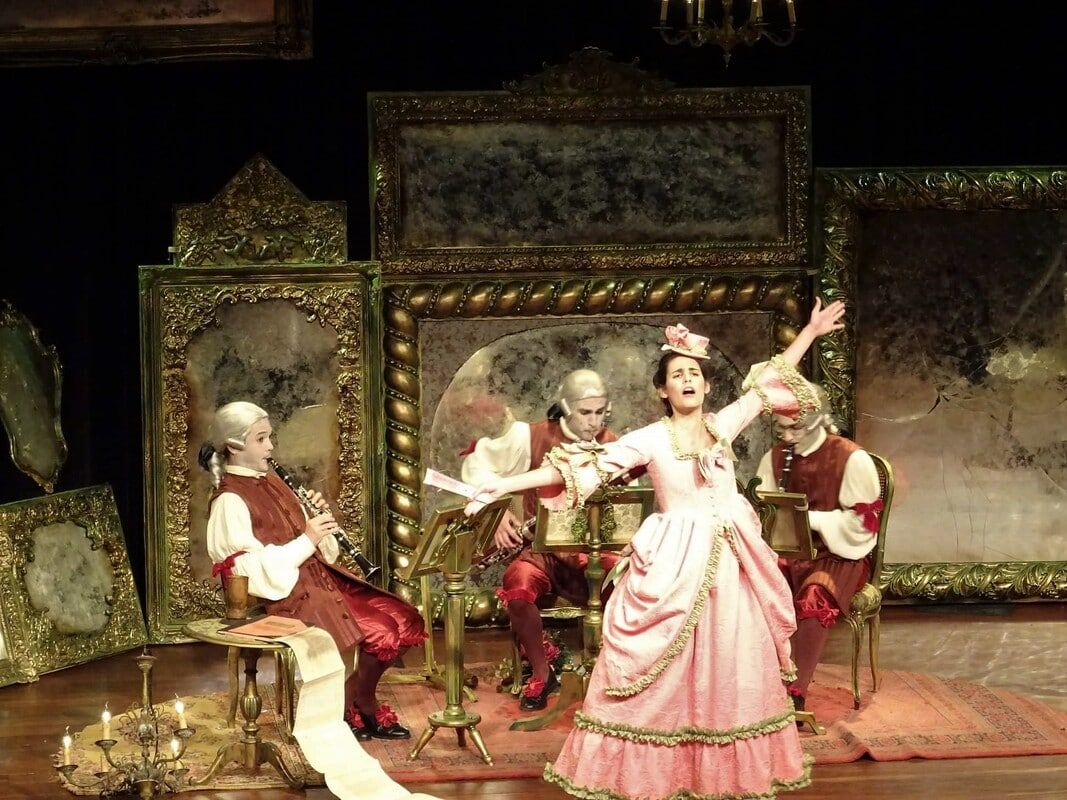
---Well yes, after an almost total standstill in 2020, things reactivated. Culture has remained open in Spain and, personally, it has been a very fruitful year. I have been able to debut in many roles. I started the year singing Rosalinde in Die Fledermaus, then I sang La Ópera de las 4 notas at the Teatro de Sarrià, I debuted in La Traviata and participated in the Josep Palet Competition where I won first prize. Currently, I am also involved in a children's show for CaixaForum called Papageno & Cia, which consists of passages from Mozart's operas. They form a story with beautiful scenery, with another singer ---a baritone---, two clarinets and a bassoon. An arrangement that, truthfully, sounds very good.
---And then there's your debut at the Gran Teatre del Liceu…
---I am very excited to debut at the Liceu. It will be the first time I appear in the official season ---I had sung at some external event, like a charity dinner--- and although it is a small role, in the opera Rigoletto, at the same time it represents a first step to enter the Liceo. And in this sense, I am very grateful to its artistic director, Víctor García Gomar, for offering me this opportunity. I did an audition, it went very well, and immediately ---in fact, the next day--- they offered me the possibility of debuting in the current season.
---Actually, beyond the purely vocal qualities, many other elements of the artist's training are taken into account when assigning roles, right?
---Now a lot of importance is given to acting, so that the singing is credible. They can even tell you, when choosing roles: "look, you could sing a very good Micaela ---to give an example--- but you don't have Micaela's physique." The priority is that the story being told is real, that it works for the audience.
---In this sense, what character would you like to play in the future?
---Well, one of the roles that I think goes very well with my voice, but that I haven't had the chance to interpret yet, is that of Lucia di Lammermoor by Donizetti. I like the role of Lucia as a character, so fragile ---she even goes mad--- and so romantic and strong at the same time. Musically, I feel very comfortable with belcanto roles, as they allow me to express myself with such freedom. Then, of course, there are those beautiful roles that one says, "perhaps I will never be able to sing them," for example, that of Madama Butterfly by Puccini.
Musically, I feel very comfortable with belcanto roles, which allow me to express myself with such freedom---And among the consecrated sopranos, is there any you admire or keep in mind for any special reason?
---There are many sopranos I admire and follow... I think I would never finish listing them! Some of the singers who have served as a reference for me have been Montserrat Caballé, Renata Scotto, Maria Callas or Ileana Cotrubaş. Currently I am also following the careers of Lisette Oropesa, Marina Monzó or Nadine Sierra. Precisely, I was able to enjoy the latter live when she sang the role of Lucia at the Liceu at the end of last season. In some way these singers have been an inspiration, because they sing very beautifully. And for me that is important, the fact of transmitting beauty in singing.
Add The New Barcelona Post as your preferred Google source for free
Stay informed with the latest news.
