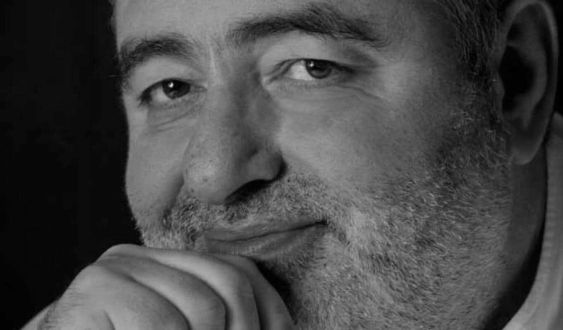
In my home kitchen, gastronomic books have a strong presence, and among them, those written by Santi Santamaria are always visible. One of them holds great sentimental value: L'Encyclopédie visuelle des aliments, from the Canadian publisher Québec Amérique. And that value is not conferred by its content, but by its meaning. Between its pages, I keep handwritten manuscripts by Santi, as a bookmark. And it is that this server had the great luxury of working with Santamaria.
Before writing and dedicating myself to communication, I was a graphic designer. At the beginning of this millennium, I met Santi Santamaria and had the opportunity to work with him on graphic projects for Can Fabes, Santceloni, his Gourmand Santamaria brand, and to be part of the design of Evo, the restaurant housed at the top of the Hesperia Tower that achieved its first Michelin star six months after its opening, with Ismael Alegría at the helm of the stoves. Working with him implied fullness, creating together, nourishing oneself from his high capacity to conceptualize and make any idea shine. I have not met anyone comparable to him in this sense.
The milestones of this great chef are well-known and public: he was the first Catalan chef to obtain three Michelin stars, in 1994. With his heart and his stoves at the service of Catalan and French products and their producers, he became part of that new Basque and Catalan cuisine that would place Spain on the map of haute cuisine. A cuisine that sought the least possible intervention in the product so that it would show itself in its splendor and unique texture, in its seasonal moment. And he believed in these premises of quality and connection with the territory until the end. He defended it not only in his kitchens (whether in Sant Celoni, Barcelona, Madrid, Singapore, or Dubai) but in his prose: he wrote nine books of gastronomic reflection and dissemination and had a Sunday section in the Magazine of La Vanguardia for three years where he delved in his 134 writings into what is the basis of current cuisine.
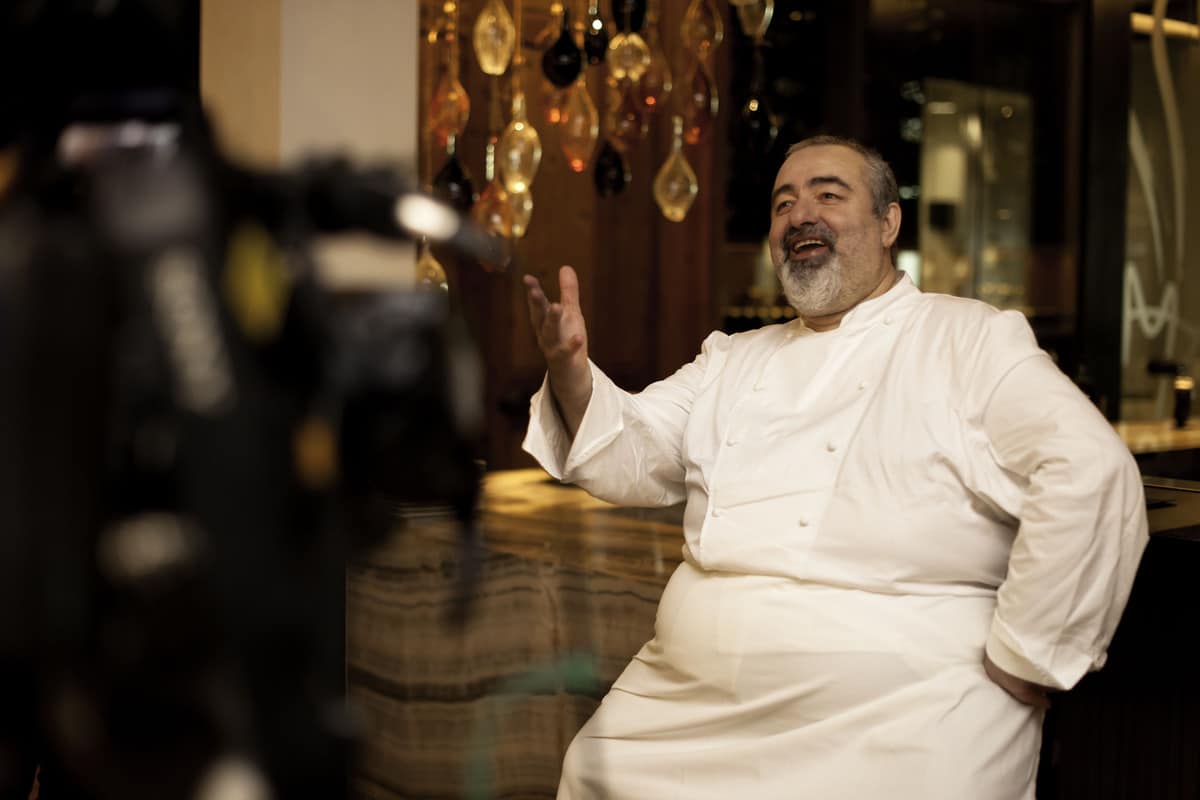
It is curious that it can be affirmed that Santamaria's philosophy is more current than ever. And if it is, it is thanks to the vital mission of Santamaria as a chef and gastronome to keep memory alive. That cultural roots, the identity of the territory and the landscape could channel through him to move forward in the form of product, updated traditional recipes and a powerful connection with those who provide raw material to the cooks who transform it: farmers, producers, ranchers and fishermen. Doesn't that sound current and could it be read in any gastronomic review? 20 years ago, however, controversy was served: from his verse or his prose, Santamaria vindicated these values against a molecular cuisine that earned the admiration of everyone, with Ferran Adrià as its standard-bearer. As if it were a duel between the Beatles and the Stones, chefs, journalists, critics… everyone had to take a stand. And in that situation, Santamaria was clear and forceful: with the publication of La cocina al desnudo he received criticism and detachment, but the chef, unscathed, knew that his words were not only his, they were those of his predecessors.
Santamaria's vital mission as a chef and gastronome was to keep memory aliveBeyond the controversy, I have met numerous professionals (chefs, front-of-house managers, suppliers, journalists) who, when mentioning Santi, have smiled. His physical greatness was comparable to his moral characterand I have not met anyone who did not praise his integrity. Of these professionals, all those who worked with him have a feeling of gratitude and of having lived a great moment by his side, leaving aside the shadows and illuminating the lights. And recognizing myself in them has made me think on many occasions thatSantamaria created a large family around him, an idea that when I exposed it to his son Pau, he proudly nodded to validate it.
Santamaria was a person who filled in every aspect: a scolding made you feel small, and sharing a working meal with him at the Shunka bar made you feel giant. Immensely creative, he knew how to channel his great cultural background towards that reflective creativity, always with a reason behind every intuition or decision. And he was generous with his people, and I felt part of it. Not only did I learn about cooking, products, their season, or other specificities: he inoculated me with a passion for this sector that still remains a living flame, with a hunger to know and experiment. In short, what Santi passed on to those around him is a genuine love and respect for this sector.
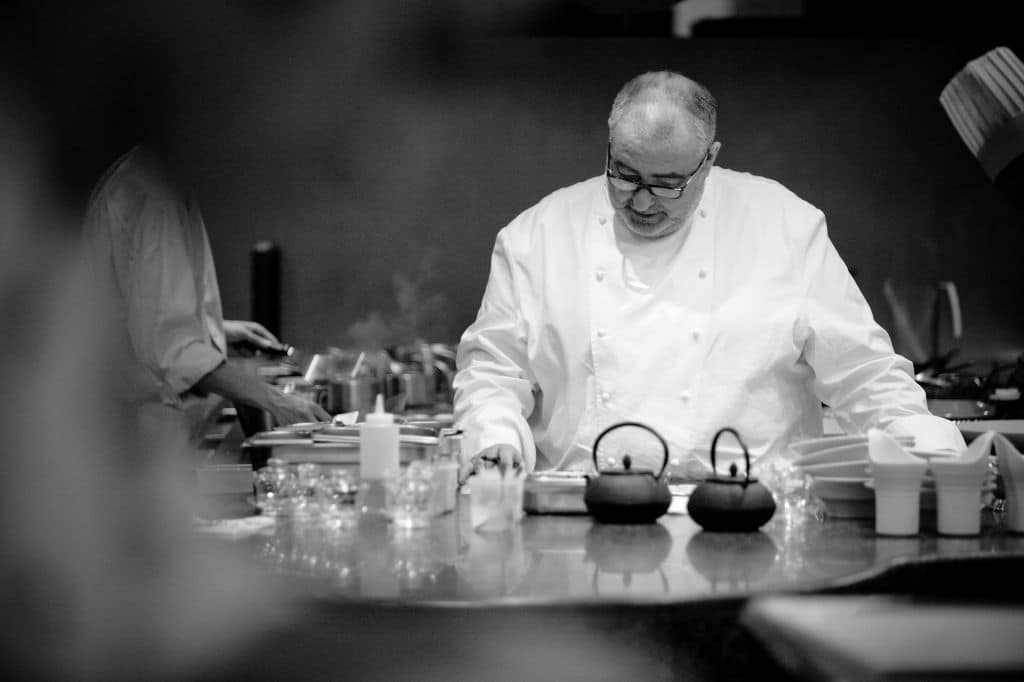
That the profession has gathered under the call of the Acadèmia Catalana de Gastronomia to pay tribute to him seems fair to me. At the MNAC, more than 150 professionals gathered this Wednesday to remember this great chef, tasting the menu that chef Jordi Vilà (National Gastronomy Award 2021) created inspired by the figure and legacy of the master.
After enjoying this night, I stop to leaf through those manuscripts and review the pages of his books, with a certain point of nostalgia, the same that invades me when I can enjoy a woodcock, one of his favorite game pieces. If for Santamaria the origin was the purpose, for me knowing him was the beginning of mine, and I cannot be more grateful for it.
Add The New Barcelona Post as your preferred Google source for free
Stay informed with the latest news.