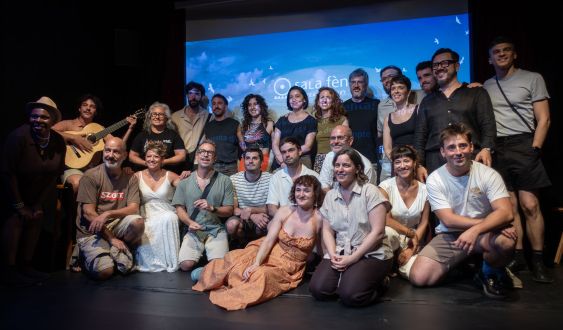
Sala Fènix has presented its new theatrical season for 2026/27. And it has done so in a very original way, where theatre could be felt everywhere: the stage of the venue has been transformed, for an hour, into "La taverna Fènix", a relaxed and informal space where the artistic directors (Felipe Cabezas and Isabella Pintani) shared a drink, chatted with the audience and introduced the productions that will make up the new season that we will see in Raval during the upcoming season.
La Fènix is a small venue in the heart of Barcelona with 45 seats; a small-format space that is part of the local theatres in Barcelona united under the name "On el teatre batega" (Where theatre beats). But, despite the intimacy of its space, authentic wonders take place on its stage: socially engaged, feminist, anti-racist and anti-colonial theatre. Theatre that challenges audiences, broadens perspectives and treats art as a tool for social change: a theatre that aims to stir consciences, to renew perspectives, and to make art an instrument for building a better future.
The productions in the main season
The stable program features 11 shows that blend contemporary Catalan dramaturgy, resident companies, and creators with very diverse perspectives:
- L'estanquera del Raval (From September 2 to 20, 2026): A reinterpretation in a local and contemporary key of Alonso de Santos' classic (La estanquera de Vallecas) that transfers the tension, the robbery, and the urban perspective directly to the heart of Raval.
- Carne quemada (From September 30 to October 11, 2026): An intimate and poignant drama that speaks about unhealed wounds, personal memory, and the impact of pain on human relationships.
- Manual para follarse a un macho con vagina (From October 21 to November 1, 2026): A bold piece exploring trans sexuality, desire, gender identity, and the deconstruction of masculine roles with humor and honesty.
- LÖTÒ. Un ritual de emancipación corporal (From November 11 to 29, 2026): A journey focused on the liberation of the black body, collective healing, and the breaking with aesthetic and racist mandates. This is the return of Silvia Albert Sopale together with Rogelio Lorda and the company. No es país para negras.
- Que la terra et sigui "trendy" (un conte neorural) (From January 7 to 24, 2027): A comedy about the trend of fleeing the city to the countryside, rural gentrification, and the contradictions of modern youth.
- Salve Regina (From January 27 to February 14, 2027): An incisive monologue that questions the myths of motherhood, the mandate of care, and the social guilt imposed on women. A creation by Ángela Palacios and Paloma Remolina (company Los espejos son para mirarse).
- La dona sense cor (From February 17 to March 7, 2027): A theatrical thriller that reflects on empathy, emotional coldness in contemporary society, and the boundaries of morality.
- Em protegeixen les estrelles (From March 10 to 21, 2027): Genís Lama returns with this new production, co-written and co-directed with Anna Cerveró (company Temple de Vesta). A poetic story about mental health, isolation, and the search for refuge amidst an overwhelming world.
- Solo cabe una persona (From March 31 to April 25, 2027): An autofiction comedy about ego, precariousness in the artistic sector, and the absurd competition to stand out.
- Monroe ha de morir (From April 28 to May 9, 2027): A critical re-examination of the Marilyn Monroe myth, female objectification, and the voracity of the entertainment industry.
- Polles, Polles, Polles (From May 12 to 30, 2027): The young playwright Ramon Catà returns next season with this rebellious and direct proposal that dismantles hyper-machismo, phallic obsession, and the complexes of traditional masculinity.
Three established programmes
In addition to the main program, Sala Fènix also includes 3 programming strands in its programming:
- #PONTAERI (September - November 2026): A welcoming space for international pieces that are programmed briefly at the venue. This season will host proposals such as Angelina (Studio d'action théâtrale, Switzerland), Indio de mierda (Chile-Madrid), Gallina (Claudia Ramírez, Chile), Les Fabliaux (I nuovi scalzi, Italy), AMOR(a)MUERTE (Las Lunas, Andalusia), Segarem ortigues amb els tacons (Contrahecho, Valencia) and Bodas de Sangre (Sala La Teatreria, Cantabria).
- #MEMÒRIAHISTÒRICA (December 2026): A month dedicated to reviewing the past to question the present through three titles: Ocells a la frontera (Marcela Terra), Trampantojo, o el relat de la història d'Espanya (Maria Villarejo) and IAIA, memòria històrica (Alba Valldaura). Saturday performances will feature post-show discussions led by the historian Jordi Barra. As a complement, the space will host the exhibition Antigitanisme: Passat, Present i Futur, curated by FAGiC.
- #EXTRAORDINARI (June 2027): An exhibition focused on creation processes developed together with the Centre Cívic Drassanes, aimed at giving visibility to emerging talent from the neighborhood.

The commitment of Fènix: building community, creating audience, and breaking barriers
The project on Riereta street goes much further than raising the curtain every night. The venue also carries out a social task that seeks to impact the fabric of El Raval and open the doors of the theater to groups usually far removed from performance spaces. One of the pillars is the TeenFriday program, an initiative born in 2017 through which more than 2,000 teenagers have taken part in the programme; the project offers young people from the neighborhood a safe and creative space to express themselves and question their environment. For this new academic year, Fènix will carry out 15 new activities that will include workshops, talks, and open rehearsals where students themselves can talk with the artists.

In addition, Fènix reinforces its commitment to accessibility with the aim of making culture accessible to everyone. In alliance with entities such as ONCE, ACIC, and the EMAV school, the venue will maintain its adapted performances for visually impaired audiences, incorporating resources such as audio presentations and tactile visits prior to the show to familiarize themselves with the set design.
Finally, the venue remains committed to supporting local talent through its artistic residency program. To do this, it puts its facilities, time, and technical support at the disposal of emerging companies, offering them the professional conditions necessary to develop their creative processes from the rehearsal phase to opening night.
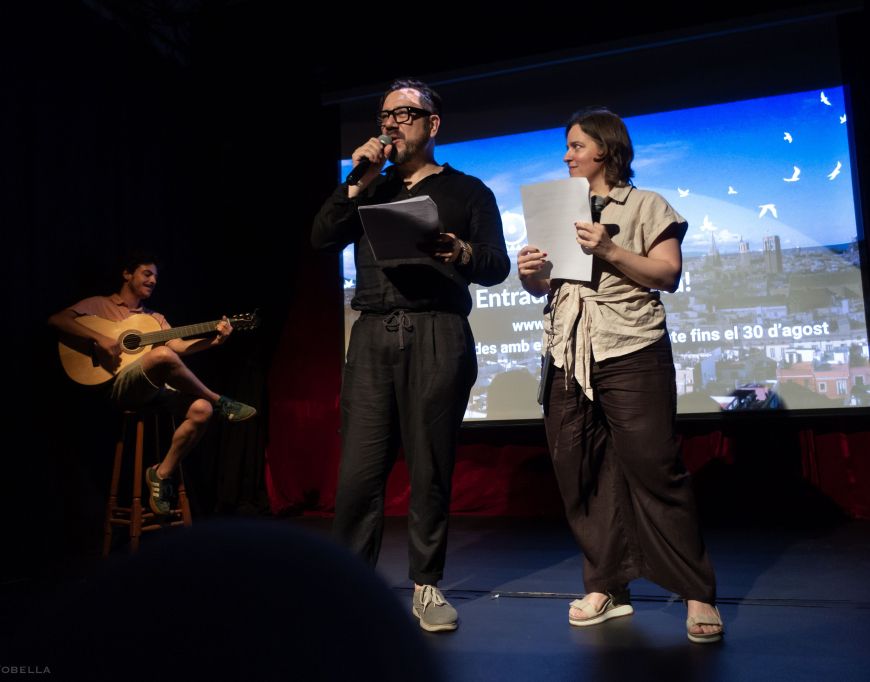
There is one question Felipe Cabezas and Isabella Pintani are constantly asked: “Where are you from?”, to which they reply "From Poble Sec", but the follow-up inevitably comes: “No, where are you really from?”, and they answer "Felipe from Chile, Isabella from Italy". It is a question they have answered countless times, despite having lived in the country for 24 years, and of those 24 years, they have spent 13 leading the Sala Fènix project. But, as Pintani rightly points out, "What's important is not where we come from, but where we are going".
And their goal is clear: to build a theatre that is open, contemporary, diverse and deeply rooted in Barcelona.
Add The New Barcelona Post as your preferred Google source for free
Stay informed with the latest news.