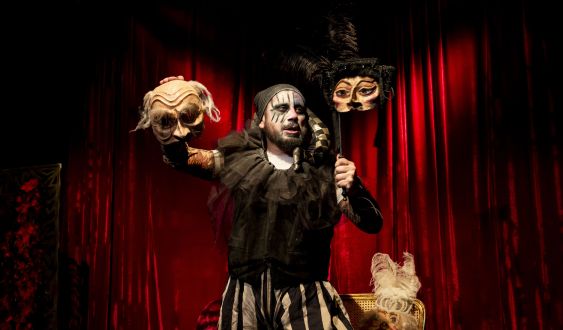
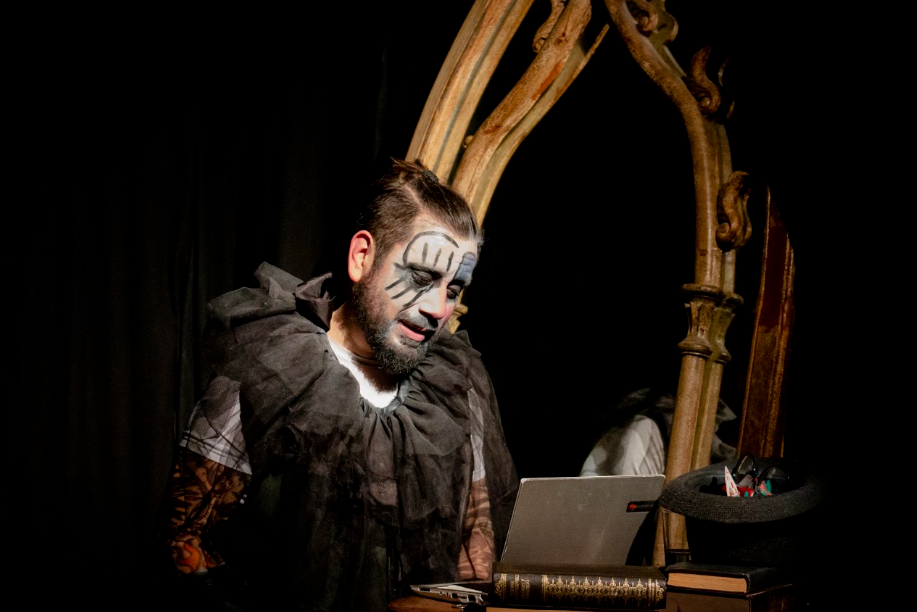
After a rehearsal, changing clothes, drinking water, and with hope in his eyes. This is how Felipe Cabezas welcomes us at Sala Fènix, before the re-premiere of King Lear's Fool for the ninth consecutive year. "That's theater," he says, laughing, as he finishes removing his makeup. This July 15, one of the plays that has already become a classic of the theatrical billboard returns to this small, intimate venue in Raval.
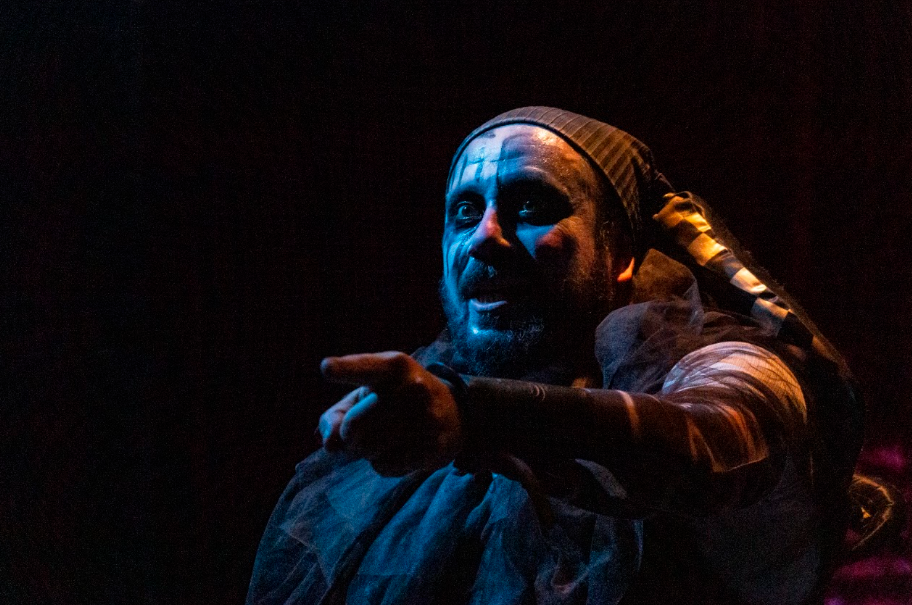
Felipe Cabezas, actor and director of Sala Fènix, pays homage to Shakespeare's fool character, giving him a voice and allowing him to tell us the story of King Lear. We sit down with the actor and director to learn more about his story, his creation, and his experience in the world of theater in our city.
—This July 15, you are presenting the ninth season of King Lear's Fool. How do you feel about bringing this show to the stage in Barcelona for the ninth time?
As always when the premiere approaches, at first certain insecurities assail me. I ask myself: "Will I be good doing this for another year?" But the truth is that, once immersed in the season, I am immensely happy. The play has elements deeply rooted in 2017, in the time of the referendum and everything that happened around it, and every year people in the audience tell me: "Hey, you've changed things, you've added new digs...", and I tell them no.
What happens is that some passages are naturally highlighted by the contingency of the moment; it seems like I'm talking about the most strict current events, but the text is exactly the same.
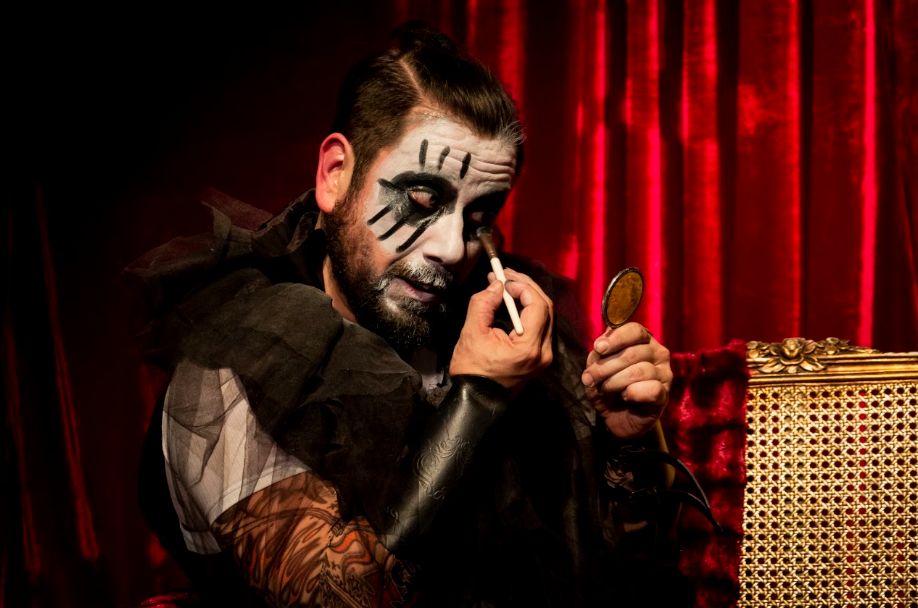
—Is the dramaturgy entirely yours? How did you work with the original text?
It is my own dramaturgy built from small passages by the author. It consists of taking King Lear and having a single secondary character —in this case, the Fool— tell you the whole story. It is written in my own words. I have replaced original passages with others invented by me. Thus, when classic characters like Lear or his daughters speak, I do use original fragments to give them that imposing Shakespearean voice. But in global terms, being a narrator's show —almost a minstrel's—, this character expresses himself with my own voice.
— Being the only actor on stage, how do you manage directing yourself?
When I started the project nine years ago, I had the help of Jordi Pérez as an external eye and acting coach. He was in charge of balancing the rhythm and ensuring that the characters didn't look too similar on stage. As the general director of the project, I decided which advice to apply, but having his professional judgment helped me lay the foundations of the show.
Now, after so many years, it's enough for me to watch the video of the play just once before resuming the season as a reminder. I have the text ingrained in my skin. In fact, I just did a full run-through without reviewing the script beforehand. I lost count of the performances when I passed 150, but I estimate I must have accumulated between 150 and 200 performances.
I have the text ingrained in my skin.
— Where did the idea to create this show come from?
I came from working purely as an actor. I had been doing a Shakespearean spin-off called Bruto —about the protagonist of Julius Caesar— written and directed by Marcela Terra. I was fascinated by that formula of taking a peripheral character to discover their vision of events. As a result, I started devouring his works and fell in love with King Lear.
Additionally, I fell in love with a recording of a spectacular version by the Piccolo Teatro di Milano, directed by Giorgio Strehler, which used a beautiful circus imagery. Since I had specialized in Commedia dell'Arte for many years, I wanted to apply those physical codes to the staging to invent a kind of contemporary Commedia dell'Arte.
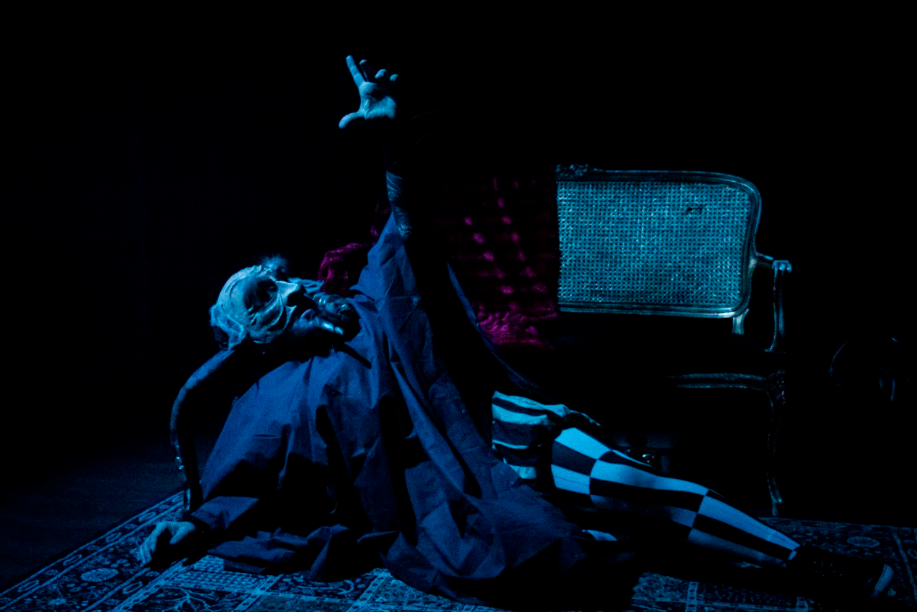
— Have you abandoned Commedia dell'Arte over the years?
I have stopped thinking about it at the level of personal creation. I still teach occasionally, but I like to constantly change my focus and not get stuck. I dedicated myself body and soul to this discipline, traveling through France, Italy, and Spain to train with great masters. In Barcelona, there were very few people with that specialization. But, at the same time, you see professionals who have been doing exclusively that for 40 years, and I felt that I didn't want to end up there.
I didn't want to become a dinosaur of Commedia dell'Arte. The classic contents of Commedia dell'Arte have expired: they carry conventionalism and sexism. I wanted to rescue the political aspect of those who reinvented the discipline, like Dario Fo.
The classic contents of Commedia dell'Arte have expired: they drag conventionalism and machismo. I wanted to rescue the political aspect of those who reinvented the discipline, like Darío Fo.
— And how did you apply those codes in this work?
From the classical technique, I have only kept the mask work and the physical construction of the characters. Beyond that, there is nothing else from traditional Commedia dell'Arte, especially because I defend the stage completely alone. I believe the show is much closer to the figure of the minstrel who narrates Lear's tragedy.
— In the play, there is a secondary story that alternates with the classic one: the story of a contemporary actor who wants to stage, precisely, King Lear. How do they intersect?
King Lear is one of the few Shakespeare plays that has two identical parallel plots that enhance each other: that of the king betrayed by his daughters and that of Gloucester with his sons. What I did in my dramaturgy was to eliminate the entire Gloucester plot and replace it with my own contemporary story. Both run in parallel, enhance each other, and, in the end, merge. I have not destroyed the original structure; I have simply replaced one piece with another.
It is not my reality, but it is my fears.
— In that metatheatrical part, you talk about the precariousness and instability of the profession. Do you base it on your own experience?
Many spectators think that everything I explain has happened to me because the character is an actor at his wits' end, in a very precarious professional and personal situation that drives him to madness. That is not my reality, but it is my fears. I am inspired by the fear that this could happen to me someday.
Although there is a real trigger: years ago, I had a project practically closed for a season in a large theater in Barcelona. Everything was agreed upon, but when the programs were presented in June, I discovered that I had been left out without even receiving a call. It hurt me a lot, I felt very betrayed, and it affected me emotionally for a long time. I poured all that pain and frustration into the character.
I use that plot to deliver a very honest discourse about the profession, the emotions of artists, precariousness, and how treacherous this sector can be. My professional career is divided into two: before and after opening Sala Fénix. Before, my relationship with other venues was very complicated and painful. Building Fénix gave me the freedom to forge my own path without depending on the dynamics of other theaters in the city.
I use that plot to deliver a very honest discourse about the profession, the emotions of artists, precariousness, and how treacherous this sector can be.
— Sala Fénix is part of "On el teatre batega". How did this network come about and how do you help each other?
We are founding members. The project was born very organically in 2020, in the midst of the pandemic, when the director of the Grec Festival invited ten local venues to be part of a section of the festival. When the lockdown hit, we decided to reinvent ourselves together: we created radio theater, online productions, and designed a joint website to make the circuit visible. We realized that we were people of the same generation who shared exactly the same daily challenges. We decided to move forward and the circuit has consolidated a lot.
— Don't you usually tour your productions among the different local venues?
The truth is no, because the artistic line of each venue is radically different. For example, this play could fit in El Maldà in terms of space, but their programming is very focused on musical theater and a very specific type of comedy with an idiosyncrasy linked to a very deep "Catalanness". Although I've been here for 25 years and feel fully Barcelonian, I handle a different theatrical language. Perhaps it would fit better in Versus or Badabadoc, but the market is so small that the local audience already has us all very well located.
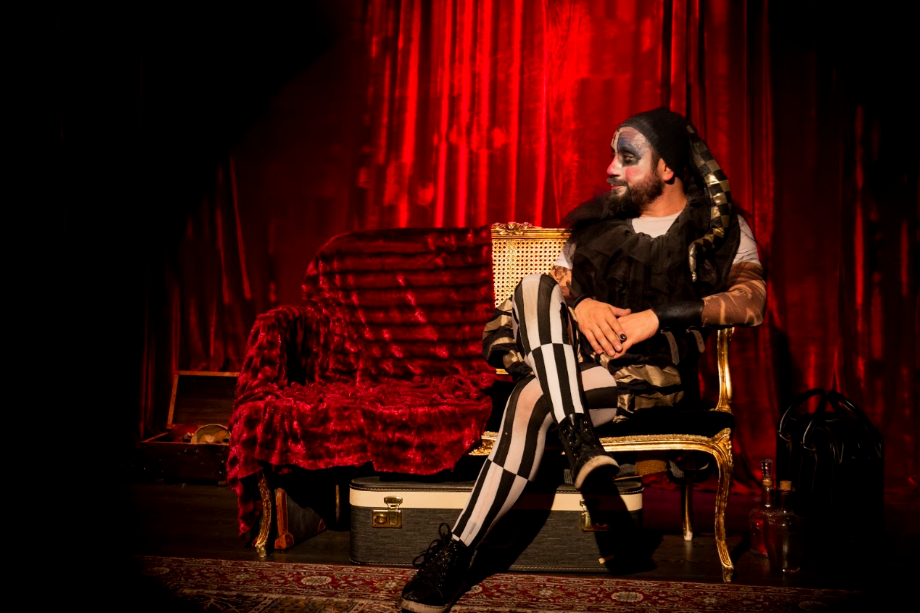
— Speaking of this "Catalanness", have you encountered difficulties in launching your project in Barcelona?
If I were to complain about Barcelona, it would be very unfair. Institutionally, the support we have received has been proportional and fair to the size of a small project like ours; we live off of this thanks to aid from the Generalitat, the City Council, and the Provincial Council. Socially, Barcelona is an extraordinarily open and multicultural city, so we have never had audience barriers.
— For someone who has never heard of El Bufón del Rey Lear, what will they find when they enter the theater?
They will find a show with traces of minstrel theater, very artisanal, but which at the same time breathes a contemporary and very fresh reinterpretation. Even the purely Shakespearean passages have been brought down to a very simple language. That's why I always say it's a Shakespeare for a very broad, non-elitist audience; one of the best options to approach the author for the first time without the barrier of that elevated language that sometimes distances the viewer from the classic.
It's a Shakespeare for a very broad, non-elitist audience; one of the best options to approach the author for the first time.
— What would you say are the main themes that run through your monologue?
Ambition and selfishness are Shakespeare's great drivers, and they are omnipresent here. But in my particular version of King Lear, I would say the core is totalitarianism, stubbornness, and structural machismo. I wanted to portray a violent, irascible, and very aggressive King Lear, but one who combines that aggressiveness with a folksy attitude of "owner of the estate."
It is precisely that arrogance and stubbornness that ends up unleashing chaos in his kingdom, in his own head, and in the lives of those around him. The play shows us how the blindest stubbornness —and the inability to recognize our own mistakes— is capable of dragging us to the worst of human beings.
All the music in the play is made with my own voice.
— The soundtrack of the show is created entirely from sounds emitted by yourself. How did that idea come about?
If I don't tell you, you won't believe it! All the music that plays—melodies and real rhythmic bases—is made with my own voice. The idea came from Orestes Gass, who is an extraordinary musician with a very long career in theatrical sound design. He wanted to investigate and proposed that I do a test. The next day he showed up in the room with two microphones and we were locked in for a couple of hours recording. I have a video saved from that day where I end up shirtless, soaked in sweat and screaming like a madman in front of the microphone.
— Next July 18, you are organizing an accessible performance that includes a "tactile visit." What exactly does this initiative consist of?
Accessible performances and tactile visits are a structural initiative of Sala Fénix that we have been developing for two years, often in collaboration with ONCE. It consists of adapting the theatrical space for blind or visually impaired people through several specific actions. The first is audio description. We send them an audio of about ten minutes in advance where I detail the aesthetics of the work: the colors, the textures and the spatial dynamics.
The second action is the tactile visit itself. Before the performance begins, attendees go up to the stage and touch absolutely everything with their hands: they feel the masks, the set design, the costumes, and they even touch me and feel my face to locate me. It is a very powerful sensory, olfactory and tactile experience that reinforces the previous audio description. Afterwards, they enter the room to enjoy the performance.
King Lear's Fool is a reading of the present through the echoes of the past.
— Why do you think we should continue interpreting Shakespeare in the 21st century?
I believe that Shakespeare analyzes the human being like very few people have achieved in the entire history of theater and art in general. He knows how to describe human nature in a unique way. In fact, Harold Bloom in his book The Invention of the Human states, almost literally, that Shakespeare invented our conception of the human through his characters, and that since then we reflect ourselves in them. No other author has that conceptual greatness.
And may the defenders of the Spanish Golden Age forgive me, with whom I have had more than one discussion and artistic fight on this subject, but "William" is an authentic genius! His production has too many jewels and his range is so wide that it is inexhaustible. He captures human beauty and misery with a seriousness and depth that goes a long way.
However, I believe there is a clear distinction between his texts: his tragedies have aged much better than his comedies. Tragedies remain timeless because power struggles continue to occur in exactly the same way as in his time. In contrast, his romantic comedies have aged worse; our society and our affective dynamics have changed radically, while ambition and greed remain identical.
Shakespeare analyzes the human being as very few people have achieved in the entire history of theater and art in general.
— And to close, if you had to complete the sentence: "King Lear's Jester is..."
A reading of the present through the echoes of the past.
Add The New Barcelona Post as your preferred Google source for free
Stay informed with the latest news.