"Summer doesn't start until Parking Shakespeare starts." This is one of the phrases that the public has sent to the company over the years. And this 2026, the motto becomes more real than ever. Although the Parque de la Estación del Norte is partially upside down due to construction, the collaboration of the City Council has allowed the enclosure to be secured for an event that is already a summer ritual.
This Thursday, July 9, Parking Shakespeare begins its 17th season and does so by venturing to the extremes: after staging Shakespeare's most unknown play last summer (Cymbeline), they now dare, for the first time, with the classic of classics: Hamlet i les coses podrides.
The comic potential of tragedy
The folks at Parking Shakespeare like extremes. If last summer more than 5,000 people filled the park to discover Cymbeline, one of the English playwright's most unknown and minority plays, this year they make a 180-degree turn to focus on his most famous text. The hour-and-a-half-long show uses tragedy to reflect on and analyze our present.
Roger Torns is the director of this free version of Hamlet. Actor, playwright, director trained at La Casona school, graduated from the Institut del Teatre and linked to the Obrador de la Sala Beckett and his own company Produït per H.I.I.I.T, he does not propose an untouchable academic proposal; on the contrary, he has rewritten all the classical verse to adapt the rhythm and change the order of some passages.
A version that, despite being very faithful to the story, has been baptized with a different title to make its identity clear: Torns' version points the finger at the constant surveillance of the patriarchal system, a mechanism that sustains a corrupt and sick society where showing vulnerability is a danger.
When I started reviewing the classic, it was inevitable for me to think about the legacy of hegemonic masculinity that dominates our most everyday actions.
"When I started reviewing the classic, it was inevitable for me to think about the legacy of hegemonic masculinity that dominates our most everyday actions," Torns reflects. "This discourse that we have ingrained, as if the character of a play had possessed us, constantly dominates and blinds us. In the play, it is evident that young Hamlet, Ophelia, and Laertes flee, each in their own way, to avoid following the established structure, and fight to get rid of the imposed role."
The synopsis places us at a very specific starting point: Horacio acts as narrator and director of an improvised company that reconstructs the story to fulfill the last wish his friend Hamlet asked him before dying: to explain his story. In this reinterpretation, Hamlet is no longer the perfect hero: he is a young man who does not fit into his world and is pressured by the inheritance of revenge and power.
"I have always imagined that Hamlet is a young man who happened to be the son of a King and who is pressured to follow the mafia tradition of killing each other to maintain power and privilege," says the director.
In this reinterpretation, Hamlet is no longer the perfect hero: he is a young man who does not fit into his world.
Patriarchy as a classic prison: "Ophelia was the most sensible"
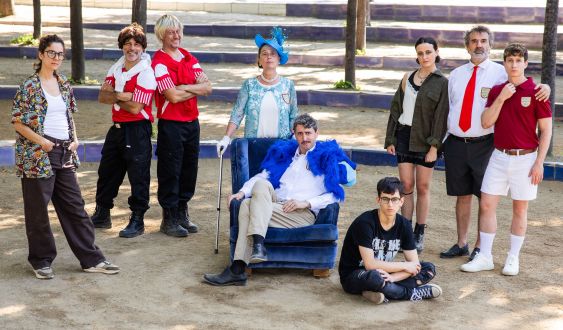
Torns' adaptation wants to unmask how the patriarchal structure, obsessed with control and surveillance, feeds a rotten society that punishes vulnerability. We spoke with two of its performers, actress Ariadna Matas and actor Roger Vilà, who joined the cast this year along with Àngels Coma and Lluís Català through an open casting call that sought new talents for the tragedy.
"All the characters are corseted following a hegemonic structure, which is what is expected of them within this patriarchal system," reflects Ariadna Matas. For her, the play is a direct reflection of current dynamics: "A rotten environment where Hamlet is the only one who stops to reflect on whether he really wants to continue down this path or not."
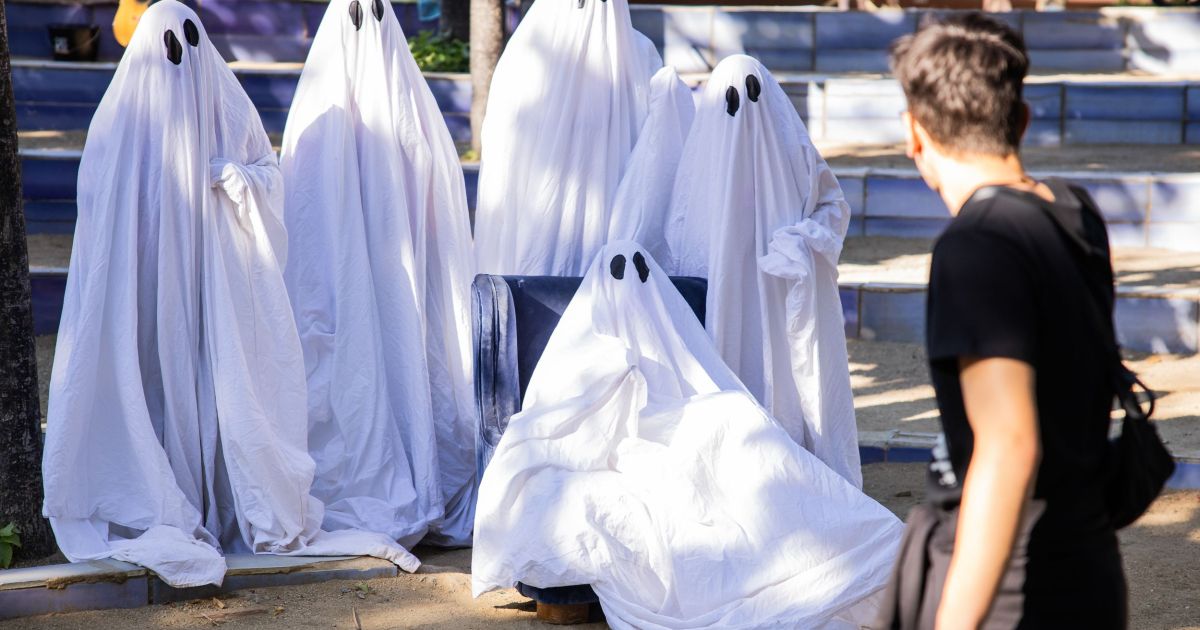
This social pressure especially suffocates characters like Ophelia and Hamlet himself, a misfit who perpetuates the tradition of violence and revenge so as not to lose the privileges of power. Matas emphasizes the reinterpretation of Ophelia, a character historically mistreated by stage productions:
"In many classic versions, Ophelia has always been described with condescension, saying 'poor thing, she was crazy.' But perhaps she was the most sensible of all! Ophelia is a victim of an environment where men rule, where she is given neither voice nor vote and is used as a puppet to manipulate Hamlet. In this version, she is given a voice. If she ends up suffering the fate we all know, it is precisely because it is impossible for her to escape this closed structure. She is capable of abandoning her character; she is even braver than Hamlet."
Torns turns the historical myth of the female protagonist's madness on its head: "I have always wondered why Ophelia is said to be mad, and recently I realized that we had been profoundly mistaken. Ophelia is not mad but is so disappointed, so sad, and so manipulated that she has no other escape than suicide to flee this corrupt world where she has only been an object of trade."
For the director, the gesture is one of absolute rupture with the system: "Ophelia is indeed capable of stopping acting, of abandoning her character. Even Ophelia is braver than Hamlet."
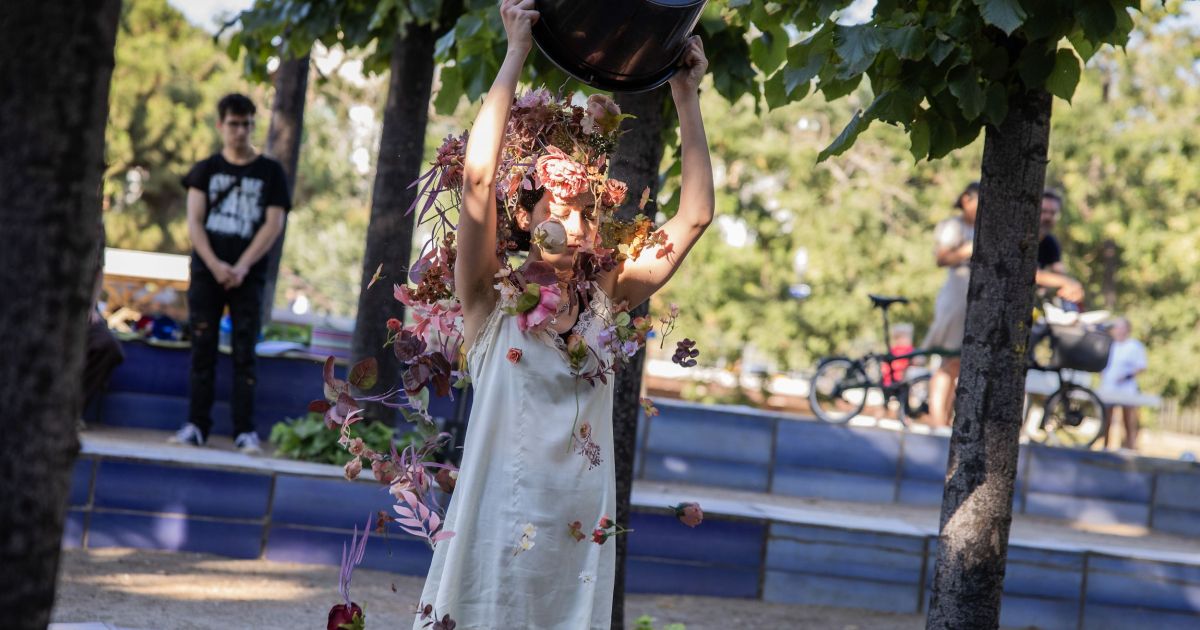
Acting in the park: The 360-degree challenge
One of the main characteristics of Parking Shakespeare is to defend the Anglo-Saxon philosophy of performing the playwright in public parks, without scenery, lights, or sound equipment. All the weight of the tragedy falls on the bodies and voices of the actors. Debutant Roger Vilà analyzes the technical effort required by this theatrical style, especially when arriving at the park after having rehearsed in the intimacy of a room:
"In the rehearsal room, you work from a very intimate, confidential place, but here all the nuances take on another aspect. The vocal challenge is immense: you have to make the spectator receive an 'I love you' in an intimate, confidential tone, but having to project it practically as a shout because it has to be heard equally everywhere. You have to have an absolute awareness that the audience surrounds you 360 degrees and that you also have to project backward."
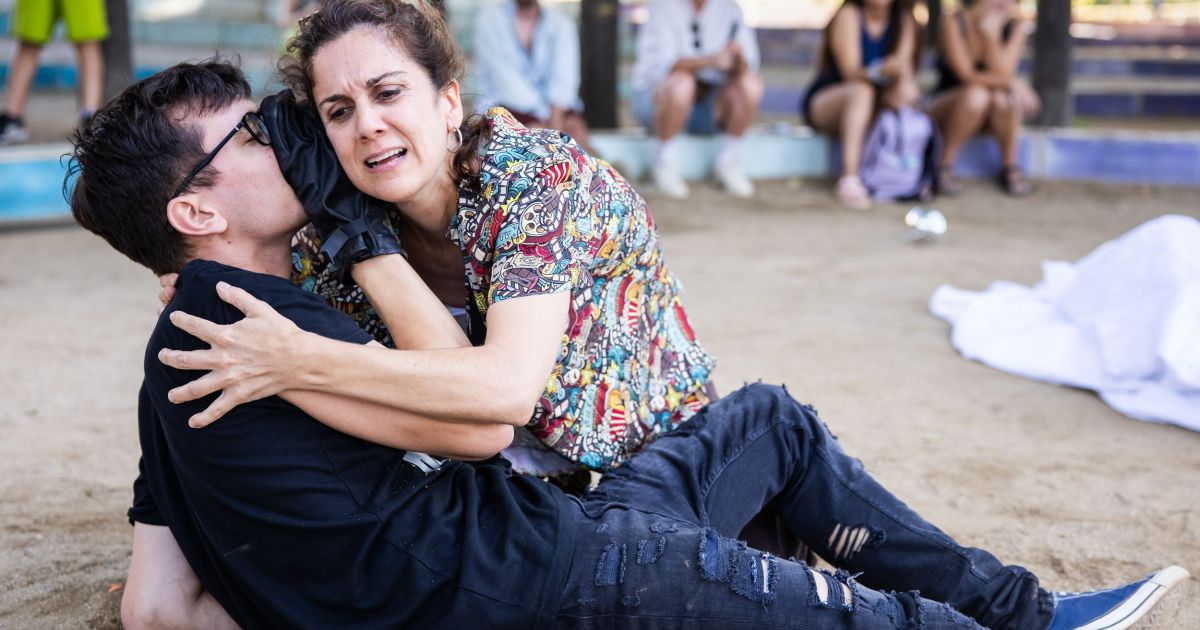
Furthermore, the park's works are not the only external element that coexists with the show. Acting in public space implies breaking with the rules of a conventional theater, where the audience remains static and protected indoors. "Just to enter the stage, you have to dodge people in the park, and that already modifies your mood when you go out," confesses Matas.
"The street multiplies everything: suddenly you have twenty children from summer camps watching, a dog crossing in the middle of a monologue, or a spectator who laughs in your face or answers you mid-sentence." But Vilà, new to this type of street theater, tells us: "How everything you had rehearsed from the first day to the last is modified is a much more exaggerated and lively process. I am very eager to encounter these unforeseen events," he explains with a big smile.
A theatrical phenomenon that transcends the park
The company's good performance led them in 2013 to create Parking de Invierno (moving from comedy to drama and performing in venues like the Beckett), and last 2025 the City Council commissioned them La comèdia dels embolics, a play for La Mercè. Even this 2026 they have been invited to the Craiova International Shakespeare Festival to perform Cimbelí in Catalan.
It is an invitation to reflect on what we are as a society, but made from the freshness, lightness, and proximity of the street.
Feeling the actors pass by your chair, receiving a gesture of complicity asking for passage through the audience, or seeing them change clothes in plain sight generates a connection impossible to achieve in a closed theater. And, this summer, we will once again experience this magic of open-air theater with Hamlet i les coses podrides, a play that, as the performers define it, "is an invitation to reflection on what we are as a society, but made from the freshness, lightness, and proximity of the street."
Add The New Barcelona Post as your preferred Google source for free
Stay informed with the latest news.