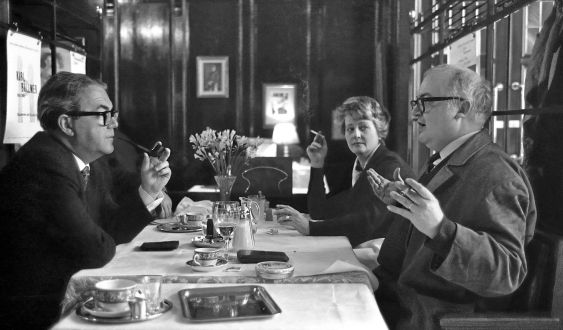
Master of intrigue, scathing and ironic like few others, Friedrich Dürrenmatt inserts moral dilemmas into his works that shake the reader or spectator with exquisite forcefulness. His luminous gaze, not without sarcasm and self-criticism, leads him with a firm step into dark matters. And it is that Dürrenmatt dares to verbalize what we kindly decline in everyday life, turning the most elemental logic upside down or showing its tendentious nature. In the game of mirrors that his plays represent, but also in his novelistic thrillers, he unusually subverts the reader's expectations with relish. The titles that Tusquets recovers within its andanzas collection are two of the first to build his fame, specifically The Judge and His Hangman (1950) and The Suspicion (1951). Works that appeared decades ago, whose reprinting only emphasizes their transcendence.
Similarly, the Swiss writer's plays have enjoyed an excellent reception in the city of Barcelona. In the already distant summer of 2000, the National Dramatic Center company filled the Teatre Tívoli with a spectacular version of The Visit of the Old Lady, a play that the Teatre Lliure also staged a couple of seasons ago, starring Vicky Peña. It is a true tragicomedy, stark and intelligent ---in the collective imagination it can be understood as an untimely combination of Welcome, Mr. Marshall and Dogville--- that equally provokes laughter and a kind of cold sweat. It begins with the reception that a ruined town gives to an elderly millionaire ---Claire Zachanassian--- who has decided to return to her birthplace. No one seems to remember the humiliating treatment she received as a young woman, nor suspect what the turn of events will be… even though from the beginning of the play some clues are offered in the key of black humor ("I want to visit the places of our love with Alfred, while you take the luggage and the coffin to «The Golden Apostle»").
A good part of Dürrenmatt's magnetism lies in how he manages to make profound disquisition coexist with nonsense. He consciously promotes changes of register and theatrical effects, and cultivates the path of parody, up to the eventual flirtation with kitsch aesthetics. Agile and direct literature, but only seemingly simple. This impression will all the more effectively provoke bewilderment in the spectator or reader when addressing such capital questions as that of justice, in its different forms. Among which, the retrospective claim of punishment that is psychologically experienced as revenge. Curiously, even in fiction, the representation of a cosmos without moral law is scandalous, or ---if there is one--- in which precisely those who transgress it triumph. The manipulation of the spectator undertaken by Lars von Trier in Dogville ---a film developed on a kind of board with squares, which received an interesting staging at the Teatre Lliure a year after The Visit of the Old Lady--- is exemplary in this sense, when at the last moment and unexpectedly the father of the abused Grace appears, to act as a true deus ex machina.
[subscribe_newsletter_esp]
The plot of The Suspicion suggests the possibility that a doctor responsible for crimes against humanity during Nazism is operating with full impunity in a clinic in neutral Switzerland. The one trying to find out is a retired and seriously ill commissioner. Like many of his characters, Commissioner Bärlach oscillates between solemnity, with statements that denote Dürrenmatt's philosophical training, and the audacity of an eminently pedestrian knowledge, which he has compiled in contact with human passions not always elevated. This is an oscillation that makes the characters attractive, by revealing the hybrid nature of the human being, open to the highest milestones or to falling into misery, and of course also to the delightful recreation in the world of the imaginary, which the author recalls with the explicit mention of Cervantes' character: "We should all be Quixotes if we truly had our hearts in the right place and a grain of understanding under the lid of our brains."
Welcome be the insubstantiality that invites us to look at the irresolvable and pressing questions about the essence of the humanIn a cosmos permeated by relativism, where grand discourses are blurred by the suspicion of everything that smacks of messianism, Dürrenmatt does not fall into the cynical temptation of declaring the complete dissolution of moral categories, or canceling the meaning of particular feats. The unsettling diagnosis of the protagonist ofThe fall of Albert Camus ---an absolutely contemporary work, dating from 1956, which theNational Theater of Cataloniaprogrammed in monologue format in 2003 with a minimalist and impactful staging--- it is rediscovered in many of Dürrenmatt's narratives, in which he raises the problem of justice, in the face of the disconcerting existence of evil. And, with all that, even if it is via negativa, from the possibility of the worstdefends, more or less battered, the belief that man is the master ---and morally responsible--- of the destiny he chooses. The background of totalitarianisms is, without a doubt, determining. A character fromThe Suspicion"I refuse to make differences between peoples and to speak of good and bad nations; but I must make a distinction between men (...) since the first beating that ran through my flesh I have known how to distinguish between executioners and victims."
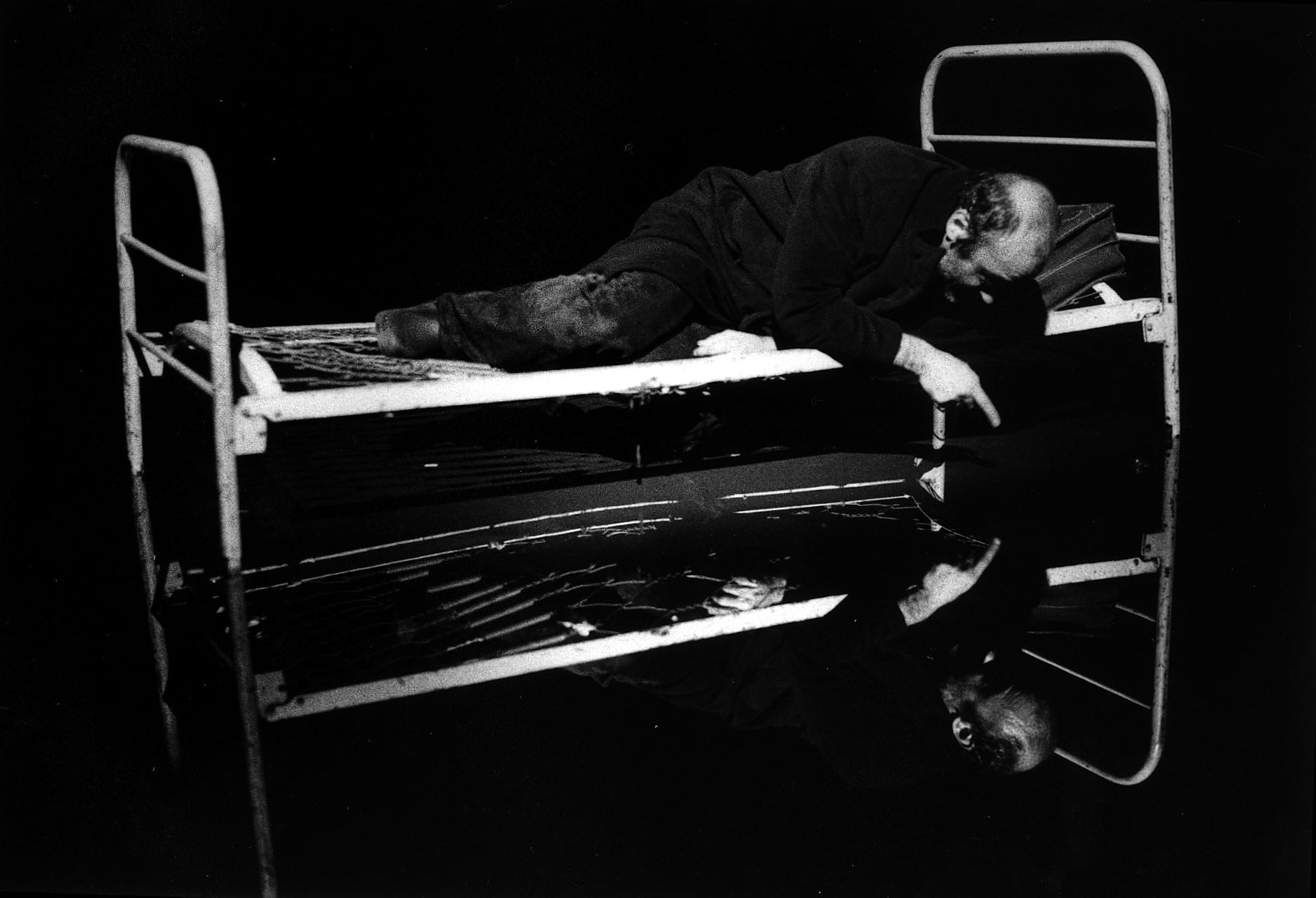
Ecological awareness also appears punctually in Dürrenmatt's works, with the denunciation of the so-called "instrumental reason," that which, with partisan pragmatism, tends to reify the world to exploit it better. In The Assignment, one of his last and most experimental novels ---"Story in twenty-four sentences," from 1986--- a character, a logic professor, explains that "he sometimes had the impression that nature observed the man who observed it and became aggressive, the polluted air, the contaminated soil and groundwater, the dying forests, were a kind of strike, a conscious refusal to render harmful substances harmless," while men "observed each other, photographed each other and looked at each other out of fear of the absurdity of their existence." The search for meaning thrives with a captivating style in Juan José del Solar's impeccable translations for Tusquets. Some will say that the celebration of an anniversary ---here, Dürrenmatt's birth on January 5, 1921--- is nothing more than an insubstantial pretext. Welcome be the insubstantiality that invites us to look at the irresolvable and pressing questions about the essence of what is human.
Add The New Barcelona Post as your preferred Google source for free
Stay informed with the latest news.
