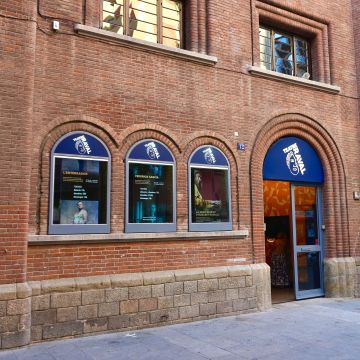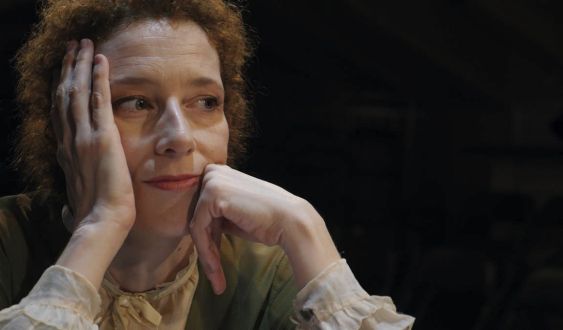
The Teatre del Raval hosts A Room of One's Own, Virginia Woolf's text that actress Clara Sanchis and playwright and director María Ruiz adapted a decade ago. But the relevance of the text continues to be of radical importance today because, although many women work and have a certain independence, wage gaps, inequalities in accessing power, and systematic violence against women still exist (in fact, so far in 2026, 38 sexist murders have already been recorded in the country, according to updated data from the Ministry of Equality).
Thus, although Woolf's discourse might seem outdated or old-fashioned, it is not at all. What the author presents to us is a truth that continues to beat in our society, and that is that women do not enjoy the same opportunities or rights as men. And, if anyone still doubts it, one only needs to take a look at the leaders who control the world order and, then, we will see what reality we face. Furthermore, today, with the social media movement of stay-at-home women (known as tradwives), the submissive role of women, relegated to household chores and family care, is once again being fought for.
Therefore, yes: A Room of One's Own is a text that continues to resonate strongly, that continues to stir us inside, and that continues to fight for a more just and egalitarian society between men and women. And Woolf's message, her analysis of society, her irony, and her pain have been perfectly reflected in the adaptation that can now be seen at the Teatre del Raval.
An interpretation full of rhythm changes and irony
If you have ever tried to read A Room of One's Own, you will have encountered a dense and potentially overwhelming beginning. Especially because the author focuses on explaining in great detail how a dinner is experienced in an Oxbridge male school (an acronym that merges the names of Oxford and Cambridge universities) comparing it with the same type of dinner, but at Fernham, the female school.
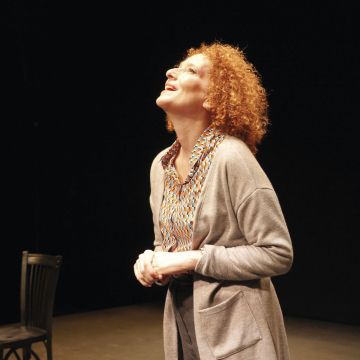
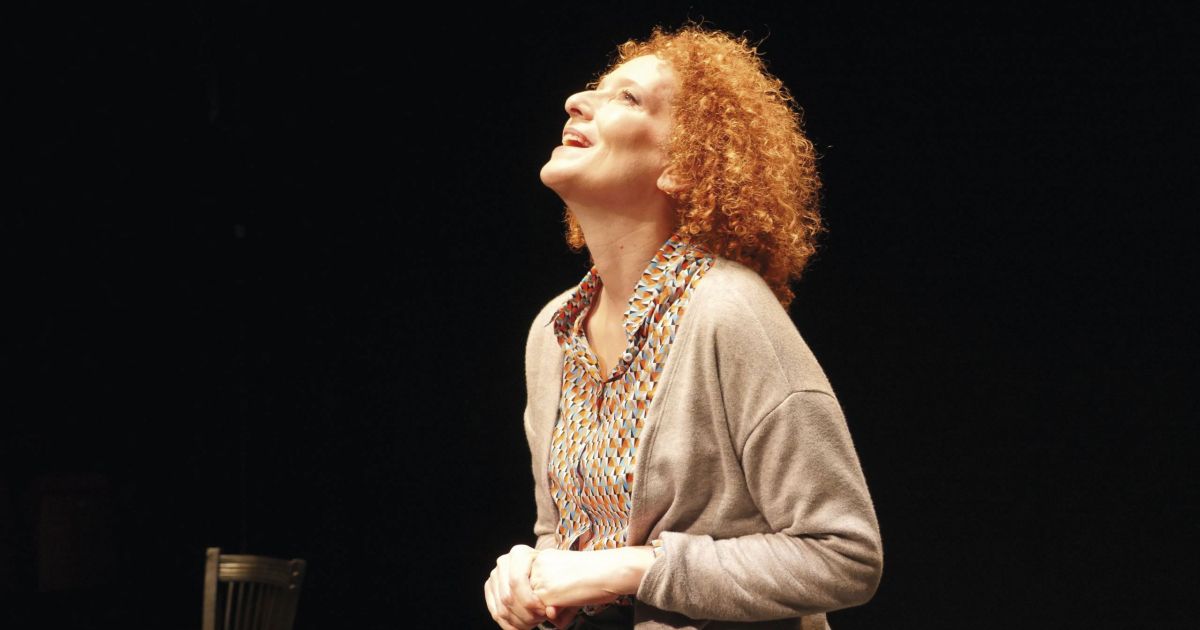
In María Ruiz's adaptation, this scene continues to appear because, as Clara Sanchis explained to us in the interview we did with her, they have completely respected the text; but the scene takes on such vitality and energy that it is impossible to look away from the stage. And this is thanks to Sanchis's interpretive talent who, with changes of rhythm, light movements, and an irony that stirs consciences, fully immerses us in the philosophical and reflective journey we are about to undertake.

From the small anecdote in the two fictional universities, we move to a broader and deeper analysis of power in the world and the absence of female figures in high spheres. For this reason, Woolf defends the need for women to have money; economy as a principle of independence in a capitalist society where you are worth what you have. With a humorous intervention, Sanchis recalls the author's words and encourages all women to have their economic independence to be freer, more self-sufficient, and owners of their decisions.
But, in addition to economy, a private and enclosed space is also necessary where one can have time to reflect, to stop doing tasks and more tasks, and to be aware of our presence in the world. This is when the term "a room of one's own" appears as a feminine refuge against a world that demands us to do, do, and do, so we don't even have time to think. "Let's think!", Woolf seems to shout at us, "let's think and enrich ourselves!", to be able to have economic freedom and freedom of thought.
Throughout the monologue, we find a wide variety of reflections that invite thought and observation of the current world. Because Woolf wrote this work in 1929, almost a century ago, and many of the ideas and proposals she puts forward continue to be just that, ideas that have remained in the world of ideas, without materializing. There are many phrases that catch the eye throughout the work; but there is one that, personally, stuck with me, and that is that to truly know the society we are facing, rather than doing a study on female emancipation, it would be more interesting to do one on the male reaction to this emancipation. The exact quote is the following:
«The history of male opposition to the emancipation of women is perhaps more revealing than the history of emancipation itself.»
Improvised live Bach music
María Ruiz wanted to take advantage of Clara Sanchis's musical talents and, for this reason, the play features live piano music that helps to settle the message and reflect on everything that has been said. The different acts of the proposal are enlivened by Sanchis's piano, who opted for Bach's music as an inspiring base. Because she doesn't limit herself to interpreting Bach's pieces, no: she improvises on the scores, so, every night, the soundtrack of this work is unique and different.

Bach's music is the perfect balm for our mind to rest, for Woolf's accumulated ideas to be internalized, and for the audience to breathe. The addition of music, besides giving an intimate and emotional touch to the proposal, also contributes to delineating the rhythm and preventing the result from being an accumulation of ideas and reflections. With music at hand, Woolf's text is digested much better, allowing us a moment of pause to savor it well.
With music at hand, Woolf's text is digested much better.
The closing of this fictional conference is encouraging and stimulating: we continue fighting to build a world in which women are increasingly present, in which we occupy spaces of power, in which we have our own wealth, rooms, and voice. A world in which Shakespeare's sisters do not have to end up buried under the crossroads of any city and can go on stage, launch their ideas, and be globally recognized.
Together we are stronger, Virginia Woolf of the early 20th century seems to tell us. Well, you were right, Virginia: together we are stronger.
Add The New Barcelona Post as your preferred Google source for free
Stay informed with the latest news.