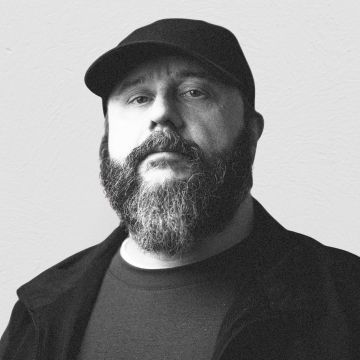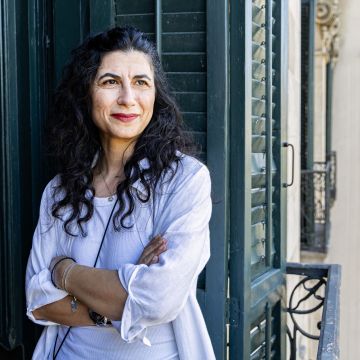
The classic by Oscar Wilde arrives on Barcelona stages thanks to an immense Àngels Gonyalons whotakes on every major role of The Picture of Dorian Gray. Marc Rosich, director and playwright of the piece, has reimagined the novel in his own theatrical language: text and music to create a chamber piece that overflows with beauty, poetry, and depravity.
Because that is Wilde's literature. An author who captivated readers of the 19th century for the beauty of his phrases, for the intensity of his stories, and for the ferocity of his message.A dark, visceral and hauntingly beautiful style that Rosich has managed to transfer to the stage with a delicate staging that moves and thrills in equal measure.
Music, text, and choreographies to delve into the darkness of Dorian Gray
The Picture of Dorian Gray is not a musical, but neither is it a text-based play: this is neither a conventional musical nor a straight play where the narration of the story merges with songs, with music, and with simple but impactful choreographies. This fusion of genres unfolds in a very natural and organic way; the text perfectly complements the composition designed by Jordi Cornudella to ensure that Wilde's macabre story becomes a beautiful, intense, and poetic piece.

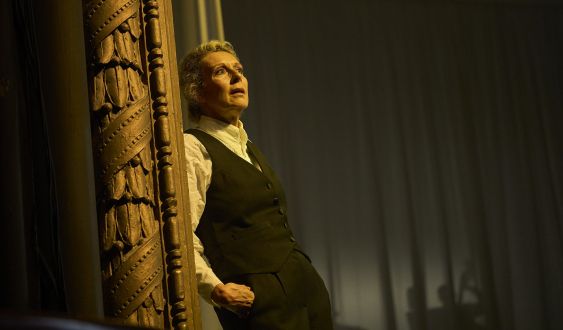
Àngels Gonyalons is in charge of guiding us into the depths of Dorian Gray's soul. And, for this, she interprets all the most prominent characters of the work such as Dorian himself, the painter Basil, the depraved Lord Henry, and the enamored Sibyl Vane. But Rosich has included a new character, Oscar Wilde himself, who is in charge of narrating the story and welcoming us with the prologue he wrote for the second edition of the novel, a prologue where he responded to the criticism received for the lack of morality of his work and in which he proclaimed his artistic aesthetic: art for art's sake.
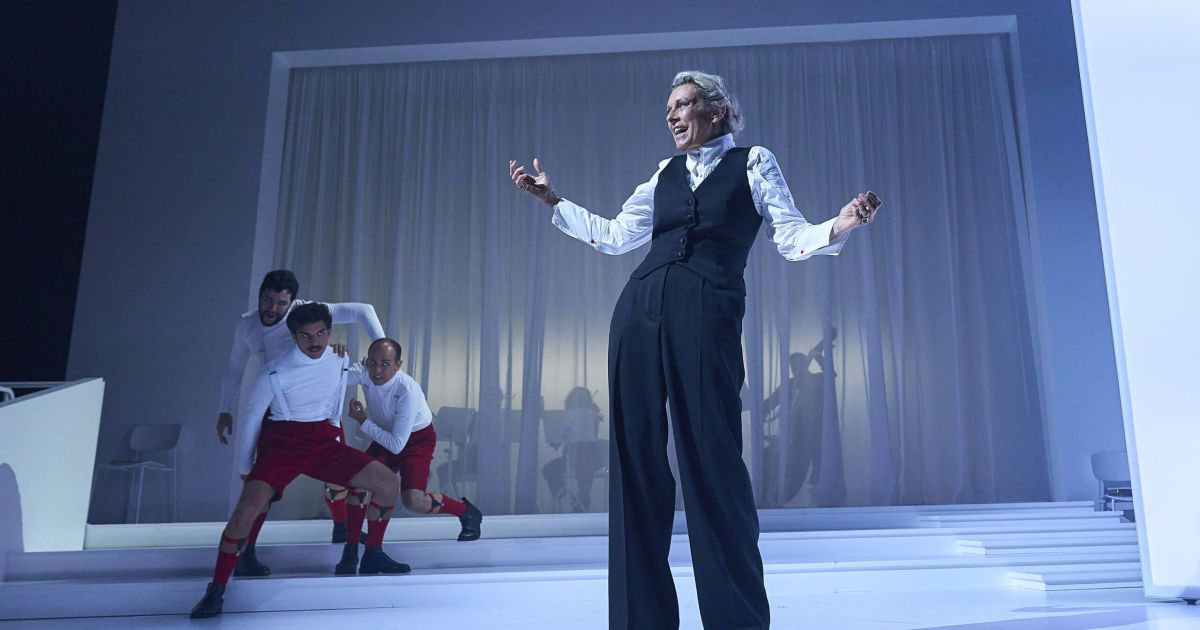
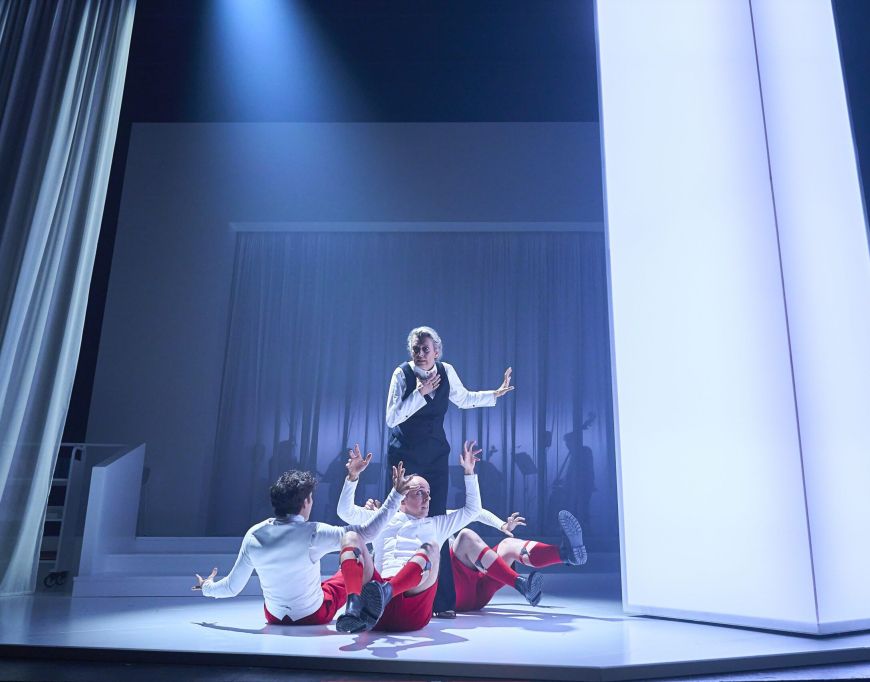
The set design reflects Wilde's philosophy and, instead of recreating Dorian's mansion, Sebastià Brosa has opted to place us in a museum. White walls, white floor, a clean space and a large monolith, also white, where Dorian's portrait is "exposed". But, in reality, the monolith is empty: the audience is left to imagine this painting with their own imagination. Rosich deliberately leaves space for the audience's imagination instead of spelling everything out, he wanted to encourage the audience to recreate the depravity and wear and tear of Dorian's painting.
Daring to be oneself in a world full of influencers
One of the big themes that is most repeated on stage is the need to find our authentic essence. In the 19th century, social influence already played a defining role, especially related to people's status or social class. In this play, it is Lord Henry, an English nobleman, who exerts a great influence on the young Dorian who, from the first moment they meet, is amazed by his attitude, his demeanor and that enigmatic and captivating air he exudes (and which Gonyalons interprets brilliantly).
If we let ourselves be influenced by someone, we lose part of our essence: we stop being ourselves to be the shadow of another, to repeat the ideas of another, to speak with the voice of another. Our "self" blurs and we begin to be a false copy of another person. And this can lead us astray, as happens to Dorian. This theme seemed particularly interesting to highlight in the Romea's proposal because, today, we are surrounded by influencers who tell us how to dress, what to eat, where to go, what to see, what to think and, in short, how to live.
If we all start replicating the same patterns, in the end we will stop being unique and special beings, to all be copies of the same. And in 21st century theater, launching this message by recovering a 19th century work seems to me a very subtle way of defending the need for originality, authenticity and individuality of people.
A delicate staging full of beauty
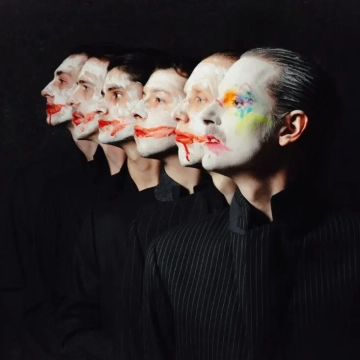
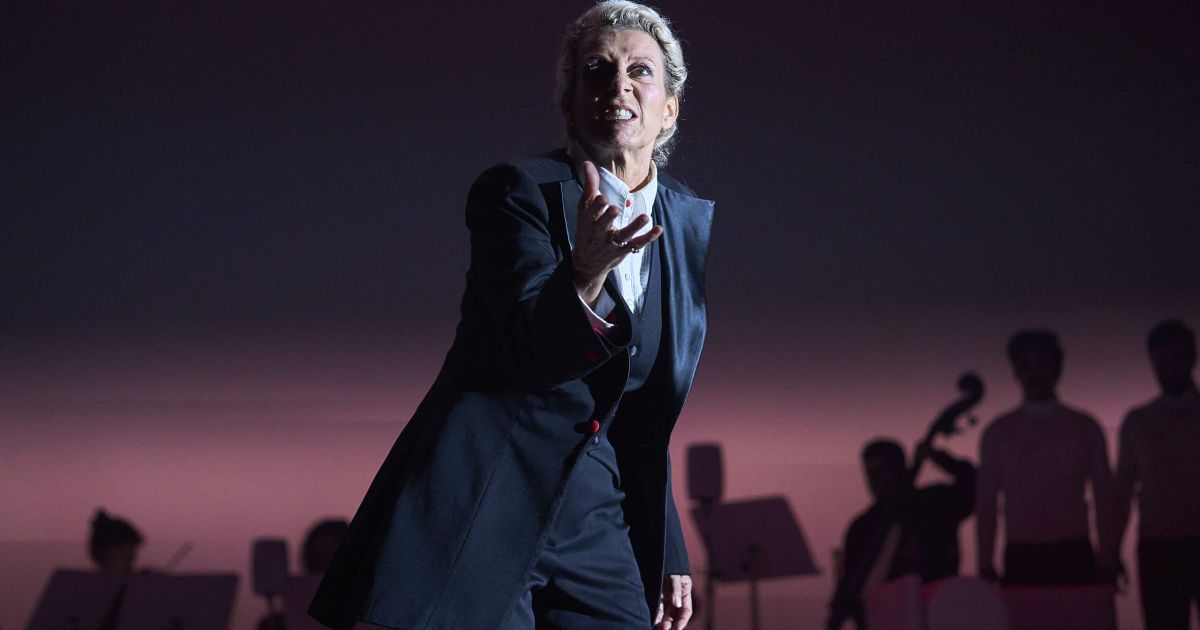
The live music performed by the orchestra, the white tone of the stage, the costumes of the characters, and the stage choreography make the work very beautiful. Every detail feels meticulously considered: the movements through space, the interaction with the chorus interpreted by Jordi Vidal, Pau Oliver, and Pol Blancafort, the songs, and the energy of the performance. The result is a neat and very elegant proposal.
There is one scene that deserves special mention for the intensity and restraint it shows: the scene where it is detailed how Henry manipulates Dorian. To reflect the strings that the Lord uses on the young man, the orchestra's violinist confronts Henry himself and, between the two, they lay bare the mechanics of manipulation. It is a duet with music and song that equates the human soul to the melody of a violin that the musician can manipulate at will. A scene that thrills and creating one of the production's most magnetic moments.

The magnetism of Gonyalons and the comedy of the chorus
Àngels Gonyalons once again demonstrates her remarkable range and that, whether she has to embody a humble painter, a pedantic Lord, or a depraved young man: through subtle physical shifts, subtle changes in tone, we know at all times who we have in front of us. In addition, the musical moments are very organic, they manage to advance the narrative, and the more sordid scenes with very good taste. In fact, the entire descent into hell, into Dorian's depravity, is designed in a very subtle way: we understand the type of pleasure he seeks, the moral wear and tear the character is experiencing, but without going into gruesome details or overly explicit scenes.
Although the weight of the work falls mostly on Gonyalons, the actress is not alone. On stage are the three men of the chorus who bring dynamism to the piece, comedy, and accompany Àngels, making her shine even more. It is true that some of the choreography lacks precision (because they are not dancers and this makes some movements closer to dance occasionally feel awkward and a bit clumsy on stage), but, as a whole, the chorus works very well sharing the spotlight with Gonyalons and gives it a humorous and more relaxed touch.
The inner monster
Another of the most interesting points raised in The Picture of Dorian Gray is the mention of our inner monster, that darkness that lives within us, which we fear and desire in equal measure. Lord Henry, a textbook hedonist, encourages Dorian to dare to face the monster within, not to fear it, not to be ashamed of it. The monster is here and, ignoring it, would be like being dishonest with oneself.
In this sense, we find another of the most delicate and powerful scenes of the production: when Dorian looks at himself in the mirror and looks at his portrait at the same time. A scene that takes place with a play of shadows and where the protagonist, unleashed by his depravity, revels in his darkness. He does not fear it, it does not scare him, quite the opposite: he likes to see how he has overcome the passage of time, how his beauty remains intact, while the painting is in charge of deteriorating and sinking into the deepest ugliness. An ugliness that has a double meaning: that of the passage of time, but, above all, that of the depravity of the soul.
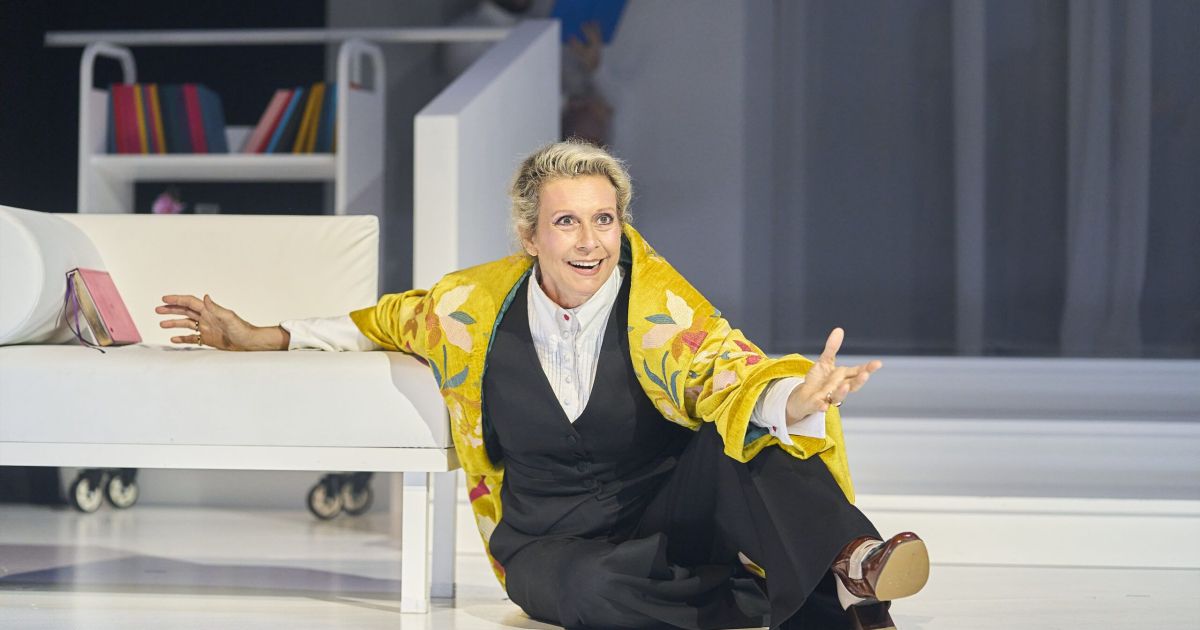
The Picture of Dorian Gray by Marc Rosich is poetry made theatre. Beauty, music and monsters coexist on stage to revive this classic and make the audience go home with a question: "What would my portrait be like?". The audience at Teatre Romea ended up standing, applauding and cheering this proposal which, without a doubt, is one of the highlights of the theatrical season of Grec 2026.
Add The New Barcelona Post as your preferred Google source for free
Stay informed with the latest news.