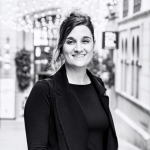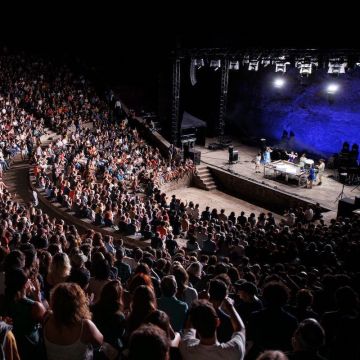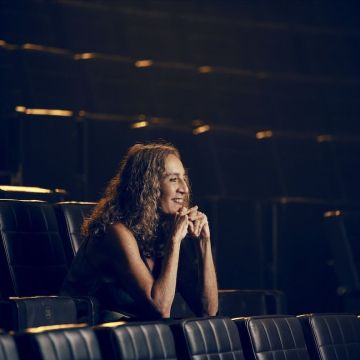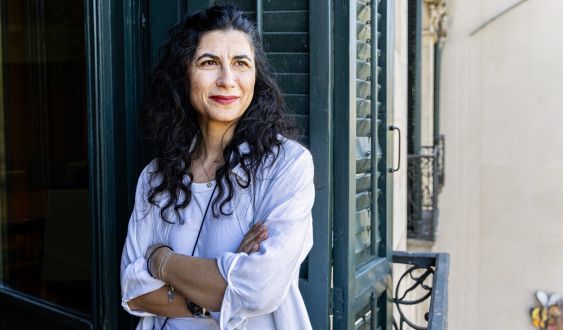
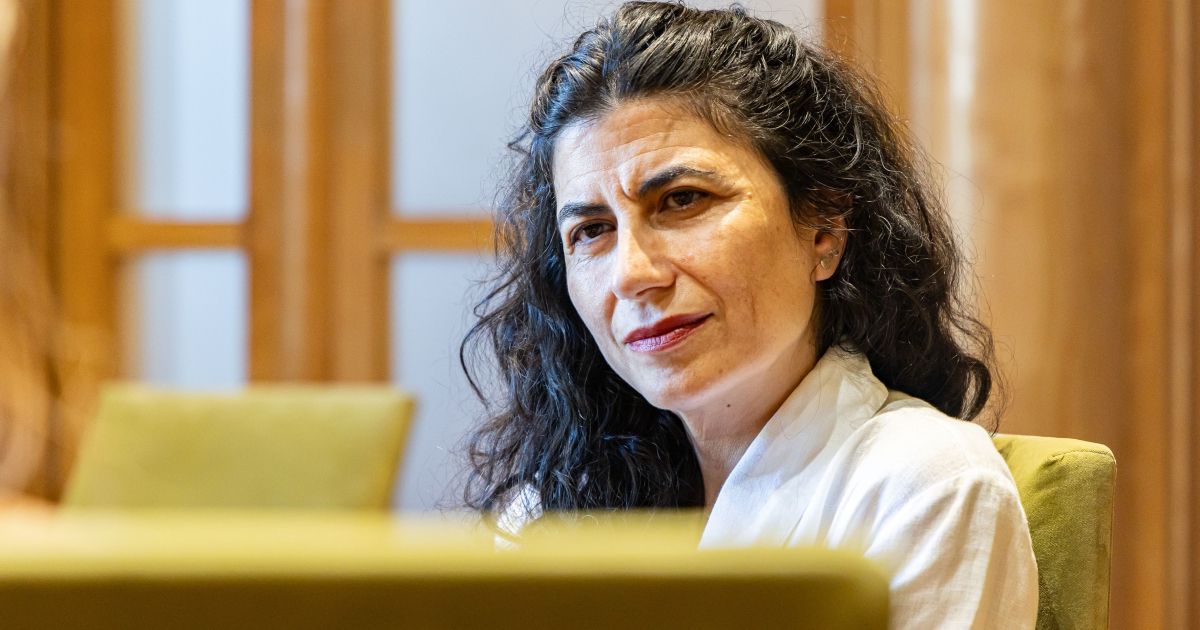
Leticia Martín Ruiz is a clear example of how office management and a passion for culture can feed each other without losing rigor. Art historian, musicologist, former production director of the Gran Teatre del Liceu and former music critic, Martín Ruiz faces the major challenge this summer of leading the 50th edition of the Grec Festival de Barcelona as artistic and management director; an unprecedented dual leadership in the festival's fifty years.
We spoke with her to learn the details of a festival that avoids political labels to focus on what really matters: caring for its community and moving today's Barcelona.
— You are an art historian, musicologist, manager, you have worked at the SGAE Foundation, at the Teatros del Canal and you have practiced music criticism. Which of all the "Leticia" in your resume weighed most when designing this 50th anniversary?
— I believe that, over time, the "Leticia" accumulate; there isn't one that trumps the other. It is true that there is a musical background, but I also had a very small theater production company. For this anniversary, the fundamental vision has been to understand that the festival is much more than a public entity: it is an event that has all kinds of connections with the public, with institutions, and with the city. One facet has not weighed more than the other.
— The Grec was born in 1976, at a time of rebellion, collectivity, and dreams. Looking at the international panorama of this 2026, which you yourself have defined as one of the most complex in recent times, do you think that current culture has lost some of that rage or does the Grec continue to be a space of political resistance?
— One must take a stand, one must have that energy and one must think in the same terms as in 1796. What I am clear about is that we cannot be indifferent. Both the programming and the attitude as a festival, and also as a person, must respond to that. It is important to remember that having an opinion, expressing it, and defending it is part of the obligations of both the programmer and the creator. And the Grec allows all this to happen: it opens the space for many creators, with different languages and from different positions, to speak and put various opinions on the table.
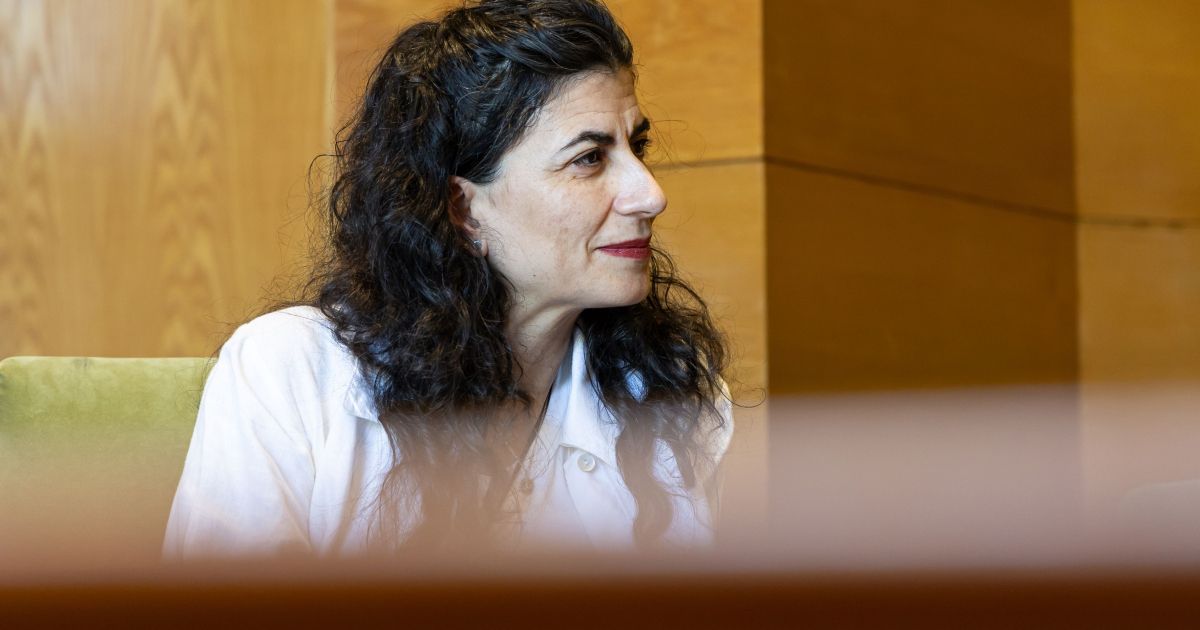
— Throughout these fifty years, the festival has run parallel to the transformations of Barcelona itself: from the Transition to the Olympic opening, and now to a hyperconnected and globalized city. How does this year's program act as a mirror of today's Barcelona?
— When you look at the program, you see that there are some issues that are truly very contemporary. On the one hand, there is identity, whether gender or race, which is very present in many of the creations. On the other hand, the world we will leave to our children or the world we will leave to the future: ecological issues, but also political ones, are present. And there is also reflection on these last few years, on the Transition or on different political moments in history.
Being a festival means having this variety of nationalities, of female, male, queer presence, of different racialities... we have Africa, we have Asia... And this offers a fairly global vision of the complete world. And of Barcelona too, because Barcelona is a very avant-garde city and there are many local artists who present their new projects at the festival.
— This year there is a large presence of free proposals in the program, starting with the concert at the Sagrada Familia and followed by interventions in museums or in La Model. What strategic line is behind this commitment to gratuity at the time of the 50th-anniversary celebration?
— There are no more free shows than in other years. The Creació i Museus, cycle, which is this initiative of activities we have with the creation factories and with the city's museums, is already ten or eleven years old and has always been free. The case of the concert at the Sagrada Familia is more in line with what I said from the first moment: I liked to think that, at least, an important proposal of the festival would be outside Montjuïc and would be free. It is a pleasure to be able to count on the collaboration of the Sagrada Familia, as it is the first time we have worked with them.
But I want to clarify that I am not particularly a believer that culture should be free. I believe that what is really important is that it be accessible, and the prices of the Grec are very much so. We are very aware that we are a public festival; that is why prices are very low and there are many types of discounts for young people, libraries, seniors, or different groups. Gratuity is not necessarily a good option.
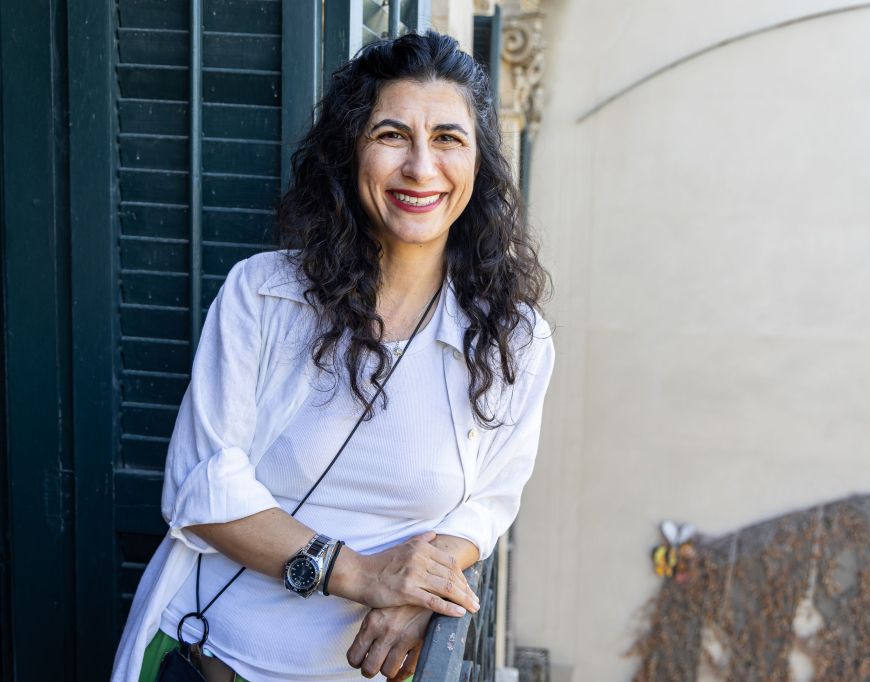
— Starting the festival with The Threepenny Opera, a work that throws out phrases like "what is worse, robbing a bank or founding one?", is very forceful. Why did you choose precisely this musical comedy to open the festival?
— First, for having the possibility of making a large, local production in collaboration with the Teatre Lliure. I was clear from the first moment that I wanted the inauguration to be a co-production with them, because both institutions are celebrating 50 years, because the relationship with the Lliure is fantastic, and because both Julio (Manrique) and I wanted to do a project together.
The truth is, when Marta Pazos's project for The Threepenny Opera landed on the table, it seemed perfect. It's a work that has been present in both the Lliure and the Grec. Furthermore, Marta, although not from Barcelona, is very connected to the city because she studied there; she is a new creator, a woman with her own voice. And, at the same time, the show recovers the spirit of years ago because there will be live music. And I believe that Brecht's tone, unfortunately, is always in fashion: this critique of capitalist society, too selfish or too focused on looking at its own navel without thinking about others, remains totally current.
— To document the Grec's anniversary, you commissioned four short films from directors of different generations and perspectives: Sílvia Munt, Núria Giménez Lorang, Jaume Claret, and Marc Salicru. What were you looking for with this cinematic mix?
— We are a festival of performing arts and music, languages that are characterized by the fact that either you are there at the moment the act happens or you miss it; they are ephemeral. What I didn't want was to make the typical anniversary book full of photos. I believe that current audiovisual language connects us much more with contemporaneity. Thinking about making author documentaries, and not just a compilation of news or archive images, meant giving creatives the opportunity to make their proposal. In this way, pieces will be created that will have a life of their own: in ten, fifteen, or twenty years, when someone sees them, they will immediately revive the memory of the Grec's 50th anniversary. And we wanted precisely that: to create an enduring document.
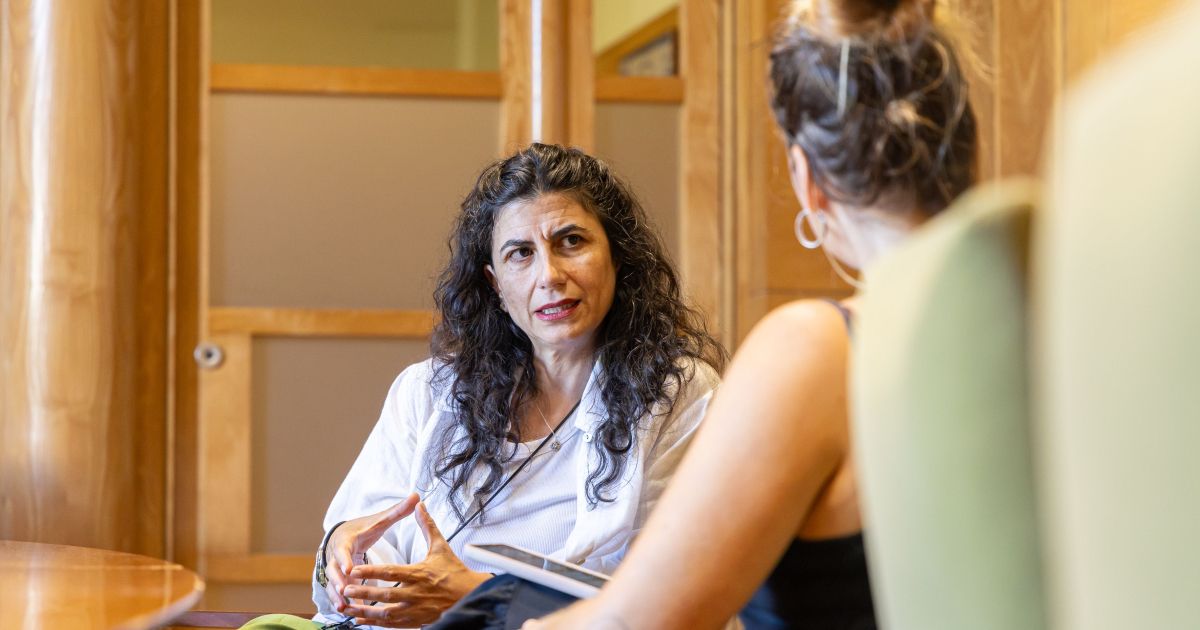
— There will also be a historical mirror from the hand of critic Juan Carlos Olivares to revisit key moments of previous editions. If you could travel back in time to a single night of these fifty years of the festival, which one would you have liked to witness live and why?
— I'll tell you three! The first, without a doubt, would be the opening night of 1976, promoted by the Assembly of Actors and Directors; all the movement generated that summer must have been very exciting. Then, I would have liked to experience one of Maria del Mar Bonet's concerts in Plaça del Rei, which I think is another very representative image of the Grec. And, finally... I don't know, maybe Romeo Castellucci's l'Inferno at the Teatre Grec, or the first time the Complicité company came, or the shows by choreographer Anne Teresa De Keersmaeker... There have been great productions. But if I had to choose just one, it would be the first night of 1976: I would love to be able to peek through the keyhole for a while to see how all this began.
— The international lineup for this 50th anniversary brings together undisputed figures of the contemporary scene. How is the Grec currently positioned and related to the major European summer festivals, such as Avignon or Edinburgh?
— We look at each other face to face and share many artists, but we don't have the same budget. When I took the reins of the festival, it already enjoyed very good international relations. Now we are at a point where, both due to the strength of some Catalan artists and those from the rest of the State, we can look outwards with our heads held high: we have raw material that travels all over the world, just as we have the privilege of receiving international creators who have the express desire to come to Barcelona. If we compare ourselves as festivals, perhaps we would be like the little brother, but the entire network of international summer festivals is in constant contact. We are living a very beautiful moment.
— Your artistic project emphasizes finding new audiences and formulas. When you talk about opening the festival to new perspectives, what kind of profile are you thinking of and through what lines will you seek them out?
— Realistically, the issue of new audiences is the great dream of any manager, but as you work, you realize that, above all, you have to take care of the audience we already have. That's why, last year, I emphasized that the first dream to fulfill was to get people who see one show to decide to go to two the following year. To find a way for someone who comes to the Grec attracted by the concert of a musician they really like, suddenly, also wants to discover a theater proposal. That would be fantastic.
Then, through alliances with other institutions (such as museums or foundations), we seek to connect the audience of visual arts or museums with that of performing arts; that is, to reach people who already have a basic curiosity. And finally, with the occupation of public spaces, my goal is to awaken everyone's curiosity, to grow the desire to be there and to live an experience different from the everyday. It is true that we are not a massive festival, of thousands and thousands of people, but I believe that these live art experiences, where you have the artist so close, offer a very special memory to people.
— The 50th anniversary of the Grec coincides with the centenary of Antoni Gaudí's death and the completion of the construction of the Jesus Tower. How did the idea of creating this unprecedented alliance with the Sagrada Familia come about?
— The fact that the centenary of Gaudí's death coincided with our 50th anniversary, added to this idea of reaching places in the city where we had never been as a festival, opened up the possibility of proposing a concert. We started talking with the Sagrada Familia officials to understand how to approach it if we wanted to collaborate. From the basilica, they asked us not to have a specific concert by a specific artist, because they do not consider their function to be to give an individual platform, but rather to propose a concert-event; a proposal that spoke of something that could be related to the space itself.
It is also true that it was mandatory for a part of the program to be sacred or liturgical music. That's why we worked on a curation hand in hand with Josep Prats, director of Espurnes Barroques, who made a first conceptual drawing: he spoke of the tower as a tree, of light playing with the symbol of clarity entering through the windows, and drew parallels between the Sagrada Familia, Montjuïc, Montserrat, and the materials of nature. From here, we began to think about a repertoire with this sacred content with Cor Cererols, and we added Maria Arnal and Lídia Pujol as representatives of today's music, with an absolutely secular spirit but very respectful of the rest of the space. Finding this balance in the program is what generated mutual trust and made the concert possible.
— It's a great highlight for the festival, especially at this precise moment in 2026 when the Sagrada Familia is in the spotlight worldwide with the inauguration of the tower and the consecration of the temple.
— Yes, everything that is happening around the temple is amazing, but I want to specify that ours will be a concert in a small format. Cor Cererols will have about twenty members, and then there will be Maria Arnal with a couple of musicians and Lídia Pujol with a couple more musicians. It will be a proposal of an hour or an hour and ten of continuous music where the performers will be entering and exiting. Something small. But the emotion of being inside the Sagrada Familia listening to this music will be very great.
— Let's move on to another proposal. The show ASIA – Heavy-Metal at La Modelo and MACBA revives a clandestine action by Carles Santos and Pere Portabella. What is Grec looking for by focusing precisely on this link between artistic avant-garde and political resistance from our recent past?
— Consciously or unconsciously, we have found that many of this summer's proposals were linked to this period of the Transition, moments when artists had a clearly pre-reivindicative voice. This project by violinist ASIA at La Modelo is a co-production with MACBA, which is also celebrating its 30th anniversary. That's why we united the two spaces: at La Modelo we will have this performative action by ASIA and in the MACBA chapel we will have Los Volubles with their project Democracia Total.
It is natural for artists of younger generations to be interested in what happened in the world during those years. Especially because, quite sadly, we are at a time when democracy is in crisis and authoritarian governments are sprouting everywhere. Remembering that we have already gone through complicated times helps us.
— The concept of "historical memory," then, becomes key again.
— The concept of "historical memory" seems to me to be too politically charged; it is an expression I do not like to use. I consciously shy away from certain words because I believe they are trapped by a political line or are very connoted. And this is not our intention. We do not want to connote anything under a specific spirit beyond the pure vindication of freedom, of struggle, and of the right to have one's own voice.
— In this year's program, local creators such as Llàtzer Garcia, Núria Guiu, and Lorena Nogal share the bill with big international names. To what extent does the Grec serve to allow our artistic fabric to dialogue and project itself abroad?
— It is one of its main functions. The Grec, as I understand it, unfolds into at least three branches. On the one hand, the international one, which gives the Barcelona public the possibility of seeing programs that would otherwise not come to the city. On the other hand, support for local creators: thanks to this international environment, we help them make the leap and reach other places, either through co-production or by acting as a loudspeaker and exchanging information with programmers from all over. And the third branch would be the creation of an institutional collaboration network, both local and national and international. It is a primary obligation of the festival to connect local talent with the international scene.
— La Perla 29 premieres L'Albada at the Biblioteca de Catalunya, a text by Jaume Viñas directed by Oriol Broggi, featuring a cast of eleven young performers. How do you value the fact that reference companies take advantage of the Grec's complicity to open spaces for new generations of actors and actresses?
— When we started talking with Oriol Broggi about what we would do this year, this project seemed the most appropriate. First, because it is the text of a young creator who is inspired precisely by the scenic universe of La Perla 29; Jaume Viñas explains that his writing is born from the impact of having seen productions of Sophocles' Greek tragedies, of Wajdi Mouawad's great texts, or of Broggi's own directions. On the other hand, the festival's umbrella offered the ideal framework to undertake a large-format gamble, with a very broad cast and without the need to resort to any excessively media-friendly face. It is a very conscious risk taken by La Perla 29 and the festival.
"Our main goal is to continue generating these new memories in the minds of those who visit us"
— And finally: when this summer passes, the lights of the Montjuïc Amphitheater go out, the madness of the 50th anniversary ends, and you sit on the sofa to rest... what would you like the press and the public to have said about your signature at the helm of the Grec?
— That everyone who passes through the Grec takes away a memory that lasts in their mind. That they have had the opportunity to approach a new reflection or, simply, to experience a great night of pleasure and enjoyment. In Barcelona, almost everyone has some personal anecdote or an emotional memory linked to a summer night at the festival; our main goal is to continue generating those new memories in the minds of those who visit us.
— This is how we end the conversation with Leticia Martín and we are already counting the days until Grec 2026 raises the curtain.
Add The New Barcelona Post as your preferred Google source for free
Stay informed with the latest news.