Albert Prat gets under the skin of the lawyer and narrator of Bartleby, the text that Melville wrote and which, to this day, continues to have multiple interpretations among literary circles. Is it a critique of capitalism? Is it a portrait of clinical depression? Is it a defense of solitude as a way to achieve freedom? Perhaps it is all of this or, perhaps, it is none of this. Bartleby has this magic: it is the audience who gives it its own meaning.
In the adaptation we now see at the Sala Atrium, carried out by Llàtzer Garcia, we see absolute respect for the text and, therefore, for its multiple readings. Prat is the sole protagonist of this show who, masterfully, stars in the descent into madness caused by an attitude of passive resistance. The phrase "I would prefer not to" unleashes in the lawyer a whole series of conflicting feelings that lead him from compassion, to disgust, to love and to hate.
Bartleby never appears on stage and, yet, his presence monopolizes everything. The only phrase we hear from his mouth is that of his preference, the preference not to act, inaction as a banner. But he communicates it in a peaceful way, without nervousness, without rebellion, nor signs of defiance of authority. And it is precisely this calm and composed attitude that makes the lawyer fall into a spiral of madness and loss of control.
Albert Prat shines on stage
This descent into hell is masterfully interpreted by Albert Prat who, at first, presents himself as a respected Wall Street lawyer who is growing and gaining more clients. To achieve this success, he needs to hire a new scrivener and it is here that the name of Bartleby first appears.
At all times, this character is explained from the lawyer's perspective, therefore, we do not truly know Bartleby, but his figure is totally colored by the impression he makes on the protagonist. This stylistic device of Melville is brilliant because, at all times, we cannot truly know Bartleby, we only know the footprint and the echo he produces in the lawyer.
And the lawyer despairs with this character. As soon as he utters his "I would prefer not to" line for the first time, his posture of seriousness, professionalism, and self-confidence begins to fade. "What do you mean 'I would prefer not to'?", "can you say that?", asks this lawyer who, for the first time, encounters an act of peaceful resistance to which he doesn't know how to respond.
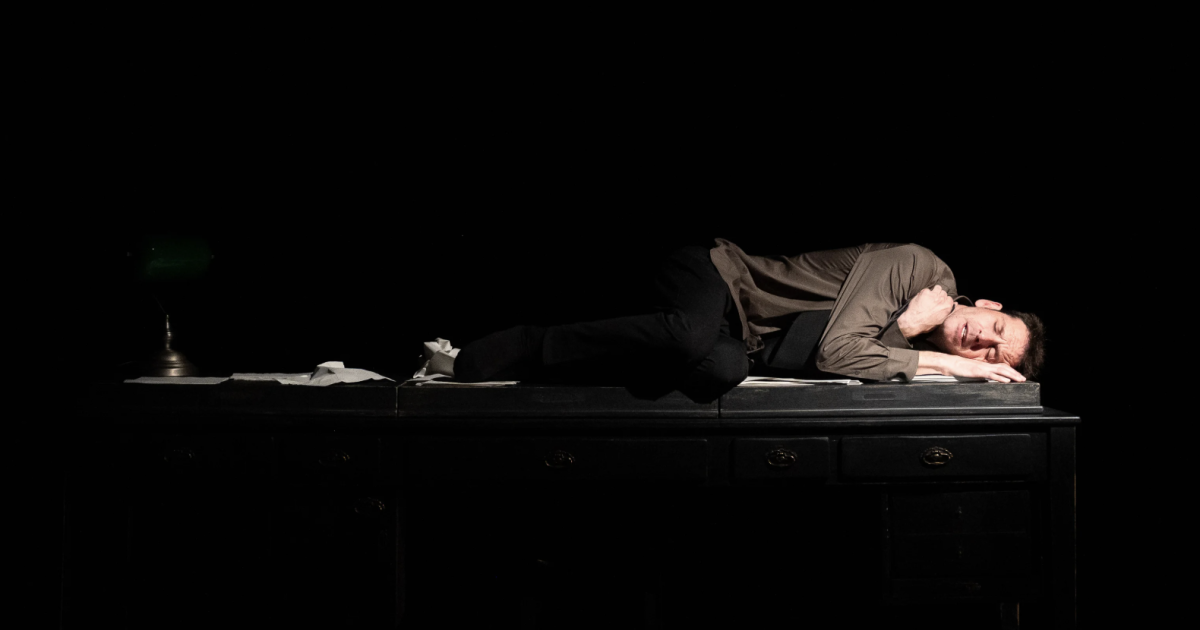
From this moment on, Albert Prat's character begins to transform before our astonished eyes and goes from being a respectable Wall Street lawyer to a pathetic, desperate being, totally overwhelmed by a simple phrase. As the play evolves, his stupefaction increases until, in the end, the lawyer ends up being as strange (or stranger) than Bartleby himself.
This transformation is hilarious. We see how the seriousness and respectability of this man begin to disappear and he becomes a being who crawls on the ground, who laughs hysterically and who moves between shock and anger.

Compassion as a reflection of humanity
But in Bartleby we also see that compassion guides the lawyer's decision-making. On the one hand, Bartleby's attitude seems incomprehensible and unacceptable to him; but, on the other hand, his tranquility, his solitude, and his silence cause him a certain compassion and make him reflect on inaction. Because Bartleby does absolutely nothing and, precisely from there, from this "not doing," all the conflict is generated.
This compassionate feeling is what makes the lawyer unable to get rid of or forget Bartleby. He worries about his destiny, about his future, he even pays money for him to eat well. Because, despite his social distancing, Bartleby is portrayed as a "rebel" who defies the norms of society. Against massive action, inaction as a response; against the fulfillment of duties; our preferences as a banner.
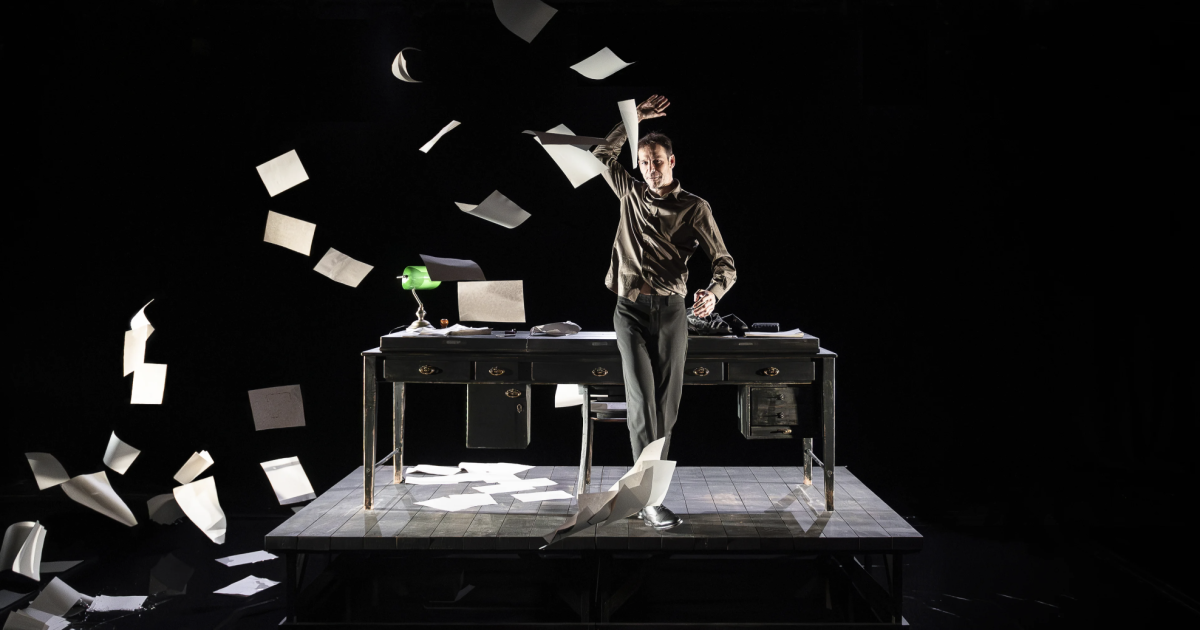
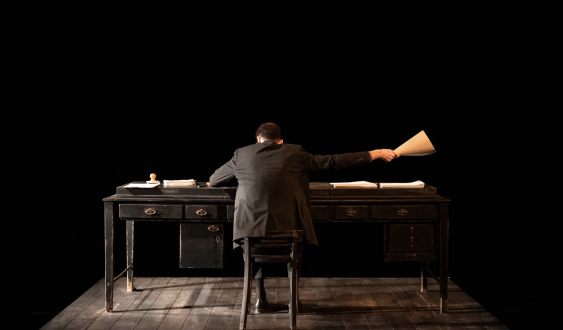
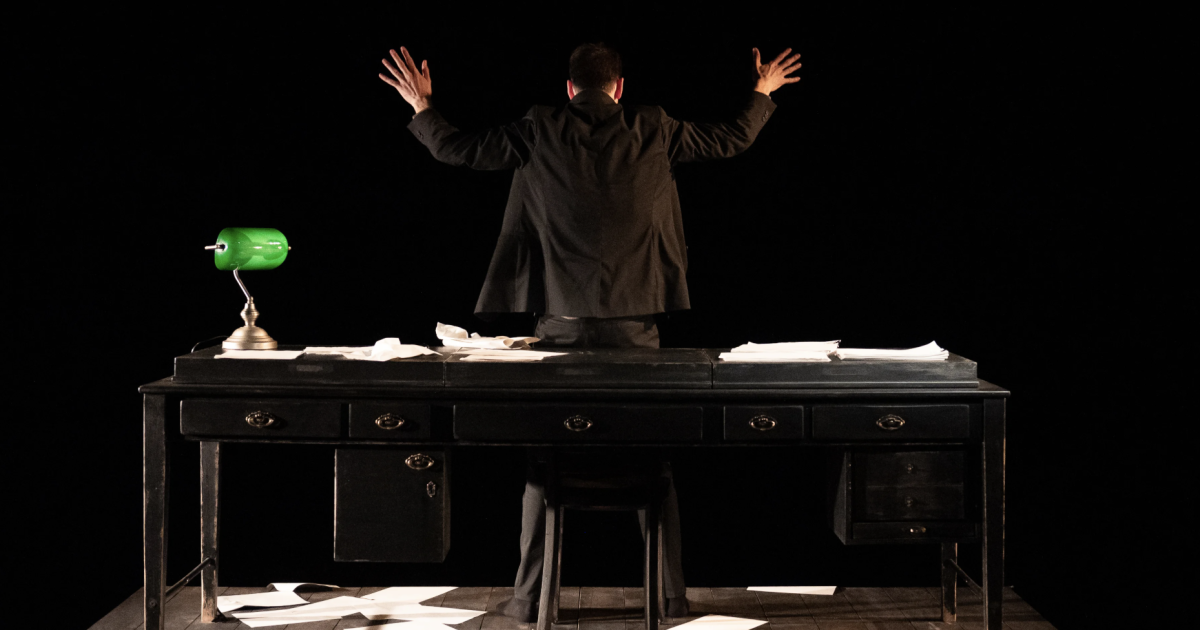
The staging of Bartleby at Sala Atrium is very well designed: a single element has been chosen (a large office desk) that very well reflects the power hierarchies in the office, the importance of work, and the wall that exists between the two main characters. In addition, the desk is located at the edge of the platform, which forces the lawyer to move very uncomfortably through this universe that, before, was his, and that now appears strange, small, and difficult to him.
Llàtzer Garcia has done a very clean job in adapting this Melville story. He has eliminated any distractions to focus on the narration and the interpretation. Pure, direct, unadorned theater that needs nothing else to shine on stage. Albert Prat portrays a lawyer who goes from professionalism to despair in such a visceral way that it is impossible not to laugh at his metamorphosis. He seems like another Kafka character: from person to beetle due to an unusual event that escapes his control.

The discussions about Bartleby
But what did Melville want to tell us with Bartleby? Since it was written in 1853, many interpretations have been made of the text. And everything has been said: that it is a defense of solitude as a superior state of consciousness (a theory that would point to the influence on Melville of the essays of the philosopher Ralph Waldo Emerson in his work The Transcendentalist); it has also been said that it is a parody of the labor reforms that took place in New York in 1850; that it is a reflection on the isolation and dehumanization that modern work produces in us; and even, it has been said that it is a reflection of a mental illness (specifically, clinical depression), as it is believed that Melville himself suffered from it during the writing of Moby Dick.
All these readings may or may not be true. What is clear is that the phrase "I would prefer not to" is perceived as a blow to the table, as an "Enough is enough" thrown at the productive society in which it seems that what you do is what defines you. And if you do nothing, are you nothing?
Bartleby may be the last free man, a character who doesn't have to do anything to be someone. And to be in all his essence. To observe the world, the clouds, to be still in a room and feel the weight of life. We will never know why Bartleby opts for inaction, much less why he "would prefer not to"; but what we do intuit is that, with this attitude, he stands before external orders and prioritizes his preferences. Because, at first they may only ask you to review a copy of a document, but if you accept that request, what could come next?
In life, the only possible success is that which is achieved personally, in solitude and without noise
The influence of Bartleby in history transcended the literary sphere: during the times of Occupy Wall Street, the philosopher Slavoj Žižek championed the phrase "I would prefer not to" as the motto of a movement led by professionals who, like the Melvillean character, protested by opting for inaction as the engine of their revolution.
From Bartleby, I take a more humanist reading: and that is that in life, the only possible success is that which is achieved personally, in solitude and without noise. Even if, from the outside, this victory can be read as a defeat. "Oh, humanity."
Add The New Barcelona Post as your preferred Google source for free
Stay informed with the latest news.