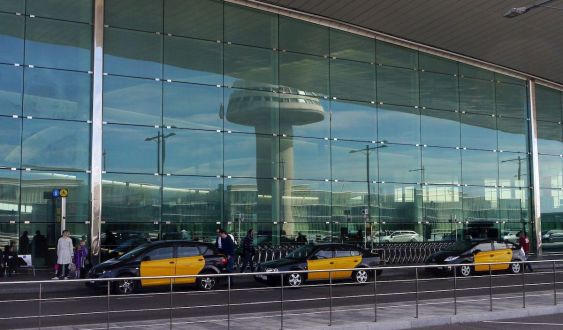
It has been a record year again. Josep Tarradellas Barcelona-El Prat Airport closed 2025 with 57.48 million passengers, 4.4% more than in 2024, once again reaching its annual historical maximum. Figures that confirm the strength of the infrastructure… and also show its limits.
Last year, 360,786 aircraft movements were operated, 3.7% more, and 200,741 tons of merchandise were transported, which represents a notable increase of 10.5%. Three indicators (passengers, operations, and cargo) that simultaneously break records and consolidate Barcelona as one of the major airports in Southern Europe.
To get a real idea of these magnitudes, a simple example is enough: distributed throughout the 365 days of the year, more than 157,000 people took off or landed every day at El Prat, on an average of almost one thousand daily flights.
Growth in off-peak hours
The above, however, is only an arithmetic average. Growth is no longer homogeneous. Awaiting a long-debated expansion, the increase in traffic is occurring mainly in the so-calledoff-peak hoursdays of lower demand and outside of the major seasonal peaks. That is, the airport grows where it still had operational margin, and it does so also thanks to a progressive desesonalization, a key trend to sustain growth without adding pressure during peak hours.December was a good example of this: 4.3 million passengers, 5.8% more than the same month of the previous year, setting a monthly record. International traffic continues to be the main driver. In 2025 as a whole, 43.25 million travelers flew on international routes (up 6.2%), while domestic traffic declined slightly, with 14.1 million passengers (down 0.6%). The train, and to a lesser extent, even some maritime connections, continue to gain ground on the plane on certain routes.
More flights, more cargo… and more added value
In operations, the airport also recorded its best historical year, with monthly peaks such as December, when nearly 28,000 flights were reached. But perhaps the most revealing data is that of the not-so-well-knownair cargo,a direct thermometer of the productive economy: more than 200,000 tons transported in 2025, with double-digit increases and an especially strong December (17.1% more).Barcelona-El Prat not only moves people; it also moves business, in the form of goods that fly in the hold, under the passenger seats, or in exclusively cargo planes.

Barcelona in the European context
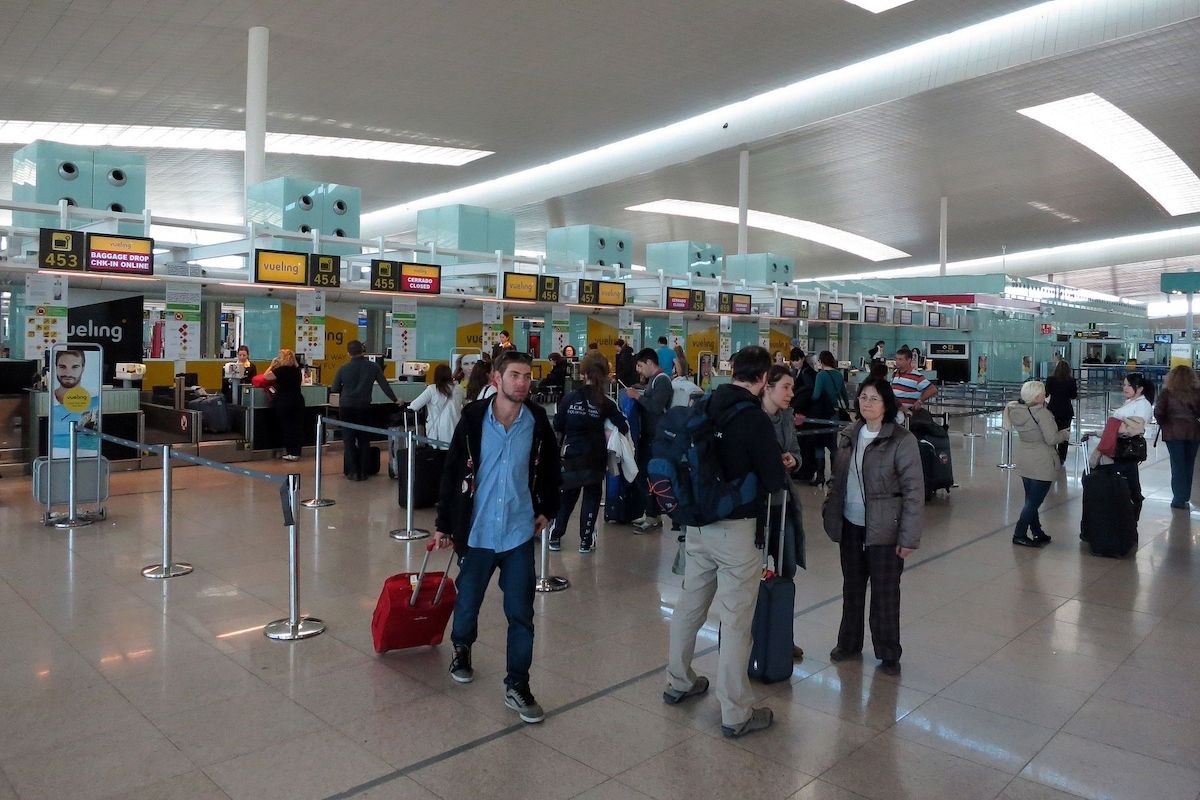
In therankingEuropean by volume of passengers, Barcelona maintains a solidseventh position. A stable position that reflects its maturity and a key particularity: 90% of its passengers are origin-destination. Unlike largehubsof connection like Istanbul, Paris, Madrid or Frankfurt, BCN remains, above all, an airport designed for traveling to and from the city and itshinterland. A particularly relevant fact if one takes into account that it remains in the European top 10 without a reference airline in the style of Turkish Airlines, Lufthansa, Air France or Iberia.This does not prevent connecting traffic from gaining weight, partly driven by airlines such as Vueling, which feed long-haul flights. In fact, if only origin-destination traffic is analyzed, Barcelona rises to fifth place in Europe, ahead of cities such as Madrid, Rome or Amsterdam. London continues to lead clearly, while Palma appears as the surprise in the top ten, reflecting the strong Balearic tourist pull.

The big leap: long-haul and less seasonality
The big strategic headline for 2025 is the intercontinental connectivity. By October, this traffic already represented 18.3% of the total, its historical maximum. For the 2025-2026 winter season, Barcelona offers 46 long-haul routes, one more than the previous year, with a total offer of 3.69 million seats, 21.9% more.The United States leads intercontinental capacity, followed by Morocco —although some of its destinations are closer to El Prat than certain European airports, they are still flights to another continent— and the United Arab Emirates. New additions to the already consolidated routes included Chicago and Dallas (American Airlines), Shanghai (China Eastern), Santa Cruz de la Sierra (Boliviana de Aviación), and new reinforcements to North Africa. Emirates and Level lead the long-haul seat offering from Barcelona.
This growth has a clear structural effect: it reduces seasonality. Between 2022 and 2025, all intercontinental regions have grown in both summer and winter, with Asia and North America leading the way. The result is a more stable airport, less dependent on the summer peak.
Looking to 2026 (and beyond)
The global context is favorable. After some difficult years, the global airline sector returned to profit in 2024, and forecasts for 2026 remain positive, especially in Europe, North America, and the Middle East. The arrival of new long-haul aircraft and, above all, the Airbus A321XLR, capable of covering routes of up to 8,700 kilometers with lower costs, opens new opportunities for Barcelona:direct connections with Canada, the east coast of the United States, Brazil, India or West Africa are no longer such distant scenarios. It's another thing for airlines to bet on them: in aviation, not everything is as simple as "I want to fly to/from Barcelona"; there are many variables to square.In summary, the 57.4 million passengers in 2025 consolidate Barcelona as a dynamic airport, increasingly intercontinental and less seasonal, with records in passengers, operations and cargo. The sky seems clear, but not without turbulence, both global and very local: without structural improvements, growth will remain selective. The Barcelona Air Traffic Observatory is optimistic, although that optimism must always be accompanied by realism. In aviation, as in the economy, the wind can change quickly and in recent months the geopolitical (and by rebound, economic) weathervanes have been surprising.
Add The New Barcelona Post as your preferred Google source for free
Stay informed with the latest news.