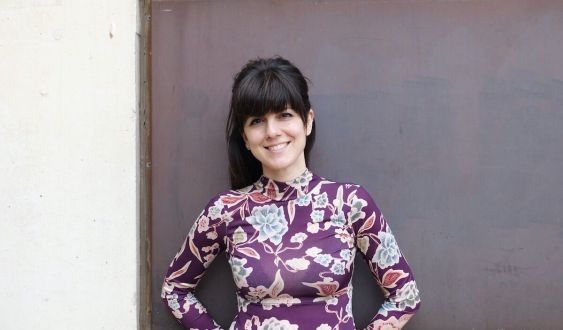
She has the humble appearance and conversation of geniuses, of those who do not go through life indifferently. She is 36 years old, was born in the Barcelona neighborhood of Maresme (wastelands that today make up Diagonal Mar), and has just received the National Music Award; she has also premiered an opera at the Teatro Real, at her age. Her mother says that when Raquel was born, a white owl got trapped in the plants on her balcony. The girl studied music at school and played a Casiotone, her "star toy," but she didn't know the piano until her music teacher opened a school in the neighborhood when she was 10. She played so much, she made time run so fast that, at 19, tendinitis in her fingers forced her to leave her higher studies with the instrument and, dejected, embrace composition.
Today, they celebrate it around the world: Raquel García-Tomás is nominated for the International Opera Awards 2020, which are yet to be decided, in the World Premier category for her unique composition Je suis Narcissiste. Winning these operatic Oscars would be entering heaven; being nominated is already touching it, with the same fingers.
[subscribe_newsletter_esp]
And to think that she felt it as a failure, composition! "I composed since I was little, I always had this creative urge; but when you want to pursue higher studies you have to decide on a specific discipline, and I chose the piano, because it fascinates me." But Raquel was very aware that she had started late to be a masterful concert pianist, so, guided by her tenacious spirit, she played and played and played, "and I put so much pressure on myself that I got injured, for fear of failure. I had left everything for the piano, even my Fine Arts studies, and I had started to play much better, to really enjoy it. But that tendinitis, that trigger finger, meant stopping playing, stopping being in shape. Of course I have assimilated it!, and observing it with the perspective of time, I think I had more possibilities in composition, which would be like the marathon for a runner compared to the 100-meter dash of the piano."
So, she turns 36 and they give her the National Music Award, isn't that extraordinary, at her age, barely 10 years since her graduation from the Escola Superior de Música de Catalunya? "Oh, I told them that, are you sure? Seriously? Am I not too young for this? Because it's true that in the composition category, older people are always awarded. I'm young but I've made good use of my time, I've worked a lot these years, much more than average, since I premiered my first composition in 2008, a string quartet, Canción al alba". Young to premiere Je suis Narcissiste at the Teatro Real in Madrid, 2018-19 season, and to bring a monodrama to the Liceu, Per precaució, premiered on November 15, in the context of six micro-operas produced by Òpera de Butxaca on its 25th anniversary under the title of Sis Solos Soles, but for now we will content ourselves with listening to it on the Youtube channel of the Barcelona venue, due to the pandemic.
Her monodrama addresses the tragedy of an elderly woman who does not want to be admitted to a nursing home because she still expects a lot from life, a subject chosen by playwright Victoria Szpunberg but which, if coincidence existed, is so close to Raquel; she who volunteered as a choral and animation teacher in two nursing homes when she felt most depressed in her life. "I was on a train, so so sad, when I met a friend who told me, would you like to volunteer in a nursing home to do choral singing with them? It was incredible, but I had to leave it because it was very demanding, I wasn't going to commit to doing it just any way." That's when the trigger finger, which threw her into the arms of composition, because she couldn't keep pounding, hammering black and white.
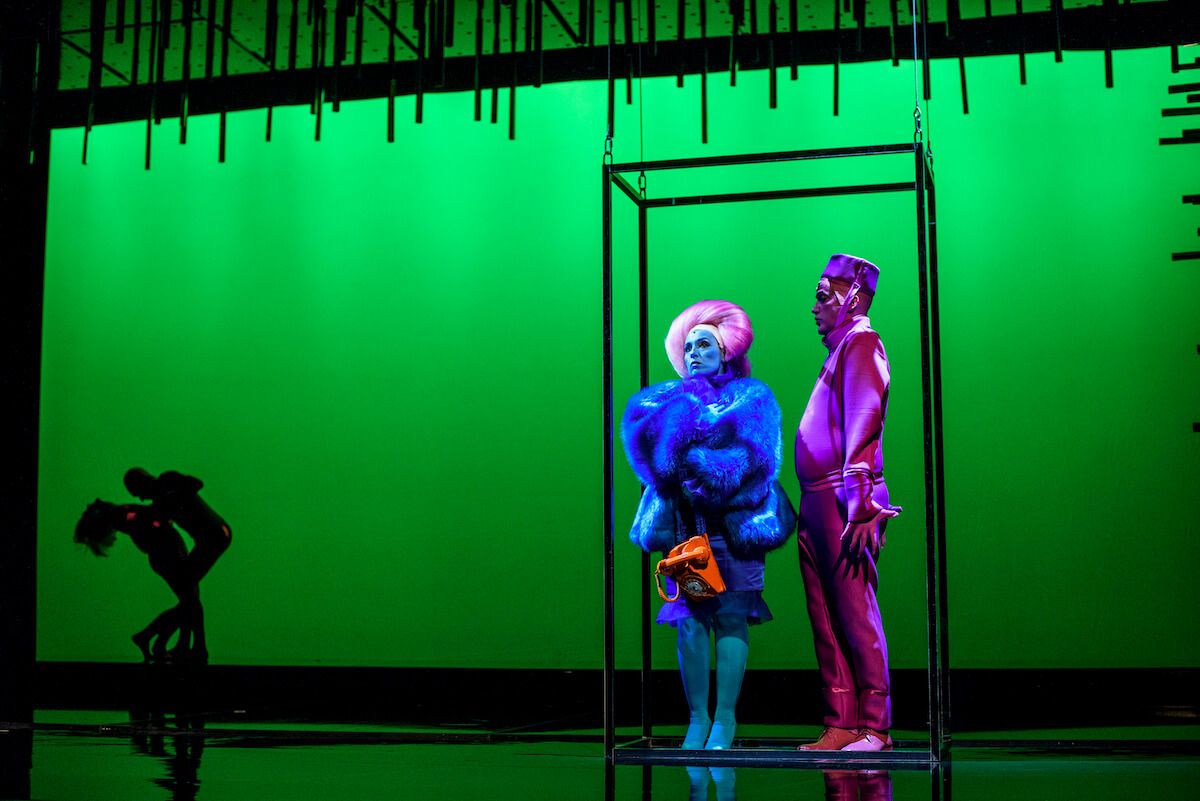
Feeling reality: is it a moral duty or the raison d'être of art? "For me, it is, to be in connection with reality, more or less abstract, even if it is musical reality: to approach the sounds that sound today, to collect the sound imaginary with or without social implications, to understand the moment in which I live. In disPLACE I addressed evictions and gentrification, and Je suis Narcissiste is a black comedy that portrays the egocentric individualism that isolates us without remedy. "I try to have faith in humanity, and I recognize that there are empathetic people, but we suffer a series of stimuli that enslave us, especially women. The code of social networks, for example, in which we do not show ourselves as we are but as we would like to be seen. I myself am capable of locking myself away to work and I love being alone, but human beings are designed for the tribe, we need community. We are narcissistic when we only talk about ourselves and idolize what we do, and this is today the generalized trend. I believe we should show ourselves more human and demystify the creator."
And speaking of questions, there's the quota one. How many times must she have been asked if she feels like an object of the female quota, on a poster, in an awards list, in the decision of a jury like this one for the National Prize? So many that it causes unease to even utter the word, quota, without further ado. "If you call me because I'm a woman, better hang up," is her answer. Direct, without hesitation. "It's true that there are occasions when they commission you because you're a woman, for percentage reasons, which must exist, they are logical; but it seems to me something very perverse that only perpetuates paternalistic behaviors. So my answer is: look at my catalog and, if you like it, call me as a creator; but change your discourse. I prefer to think that although I work a lot, there are many other women who don't have visibility, and that my contribution at least balances the distribution, but to think that they call me because I'm a woman, that they give it to me? No, never. Before quotas were even considered, my career was already going well, I worked a lot, but it's something I have to remind myself of constantly so as not to doubt. I don't want to feel guilty if one day I am favored for being a woman."
Woman or not, Raquel García-Tomás, who was born in a peripheral neighborhood, with no musical background in her family, with a doctorate from the Royal College of Music in London, prefers to attribute her destiny to the power of hard work; "I work a lot," she says constantly, and begins to talk about her next opera, Alexina B., created thanks to a Leonard scholarship based on the story of Herculine Barbin, the first intersex person known, France, mid-19th century, through her memoirs that Michel Foucault brought to light in 1985. She is currently working on it.
Add The New Barcelona Post as your preferred Google source for free
Stay informed with the latest news.