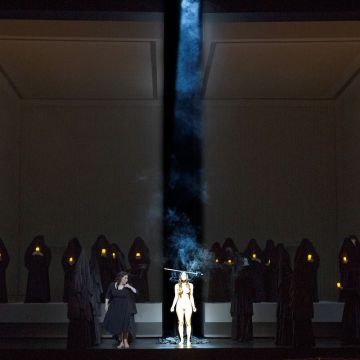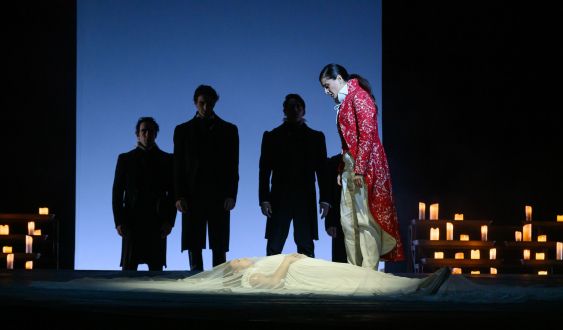
The Gran Teatre del Liceu is preparing to host the debut of mezzo-soprano Raffaella Lupinacci, who takes on one of bel canto's most demanding challenges: bringing Romeo to life in I Capuleti e i Montecchi. A complex character, caught between the determination of a military leader seeking peace and the sharp pain of a lover condemned to tragedy. Those who remember the production premiered in Liege two years ago will recognize a somber atmosphere, where death and violence permeate the scene even before the curtain rises.
But the contrast between the tragic universe of the opera and the vitality of the singer is immediate: when we turn on the screen for our videoconference, the darkness dissipates. Lupinacci appears with a luminous smile and magnetic closeness. This duality—that of a vital artist who every night delves into the abysses of romantic opera—will set the pace of our conversation.
— When we think of Romeo and Juliet, the collective imagination takes us to Shakespeare: love at first sight at the ball, the balcony scene… But here, love has already happened, and Romeo carries the weight of having killed Giulietta's brother.
— It's a strong start! It demands enormous isolation and prior concentration, because the atmosphere is very charged. That's what the performance asks for. How it's received is another matter... But the audience at the dress rehearsals already showed a very positive response and was very affectionate with me. Being my first experience at the Liceu, that reaction felt like balm to me, I appreciate it very much!
— So, are you feeling good on your first visit to Barcelona?
— When you're far from home, working in a sunny city that welcomes you so well, and receiving smiles daily… that's the best refuge and the greatest gratification, considering the effort this profession demands. Perhaps because we empty ourselves on stage and expose ourselves completely, feeling human warmth is a blessing.
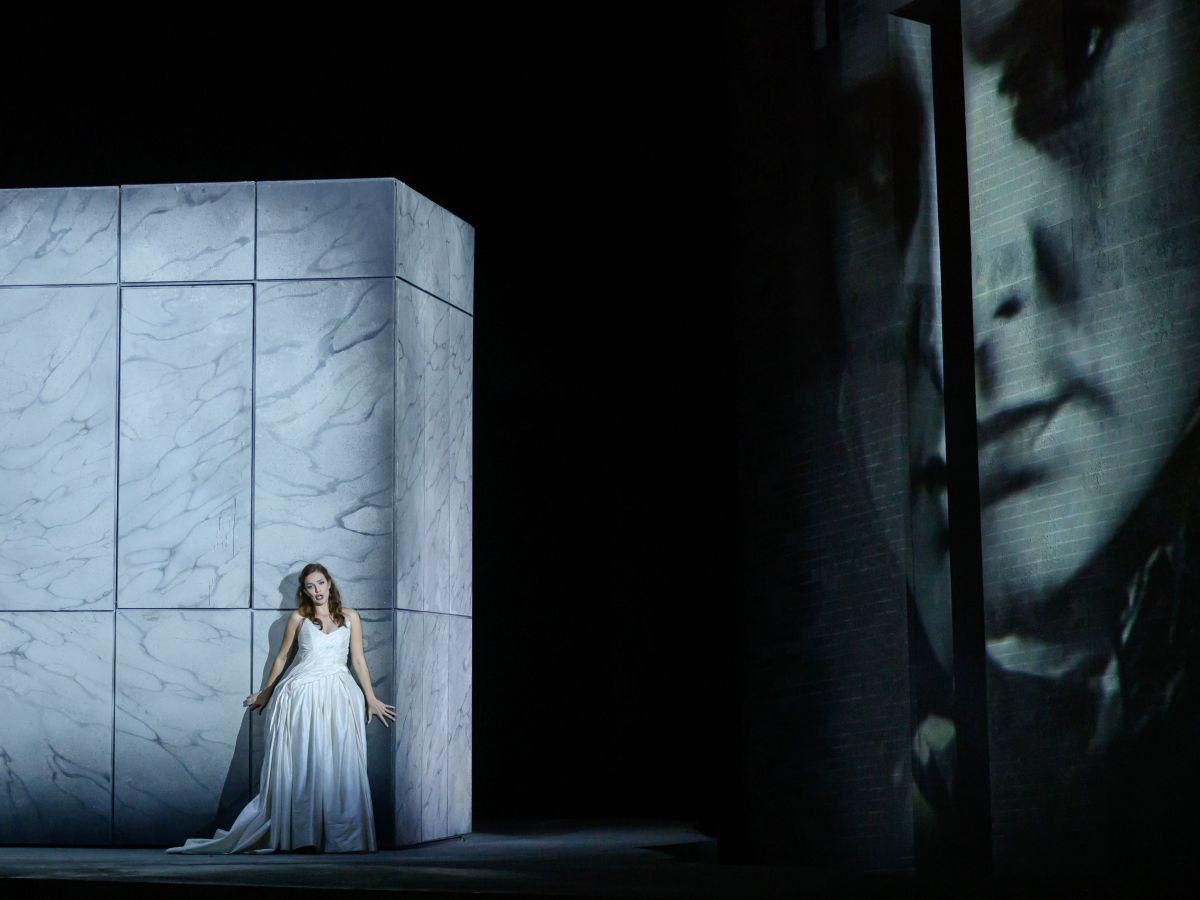
— That dedication creates a very interesting paradox: you share the vulnerability and inner world of a character precisely before a crowd of strangers…
— The bel canto repertoire prioritizes feeling, the communication of vivid emotions; it's not just about producing a beautiful sound. My goal is to generate a real dialogue with the audience, to open a window for the spectator into that inner world we have built with the orchestra conductor and the stage director. When that magic happens and that bond is created, it is also something unique for me.
“To be convincing in my role, I try to find the points of connection with my own life, to bring my real feelings into play”
— In a way, the spectator ceases to be a mere witness and becomes an active part of that emotional experience that arises from your own experience.
— That's right! If it weren't for that connection, which completes the circle, we would be left singing in our own room, or in the shower. All the effort and sacrifice that this profession demands -the act of emptying yourself in each performance- is done because there is someone on the other side listening. That's where art finds its reason for being.
— We mentioned the Liège production earlier. There, a very measured body work is perceived when constructing the masculinity of the character. Have you maintained this same proposal at the Liceu?
— In fact, it has changed quite a bit. For example, Romeo approaches the complexity of the initial situation with a hint of a smile. And, what will attract even more attention, is that here the stage director makes explicit the artifice that, in reality, I am a woman embodying a masculine role (something relatively common during the 19th century). In the duet with Tybalt, although at first I adopt a completely masculine, warrior attitude, an unexpected twist occurs: he discovers that under the clothes of his arch-enemy, Romeo, there is a woman's body… and he kisses me!
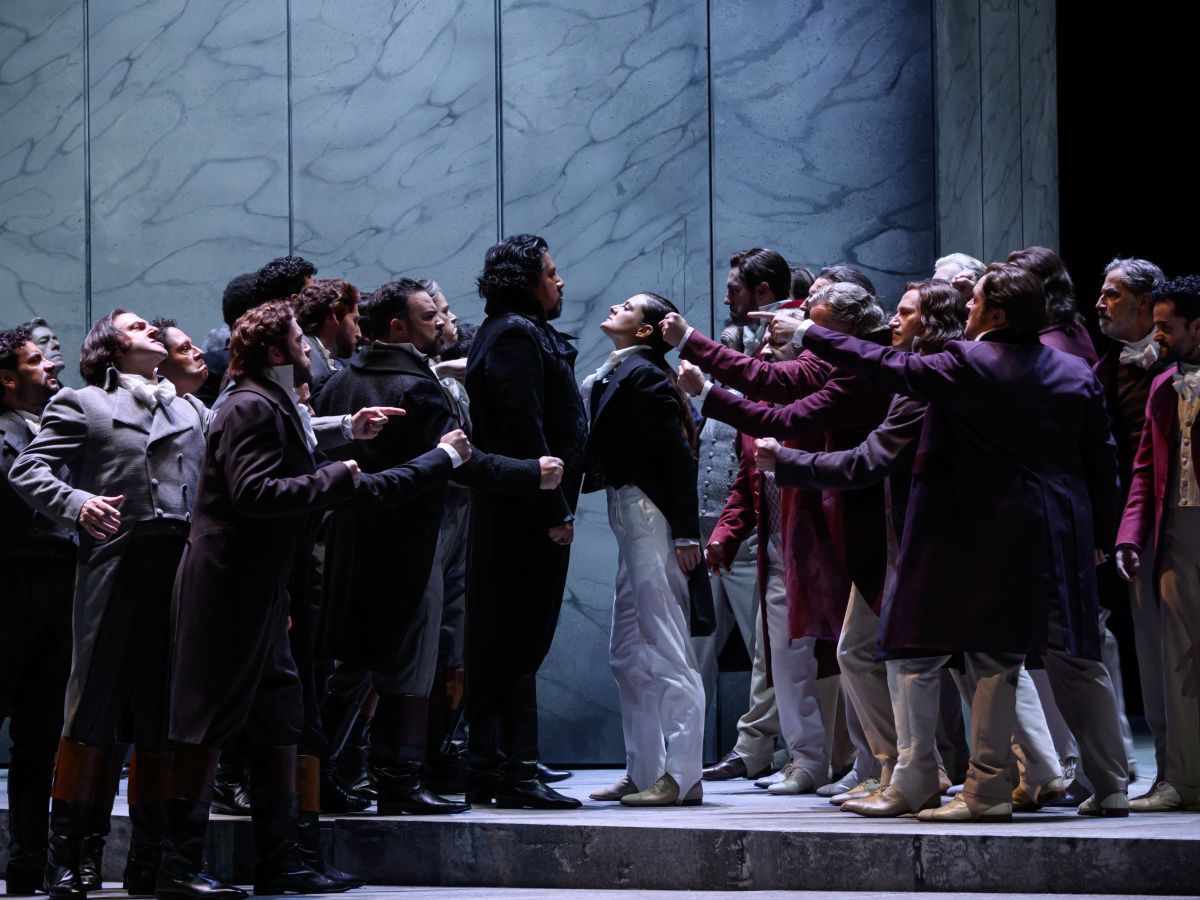
— Wait a minute, that changes things completely! That in the middle of the duel with Tybalt (Juliet's fiancé and friend of her brother, murdered by Romeo) that happens… introduces an erotic charge and an ambiguity that the spectator can no longer ignore.
— Completely! At the moment of the kiss, I am forced to recompose myself, quickly, to save my warrior role. A very powerful game of superimposed identities occurs. Even if it is something elegant and subtle, when theater addresses gender in such a vivid and brave way, it breaks the barriers of labels. Because the absolute love, passion, and pain of this tragedy do not depend on a rigid structure; they appeal to anyone, whether man or woman.
— The exchange of identities disconcertingly allies itself with the imperative, often incomprehensible, nature of desire… This already affects the duets with Giulietta. Due to the closeness of your voices, the rigid division between man and woman blurs.
— Exactly, desire and identification begin to feed on specular resemblance, on the recognition of the other as an equal… whatever the other may be. That's why, to be convincing in my role, I try to find the points of connection with my own life, to put my real feelings into that ambiguity. Romeo is all heart, pure and noble impetus, and he will let himself be carried away by passion.
“Should I let that emotional break show in my voice, risking not being technically perfect, or should I prioritize the vocal line?”
— Undoubtedly, it is a complex role, both due to the demands of the tessitura and the intensity it requires throughout the entire opera. How do you face the vocal challenge of the last act, when the drama reaches its climax?
— The last act is so strong, emotionally, that it sweeps you away. When Romeo believes Giulietta is dead, I myself feel that pain on stage, I get so emotional that I perfectly notice how my voice breaks. And there I live, for an instant, an internal dilemma: should I let that break show, risking not being technically perfect, or should I prioritize the vocal line, at the cost of not living the character intensely?
— I confess that I prefer psychological credibility. If you live that pain, and allow your voice to break, that truth will cross the pit and reach the audience with all its force.
— It's that this generates great artistic tension... Artistic and real! Because in real life, when you suffer, your voice breaks. Achieving that the audience feels that tearing without completely losing control of the score is the true challenge of bel canto. In the end, if we shield ourselves with an impeccable but cold technique, we don't communicate fully; when you dare to break on stage, you stop being alone in the dressing room. You no longer sing only for yourself.
Add The New Barcelona Post as your preferred Google source for free
Stay informed with the latest news.