
This same week, most of the city's media outlets have echoed the relaunch of the Bonus Cultura program, with which the City Council will once again subsidize a part of the city's cultural consumption to incentivize one of the professional sectors most affected by COVID. If one reads the news on the matter, it is surprising, first of all, that most fellow journalists have publicized it through an absolutely uncritical copy-paste exercise consisting of replicating the press conference in which Jaume Collboni and Xavier Marcé described the first edition of the program as a "success" (96,000 vouchers were sold with a supposed impact on the sector of 4 million euros), adding that 1 million euros will be invested in this new proposal and citizens will be able to buy 20-euro vouchers (and not just 40, as before, thinking of lower consumption activities such as bookstores and cinemas), being able to do so directly on the website of the 200 establishments adhering to the project.
If something similar to cultural journalism existed in our country (and there is no shortage of professionals who could practice it perfectly, but rather brave editors-in-chief and publications that do more than reproduce the announcements of the political class and the cultural mandarins of the PSC), someone would have dared to ask whether a model in which the administration subsidizes consumption, helping us with 5 or 10 euros to buy theater tickets or a book, is a good idea to reactivate Barcelona's cultural fabric. If, apart from repeating verbatim, someone had dedicated a few minutes to investigating the matter, they would also have asked about trifles such as where the 0.5 and 1 euro management fees for the purchase go (which the citizen pays and not the City Council) and, incidentally, clarify which cultural companies benefited most in the first edition of the program or if, as the authorities boast, the final result has led to an increase in artistic creation in the city and the trades that feed on it.
However little research was done, that bonus programs do not improve the artistic fabric of a city is cultural management kindergarten. Firstly, because, as this pandemic period has already shown, what citizens want is to enjoy an offer and for it to be as diverse as possible; they are old enough to know if the expense in question will be worth it. Directing consumption to a list of specific establishments and giving them a more sexy appearance through a discount is a dynamic typical of populism in countries where, under the excuse of socialism, the citizen's life is robotized. I don't want the City Council to help me buy a book or go to the theater, ultimately; what I want as a citizen is for writers and playwrights to have creation grants that allow them to practice their profession without starving; the decision to devour their novels or attend their plays, if it's not too much trouble, I will make myself, as I am old enough to decide.
However little research was done, that bonus programs do not improve the artistic fabric of a city is cultural management kindergartenThe litmus test of the opacity of the bonus project is that it has been reissued without the council providing information on which theatrical infrastructures, cinemas, or bookstores have benefited most in terms of consumption. If this information were published, one would see how, especially in the theatrical field, the bonuses have helped medium and large business groups that can afford to have plays on the billboard throughout the season. If I acquire a voucher for 40 euros, for example, and I use a ticket that costs 24, the remaining 16 I will have to spend in that same infrastructure, which will have advantages, since it produces shows and has more theaters in the city.If I don't end up using them, the money will be lost in outer space, which means the City Council's policy has produced the delirious result that many theaters raise the price of their tickets so that it ends up adjusting to the amount of the voucher!
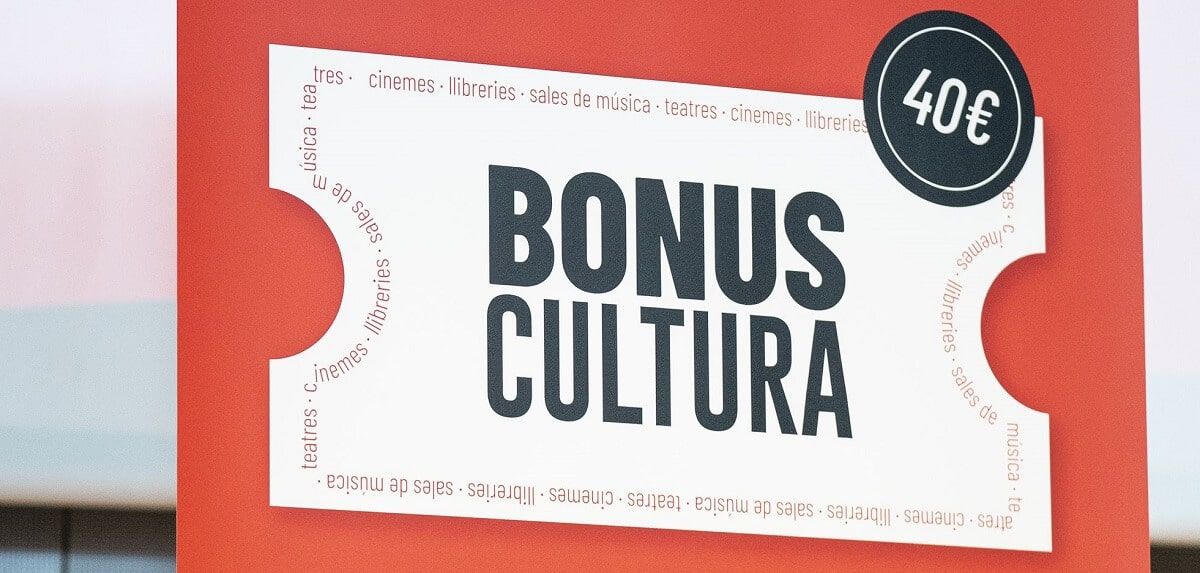
This explains why last summer the City Council, scared because there wasn't enough purchase of vouchers, encouraged the theaters themselves to promote the purchase, which means a public project has ended up being a covert form of private financing. If the Barcelona council wants to subsidize discounts, a policy that could be defended, let them explain it openly, but disguising this practice of private concertation under the excuse of empowering (ugh) spectators is as fraudulent as it is ineffective. All cultural consumption studies that have been done in Barcelona, and which the City Council knows perfectly well, tell us that price is not a problem when it comes to consuming culture. The Teatre Lliure, the Nacional, or the Liceo already have tickets for 10 and 15 euros for shows in their program. If citizens decide to go, it is due to the only barometer that makes people move their butts off the sofa: the interest in consuming a play that makes them want to leave home.
In fact, with this opacity and in a disastrous way, Barcelona's cultural agents are normalizing the (erroneous and fraudulent) message that culture is expensive and that only with the help of daddy administration will it be possible to access its consumption. Culture must be accessible to the citizens who pay for it, of course, but I insist that the effort to reach all audiences is already part of the commitment of the directors of most cultural facilities in the country. For a public theater (or a private entity) to advertise a certain discount policy is natural, but for the administration to supplant it is a prank. It is also at least suspicious that this practice is managed by a private club, TRESC, which receives a part of each operation without its involvement in this project having passed the scrutiny of a public tender. In any other economic sector, this clientelism would be a scandal: but in the Catalan cultural world, the law of silence still prevails.
The litmus test of the opacity of the bonus project is that it has been reissued without the city council providing information on which theatrical infrastructures, cinemas or bookstores have benefited most in terms of consumption.It is terrifying to think that the millions of euros allocated by the City Council to a policy that we know has failed could have been directed (as I hope will happen with the European funds that end up in the cultural sector) to promote projects that directly reach the city's creators. In the same way that happens, for example, with the aid from the Institució de les Lletres Catalanes (although with ridiculous funding of a few hundred thousand euros),the council could have subsidized the work of translators, playwrights, dancers and performers who have been frozen at home for almost a year nowand that shortly ---if the sector is not reactivated with creative muscle and not with covert aid to large companies--- they may end up going hungry. That in times of emergency (and when I write that word I do so in the literal sense, because the precariousness of the sector can end up being endemic) the administration dedicates itself to such pyrotechnics with everyone's money is highly disappointing.
Nor is it necessary to delve into a journalistic investigation like Watergate to verify how the same mandarins who incentivize policies such as cultural bonuses have been former employees of the companies that benefit most from the procedure. This impunity and the lack of transparency of the administration, I insist, should be denounced by the city's cultural journalism. I repeat that our newsrooms are full of colleagues who could dedicate time to this task if it were not the case, and it is no coincidence, that the culture newsrooms of most of our media are the "María" of the press and their long-suffering editors already do enough by trying to get to all the city's press conferences on time to end up painting a hurried summary of what is said in them. It is a shame, certainly, because this perverse system ends up leading to a cultural system where everything is done for the people but without the people.
The culture newsrooms of most of our media are the "María" of the pressBut don't worry, dear readers, that amidst all this climate of napping, breaking the ethics of silence and the habit of not shaking things up too muchomertàso as not to get into trouble, you will always have this painful, tireless, and hurtful Saturday stab.
Add The New Barcelona Post as your preferred Google source for free
Stay informed with the latest news.