Inspiration knows no schedules or scenarios. It can arise in a hotel room before a concert, during a train journey, or on any given afternoon away from home or the conservatory. But pianists face a limitation that other musicians barely imagine: they cannot take their instrument wherever they want, nor even have it nearby when inspiration strikes. Its size and complexity have turned something as commonplace for a guitarist or violinist as traveling with their instrument into a practically impossible task for a pianist. That is the barrier that Pocket Piano, a modular professional piano made of independent pieces, designed and produced entirely in Barcelona, wants to break down.
The idea for the project was actually born out of a very personal need. Its founder, Josep Bergadà, from a family of musicians, was studying Business Administration when he realized that he couldn't use his free time between classes to practice, as the piano is difficult to transport. While a guitarist could take the instrument out of its case and play in any corner of the campus, he always depended on returning home. That initial frustration ended up becoming a challenge: was it possible to design a professional piano that could be taken anywhere without having to give up the feeling of playing a traditional instrument?
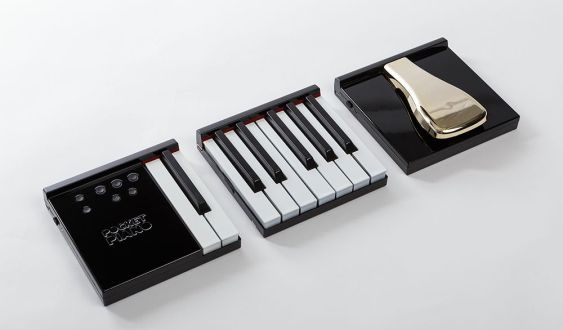
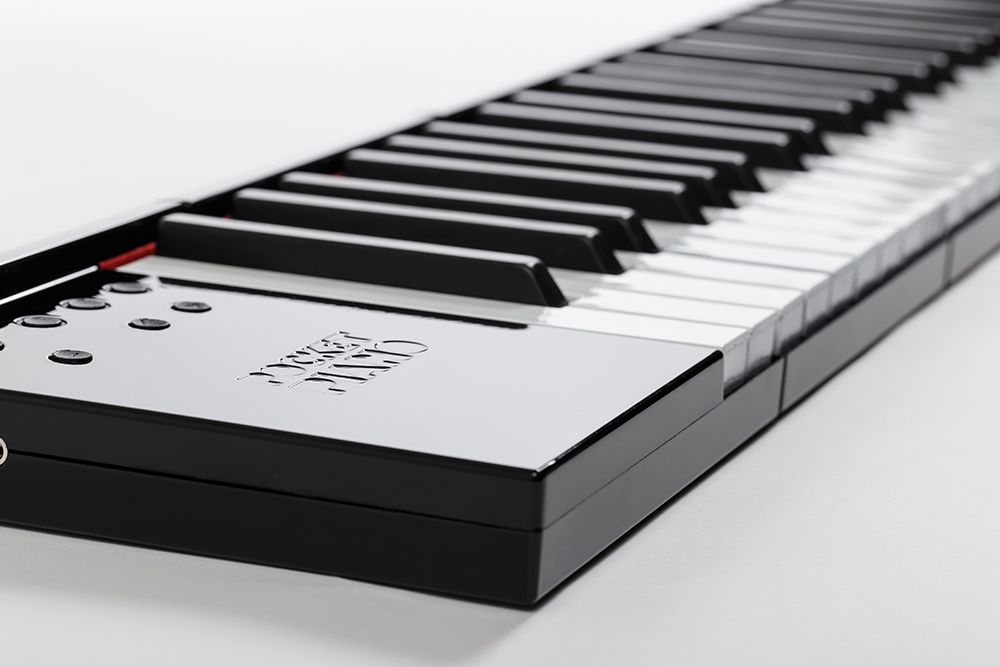
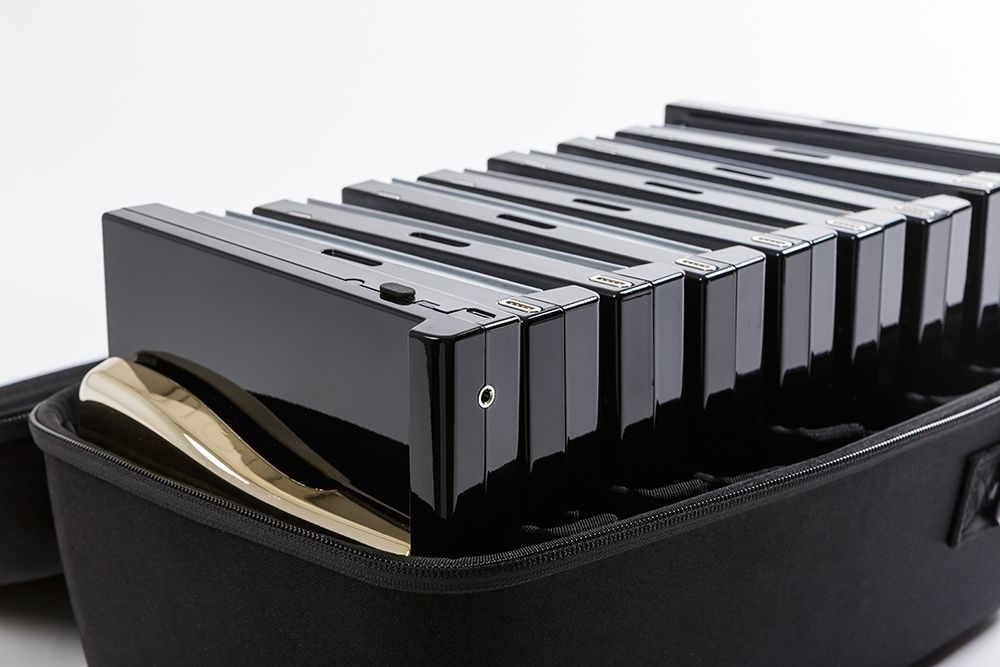
Therefore, the barrier was not only to reduce its size and weight, but also to preserve the touch and response of the keys typical of a piano. After years of prototypes and tests, Bergadà managed to manufacture the device he was looking for: Pocket Piano, an instrument with 87 keys —a concert piano usually has 88— distributed in seven independent magnetic modules that can be assembled in just a few seconds.
After several years of ideation, development, and prototyping, Pocket Piano found the partner it needed to make the commercial leap. In late 2025, Ponder Trade, the investment holding of the Grifols Gras family (owners of the large pharmaceutical company Grifols), decided to acquire a stake in the company to turn an innovation born in Barcelona into a business project with the capacity to compete in international markets.
In fact, each module corresponds to an octave, that is, to the set of notes between one C and the next. These seven modules connect to each other through a system patented by Pocket Piano that eliminates latency —the small delay generated by technologies like Bluetooth— and allows the instrument to function as a single professional piano. When disassembled, however, the set occupies barely 40 centimeters and weighs around six kilos, which allows it to be easily transported in a backpack or even as carry-on luggage.
"The technology convinced us from the first moment, but also the team and the story behind the project," explains Manel Torrents, director of Ponder Trade. "We are not just looking to provide financing. We want to accompany companies in their growth, help them professionalize their structure and turn a good idea into a scalable company."
That is precisely the role that Ponder Trade has played since its entry into Pocket Piano's capital. After completing the instrument's industrialization process, the company has begun international commercialization of the piano and has already sent more than 1,700 instruments to 45 countries around the world. In fact, more than 200 professional artists already incorporate this piano into their performances or creative processes.
For now, most sales come from the international market. The United States accounts for nearly 40% of demand, followed by markets such as Hong Kong, China, India, and various European countries. In addition, the instrument has also attracted the interest of some of the most recognized names in the international music scene. Jordan Rudess, keyboardist for Dream Theater; Greg Phillinganes, historic musical director for Stevie Wonder; and pianists Jesús Molina and Gabriela Montero have already tried and even incorporated Pocket Piano into their professional activity.
The traveling piano
The interest that Pocket Piano has aroused is largely due to a proposal that until now had hardly any equivalent on the market. Unlike traditional pianos, which are difficult to transport, and portable keyboards, many of which are designed for more amateur use and often sacrifice part of the interpretive experience, the company has opted to combine both qualities in a single instrument.
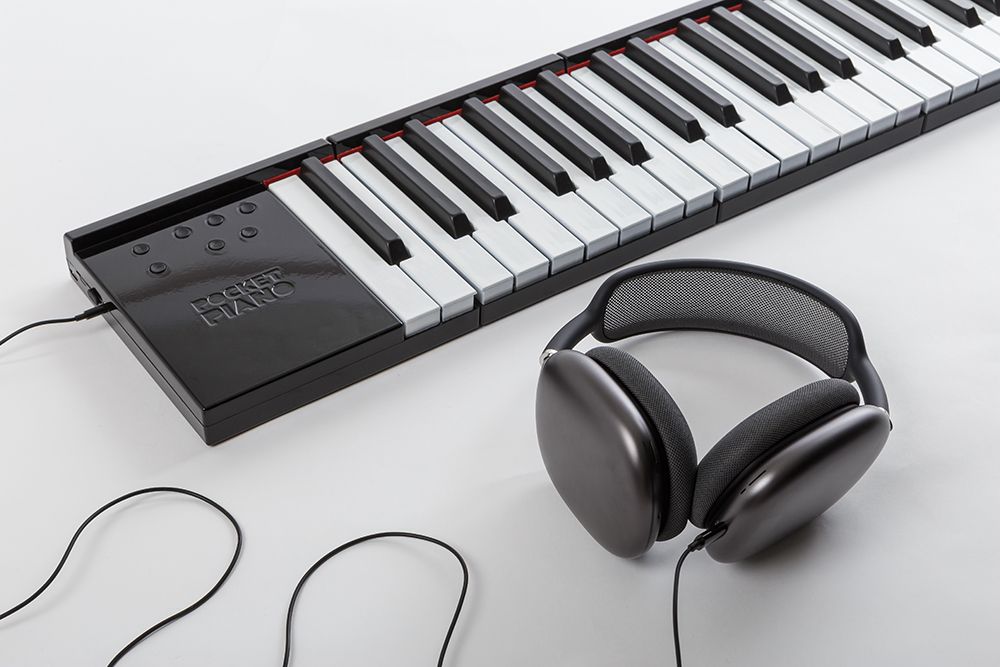
"We wanted a pianist to be able to travel with their instrument without giving up the feel of a professional piano. Mobility should not mean losing quality," summarizes Torrents. "It's a piano designed by a pianist accustomed to playing the instrument, and that shows in every detail," he adds. Thanks to its reduced size and its compatibility with headphones, speakers, or music production applications, a pianist can rehearse in a hotel room, prepare for a concert before going on stage, or even compose during a trip. "Until now, it was unthinkable to be able to carry a professional piano as hand luggage," says Torrents.
Although the piano's characteristics allow it to be played in professional settings or even to offer a concert of the highest level, Pocket Piano also makes this instrument accessible to a more amateur audience or even to students starting their music classes. Precisely, its versatility has aroused the interest of conservatories and music schools, which see in Pocket Piano a tool with which students can continue practicing outside the classroom without depending on a conventional piano. "We want to democratize access to the piano," Torrents emphasizes. "Many families don't have space for a traditional instrument at home, to store it when you finish and take it out again when you need it. We believe that this ease can encourage many more people to approach this instrument."
After completing the commercial launch, Pocket Piano's next challenge is to scale the project. Currently, the company, with a team of six people working on the project, manufactures between 100 and 150 instruments per month. Production, which is carried out entirely in Catalonia with local suppliers, is currently adjusted to demand and operates on order.
But the next step is to increase the production rate to respond to growing international interest. With this objective, the company plans to open a new round of financing that will allow it to increase production capacity and accelerate its expansion in foreign markets, while maintaining design and manufacturing in Barcelona.
Beyond Grifols: Ponder Trade's strategy
The investment in Pocket Piano also represents a significant step within the strategy of Ponder Trade, the family office of the Grifols Gras family. Established in 2015 to manage the family's business and financial assets, the group has been diversifying its investments with a long-term vision, focusing on Catalan business projects with the capacity to grow and consolidate.
The main stake of this investment holding continues to be the pharmaceutical company Grifols, of which the family is one of the main shareholders. Along with this historical link to the field of health and biotechnology, Ponder Trade has also developed an important real estate portfolio, focused mainly on offices, commercial premises, and residential buildings in Barcelona and its metropolitan area.
In recent years, the group has also begun to allocate part of its resources to technological or innovative companies that can grow in the long term, such as Pocket Piano. For Torrents, this company embodies the type of projects the group wants to promote: companies born in Catalonia that, based on an innovative idea, aspire to carve out a niche in international markets.
Add The New Barcelona Post as your preferred Google source for free
Stay informed with the latest news.