Let's pause for a moment on this phrase by Federico Fellini, the same one who recreated the most glamorous Via Veneto in La dolce vita: "For me, Rome was what I created, but she also created me." This statement, closely linked to Italo Calvino's literary theories, could very well apply to the Ganduxer restaurant, which is currently celebrating 57 years.
"It is undeniable that Via Veneto has also created me and left its mark on my life," says Pere Monje, current owner and director. "To both my siblings and me, it has instilled values and a deep sense of responsibility."
While figures like Frank Sinatra, Elizabeth Taylor, or Burt Lancaster strolled along the Italian avenue, in the Barcelona Via Veneto, personalities such as Richard Nixon, Gabriel García Márquez, or Salvador Dalí were found, in addition to numerous contemporary artists and politicians who still trust the team's discretion to conduct business, devise operas, or fall in love with historical gastronomy. And it is no coincidence that this emblem of local restoration has remained alive over time.
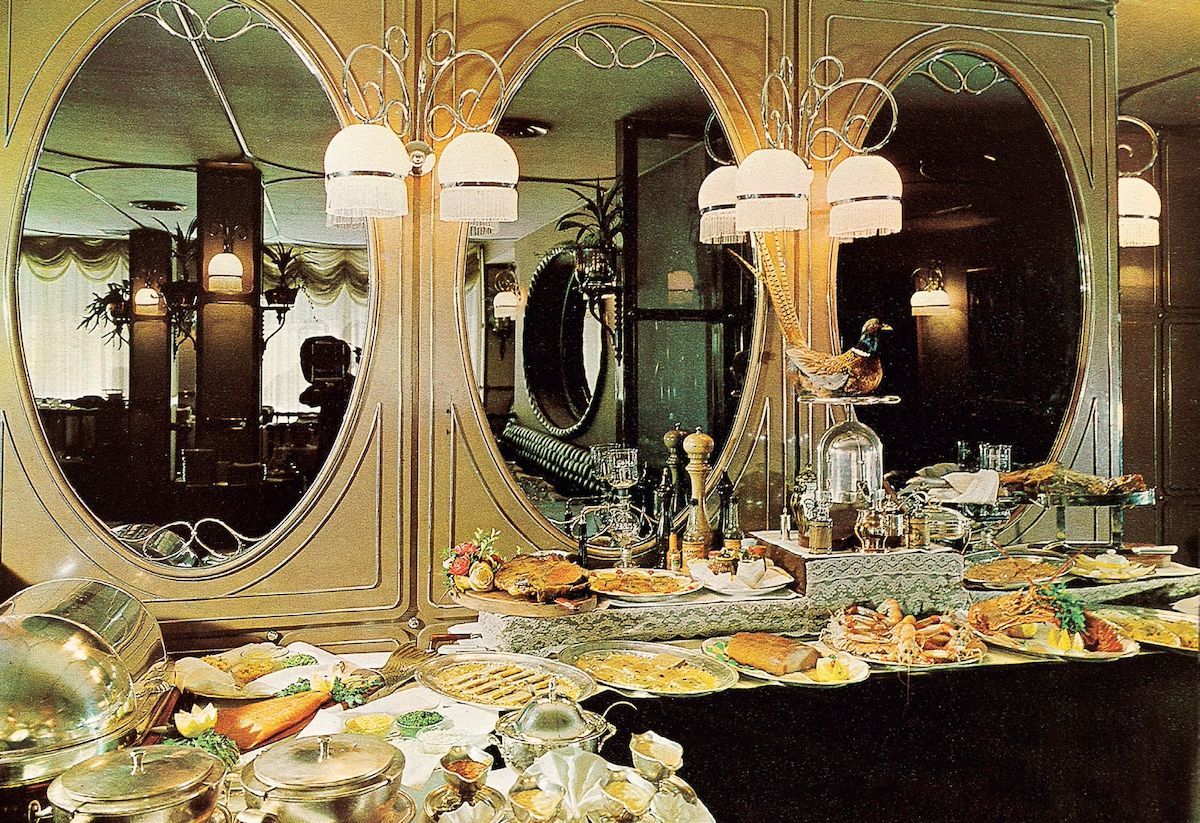
As Oscar Caballero writes in the book just published by Planeta Gastro: "Like the Eiffel Tower, born ephemeral, a cherry on top of a Universal Exhibition cake, Via Veneto had planned obsolescence, just like the gauche divine", referring to the fact that it was born as an Italian restaurant at the hands of Oriol Regàs, in 1967, and could have been as ephemeral as his Bocaccio nightclub. But, Caballero continues, if it is still here today, it is because "a waiter changed the script."
The project from within
This waiter was Josep Monje, Pere's father, who ended up turning the restaurant into a living project with a great capacity for adaptation. "Mr. Monje does not have any published memoirs. That is why the longest chapter is dedicated to him," notes journalist Trinitat Gilbert, who has researched the origins of the project for years. "The first pages are all research. The rest are dedicated to the dining room, the kitchen, the management, the cellar… The book also aims to explain the present and future of the restaurant."
"Mr. Monje does not have any published memoirs. That is why the longest chapter is dedicated to him," notes Trinitat GilbertFor the writer, the success of Via Veneto lies in its modernity. "It was born as an escape center that wanted to bring everything that was happening in Europe to a Barcelona in the midst of a dictatorship. It was a restaurant of cultural resistance." Avant-garde beginnings that remain to this day, perhaps not so much in the decoration as in the cuisine. "The dishes are of absolute modernity," says Gilbert, "they seek the predominance of flavor and surprise in form with product of extreme quality".
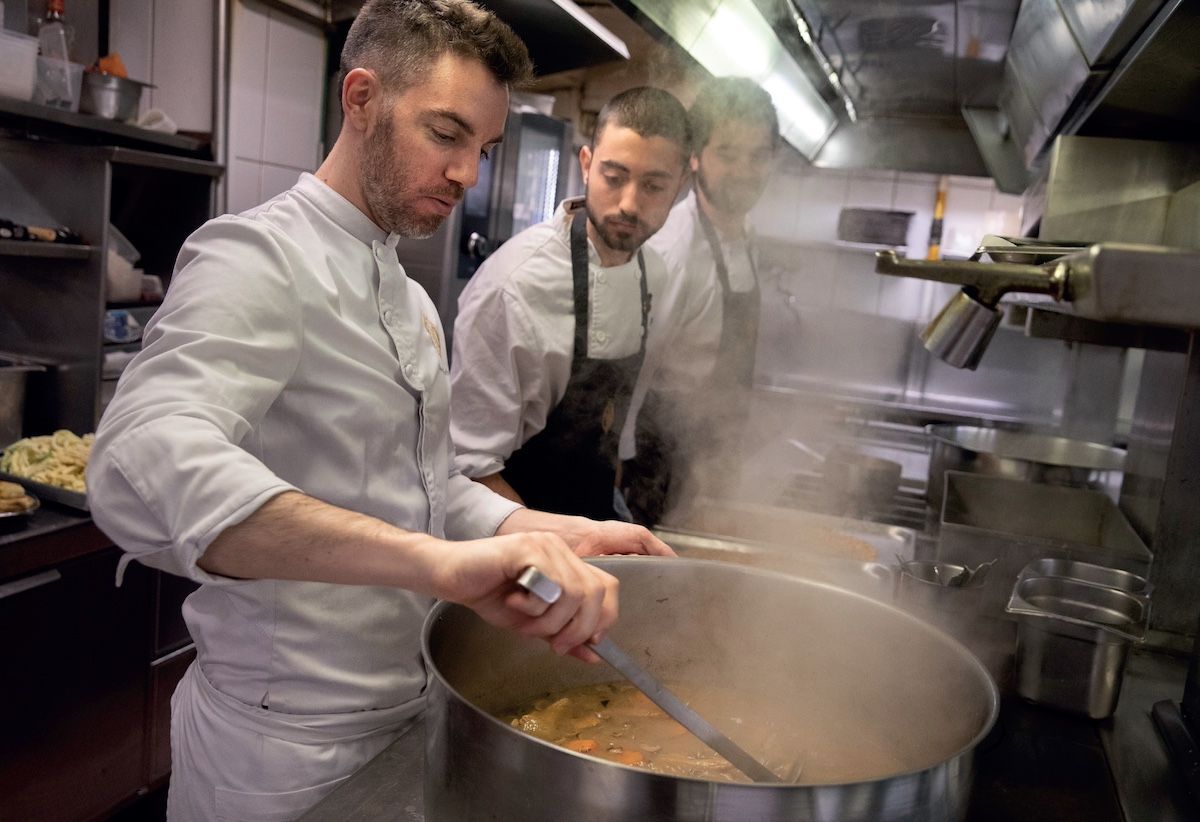
And it is that the current chef, David Andrés, has brought a lot of creativity to the menu, with contemporary recipes that work as a team. The former hockey player, who keeps Via Veneto menus from when he was a child, states that one of his secrets is to apply sports values to cooking. In addition, the book explains that, when he met Pere, he was very surprised that he knew the first and last names of his entire team. Then, he became aware of the meaning of a phrase he had often heard; that the walls of Via Veneto have a soul.
Recipes that mark an era
This is not the first book that has been made about the restaurant. "The previous one, very difficult to find, was written by Dr. Francesc Casas, who analyzed and gathered all the menus when we celebrated 40 years," explains Pere Monje. However, the new volume focuses more on the history and identity of the place, in addition to including unpublished recipes and archive photographs. "Even the cover reflects our spirit: look at the texture and color, which is the same as our awning."
The selection of recipes has been laborious. As the director states: "We have chosen about thirty, among thousands of dishes. It is interesting because you can appreciate the evolution of Catalan gastronomy". Thus, it begins with the French-inspired elaborations of the 60s ---Soufflé al grand marnier, Lobster thermidor--- and moves towards a return to local origins ---Confit potatoes with butifarra del perol--- and an introduction of ingredients and cooking methods from other cuisines ---Shrimp-stuffed dim sum from Palamós---.
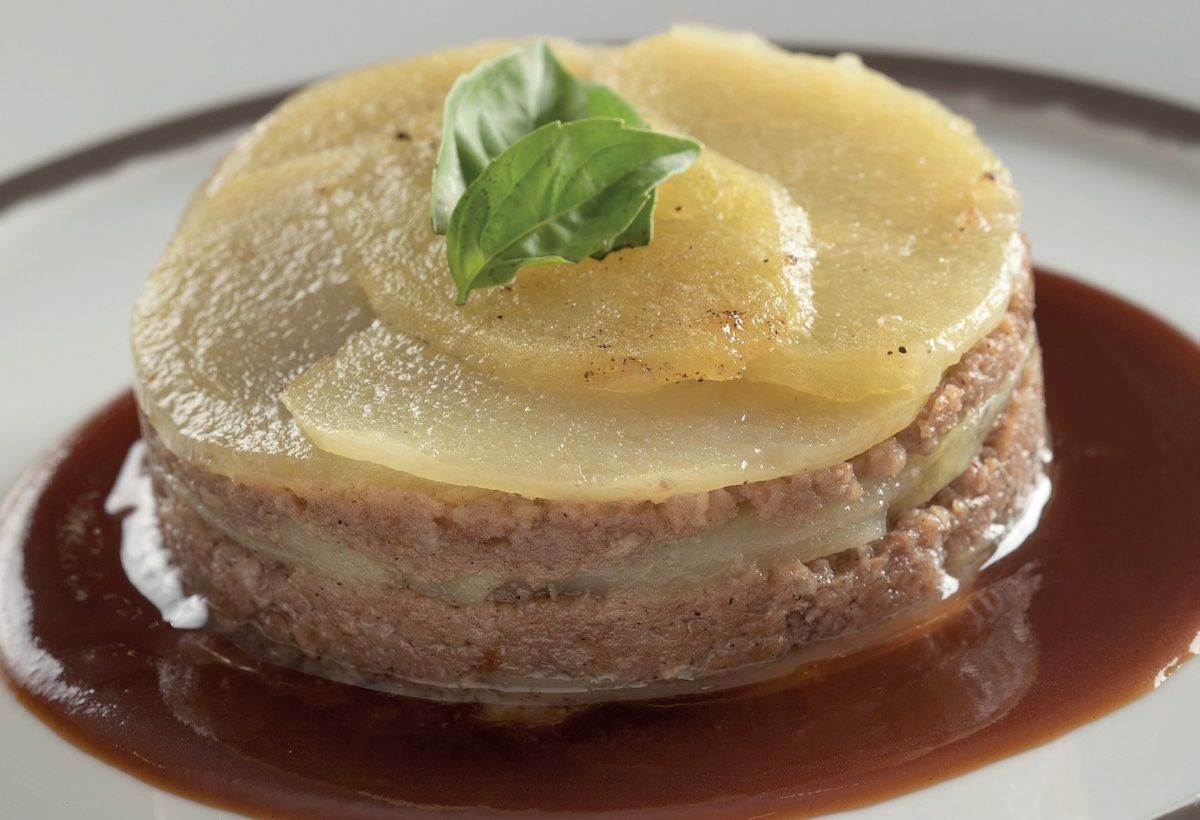
Among them, Monje highlights some from childhood and others more current. "I really like the boneless oxtail and the boletus and foie lasagna, which are very classic, but also the white asparagus with carbonara." Another famous recipe is the duck à la presse, which is made with presses from La Tour d'Argent. "Many customers are excited when you prepare a historic dish. If we can, we do it, and we do it gladly," adds this master of ceremonies, who defends that "the intangible feeling of how you felt in an establishment is what makes you come back."
An intangible that is present in this new book, which arrives at a very sweet moment for the team. "We are at the best moment in our history," exclaims Monje, remarking that they are eager to look towards the future and continue evolving within their style. "We only need to concentrate on the present; the past no longer has relevance," he reflects. A present that, without a doubt, shines as brightly as Fellini's Via Veneto.
Add The New Barcelona Post as your preferred Google source for free
Stay informed with the latest news.