— It's been two or three weeks since everything happened. How are you noticing it? Are there still aftershocks from the earthquake?
— It was a very, very big earthquake. I think it's one of the biggest I've experienced in terms of repercussions, the timing, and many things. And there have been many aftershocks in the following days. Many, many... I had never experienced anything so big.
— And is it still happening?
— Today, there are many people from inside here, colleagues I hadn't seen yet, and I find that they come to greet me, they smile, they are happy and proud. This part of the internal earthquake (not only as a city and as a country, which for me is very key) goes beyond the country: the Spanish State, and also from outside Spain, because we have had many responses, many inputs from outside. People who are not from work and who tell me "is that you?". It happened to me the other day: at my mother's house, a neighbor who didn't know my brothers or me, tells me "is that you?". He's a neighbor we had almost never spoken to.
— Internally too, then?
— Today, colleagues I hadn't seen yet come to see me, happy (not because of Paulí, but to feel like a group, to have done this together.) And I transfer this to the team we were working with, I transfer it to TV3, I transfer it to Barcelona, which I love, and to Catalonia, which I love just as much or more. And this is the cloud we are still in, floating, seeing this global reaction.
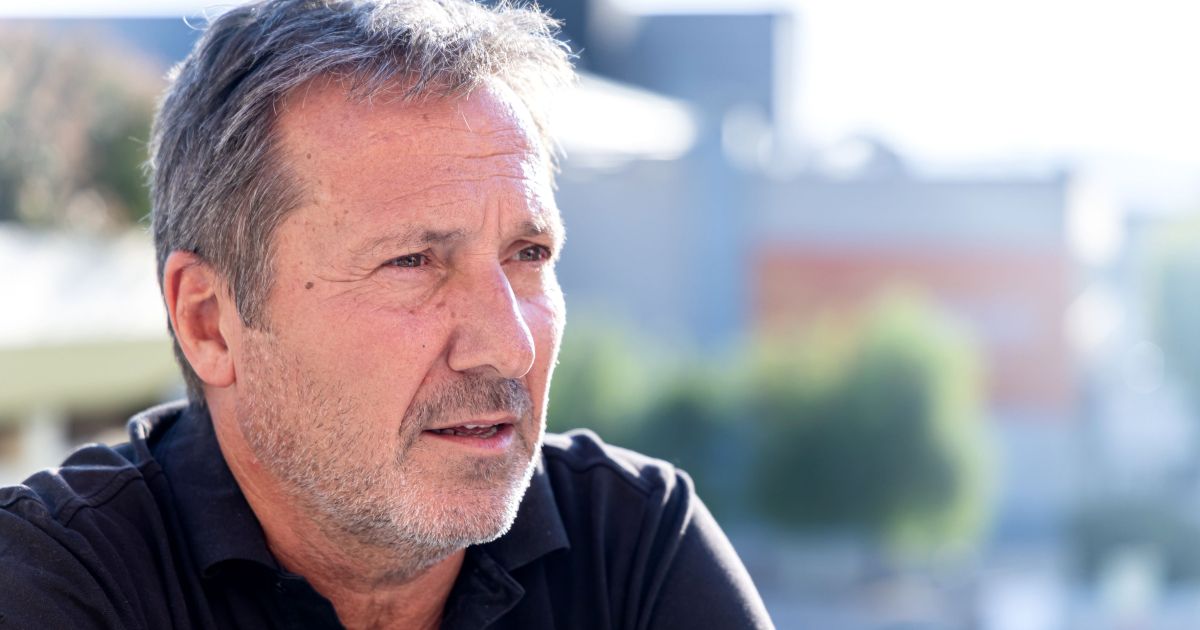
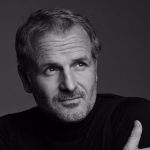
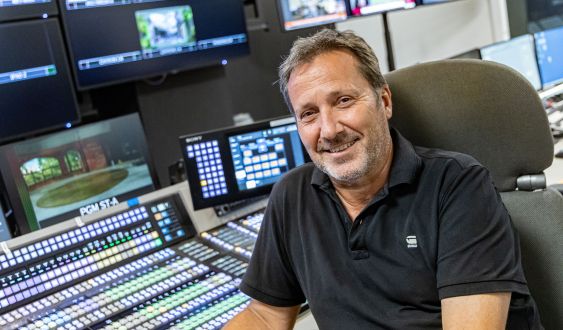
— Normally, directors are behind, in the dark, in the backstage, with a long resume behind the cameras, but not visible. Now we see your face. Does this represent a big change?
— Man, sometimes our face has been seen, but when you reach this level of repercussion it seems more noticeable. I've been here for many years and doing many things outside as well. Very recently, for example, we premiered Mar i cel, a production transferred from theater to superproduction, to cinema, and we also had a lot of repercussion in the country. But much more limited. And then, when my face appears, for me the important thing is that this face represents a working group. There is a team, an orchestra, let's call it what we want. I feel like a representative of my colleagues, the team we were here, and also, in the artistic case, the team that was behind the artistic direction, which represents many people. Between both teams we represent the group of people who worked on this, which are many people. If behind the artistic part (Igor Cortadellas) there were 350 people, to give a number, on TV perhaps there were 100. Between the two, if we keep adding, we are even more.
"We look for a way to use technology to explain love"
— I am a neighbor of the Sagrada Familia, and from the rooftop what I saw was different from the result in television format: that is, it is from an angle, filmed from the Torre Baró to capture the drones... Therefore, what comes first, I suppose, is the idea of the artistic direction. How was this collaboration with the artistic direction of the show born?
— I have worked with many artists, artistic directors (Lluís Danés, for example). In this country there are very powerful people, with very powerful ideas. In this case, for many years Igor and I had been saying "let's see when we coincide, let's see when we do things together!". We had seen each other work, we had talked about things, but we had never been able to find the reason that would unite us. This time it has been something magical. He had been working on this project for a long time, which he had evolved quite a bit within his part. He had an idea and a concept, and months before July we said "we'll do it". We got to it, we finally met, and we started working on these ideas he had in his head.
— And then?
— When you are an artistic director and at the same time an audiovisual director, the former already has ready-made ideas, and that is an advantage. But at the same time, the audiovisual director must contribute their part, because otherwise, in the end, you only execute. In this case, I think we have complemented each other very well, we have understood each other very well, and we have added up. Sometimes two positives do not add up to a positive, and this time, they did. He had been thinking about it for many months, and months before we talked, we looked for a way to do it and how to use technology to explain love.
"I would compare it not with the Olympic Games, but with the technology used in the last Super Bowl with Bad Bunny"
— First, love.
— And then look at how to contribute all this technological part to explain a story that, in the end, is about the theme of light: how everyone's light ends up illuminating the cross and gives us all light.
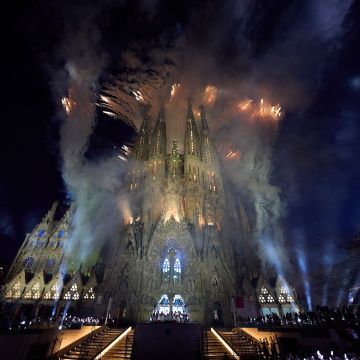
— The case of the inauguration, of the culmination of the Sagrada Familia at the level of a city phenomenon, is associated with the inauguration of the Olympic Games, as a great projection bomb for the city. The difference is that the opening ceremony of the Olympic Games lasts an hour or two. Here, however, in the end there was a kind of eight-minute video clip where the essence of everything had to be fitted in.
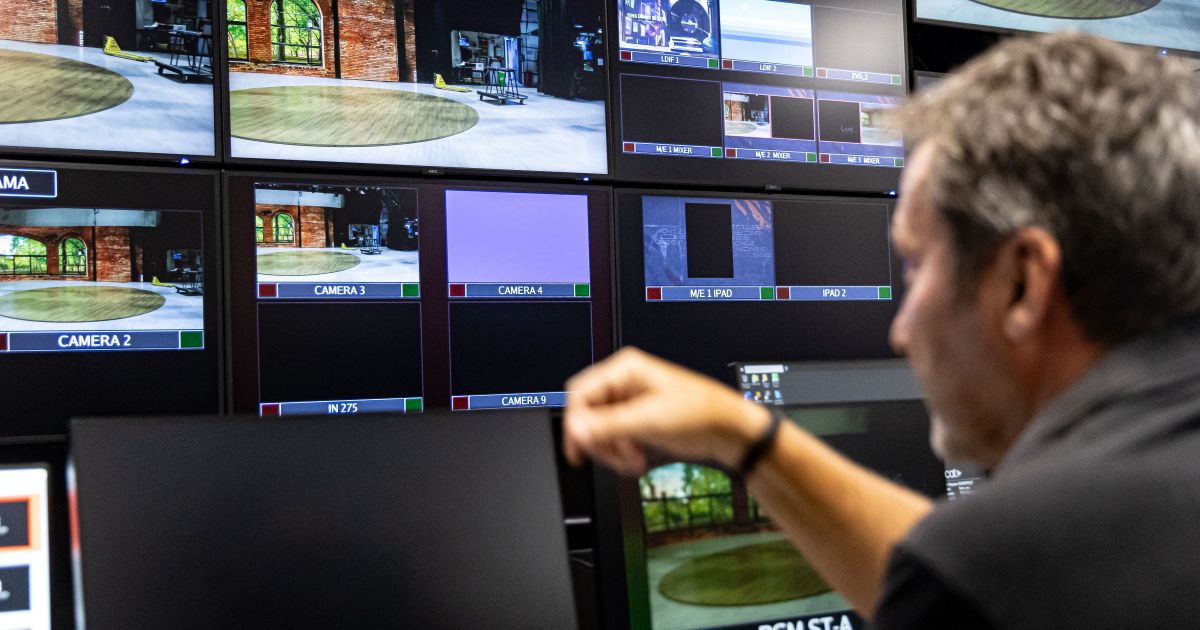
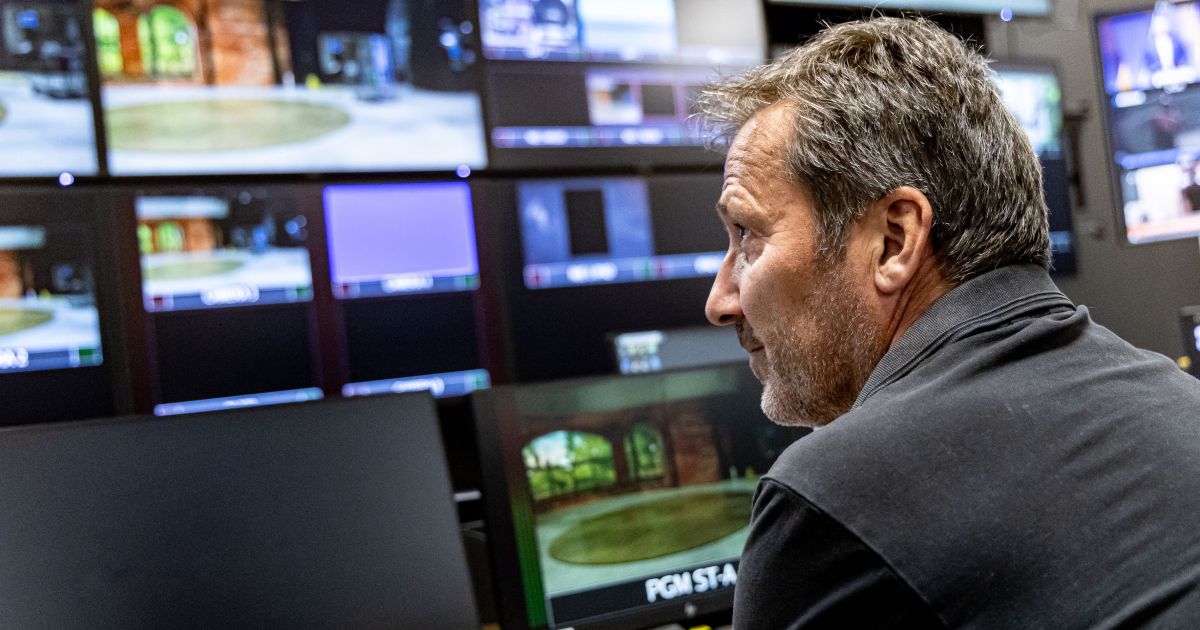
— And before the show there's the blessing part, the moment when the Holy Father stands there and blesses. We also did that part. We divided the international and institutional signal into two parts: the part of the mass, the liturgy and the arrivals, which was done by Televisión Española, with the director from here, Sant Cugat, Roger Paolo (very good people by the way). He took on that part. Since in 2010 we did everything ourselves at TV3, this time, due to the magnitude of everything, we divided it. We, TV3, kept the part from when he went outside and the blessing was given, until the show, and then the drones and the fireworks. The idea was to differentiate it from what was done outside. There was a more liturgical, more institutional part, if you like (the blessing, the cross itself, of the Holy Father, the gifts, the bishops, the kings), all this part had to function as a more normal, usual part; and then it was necessary for the show to be something different and for people at home to perceive it differently, for us to go from something more like true life. I would compare it not with the Olympic Games, but with the technology used in the last Super Bowl, when at halftime Bad Bunny did a thirteen or fourteen minute show and then football continued.
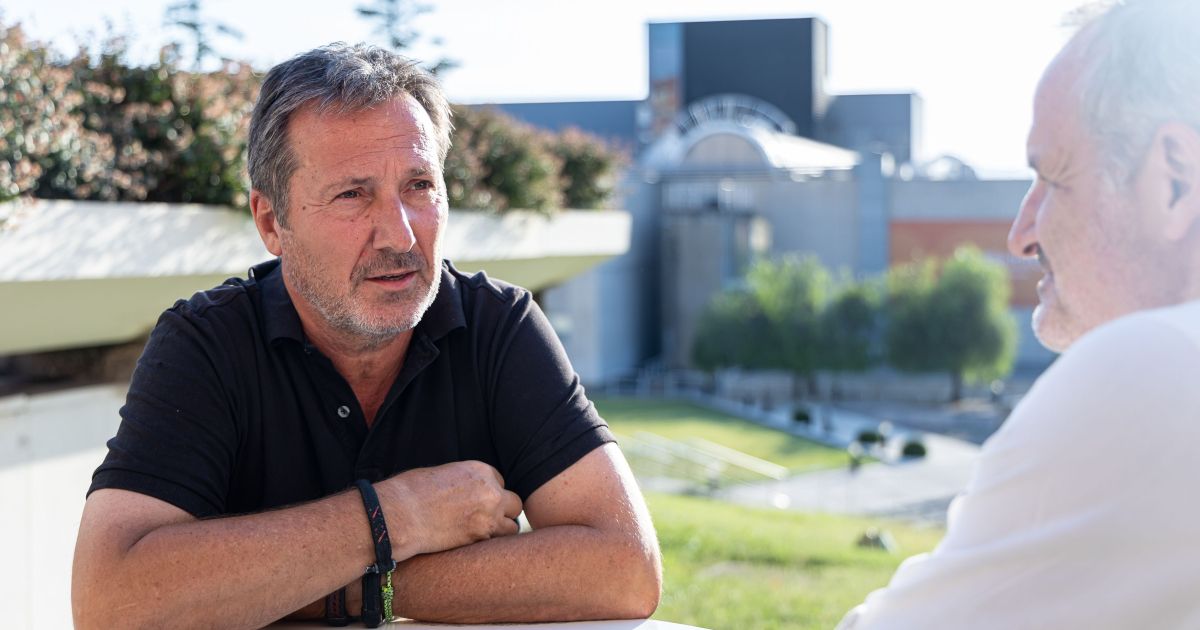
— I understand. That wasn't a stage, but a whole framework with travelings to tell a story.
— And here we went to the very fact: I didn't show the kings, nor the Holy Father, nor, in the end, almost anyone. It was something more global, and it wasn't about whether the Holy Father was there or not. It transcended this more institutional issue. In fact, the Pope only appears at the beginning and at the end: when he sits down and the light goes out, I stop showing him, and I only show him again at the end, when everyone applauds. There is no close-up shot of the Holy Father during the show. It's the opposite: it's the people, with their light, with the candles that were made expressly, who are acting and are part of the whole show.
"My feeling, when we finished, was not complete"
— Sometimes the Church is very rigid, but it seems that this time they gave you total creative freedom.
— This I will say is my opinion: only afterwards did he understand the magnitude of what had been done and what it meant. I believe there are many factors that created the perfect storm, in a positive way. And I believe the Church allowed it to happen, but without fully knowing the magnitude of what was happening. I had a lot of work convincing, explaining all the details. And obviously Igor, who is the creative director and who had to sell the idea the most, had many meetings, many, with the Sagrada Familia. To explain it well and so that it would be understood that, in the end, it was not an outrage, but quite the opposite: that everything had to breathe Sagrada Familia and Gaudí, that in the end the reason is this, both things.
— And religion?
— Obviously there is a part of religion behind it, because it is the Sagrada Familia, it is a basilica. The light, everything that entails, in the end, Gaudí's thought also based on faith... all this had to transcend. For example, if there is a shot in the middle and we show the presbytery, we will not hide that; but on the contrary, if you do everything in the foreground and everything is very religious, in the end you are doing something too dedicated only to that. There were many pieces of a puzzle that in the end gave a very beautiful result, where we explained many things, without having to dedicate ourselves to doing only a religious thing or to doing an ultra-secular thing.
"Practically twenty seconds before the show started, they told me the choirs wouldn't come out"
— Do you have the feeling of having created a work of art and something very unprecedented, or would you rather say that, if they give you the Sagrada Familia, they make it very easy for you?
— There's a phrase I said on another occasion: "Here we have it easy, the only thing I can do is spoil it." Because in effect, it is so magnificent that what you can do is make it worse. And you have the best material, and you are protected by the team, and the lighting, all the elements, the drone part, the pyrotechnics... everything is so good that you will hardly make it worse. It's hard for it to go wrong. And then there is the figure of the artistic director himself, a person so creative and with so much light of his own that he already adds to everything.
— With all this, what feeling did you have when it was over?
— My feeling, when we finished, was not complete.
— Oh?
— We had last-minute inconveniences, things that happened to us at the last minute. My feeling was not "that's it, we've nailed it"; but rather "we've saved it." And that's because you're suffering until the last moment. And we had serious inconveniences, for a production like that, serious ones that arose at the last minute. The feeling you're left with at first is that it could have been much more powerful than it was, than what we had in mind and what we had planned to do. But, in the end, although we had never done a full rehearsal, luckily we did have the stories made, imagined. If you want to narrate something, you have to have everything clear. The grace of doing live is also being able to improvise, but at least you have to know the story you want to tell. If the actors fail you before starting a movie, you have a problem: but you still have the story, if you have it clear. In any case, if people say it was a 10, I'm very happy. But it could have been an 11, perhaps.
— We have seen the video where you suddenly say "there are no choirs."
— I'll explain how I experienced it. When the whole entourage comes out and arrives outside, I start directing and the artistic director was inside organizing everything. We were connected with the stage management people. There was a lot of nervousness because think that one of the main issues was that we couldn't start before 10:25 PM, because it was the magical hour of light.
— The blue hour, of course.
— Those fifteen minutes when it's not yet dark, that blue, was the hour we thought was the good one. If we started earlier or later, we had a problem. There was a lot of tension: I was sending messages to people to enter Sant Pau, because if we took ten minutes to enter, we would have a problem. And just when we were like that, the artistic director calls me on my mobile, and tells me that we wouldn't have the choirs. I say: "How?". The choirs were 600 people, each with a candle that was linked and programmed with all the lights to create the light effect we wanted. Think that the movement of lights was a program with 4,000 candles; if 600 are missing, the percentage is very large, and then that shows. "It doesn't show," he told me. But those of us who know it, know it.
— They haven't been able to hide it, afterwards, either.
— Practically twenty seconds before the show started, he told me that not even 200 would come out. That no one would come out. And of course, when this happens to you, your head has to change gears quickly, and you have to overcome it. Because I had planned that at a certain second I wanted one shot, and at another second another; when the choirs sang I would do a close-up, I had three cameras set up to take shots of the people in the choirs, and I wanted to show a close-up of the people singing, to reinforce that the choirs were there. And you tell yourself: "I don't have it anymore." And even more: there was a camera hanging, for example, on the facade, which gave a very spectacular backlit shot, where all the lights were visible and in the end it turned out that there were two giant light holes. And also, when the lights had to sparkle, since these agents failed, this got deprogrammed.
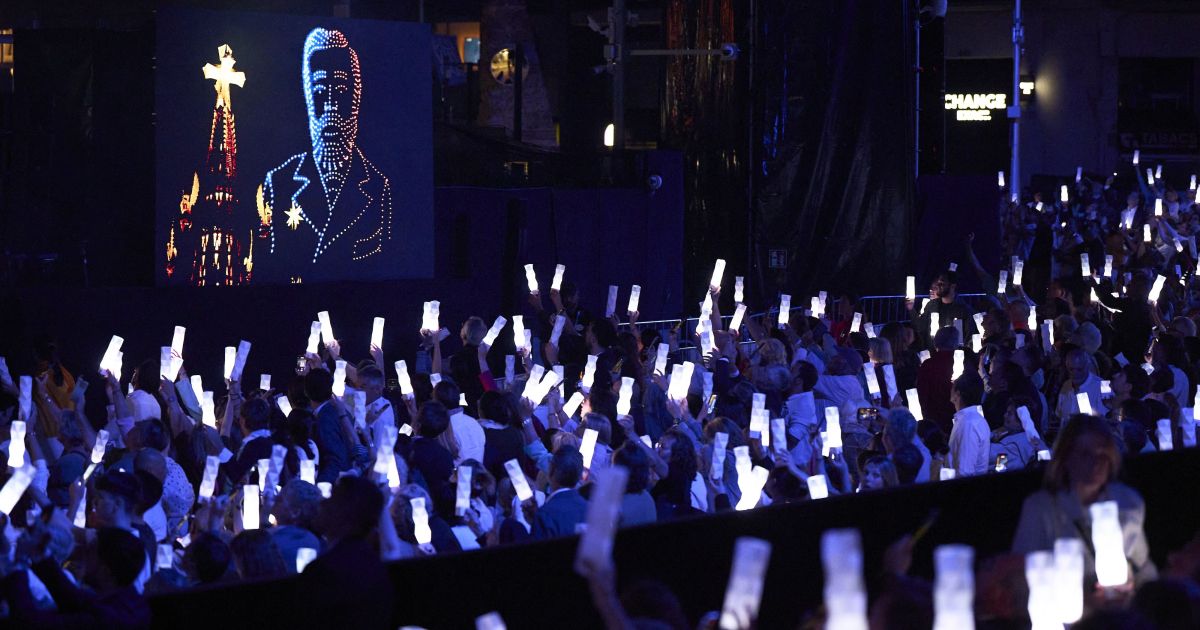
— How do you manage a live show like that, when all the planned schedule falls apart?
— You had to tie everything together, because it went very much like a metronome. Normally, in a production like that, the movements are automatic, the direction is programmed and, if you see that it's perfect, the machine triggers it. The director prepares it beforehand, and then raises his hands and the machine triggers the camera. So the cameras know that now they do this zoom, and everything is precise. But here it doesn't work like that; I don't work like that, and I can't always work. We have this tool, but we don't use it as much as it's normally done. And this allows you to improvise, but it also makes you go very much to the limit: my assistant kept saying "three, two, one, now we would enter here, now the choirs would enter"...
— In conditional.
— And I told him "very good", and then I had to remind him: "We don't have choirs." The good thing is that we are experts in doing live shows. Some of us have been doing it for a long time. You have tools to overcome the obstacles that come up, to redirect it, and so that those who don't know, don't notice.
— I asked you from the technical point of view; but from the point of view of love, of emotion, how did you experience it?
— At that moment you think, first: "How is this possible?". You ask yourself what happened, but you don't have much time. I asked myself, and I said: "Why?". Then I said: "Don't ask", and I assumed there had been some problem. There was an issue with the choirs: hundreds of people who had to move among the 4,000 who were going outside, a very difficult movement to make in a very short time. And there was security of many types: the kings, the Pope, everyone, an enormous security device. When they told me that, I didn't know why it was, nor did I know they had been kicked out. I didn't know, nor would I have been able to do anything. But you don't know what's happening, and, as for the show, the emotional part tells you "I'm missing this, we're missing this". Afterwards, when I knew what had happened, I have to say that what I said is recorded, but it's censored. Let's just say that, emotionally, I thought this wasn't right.
— A shame.
— No, let's see. For me, in the end, I would like it to have a good reading; what happened has to be looked at positively. It's very wrong to take people and not let them express themselves; that seems terrible to me, that this still happens today. But on the other hand, if they had gone out and, besides singing, had freely expressed whatever they wanted, surely now we would be talking more about this demonstration than about what happened. One of the good things about what happened, and which is one of the things that was missing in this country, after many years in which they say we had confronted each other a lot, is that many people have felt it as their own: many people have felt identified, whatever their color: more or less religious, more or less secular. Everyone has felt identified with an act that represents their city, their country, each one with the concept of country they want to have.
— We have transcended.
— As always, from the particular to the global, from the local to the global. The fact of putting Barcelona and Catalonia back in the eyes of the world, of saying "we are here, it's us, we are capable of doing this", is what has made many people feel proud, no matter which side they are on. We have achieved (or it has been achieved) the same thing that happened in the Olympics. Manuel Huerga himself, director of the Olympic Games ceremony, wrote to me the next day congratulating us. In the end, many factors come together: think that this had been planned to be done anyway without the Pope.
— Oh really?
— It was already planned to do it for over a year, and if the Pope wasn't there, he wasn't there: it was going to be done anyway, because that day marked the centenary of Gaudí's death. The broadcast was going to happen anyway, no matter who came.
"In the technical part, we have set a new European standard, which had not been done until now"
— How do you fit this big leap into your career?
— I am very happy with almost everything I have done. In 2010, we were the first to do 3D in Europe, more than anyone else. We also did the first Champions League final in 3D in Europe. This has always been a television very up-to-date with the latest technology. More than a television, a medium. And now, in Europe, they see us again: we have inputs from Sony, from Fujifilm, which are the two brands that have helped us, and inputs from all over the world. In the technical part, we have set a new European standard, which had not been done until now, and this pride of the people here is also that: we are back a bit to where we had been from the beginning in this house, that is, using technology to explain content, and the more modern, the better. This is one of the achievements that excites me. I still have to work a few more years, and I will do big projects; with the artistic director himself we are talking about doing things together, because we have understood each other very well and because he has many projects in his head, and so do I. I am lucky to do things outside of here.
— Don't you have an exclusivity with the house?
— I do very different things, like the Batallas de gallos (the world championship of raps organized by Red Bull). I've been working for a few years on the final of the biggest one internationally, which is an outrage. I've been doing it for years, and here they let me do it; so I say "I'm going for 15 days to do this", I leave here, I go, I learn things. Therefore, I'm in here, and I learn a lot, but when I can go out to do MotoGP some years, or I go to do football, or concerts, that fills me, and then I can apply it here. I represent the entire image and artist service area of this house, which is 400 people. Being able to do some things like that, it fills you and makes you grow professionally. And when you can bring it to this house, that's how you can help things grow here. When we've done virtuals, when we've done 3D mapping, or now ultra high definition or now that we are at the BBC's level in terms of production quantity in documentaries, in concerts... What happens is that we don't have enough budget to have a broadcast channel dedicated to ultra high definition. This part would be missing, which is already a matter of financing and also of will.
— First, love.
— Yes, but we are always there behind.
Add The New Barcelona Post as your preferred Google source for free
Stay informed with the latest news.