The atmosphere at the season openings of the Palau has that taste of family reunion, petit bourgeois and artisan, which dresses a palace but reminds us that this piece of palace was founded by a jeweler. An habitué of the Liceu reminds me of this, someone who perfectly notices the lack of pomp in the box and at the same time that local way of putting pomp on the autonomous institutional position, on the small company, on the presidency of a foundation.
Everything feels very close, at the Palau, to the point that everyone seems to be able to become anything and thus creates this kind of fiction of the "Catalan dream" where the plural, the "we", ends up being at least a little comforting in these stark times. Perhaps that is why the program is also comforting: a tribute to Pau Casals, on the occasion of the commemoration of the 150th anniversary of his birth, and an omnipresent and well-illuminated Beethoven. "It's not for you," director Joan Oller clarifies to me: "it's about the war."
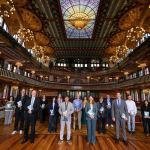
For those who don't know, we will illustrate: Casals conducted the Ninth in 1931 in a massive concert in Montjuïc to celebrate the proclamation of the Republic (a person from the Orfeó tells me it was the first time it was performed in the State, and it was with Joan Maragall's translation). A year later, with the Pau Casals Orchestra, he did so at the Palau de la Música. And precisely on the fateful July 18, 1936, as the Spanish Civil War broke out, Casals was rehearsing this Beethoven symphony at the Palau de la Música, on the occasion of the upcoming inauguration of the Popular Olympiad (an opposition to Hitler's Olympic Games that never happened), with the same orchestra and the Orfeó Gracienc.
According to the maestro's own account, "When the choir was about to go on stage, a man ran into the hall. He handed me an envelope and, breathless, said: it's from Minister Gassol. A revolt is expected in the city at any moment (...) I read the message aloud to the orchestra and choir and said: 'Dear friends, I don't know when we will be together again. As a farewell to each other, can we play the finale?' And they replied: 'Yes, let's play the finale!' The orchestra played and the choir sang like never before. Tears prevented me from seeing the notes. I said goodbye to my friends, they were like my family."
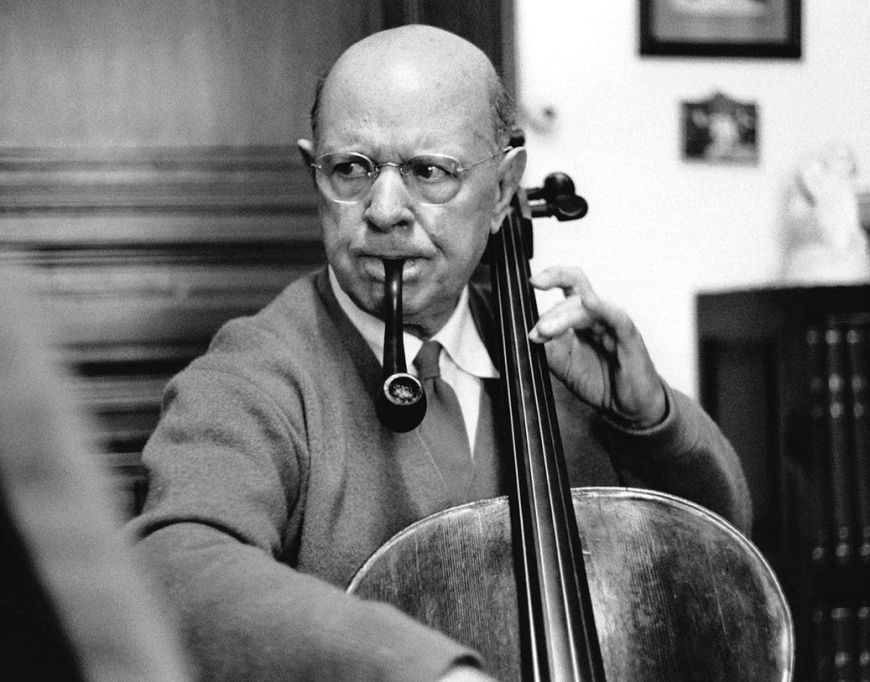
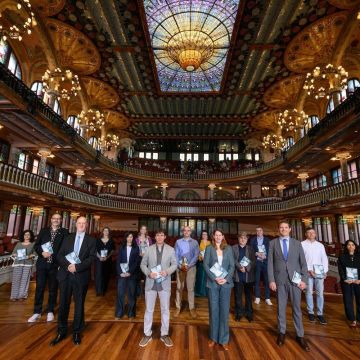
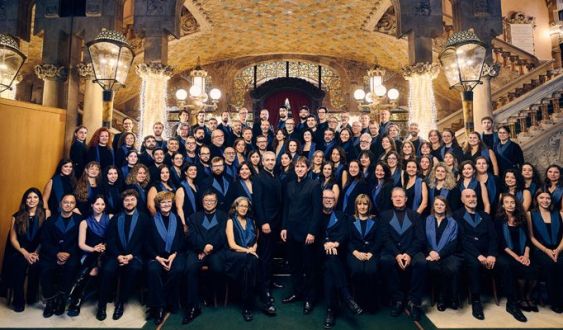
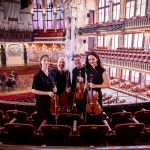
This is the family that gathered this September 28 at the Palau de la Música, with the prominence of the great cellist Pablo Fernández, first recipient of the Pau Casals scholarship (and who performed for us a Cant dels Ocells Vivancos version with literally little birds singing, and the entire Cello Suite No. 1 in G major by Bach); the Casals Quartet, which with surprising preciousness showed us what Schubert's String Quartet in C major means and why Casals was so attached to it (far from the - for me - unbearable sung winter lieder, and worthy disciples of Beethoven's sensibility); the Escolania de Montserrat, with a Nigra Sum and an O vos omnes by Casals himself, both historically connected to the serrated mountain; and evidently the Orfeó Català, which accompanied the Orquestra Simfònica del Vallès (and soloists Roger Padullés, Ferran Albrich, Gemma Coma-Albert and Marta Mathéu) with the Choral Finale of the Ninth. The latter under the direction of the enthusiastic Xavier Puig, director of the Orfeó, which completes this great family photo that under Beethoven's bust paid homage to Casals, with a very local compilation of indigenous talent, proximity art, zero-kilometer interpretation, a hallmark of the Palau. Liceu's Aida? Very good, too.
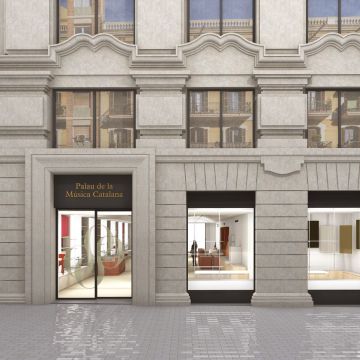
In the presidential boxes (among others) a notable representation of the Department of Culture, the Abbot Father, former mayor and former minister Narcís Serra, the director and the board of trustees of the Fundació Catalunya-La Pedrera, the chief architect of the Sagrada Família and evidently a good part of the board of trustees of the Palau and the Board of the Orfeó Català, proud of the quality exhibition shown and of the various promises, still embargoed by secrecy, that the institution holds for this season (some of an artistic nature, some more of an urbanistic nature), directed by the good team of Joaquim Uriach.
Perhaps the Cant de la Senyera is our Ninth, or at least our umpteenth song to freedom
The event linked the Ninth with the Cant de la Senyera with an almost musical continuity, and not just poetic (both pieces contained lyrics by Joan Maragall). Humanity, brotherhood, peace, freedom. Perhaps the Cant de la Senyera is our Ninth, or at least our umpteenth song to freedom, and perhaps it has been prohibited several times as if it were a subversive anthem and not the anthem of a choir. To exist, sometimes, is subversive in itself. And the Palau has decided to exist, and to exist a lot.
Add The New Barcelona Post as your preferred Google source for free
Stay informed with the latest news.