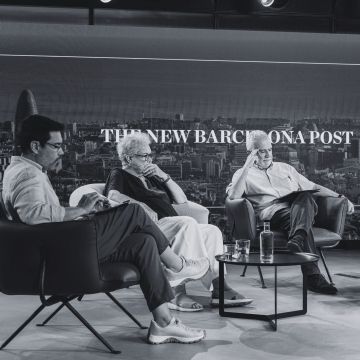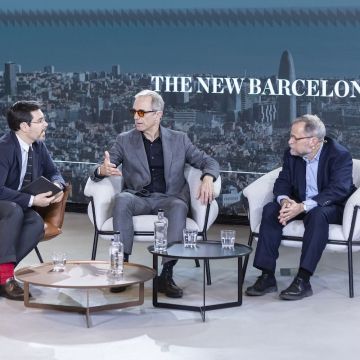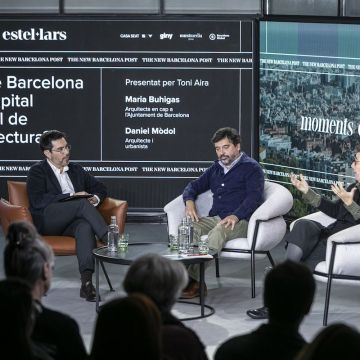
As much as one expects to find in the general director of the Liceu a profile of management and rigorous tie (because the Liceu still retains that veneer of the opulence of other times, and rightly so), when you sit down to converse with Valentí Oviedo, you immediately realize that in him there is no posturing, but there is passion. Of the kind that is not shown in a resume, but that filters into each of his answers. And that, to be clear, is contagious.
Oviedo is not only the gentleman who holds the keys to the Liceu (which he also is), but, above all, the administrator of a house "of voices." Not only because he defines it that way, but because he lives it. "The Liceu is an institution of voices," he says in a new session of the Moments Estel·lars cycle about the Liceu. And one cannot help but think that he also speaks in plural and with capital letters. Voices that sing, that narrate, that think. Voices that add up.
And he does not speak of the Liceu as a theater, but as a story that explains us as a country. With an undisguised ability to create complicities (with administrations, companies, artists or the public), Oviedo knows that, to make this project sound good, everyone must find their piece of melody in it. And he knows how to sell that. But not sell as someone who places a product: sell as someone who knows how to connect enthusiasms.
He knows a lot about marketing, but the good kind: the one that doesn't make noise, but resonance. The one that doesn't dazzle with acronyms, but with meaning. And that, applied to the Liceu, is pure orchestration.
When you say goodbye to him, with that feeling of having spoken more with an apostle of lyricism than with an executive, you think that perhaps yes, perhaps the Liceu is not just a great theater. Perhaps it is a great voice. Or many. And now, also, a gaze that knows where it is going.

Add The New Barcelona Post as your preferred Google source for free
Stay informed with the latest news.