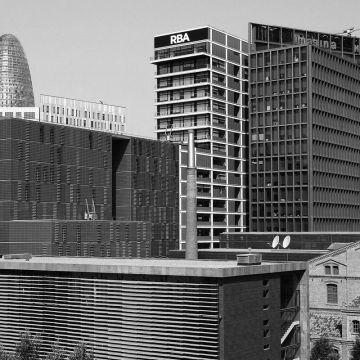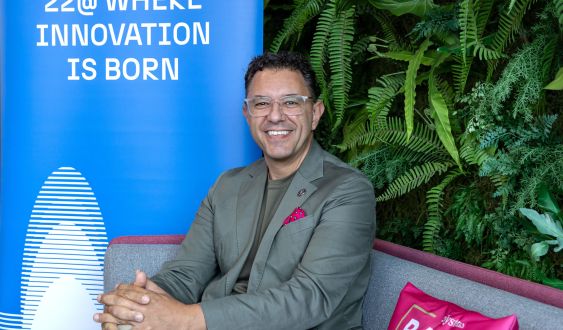
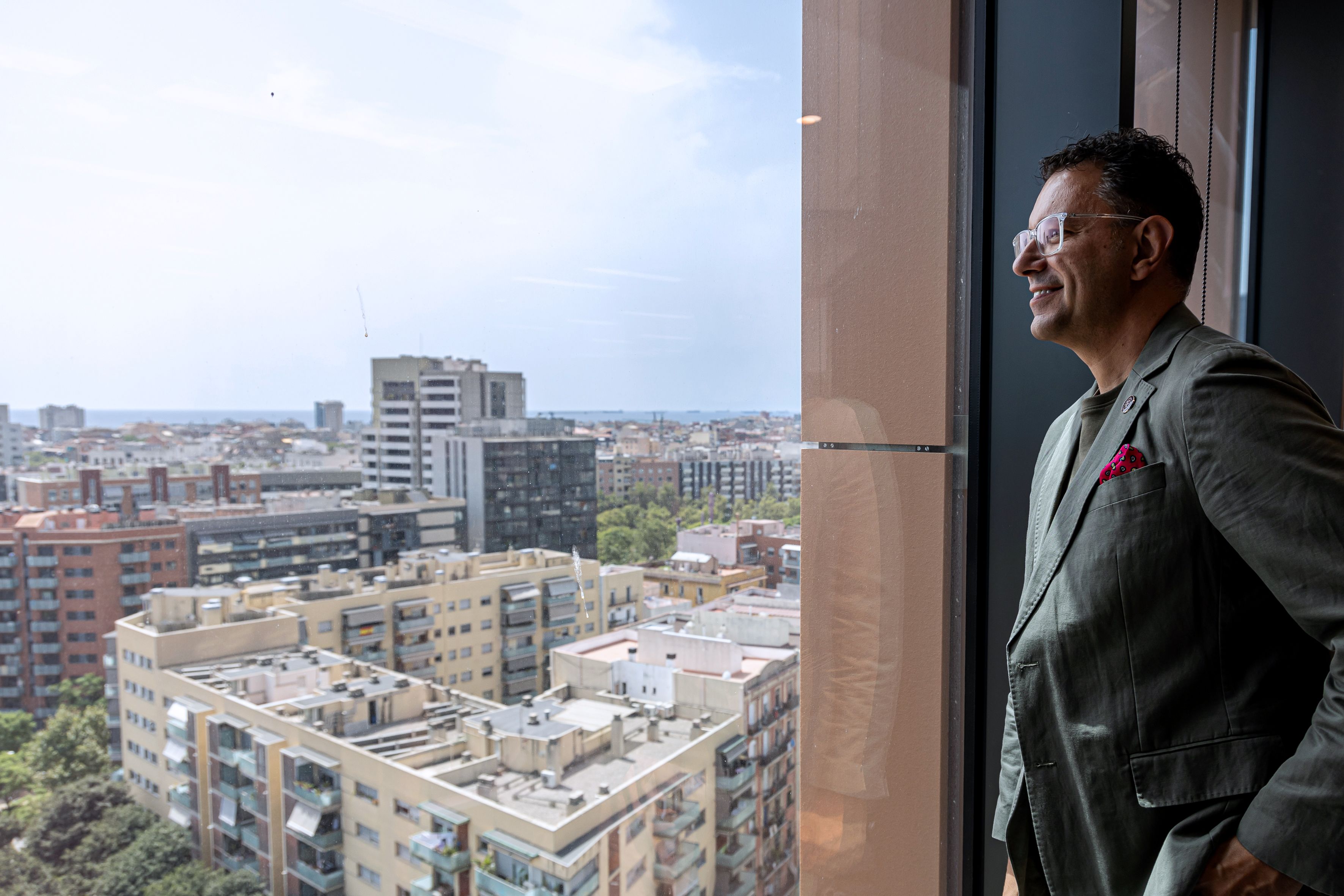
Osmar Polo has just assumed the presidency of 22@ Network BCN, with the promotion of public-private collaboration, talent, and innovation as priorities. He receives us from the offices of T-Systems Iberia, where he is CEO and chairman of the board of directors, with views overlooking 22@ Nord and icons of its transformation and its industrial past, such as Ca l’Alier and La Escocesa.
The district's model constantly attracts other cities to learn about this transformation: each week it receives an average of three international delegations. Polo has been able to verify this over the six years he has been on the board of 22@Network BCN, which brings together companies and institutions to energize the district's ecosystem. After two years as strategic vice president with Susana Prado as president, they have now swapped roles, as agreed at the beginning of the mandate, in a stage of consolidation of 22@ as a strategic piece for Barcelona.
— What is the current picture of 22@?
— We are in a good moment. It is a moment of consolidation for some issues, while also a moment of growth for others, such as the development of 22@ Nord, above Diagonal.
— Where we are right now.
— Exactly. T-Systems' offices have been here for about three years. But we have been in 22@ from the beginning, for more than two decades. In these years, the technology district has developed very well, where we now have an ecosystem among universities, companies, and development centers, which collaborate with each other. In fact, the key to everything is precisely that, collaboration.
— To operate as a connected ecosystem.
— And with this ecosystem, 22@ is a global benchmark. Many cities seek us out to understand how the district has developed, to share experiences and see the benefits of what has been built in recent years to position ourselves as a benchmark.
— What kind of cities?
— For example, we have quite a few conversations with London.
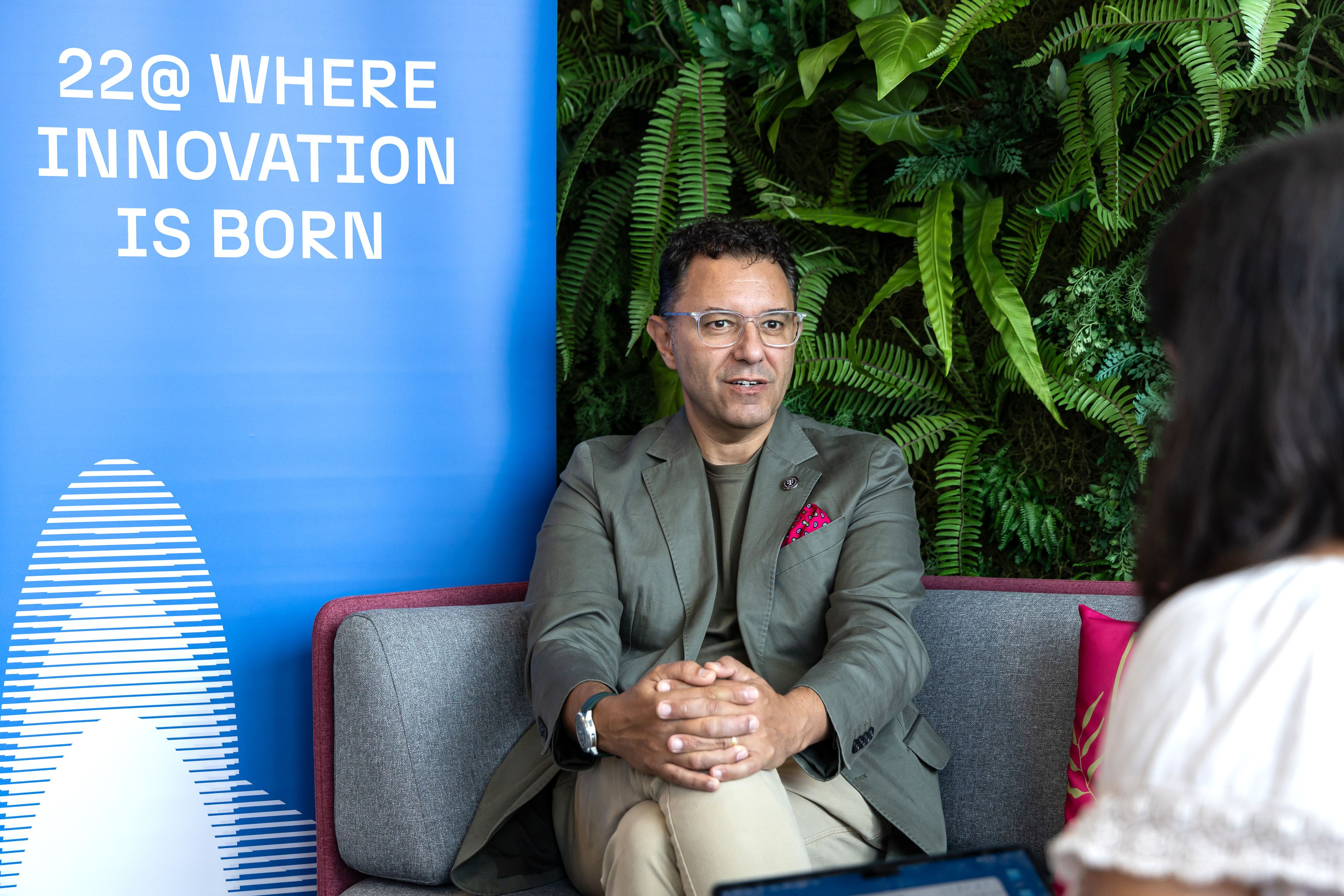
— I expected to talk about emerging cities, rather than one as consolidated as London. What is London looking for in 22@?
— We have a close relationship. In fact, there are initiatives that we do bilaterally. For example, a mission has been carried out to bring startups from Barcelona to London to hold a meeting between startups and investors, and now it is planned to do it in reverse, so that startups from London come here and put them in contact with local investors.
— It is significant that a benchmark like London approaches Barcelona's 22@.
— Other cities that want to launch technological districts also do it, such as several in Brazil, which carry out joint missions to learn about our experience. We also have an agreement with the Smart Cities association of Korea, and with Beijing and Hong Kong. Delegations normally come from South America and Asia, they are the ones that come the most.
— And from Europe?
— Also, especially to see the impact of the concept of sustainability, with initiatives such as the superilla.
— And that it was heavily criticized.
—- When it was launched, T-Systems was at the crossroads of the superilla. Then there was resistance and controversy, but it was filled with people using the public space, also as a laboratory. Having this urban laboratory space in the district is very powerful for innovation.
— Is innovation a priority of the mandate?
— This is a mandate of continuity, to continue implementing what was decided in the last two years, with Susana Prado as president and me as strategic vice president. A priority is to continue promoting public-private collaboration, and also the issue of talent and the development of innovation.
— And how does 22@Network work on these priorities?
— We work by commissions. Now, for example, we are betting heavily on AI. We have created what we have called 22@ AI Hub, with the aim of creating a hub where we can share practices linked to AI by the different companies in the district.
— And that also connects with the issue of talent.
— Exactly. We are analyzing how artificial intelligence can change the talent needs of the future to help universities, business schools and training centers incorporate these competencies. In the district there are 16 universities and training centers, with about 250,000 linked students. If we combine that with the 150,000 jobs in companies, the potential is enormous.
— Can this coexistence between the world of research and business be a key point for the Catalan strategy in favor of knowledge transfer and innovation?
— Absolutely. We cannot just define policies or point out priorities. Execution is needed. And for execution, the key word is collaboration: between companies, startups, technological hubs, universities, neighbors, and administration. And we can act as a unifying platform.
— Again, collaboration as key. And how does this collaboration materialize?
— With concrete initiatives. One of them is the 22@ Innovation Day, where we give visibility to companies that are innovating in the district and publicly recognize their projects. Many times innovation exists, but it is not known. We also work on matching between startups, investors, and corporations.
— Of the 2,400 startups in Catalonia, 1,100 are in 22@. It's practically half.
— In the district there are 37 coworking spaces and 26 accelerators, incubators, and entrepreneurship support entities, so the concentration of startups is very high. Also in technological hubs: of the 203 in Catalonia, more than 60 are here.
— Do you work from the association to attract these international hubs and companies?
— Other actors are in charge of this attraction role. But when a company is considering the possibility of landing in Barcelona, we help explain what 22@ is, what the district offers, and why it can be a good location. Last year, 54% of the companies that arrived in Barcelona settled in 22@.
— Do the figures respond to those who criticize 22@ and its availability rate?
— The assessment must go beyond available spaces, and must also look at factors such as attracting companies, generating quality employment, and the possibility of offering the district as a testing laboratory for innovation. In the end, the district must be seen as a city infrastructure and as a country infrastructure.
— In what sense?
— Sometimes we don't value it from the city, and we realize more what we have when people from outside come to observe us and try to understand. What we have here is brutally powerful. Because of the ecosystem, because of the attraction of talent, because of having companies, research centers, training, local and international hubs, all concentrated in the same space.
— However, there is still a housing shortage.
— It's a topic that constantly comes up when we talk to companies and our partners. We don't have the capacity to legislate, but we can convey the need and offer ideas. The lack of housing can slow down the growth of the ecosystem.
— Why?
— Because it affects talent. One of the factors that limits the ability to attract and retain professionals is displacement. Having the possibility to live and work in the same environment helps create community and collaboration.
— Do you fear that some companies might opt for other cities?
— Housing is one more factor in the decision. The availability of talent, transport, infrastructure, salary levels, and quality of life also count. Barcelona continues to be a very attractive city, but we have to take care of these elements.
— Other areas of Barcelona do combine housing with quality offices and business environments. Do you see these areas as competition for 22@?
— On the contrary, I see it positively, and not as competition. The more quality office spaces we have, the better for the city. And, consequently, the better for the district.
— How do you imagine 22@ in the short term?
— One of the short-term objectives is to work with other European technological districts to advocate in Brussels for us to have our own voice. We want technological districts to be considered a player.
— With what objective?
— To have a voice to influence European policies, channel investment, and facilitate the implementation of innovation-related initiatives.
— To strengthen the international voice, does 22@'s voice in Barcelona also need to be strengthened?
— One of the issues we are advocating for and requesting is its own headquarters for 22@, as other international technological districts have. An open headquarters where we can explain the evolution and growth of 22@, where we can showcase the district's innovative initiatives and companies, both to citizens and to the international delegations that visit us. A space for demonstration and collaboration, where we can show other cities the power of what we have here.
— Like a showcase for the ecosystem.
— Exactly. A space to showcase 22@ as the international benchmark it is, as a city and country infrastructure, where collaboration is key.
Add The New Barcelona Post as your preferred Google source for free
Stay informed with the latest news.