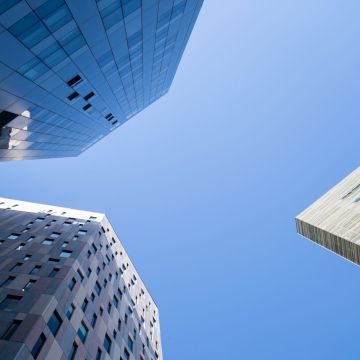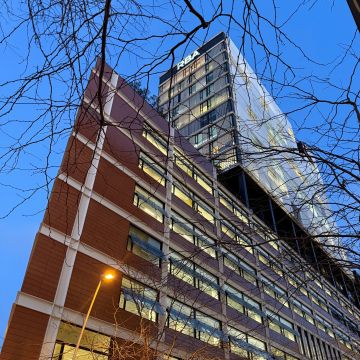
Barcelona is experiencing a key moment in its economic and urban evolution. The combination of different elements, such as quality of life, global connectivity, and the prestige of its universities and research centers, has turned the city into one of Europe's main technological and innovative hubs, especially regarding the establishment of international innovation and digital development hubs. In the next decade, 22@ must be the land of hubs. A space that is not only a place of establishment but also of rootedness and consolidation.
In this entire scenario, the 22@ district acquires a fundamental role. The old Poblenou area has become the gateway for global technological hubs on the European continent. What two decades ago was the image of deindustrialization, today represents the image of the future. A future based on startups, technological centers, the connection between the world of research and the business world, talent, and also, on hubs.
Being a key piece of the Catalan economy is no coincidence. The 22@ model responds to a sustained urban, economic, and business transformation over time, which has been able to turn 22@ into a unique space. The district is more than offices, it is an ecosystem, a connection network. But why do companies choose the district as the headquarters for their hubs? 22@ has a characteristic that makes it unique; its ability to concentrate talent, knowledge, and connections in the same urban environment.
The data from Mobile World Capital speak for themselves: Catalonia has 203 technological development centers, with global services that generate an economic impact of more than 4.1 billion euros and employ more than 46,000 professionals. Barcelona concentrates 70% of these hubs, and practically half are located in the Poblenou and Sant Martí neighborhoods, consolidating 22@ as the innovation pulse of the country. Thus, talking about the future of Barcelona necessarily involves talking about hubs and innovation.
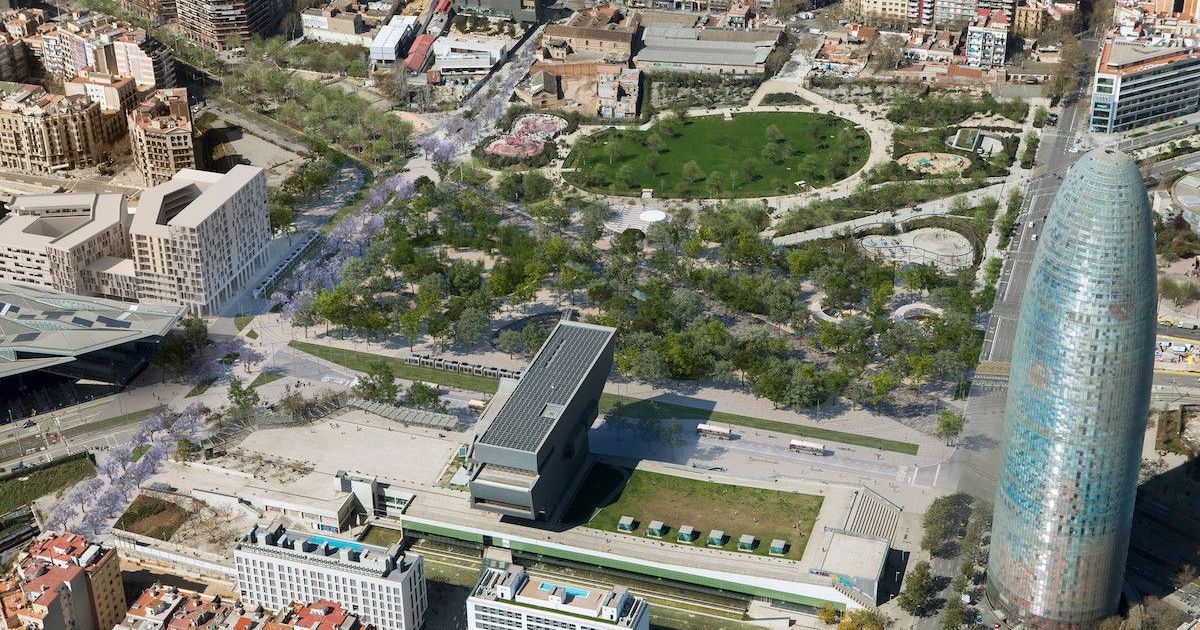
The district has become home to more than 67 global technology hubs, the ideal place to establish large corporations looking to develop activities related to innovation, software, AI, cybersecurity, or digital transformation. Global companies such as Amazon, Microsoft, Cisco, SABE, Schneider Electric, Oracle, Inetum Ubisoft, Qualcomm, Gartner, and T-Systems, among others, have already established their hubs in 22@.
In this context, the 22@Network Barcelona association has also committed to the creation of hubs, specifically the 22@ Urban AI Hub, an open innovation infrastructure designed to experiment, validate, and scale artificial intelligence projects that are intended to be applied in real environments. The challenge is no longer just artificial intelligence, but turning it into a useful tool for people and organizations, connected to the economic and urban reality of the territory, and thinking about the necessary infrastructures to turn 22@ into an AI District.

The district's ecosystem must be aware that its future inevitably involves consolidating a model based on the connection between talent, innovation, and economic activity. In short, 22@ must become a land of global hubs, a space for everyone who wants to explore, create, innovate, and connect.
In a future where cities will compete more to attract talent, Barcelona is moving ahead and beginning to make its mark on the map in terms of artificial intelligence. In short, our district is synonymous with technology and knowledge, but above all with connection to other ecosystems to design the future.
Add The New Barcelona Post as your preferred Google source for free
Stay informed with the latest news.