
Oliver Canosa had a demanding job and, from time to time, liked to disconnect for a few minutes. He'd typically do this with phone in hand, and a five-minute break would stretch into fifteen, slipping from downtime into distraction. That's how, in 2024, Off started to take shape, an app to disconnect from your phone that limits screen time in a flexible way, while also offering alternative activities and psychological support.
“Social media and certain apps are designed to make you lose sight of the world for as long as possible,” says Canosa. Driven initially by his own need, he began researching what apps were out there "to have a healthier relationship with the phone and put an end to these loops," but found that none of them offered a wide enough range of ways to disconnect: they were just simple blocking systems with expensive subscriptions.
“We thought about developing a more advanced option,” says Canosa, who until then had worked in fields like investment and sustainability. To start shaping Off, he reached out to professionals in the tech sector. A first version came out of that, which has given way to what Off is now: “a system to manage one's own time.” The goal is not to turn the phone into the enemy or replace one app with another, but to help the user decide when they want to be connected and when they don't. “I close it and get on with my life.”
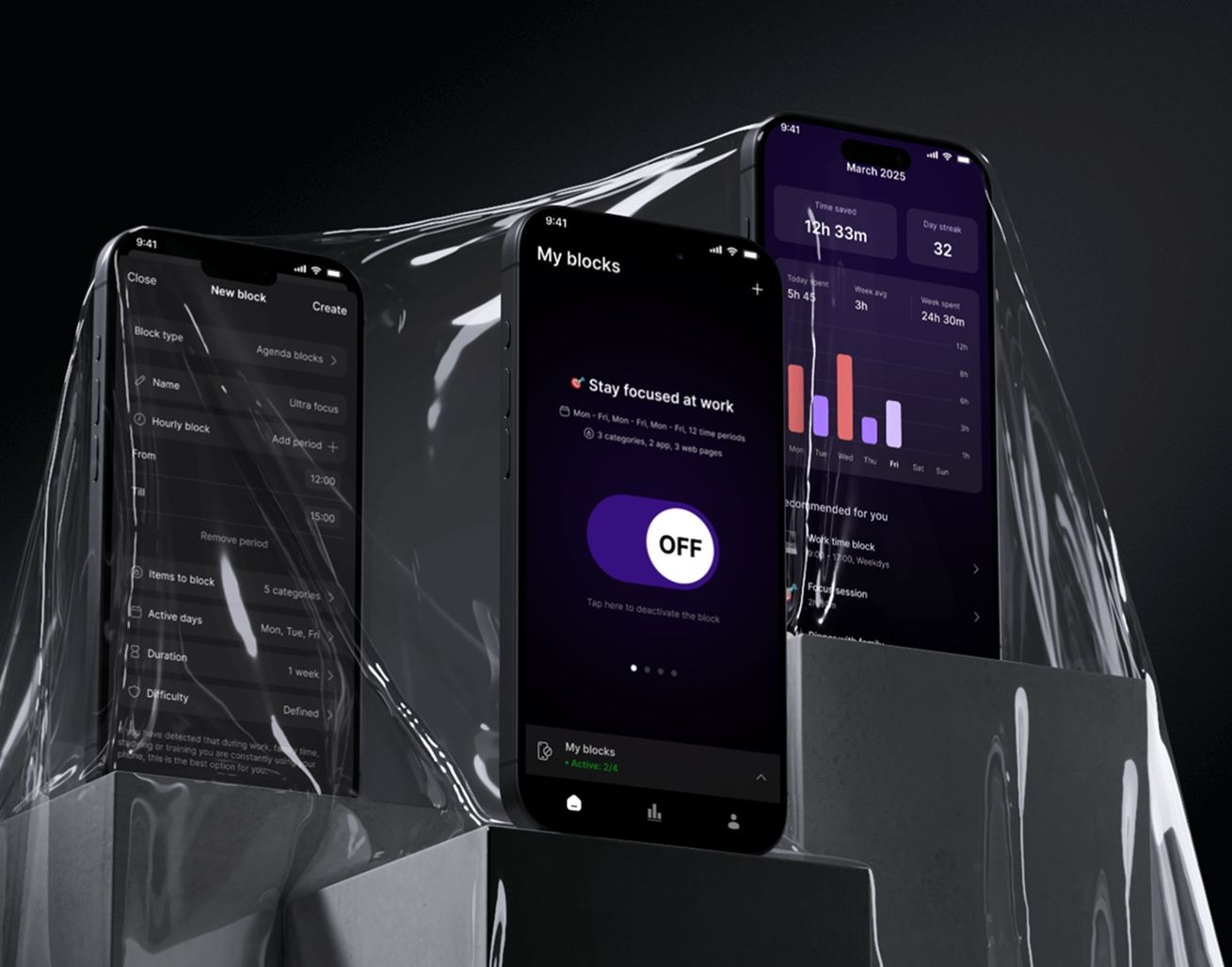
With that goal in mind, the app allows users to set up six different types of blocks — from limiting access to a specific app to restricting the use of the entire phone or setting limits on scrolling sessions. When the set time ends, Off closes the app and shows the user how long they have been on it. It also includes a stats system that tracks how many times a day someone picks up their phone, which apps they use most, and what times of day their usage peaks.
These data, as a whole, show that Off users reduce screen time by between 20% and 50%. But Off has expanded beyond the phone itself, adding two tools that set it apart from other apps: an activity finder to discover local events, and psychological support.
For events, Off has signed an agreement with Fever, through which it offers a search engine for events and activities in the area, with concerts, exhibitions, theater, and other offline options. For psychological support, Off has found a second partner, the German startup It’s Complicated, which gives users access to an international network of psychologists and lets them book therapy sessions.
In this way, the project extends the idea of disconnecting beyond the screen itself. Off has users in more than 120 countries, mainly in Europe and the United States, but also in markets such as Morocco, Algeria and Tunisia. The app is available in Catalan, Spanish, English, French and Chinese.
The app, which offers a free version alongside a subscription for 99 cents a month, has been built out of Barcelona without external investment, with the goal of becoming "an international app that has a positive impact on society.” Looking ahead, the company is exploring incorporating AI, with a system capable of analyzing each person's usage patterns and automatically suggesting the blocks best suited to them. It's also exploring the possibility of Off acting as a kind of "virtual coach," suggesting exercises to help users change habits and be more present in real life, and less glued to the screen: "Off makes it easy for you to disconnect fully and in a healthy way.”
Add The New Barcelona Post as your preferred Google source for free
Stay informed with the latest news.