Yes, this is another fucking article about Mr. Nolan's Odyssey... and I perfectly understand that the loyal reader of our Punyalada might pass it by. That said, and due to professional deformation, one of the first features that surprised me about this wonderful film was how the accumulation of noise —especially in the scenes before the protagonist's shipwreck— is an essential part of its narrative conception. Because this saturation of shouting and helplessness, woven into such thunderous clusters that would drive anyone to mental saturation, explains very well the fact that our friend Nolan has approached Homeric narrative, basically, to get revenge for providence not allowing him to direct films like First Blood (yes, the first Rambo). Due to such an obsession with warrior psychology, the London genius has transformed Odysseus into a battle veteran with severe post-traumatic stress, obsessed with returning home; and not only to reclaim his throne, but because, while exercising his memory, he has remembered the small detail that a pack of hairy men want to fuck his beloved wife.
Our world, and also the tribe, is overflowing with mestretites (I didn't know that, among us, we had so many experts in Homeric literature) and moralists (I did know about that, because I find ethics clerics in every corner) and most of these two species, which can coexist in a single person, have dismissed this beautiful Odyssey by citing the almost null presence of divinities in the plot and the fact that most females play a purely testimonial role. According to these very affected people, who usually analyze works of art by appealing to statistics, the movie in question could only be read as the umpteenth attempt by the machosfera (that is, the men's hangout to counteract the feminist rise) to return cinema to stories of muscular and testosterone-fueled heroes. In the present case, one might think that Nolan dismisses the fiery Calypso as the simple mistress of a love triangle (indeed, that's how Charlize Theron is shown to us when he leaves her beaches) and Penelope as the passive receptacle of the stubborn will of the lord.
But as always happens, under the amendment of the perepunyetes lies precisely the grace of the matter. Indeed, this Odysseus has a problematic relationship with the gods (in his very brief dialogues with the mysterious Athena-Zendaya, the warrior directly accuses her of speaking an incomprehensible language), but this obstacle of communication and empathy lies in the disillusionment of Troy, after which our hero discovers that unheard-of human cruelty —the architectural basis of the horse, and therefore of the warriors' ingenuity— has broken the fictional pact between men who believed themselves malleable and divinities of perfect appearance. This Odyssey is precisely about the discovery of a new world in which it is not that the gods are absent, but that they are basically superfluous, not only because men have discovered their shortcomings, but above all because they no longer need them as a driving force. I understand that, in an era of very heavy collective philosophies, many people find the story of a marriage that, plainly and simply, resists as individuals, strange.
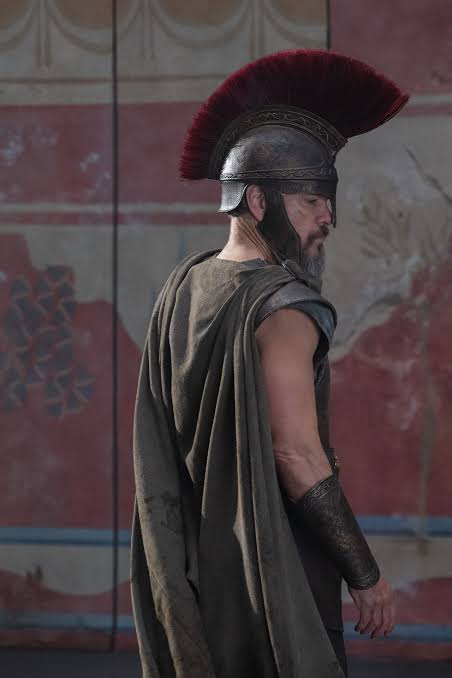
In this sense, I have been particularly pleased that the estimable Nolan has transformed the first hero of world narrative into a kind of tortured Batman of life who, once the task that cements the moral duty of the West is done, comes to the conclusion that it is best to leave home and exile himself from a world that is no longer thirsty for prophets (something that, by the way, has not gone down well with cinephile machosferistas). This transformation of trauma into action may seem like a psychoanalytic and somewhat amateurish approach to myth, although, on the other hand, it is one of the specialties of the Yankees in the art of cinema. But I find it endearing to see how men accept the only flaw that leads them to undertake profitable adventures, however laughable they may seem. After all, dears, you have already killed our James Bond, you have turned Don Draper into a prisoner who will be tortured for ever and ever (see the end of the last season of Fargo), and now you also wanted to turn Odysseus into a puppet of the goddesses. Let us, at least, keep the flawed ones...
PS1.— Apart from all this, it must be understood that Mr. Nolan knew that cerebral films on the subject in question (like Angelopoulos's very famous Ulysses' Gaze, which I re-watched to remember what a fucking bore it was) were already made, and that what was asked of him —and by "him" I mean the people who paid the sacks of millions of cucumbers that the invention is worth— is an adventure story attractive enough for people to spend eight or ten euros, settle their bottoms in the cinema, and leave the room with their morale a little higher, regardless of their gender, sex, or trifásico. The filmmaker has succeeded, and has also achieved the challenge of making three hours of heroic nagging fly by, which is very commendable.
PS2.— In turn, it has been very funny to see how —in this type of situation— there are people who criticize a film because it is not faithful enough (in theory) to the book from which it is inspired... when it can be seen very clearly that they have not read a single verse of it. All this you have given me, Christopher. And to the editors of W. W. Norton & Company, who must still be cracking open liters of champagne in their Fifth Avenue headquarters. Who would have thought that Homer could generate so much money...
Add The New Barcelona Post as your preferred Google source for free
Stay informed with the latest news.