
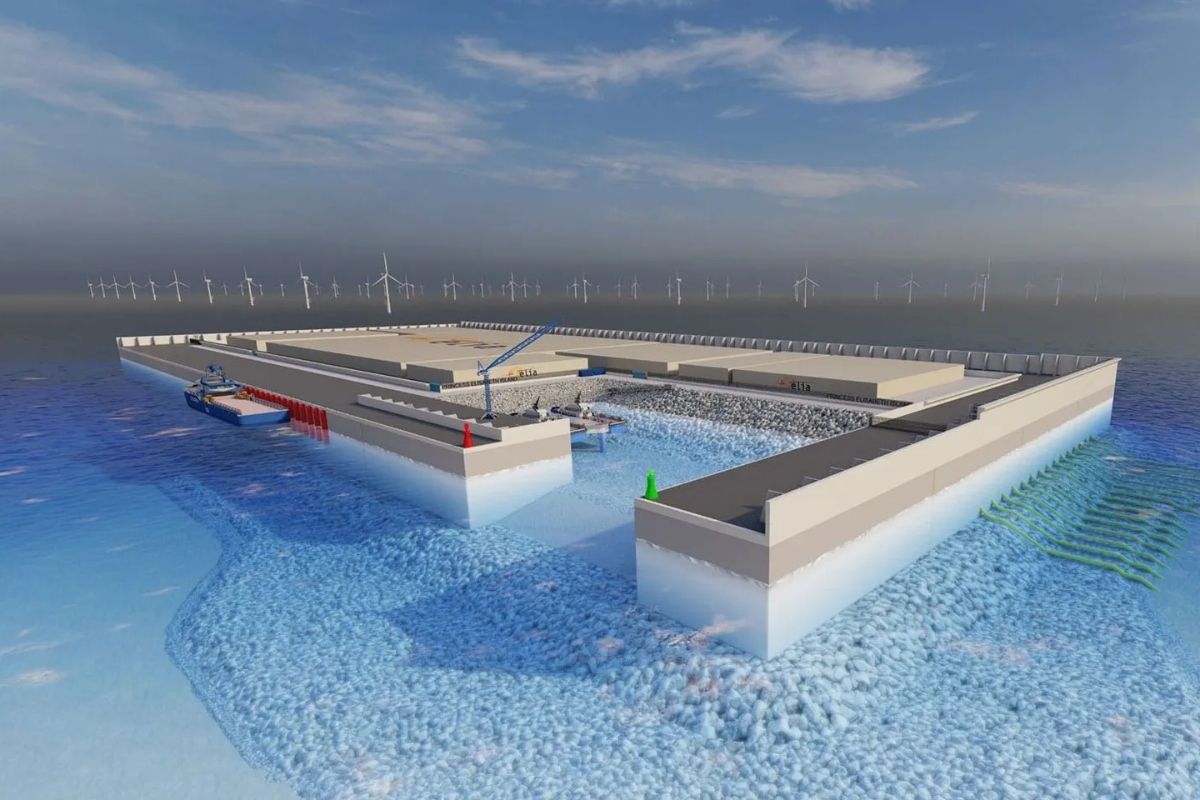
A new island the size of 12 soccer fields is emerging 45 kilometers off the Belgian coast. It will be the world's first artificial energy island, and the largest civil marine infrastructure built offshore in Europe. It will do so as a transnational project that will connect the North Sea wind farms, with the aim of generating sustainable energy. Instead of rising on a sand desert on the seabed, the infrastructure has been conceived with the intention of contributing to generating marine life. To this end, the project developer, the Belgian operator Elia, has chosen the Barcelona startup Ocean Ecostructures to install its bioregeneration technology, with modules that reproduce the conditions of natural reefs and allow the creation of complex and resilient ecosystems in environments affected by infrastructures linked to human activity.
"Having been chosen for such a large and emblematic project at a European level gives us credibility and visibility, and accredits our solution and our power," defended Ignasi Ferrer, founder and CEO of Ocean Ecostructures. The startup, founded in 2021, has been awarded a contract worth more than 1.2 million euros in a first phase, in which it will install 500 of its regenerative modules in the corners of the infrastructure. After this first phase, "the idea is to expand the project until it covers the entire island," whose surface will reach six hectares, equivalent to 12 soccer fields.
The project, developed by Elia, is being designed and built by TM Edison, a joint venture of the construction companies Deme Group and Jan De Nul Group. The island, which will be operational in the summer of 2026, will serve as an electrical interconnection point between Belgium, the United Kingdom, and Denmark. Specifically, the infrastructure will become a shared transformer center, which will reduce the impact compared to what it would represent if each State launched its own exclusive facilities. As a sign of its magnitude, the so-called Princess Elisabeth Island will include facilities such as its own port and a helicopter base.
To install these initial 500 modules, Ocean Ecostructures has worked to adapt them to the extreme conditions of the North Sea, which have nothing to do with those of the infrastructures in which it usually operates, mainly in calm water ports with breakwaters. Thus, the project implies new conditions for the company, and also its entry into the energy sector for the first time, which allows it to gain "visibility within a different ecosystem."
With the visibility it has been acquiring since its founding in 2021 and through its unique global technology, Ocean Ecostructures has gained strength, and has gone from closing 2023 with a turnover of 100,000 euros to having signed contracts worth 2.2 million. The startup, which has also entered a Nasdaq Entrepreneurial Center program and operates from the Barcelona hub of the Swedish accelerator Norrsken, allowed Banco Sabadell, Ship2B Ventures and Inclimo Climate Tech to enter its shareholding at the end of last year, through a 1.6 million euro financing round.
The workforce has grown in parallel, from the initial four workers to the 21 people it will be in September. The team, led by Ferrer together with co-founders Mireia de Mas and Anna Lloveras, is mainly composed of biologists and engineers; the assemblers and manufacturers are always local, with the intention of reducing environmental impact by avoiding the displacement of materials and personnel. With these twenty workers, the current workforce could be expanded again in the coming months: the company is awaiting several projects related to both national and international infrastructures, which are considering installing Ocean Ecostructures' pioneering technology.
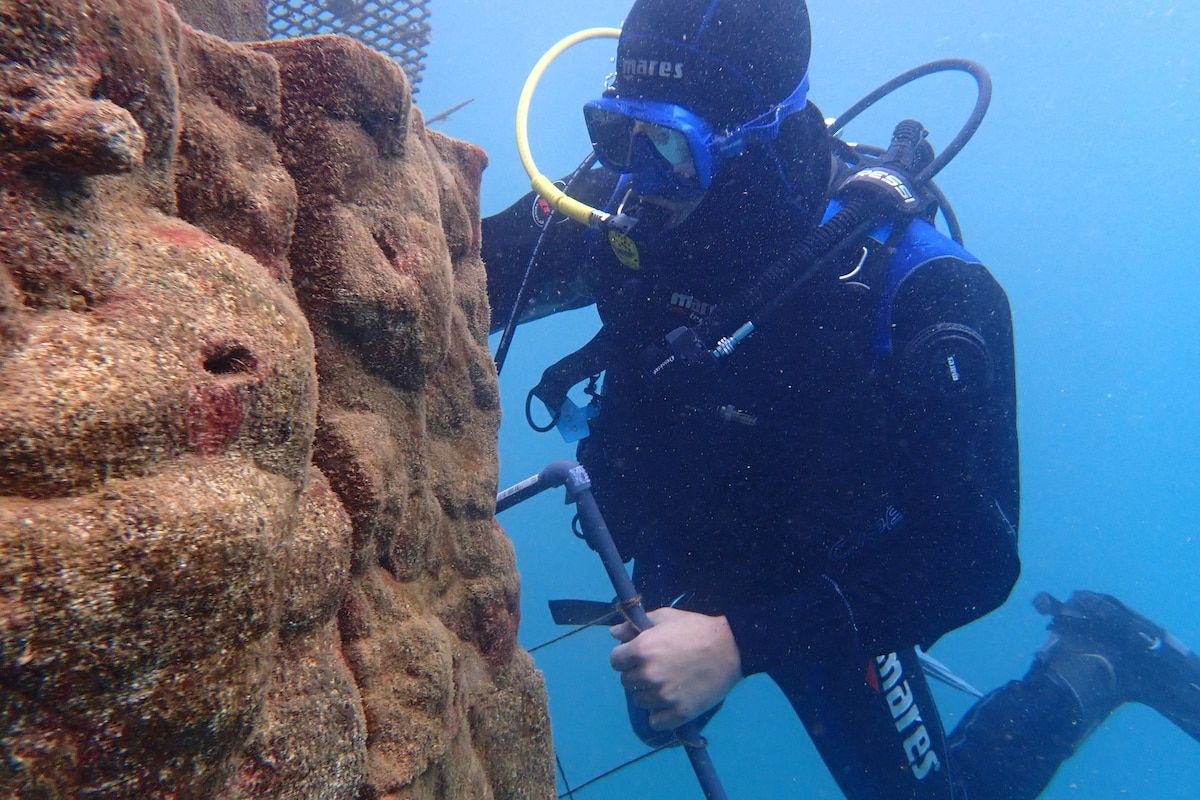
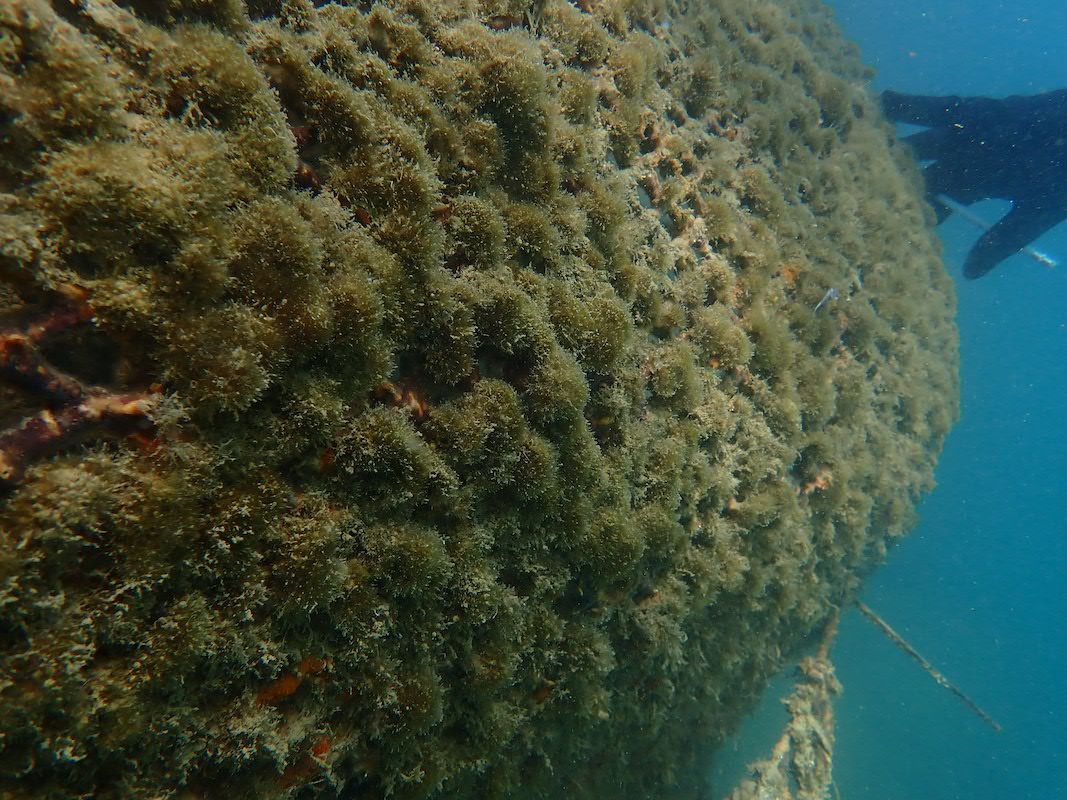
This technology includes both marine regeneration modules and their monitoring through underwater drones with cameras, probes and AI, and the generation of reports based on the data collected. These data conclude that the more than 165 units that Ocean Ecostructures has already installed in 22 ports have generated 2,185 kilos of biomass in one year, have avoided one ton of CO2 and contributed to gaining a hundred species in the global of their ecosystems.
With its technology, called Bio Booster System, the company aims to generate a paradigm shift in which human infrastructures go from being "enemies of the sea, to being regenerators of marine life." To stop subtracting and start adding, something the company aims to continue taking to more places worldwide, and it wants to reach 20,000 marine infrastructures by 2030.
Add The New Barcelona Post as your preferred Google source for free
Stay informed with the latest news.
