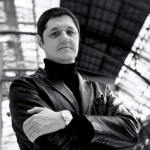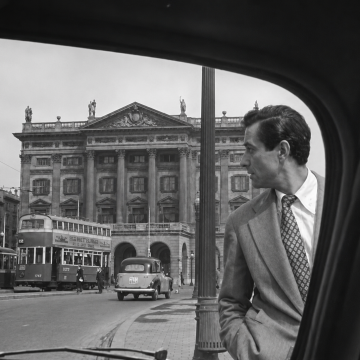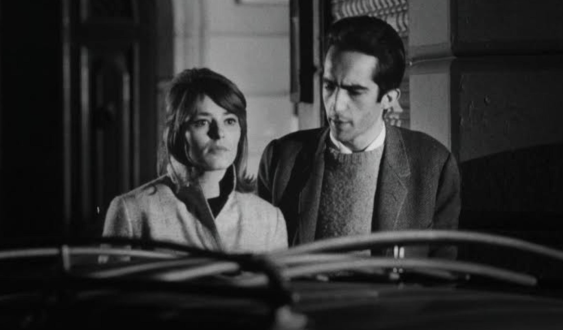
Black screen. Sounds of trains, of a long journey. Suddenly, the phrase "in every woman there are all women" appears superimposed. The action begins when Ella, played by Italian actress Serena Vergano, enters an apartment. Images of Miró, Picasso's Guernica, and books hang from the walls. Folk music plays. A nest to which the woman returns with evident enthusiasm.
A flashback takes her back to this same apartment, some time before, embraced by a man a little older than her, attractive, evidently in love, played by Rafael Arcos. They are lovers. He makes her promise that if one day she arrives at this place and he is not there, if he does not appear, everything will be over. And now he is not there, nor does he appear, and a leaden cloak of sadness falls upon her, who leaves the apartment and begins to walk, aimlessly, down the street.
She stops at a cafeteria, enters, and sits next to a group of modern young people. Beside her, with his back turned, one of these boys –Enrique Irazoqui– recites a poem in the form of a plea to a woman –Anne Settimó–, inviting her to sail the skies of a night made only for the two of them, but she refuses, rejects him, ignores him, and the young man gets up to leave. Driven by a desire to escape the here and now, the protagonist runs after him and offers to explore with him this night that has just begun.
–If you let me, I'll go with you to that last heaven of yours –she proposes.
He accepts, under one condition:
–No questions, no memories, no nostalgias; being born now.
Thus begins Noche de vino tinto (Red Wine Night), the 1966 film with which José María Nunes elevated Barcelona cinema to a new artistic atmosphere. A story of lonely and wounded souls wandering together on a night where red wine, consumed in various taverns of the Gothic Quarter, facilitates the flow of words, reflections, and events. An ode to love and heartbreak, to solitude, to serendipity, and to a city deeply loved by the filmmaker who founded (and kept alive) the Escola de Barcelona.
“In 1956, Nunes had directed his first feature film, Mañana…, sometimes considered the beginning of the Escola de Barcelona. Undoubtedly, many of the features that would characterize this school already appear here, to a large extent. This would perhaps place Nunes in the position of precursor, in addition to being a member and co-founder of this movement whose heyday we could place between 1965 and 1969,” argues musician Daniel Nunes, one of the director's sons.
A poetic, avant-garde, strange, and uncompromising work.
“In that first feature film – he continues – one of the episodes is titled Chico y chica. In it, a man and a woman who don't know each other at all meet and share adventures on a very poetic Barcelona night. This story, developed as a screenplay for a feature film, gave rise, ten years later, to Noche de vino tinto, probably his best-known film. A poetic, avant-garde, strange, and uncompromising work. In it, the woman–man–Barcelona night trinomial is structured around a new element: red wine.” The film would eventually elicit the admiration and applause of Jean-Luc Godard and Alain Resnais themselves.
The gaze of the anarchist
José María Nunes was born in the Portuguese town of Faro in 1930 and, with his family, had come to Spain when he was twelve years old, passing first through Seville and settling, shortly after, in Barcelona, where they settled in the shacks of Montjuïc. Soon, the city would become an emotional stage that he would never stop navigating in search of its secret streets, its neighborhoods, bars, and corners where nothing more is needed than the soul, character, and history that overflow.
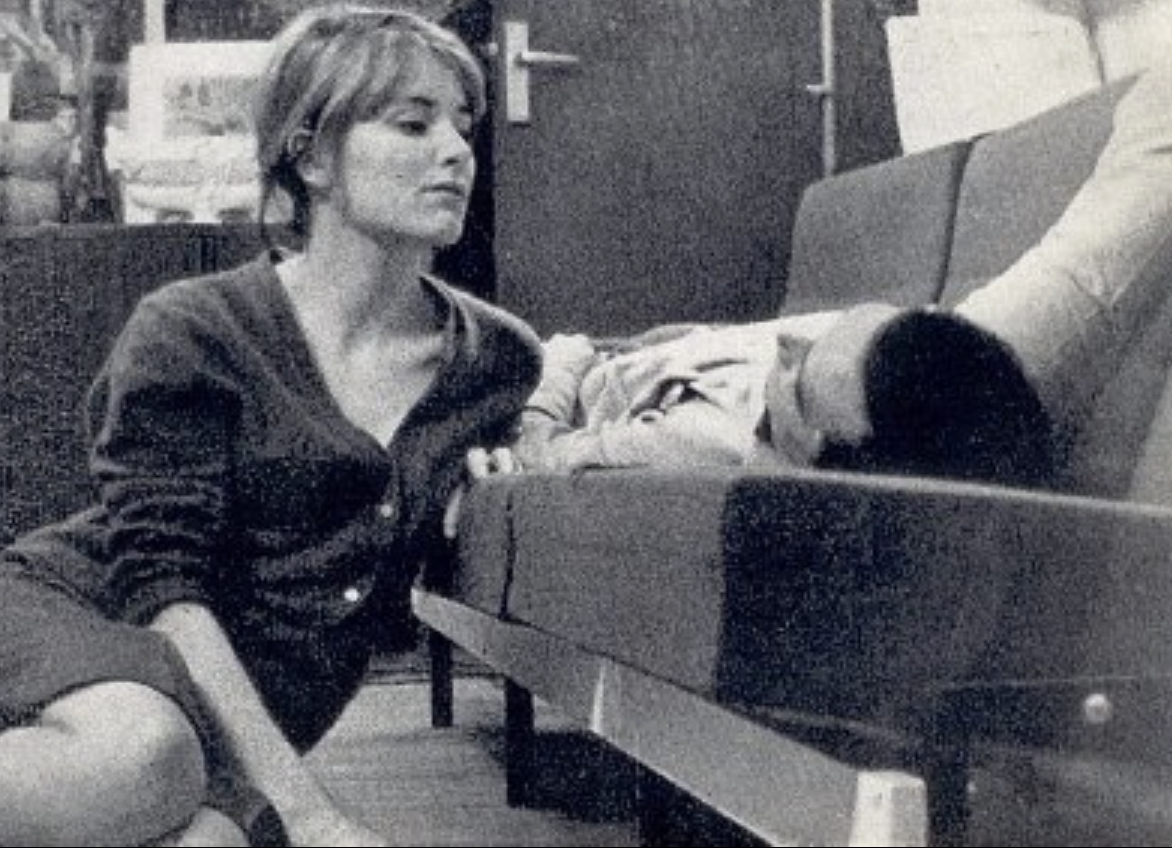
From the 1950s, he gained experience in the world of celluloid under the guidance of filmmaker Enrique Gómez and the all-powerful producer and director Ignacio F. Iquino, whom Nunes would define as his “great film school”. He debuted in 1956 with the aforementioned Mañana…, a collection of street snippets where he already made clear his vision of a cinema far removed from conventionalisms, where the plot was accessory, not to say unnecessary, and easy entertainment was the enemy to beat.
In the collective book Nunes, més enllà del temps, Joan M. Minguet Batllori describes the filmmaker in the following terms: “his humanist anarchism, his commitment to intelligence, the irrepressible need for freedom. Nunes's expressive radicalism always seeks the active, also irreverent, spectator (and reader). Nunes used to say that it is better to fail than to wallow in success.” The filmmaker preferred a spectator getting up in the middle of the screening to one who stayed there, passively.
Nunes used to say that it is better to fail than to wallow in success.
In the same work, Steven Marsh describes his films as “intriguing jazz compositions, full of loops, movements that snake through randomly articulated circuits forming hieroglyphs and arabesques. Like the improvised music that so permeates his films, Nunes' nonconformist cinema is avant-garde and wandering, nonconformist and formless; a cinema that challenges and dissents from traditional ways of making films.”
This controversial and anarchic narrative vein would be what planted the seed of the Barcelona School: a cinematographic movement based on experimentation, Pop, improvisation, disdain for all forms of plot, and an excessive love for the French Nouvelle Vague and British Free Cinema, as well as for the existentialism of Camus or Sartre and the Situationism of Debord or Trocchi.
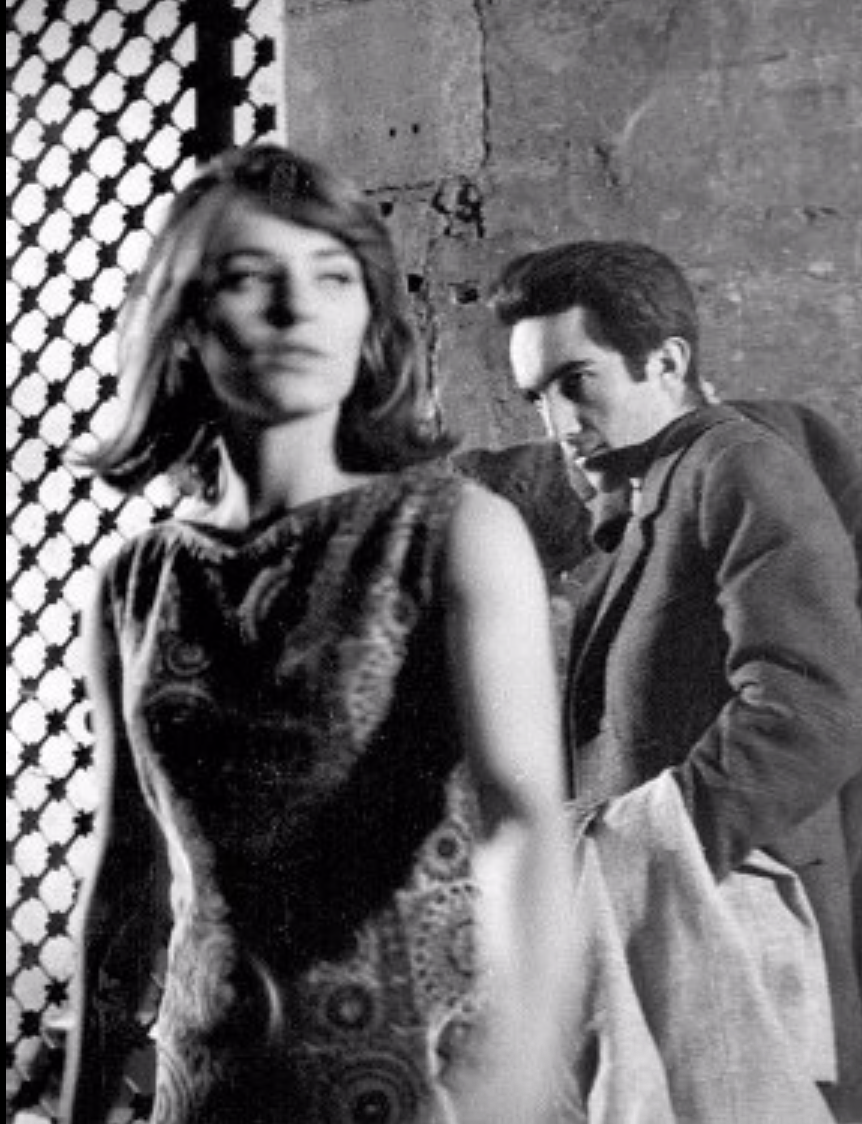
Filmmakers like Pere Portabella, Jacinto Esteva, Joaquim Jordà or Jorge Grau would be the standard-bearers of this movement where, however, Nunes also wouldn't quite fit in, a proletarian in an environment of children of the Catalan bourgeoisie, immune and indifferent to the splendor of the Gauche Divine and the strobe lights of Bocaccio and other boîtes on Tuset Street. His was cinema of the street, of neighborhoods, of people like you and me who fear the end of the month.
His was cinema of the street, of neighborhoods, of people like you and me who fear the end of the month.
Journey and tightrope walking in Barcelona's night
Let's return to Noche de vino tinto. When the protagonists converge, outside the cafeteria, and the agreements are clear –to the point that he doesn't reveal his name and doesn't allow her to say hers, baptizing her as Traveler–, the nomadic journey through the taverns and streets of the old city begins. From L'Almirall on Joaquim Costa to Plaça Sant Felip Neri, passing through Passeig de Picasso, as part of an countless succession of more or less recognizable corners and meanders of the Gothic Quarter and El Raval.
The night belongs to them and their worst enemy is time. “None of these days hanging on calendars deserves our journey. The time of clocks is dead!”, He exclaims at one point. In another scene, before some chimes indicating the time, the protagonists cover their ears so as not to hear. So as not to have the slightest awareness of how much time has passed and –even worse– how much they have left before dawn kills the spell of this night that is theirs and only theirs.
The time of clocks is dead!
And then there is the wine, which gives the work its title. Drunk as a ritual, as a facilitator of the internal and external journey that gives rise to this poetic journey of encounters and mismatches between the two, interspersed with flashbacks that –like poisonous ghosts stealing the scene– interrupt the course of the evening through which we get to know the characters a little more and, above all, the source of their pain. The reason for this feeling of lacerating emptiness when your heart breaks.
We discover His deep love for the woman played by Anne Settimó (who, by the way, participated in the film's screenplay), and of Her, Traveler, we know that she is the daughter of a bourgeois family from Vic from which she sought to flee by throwing herself into the arms of this absent lover embodied by Rafael Arcos. And we see how the night and the wine free the essences of pain, of the desire to live and perhaps die, of shared solitude, with narratively risky dialogues and situations.
“Noche de vino tinto has [...] a surprising air of voluntarily assumed transcendence, which continually oscillates between the sublime and the banal, in a difficult balance from which its director almost always emerges victorious. And while it is true that the film's dialogues sometimes sound excessively pompous, it is no less true that Nunes' powerful visual imagination manages to preserve his creatures from ridicule. Innocent, even naïve beyond what is sensible, the disoriented Nunian characters remain standing, however, thanks to the disarming sincerity with which the director dresses them,” analyze Esteve Riambau and Casmiro Torreiro in their essential La Escuela de Barcelona: el cine de la ‘gauche divine’.
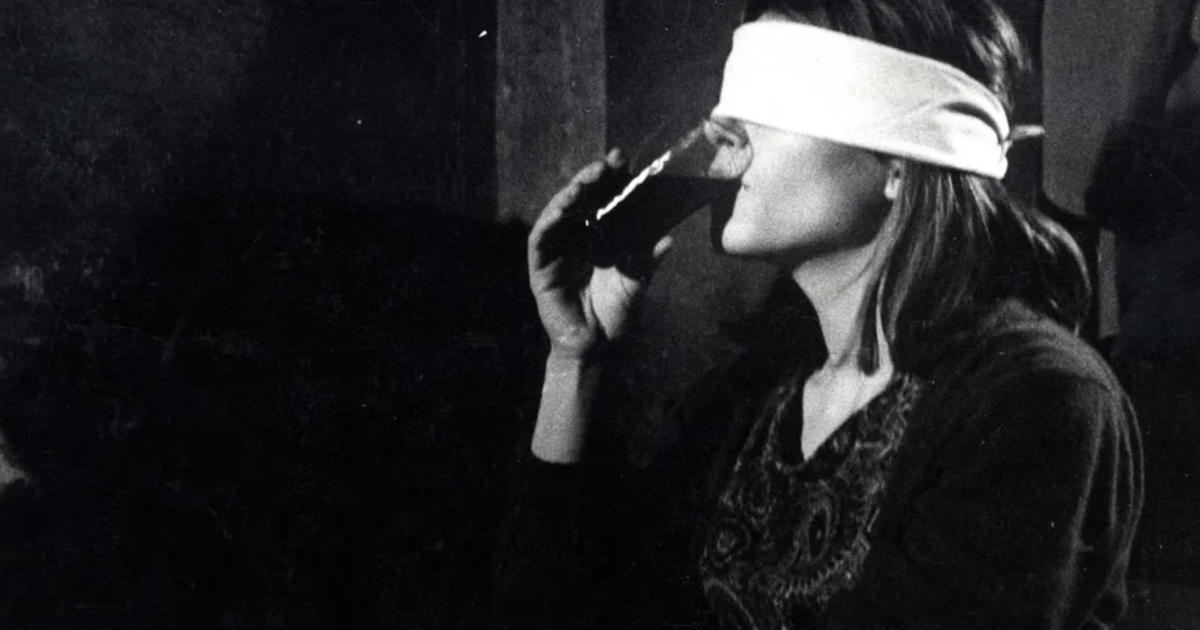
During the filming, this difficult balance was on the verge of breaking on several occasions. Enrique Irazoqui was not a professional actor and his only contribution to cinema had been, to date, having played Jesus Christ in Pasolini's The Gospel According to St. Matthew. He did not understand Nunes' script and many phrases seemed ridiculous to him.
Something similar happened with Serena Vergano, a Milanese woman living in Barcelona who was not the first choice for the director (who had thought of Núria Espert for the role), a method actress for whom many of those phrases and situations were ridiculous. Nunes would recall, years later, having threatened the actors during filming with firing them and having their place taken by the first couple to pass by on the street. "The rich are always afraid of ridicule," he would determine, regarding that anecdote.
"The rich are always afraid of ridicule"
Vergano herself realized the magnitude and beauty of the work only once she saw it in the cinema. "We were nomads, gypsies who spent nights in the Barrio Chino, in bars, without sleeping, on carajillos. We filmed sunrises, there was no shooting plan, it was a terrible thing. I was completely exhausted, but what stimulated me quite a bit was its very curious aesthetic. I saw how it illuminated and when I saw the projection I was quite impressed because the film is very beautiful," the actress recalled in the aforementioned volume by Riambau and Torreiro.
In 1967, Serena Vergano and Enrique Irazoqui would repeat their tandem in the histrionic Dante no es únicamente severo, by Jacinto Esteva and Joaquim Jordà, perhaps the most emblematic film of this Barcelona School where Nunes, despite his undeniable influence, never ceased to consider himself, at the same time, a "ugly duckling" and a continuator of the movement.
Existentialist ode to serendipity
In the pages of Nunes, més enllà del temps, Manuel Delgado defines Noche de vino tinto as "an urban film because it speaks of unfinished human connections, which refuse to crystallize, which are structured from a continuous displacement, with stops that – like the scenes of a via crucis – delimit a geography without definitive marks or limits, in which everything is fluctuating, random and fortuitous."
A territory where the protagonists "play at forgetting and at renouncing any destiny that is not immediate. They want to start from scratch [...] without past and without future. A useless endeavor," because they know that, with the end of this anarchic journey through the night, when the first lights of dawn dissipate the last halo of comforting darkness, reality will once again impose itself with all the bitterness of its breath.
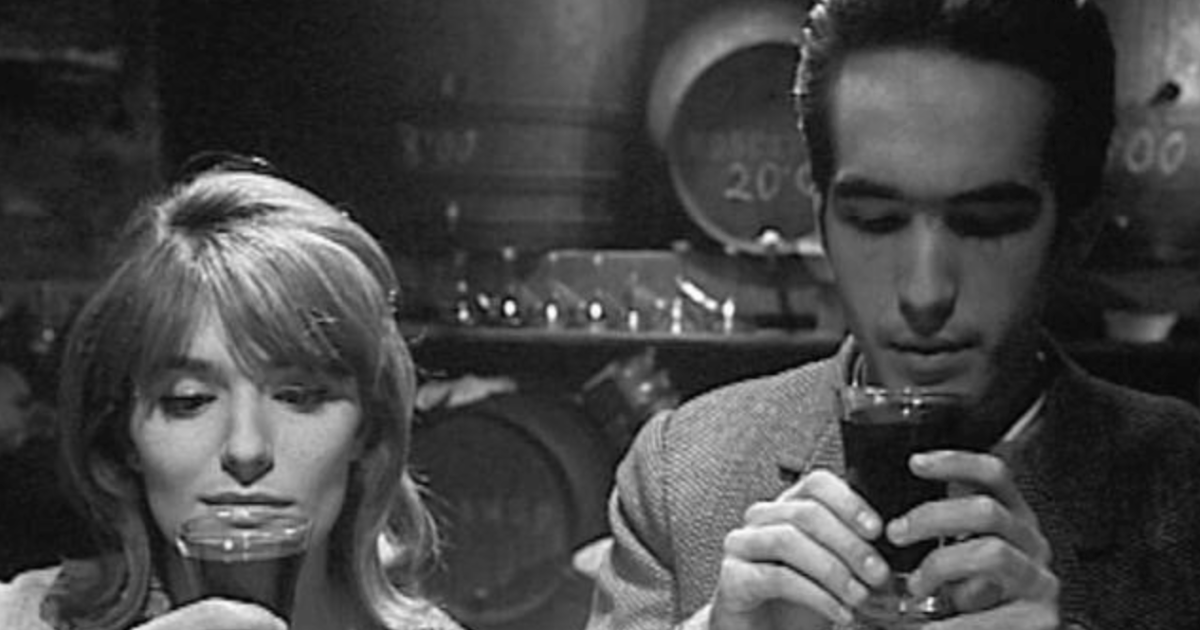
But, until that happens, the world and these streets and these taverns belong to them. In this sense, the film represents a great ode to serendipity, to that virtue of finding unexpected things. In this specific case, a shared journey between solitary, wounded, but not alienated souls. It's hard not to think of Antonioni's viaggio or Sartre's Roquentin. "They are nobody in general and, at the same time, everyone in particular," adds Delgado.
The writer Joan Lorente i Costa contextualized it generationally thus: "It is not a political rebellion, unthinkable in a Spanish film of that era, but an attitude that connected with the dissatisfaction and existential frustration of European youth at the time."
A shared journey between solitary, wounded, but not alienated souls.
Barcelona, with its streets, its faces, its bar fights, its drunks, its young people with cosmopolitan souls, its meublés, its night watchmen, its innkeepers, completes this triangle that oscillates between tragedy, fear, and an intimate joie de vivre, as long as poetry can continue to flow like red wine drunk from all kinds of glasses. A city that is not important in itself, but for its people, "who are the ones who make the places" (Nunes dixit).
In this Barcelona, deeply loved by the director, there is room for the R&R of the Mustangs, the tavern jazz of lumpen dancing and fighting with broken bottles, and that flamenco that no one understands and that, at best, if you come from the right cradle, you can only feel. Which is already a lot.

A great Modernist Barcelona film
Towards the end, we find a common resource in Nunes' filmography, who would die in 2010 having just turned eighty. After having accommodated Serena Vergano in a trough (in Barcelona in 1966 there were still some), after a terrible piece of news has left him unconscious, Enrique Irazoqui suddenly bursts into laughter devoid of all logic and explanation. This situation is common in several of the director's films, such as Sexperiencias or Gritos… a ritmo fuerte. Characters who, out of the blue, start laughing histrionically, almost uncontrollably.
It is not difficult to define Noche de vino tinto as a great Modernist film from Barcelona.
The reason why is illustrated by Joan Maria Minguet Batllori, in Nunes, més enllà del temps. “I asked him why he so often placed these discordant scenes. And Nunes, sly, quickly jumps in and tells me: ‘Minguet, I place these scenes when I'm afraid that the viewer, for a moment, might be feeling comfortable in their seat.’ A whole declaration of intent.” Pure cinematographic modernity that, in L'Escola de Barcelona, Torreiro and Riambau address, regarding the film, in the following terms: “being, at the same time, a diagnosis and a journey, a teaching and an open path, a possibility of reading beneath its evanescent, suburban, poetic images.”
In this sense, it is not difficult to define Noche de vino tinto as a great Modernist film from Barcelona, with its jazz and pop rhythm, with its street pulse, with its almost impressionistic photography and with its individualistic and broken characters swimming in a poetic and private drift. Trying to scratch from this arid life full of disappointments a night where the world is made to their measure.
Add The New Barcelona Post as your preferred Google source for free
Stay informed with the latest news.