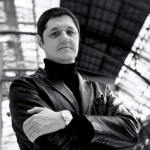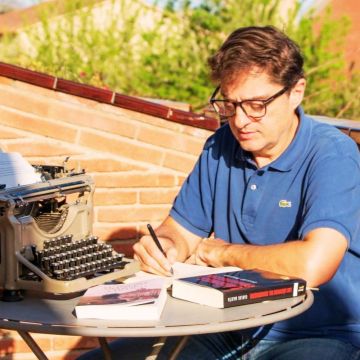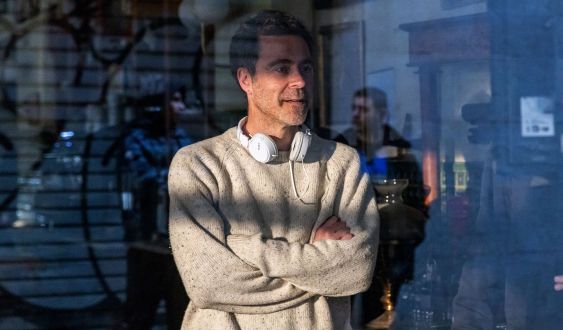
HBO's new bet is almost like a Barcelona-style The Wire. A great story that covers the problems that Barcelonians experience in our daily lives: from the expulsion of lifelong residents and businesses from neighborhoods, to the uncontrolled overcrowding of tourism; passing through the loss of identity, mafias, or the various faces of squatting. A tableau that Pol Rodríguez (Barcelona, 1978) explores, along with Isaki Lacuesta, from a deep knowledge of a Raval where he grew up and where –he knows better than anyone, and so he tells us– the worst is possible, but also the best.
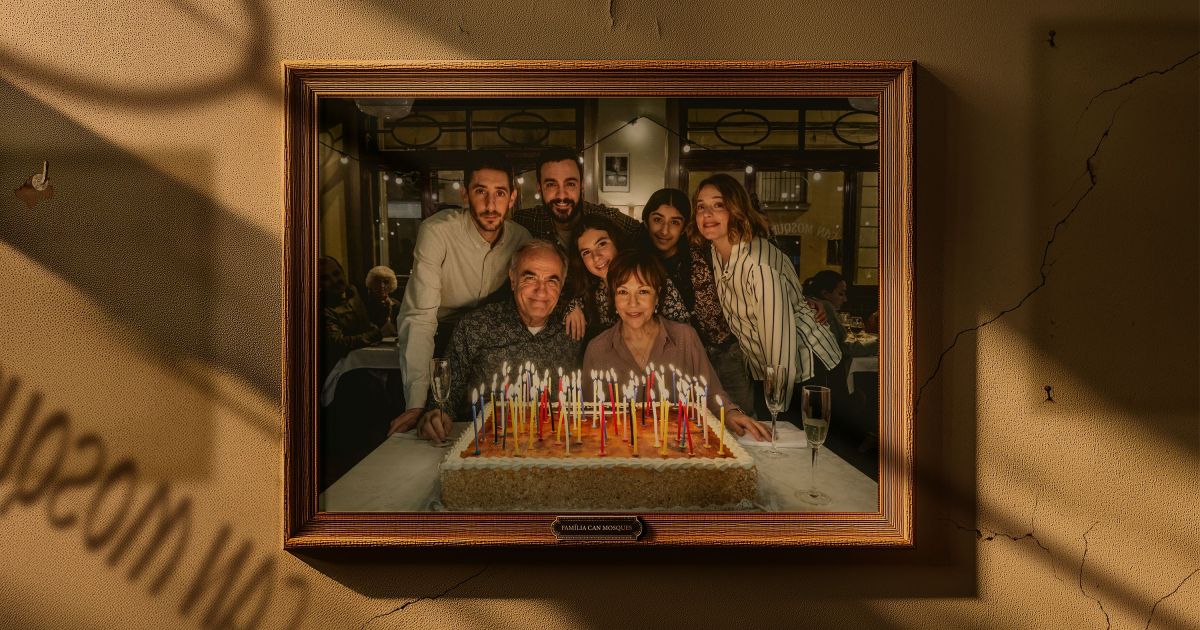
Every Friday, the streaming network broadcasts a new episode of the miniseries (of six) starring Enric Auquer, Quim Àvila, María Rodríguez Soto, Sergi López, Francesc Orella, Lluïsa Castell, Alba Guilera, Noa Guillén, Noor Ul Huda, Mohamed Ben Moula, and Marc Martínez. A story of survival, privilege, and social climbing that draws from the best Barcelona cinematic tradition and avoids being a pamphlet. The starting point: what happened with Pol's family restaurant, the mythical Can Lluís on Carrer de la Cera, which had to close after the building where it was located was bought by an investment fund, which sent the rent skyrocketing. Thus died, after 90 years of existence, one of the most iconic corners of Barcelona's restaurant scene.
— Let's start by talking about your background, Pol. You practically grew up in the kitchens of Can Lluís. What was it like to grow up in one of the most emblematic eateries in the Raval at the end of the last century?
— When you are a child you don't realize the importance of all that. It's simply part of your life. Think that I have always eaten at Can Lluís. When I went to EGB, at Escola Griselda on Amàlia street, the catering was done by the restaurant. When I went to high school, at the Escolapios de Sant Antoni, I ate there because it was around the corner. I only ate at home on Sundays! At fourteen I started working there. There was no dishwasher so every day I cleaned mountains of glasses. Then, after the service, around midnight, my father and I would have dinner. And there was always someone, some actor, some writer, someone from the neighborhood, who would join us. That was a world. Think, for example, that Mariñas did a weekly program for Radio 4 from the restaurant. That's where I got used to listening, to meeting people, their stories, their experiences, and then wanting to tell them. It wasn't just a place where food was cooked, it was much more, a meeting point, a place where people saw each other and shared life.
On Fridays and Saturdays, after the restaurant shift, we would go to Llantiol on Riereta street, which belonged to my father, and we would continue working there. When we left in the early morning, my father would stuff the money from the till into my clothes and tell me that if there was any problem with a junkie, I should run home. But we never had any mishaps. Later, already working in cinema, if I was in Barcelona shooting, I would go at noon to eat at Can Lluís. Even now, if I eat at home I have the feeling that it's Sunday.
— The restaurant was a clear example of how the voracity of investment funds crushed a historic business, of undeniable cultural and gastronomic interest, repeatedly praised by Vázquez-Montalbán and Néstor Luján. In this sense, I get the impression that Ravalear has a lot of settling scores.
— Absolutely. There is a will to denounce and to seek revenge. To explore through fiction what would have happened if we had chosen to break a law that did not protect us when it came to safeguarding the business. Based on this idea, when developing the story I wanted to thoroughly understand how the real estate world works and all the actors involved, from the large investment fund to the kid living on the street trying to make a living. That's when I realized the number of gray areas, of legal loopholes that exist.
"There is a will to denounce and to take revenge"
— There are deeply amoral characters like those played by Sergi López or Alba Guilera, who are chilling in their coldness, their absolute lack of scruples and minimal empathy. To what extent are they fictional?
— There is a scene where Claire, the investment fund executive played by Alba, meets with Lluís, the family father played by Francesc Orella, in the restaurant, which in the series is called Can Mosques. She goes there, barely touches the food, and simply tells Lluís that this is how it is and that they have to put up with the rent increase. And this is very much based on something that really happened. When an Israeli investment fund bought the building where Can Lluís was located, I wanted to meet with their representative in Barcelona.
We met one morning, just him and me. It was very similar to what you see in the series, I told him the whole story, the situation we were living, we spent a lot of time, and the guy kept telling me that of course, we were the best family to run that business, that we were going to make it. But that it was 8,000 a month. And, no matter how much I tried to reason that it was unfeasible, he told me to be calm, that we would surely get the money. But of course, for that, I might have to change the kitchen, change the menu, fire people... And, well, that's progress, he told me.
— And Sergi López's character?
— I wouldn't say that Cristóbal, the character played by Sergi, is inspired by anyone in particular, because he isn't, but he was the character that interested me the most. The one that inspired me the most because he represents class struggle. He is the sheriff of the ghetto, the lower-class character who betrays his own to try to ingratiate himself with those above, who treat him like trash. Sergi has played some of the most powerful villains in film history in movies like Pan's Labyrinth or Dirty Pretty Things and he nails it, he's a true force of nature. With him, many sequences are directly conceived as a western.
— Behind the apparent simplicity of the thriller format, Ravalear seems to me a very ambitious work, almost a Barcelonian The Wire, which analyzes various power structures and how they screw over the citizen they are supposed to serve.
— Yes, I wanted to be very ambitious with the series, in form and content. The family plot serves as a basis for me to talk about a whole series of things. Think that I spent two years researching, talking to many different people: from real estate brokers and investment funds to the people of Acció Raval and other neighborhood associations. From the purchase of properties to the recovery of drug dens. Precisely, this complexity made me go from planning a feature film to a series that would allow me to develop all these themes.
"I spent two years researching, talking to many different people: from real estate brokers and investment funds to the people of Acció Raval and other neighborhood associations"
And the most important thing is that I also didn't want Ravalear to be a pamphlet, but rather to encompass in its entirety that whole system of pressures that affect everyone, not only the less favored classes but also the middle classes. That's why I believe that a network like HBO has bought and given me so much support with the series, because it affects many people.
—What you're telling me is very interesting because it connects with a detail that I found brutal: the moment when Álex (Enric Auquer) and Marta (María Rodríguez Soto) define themselves as posh. The tables have turned so much, that a working-class family from Raval could now pass as posh...
— That's it! You realize that, nowadays, owning a house is a privilege. And that can't be! We can't accept having a home as a privilege, when it is actually a fundamental right. I am very interested in exploring this in the series, the privilege. What happens when you have a privilege and you take advantage of those below you to maintain it, to not lose it. And that affects everyone, not just the villains.
— On the other hand, the series also seems to me a great vindication of the good things, and without populism, valuing aspects related to the human fabric of the neighborhood, not without problems, but also capable of the most beautiful gestures.
— From the beginning of its existence, when it was an area of orchards, hospitals, and convents, Raval was a stigmatized area. It has always ended up being a neighborhood serving a city that took from it what it wanted. Think that it measures one square kilometer and 50,000 people live there, at the level of inhabitant per square meter of certain populations in India. And, of course, it is a neighborhood with a lot of complexity, and that is reflected in the series. There are robberies, drugs, prostitution, but... how do you fight against this from the street? From the associations? It is one of the neighborhoods with the largest associative fabric in Europe. People who fight to coexist, to improve their conditions, to get ahead. And I also want to reflect that, and contribute to breaking with the historical stigma that Raval has been dragging for centuries.
"I want to contribute to breaking with the historical stigma that Raval has been dragging for centuries"
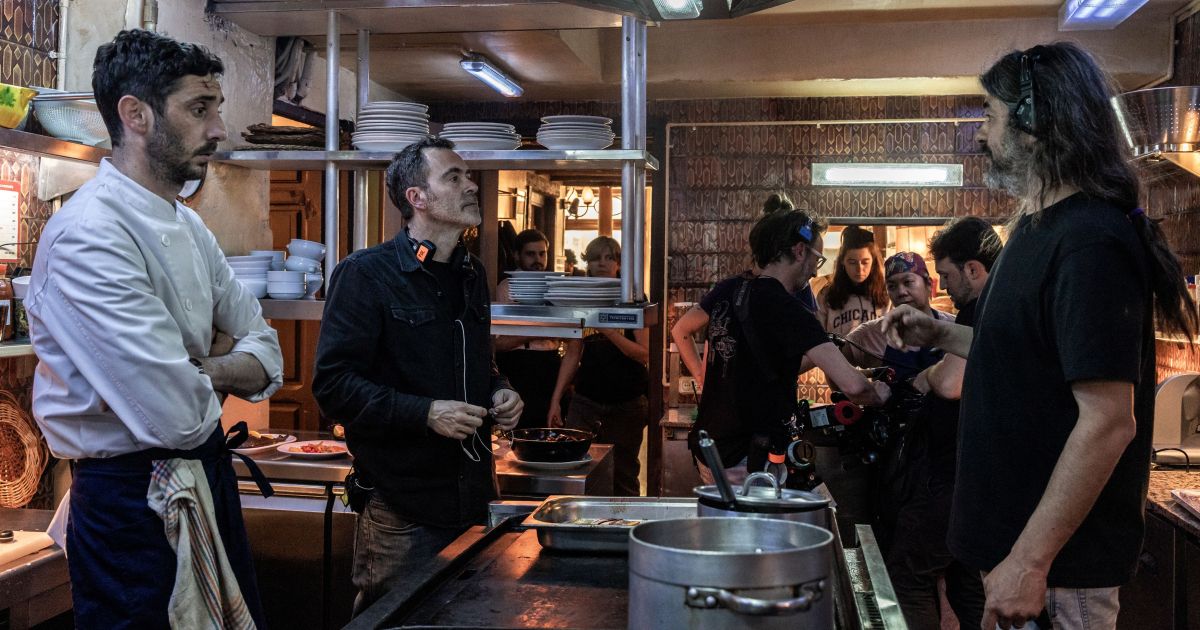
— Another aspect that I liked is that so many scenes were filmed in the street, in a cinema verité style. It seemed to me a great tribute to greats like Pontecorvo or Rovira-Beleta from Hay un camino a la derecha.
— And José Antonio de la Loma, when in his quinqui films he shot chases on La Rambla or Gran Vía without closing any street! All that cinema is, in some way, there, although Ravalear has the structure of a modern thriller. Think that my first job in cinema was with De nens, the film that Joaquim Jordà made about the case of the pedophilia network in Raval. Joaquim came to eat every day at Can Lluís. Since he was already blind, after the stroke, I would read him the menu and little by little we became friends. I remember I was bringing him a plate of soup when he proposed I work with him on that production and my hands started to tremble! With this, I mean that my connection with all the cinematographic heritage of Barcelona is very deep and it is something I am very proud of. I am glad that it shows in Ravalear.
— For the series, you have once again collaborated with Isaki Lacuesta, with whom you had already directed Segundo premio. How has it been working together on a project that is still so personal?
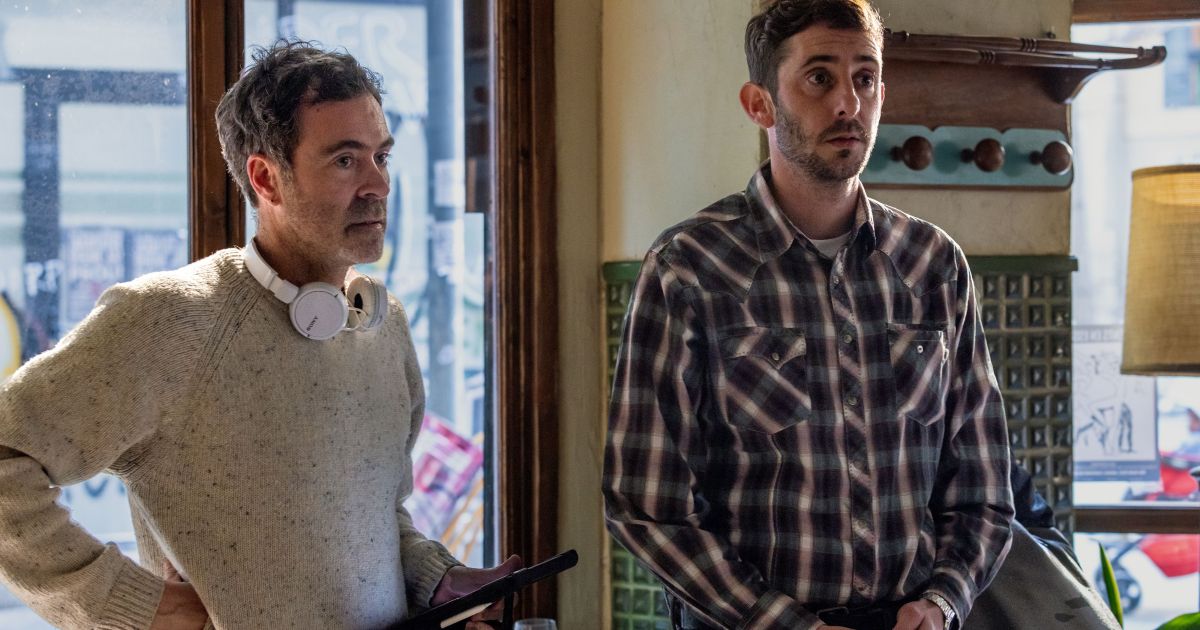
— Joaquim Jordà introduced me to Isaki at Can Lluís 25 years ago, and it's been that way ever since. We've always worked very well together because we are, above all, colleagues. In Ravalear, he directs the first two episodes with me. I directed the other four alone. But for this project, I surrounded myself with friends and people with an emotional connection to this story. People who truly believe in it because, in part, it's also theirs. Although I also tell you that, to make the series, I had to put on an emotional armor, which allowed me to tell what happens to the characters without tears and without falling into excessive emotionality. I needed that distance to be able to squeeze the most out of the story, to tell it well.
— The reception has been spectacular, not only locally but internationally. Ravalear has been the first Spanish series to be part of the official selection of the Berlinale. That means, in other words, that many people connect with what happens in the series. The same mess that splashes different cities.
— Yes, it's a problem that is affecting all cities in the world. All of this comes from policies set since the 70s, when Mr. Reagan and Mrs. Thatcher decided that they could not compete with China and that the West should base its economic policies on bricks. And all of this has ended up affecting all cities.
In Rome, for example, Trastevere, which was a popular and working-class neighborhood all its life, has gone from having 400,000 inhabitants a quarter of a century ago to having 24,000. The rest is for tourists: AirBnB, hotels, temporary rentals… And the same thing happens in London, Berlin, or Paris.
"There is a chilling fact: 50% of real estate purchases in the last ten years in Barcelona have been made without a mortgage, paying cash"
— The same ones always win: investment funds.
— Look, investment funds are partly necessary for cities to grow and prosper, but they should not have the possibility to abuse as much as they do. There should be some form of control. And policies should also be promoted that do not encourage speculation and that do not so clearly always benefit the funds. For example, stop taxing the purchase of first homes and start taxing second homes. Do it the opposite of how it is being done now.
Look, there's a chilling fact: 50% of real estate purchases in the last ten years in Barcelona have been made without a mortgage, paid in cash. Who can afford that? And, on the other hand, we have Barcelonians terrified of any kind of urban improvement, because they know that will raise their rent. We have citizens who, literally, don't want the city council to improve the streets where they live because they know what comes next!
— I think this series should be mandatory viewing for everyone who, at least in the last 30 years, has worked in the city council. From mayors to the last councilor. Who do you think would like it most? And who do you think it would piss off most?
— I don't know and I'm not interested, honestly. I don't want the series to be part of the political narrative of any party, but rather to be part of an associative and neighborhood narrative. But hey, I don't think it's a bad idea for former mayors and councilors to watch it!
"I don't want the series to be part of the political narrative of any party, but rather to be part of an associative and neighborhood narrative"
— Is there a remedy for Barcelona? Do you still live here?
— Yes, I live here and yes, I want to think there is a remedy. But that depends on the people. We have been taught that going our own way makes us stronger, and that's false. What creates strength is unity. The only thing that can scare those at the top is collectivity. In fact, Ravalear basically talks about that: the strength between the individual and the collective.
Add The New Barcelona Post as your preferred Google source for free
Stay informed with the latest news.