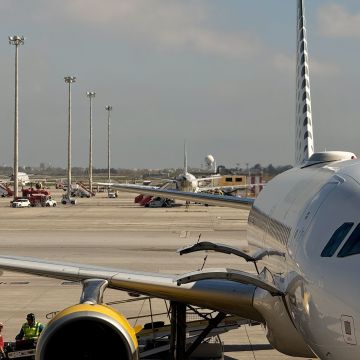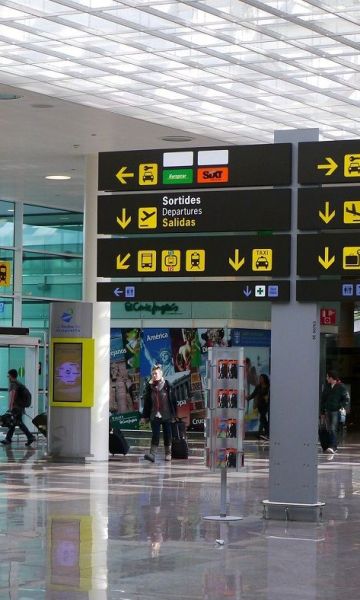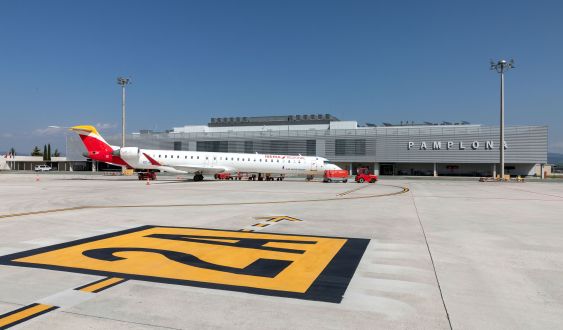
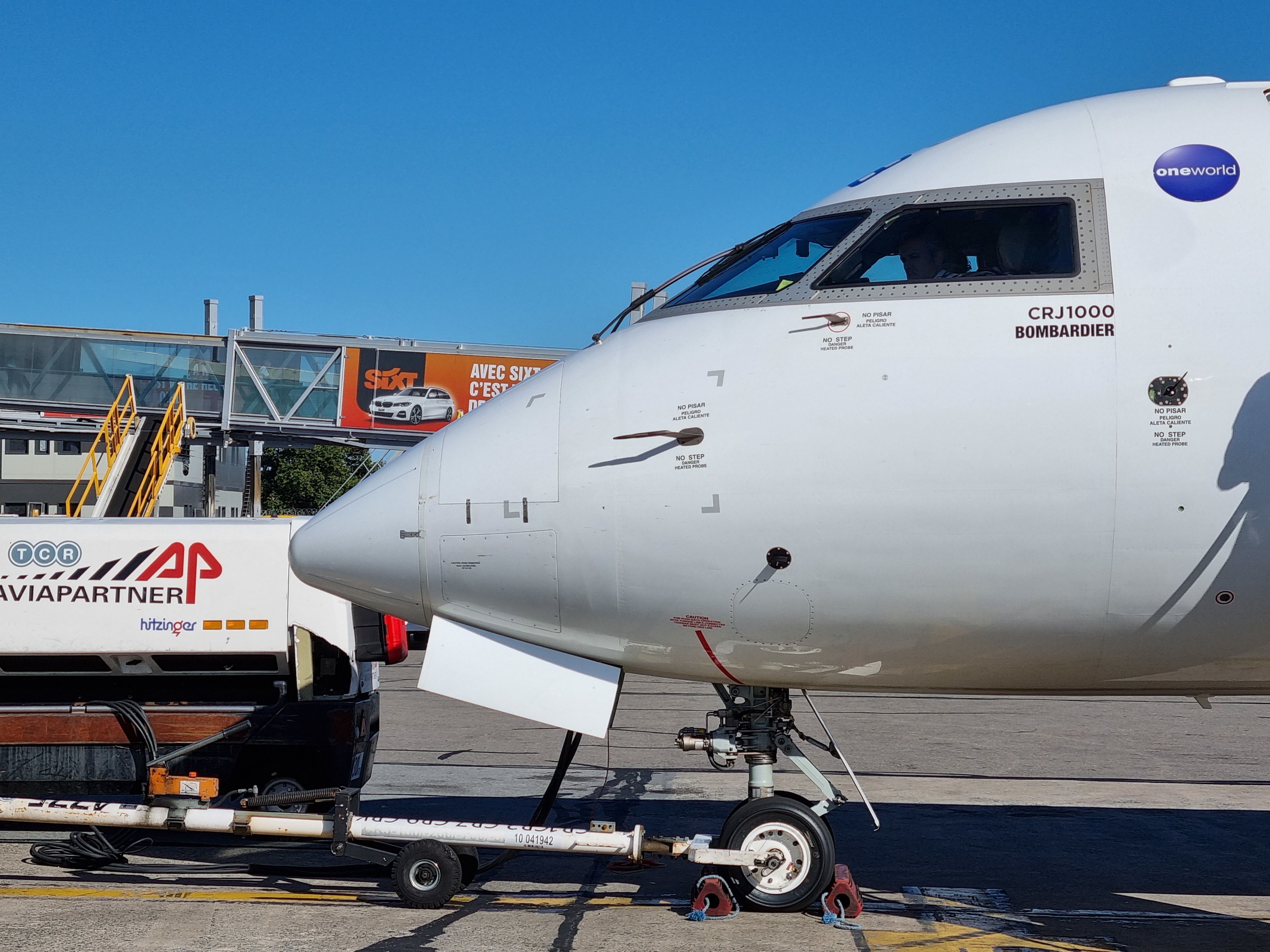
Tomorrow, Sunday, October 25, Barcelona-El Prat airport will once again have a direct flight to Pamplona. Air Nostrum is resuming the route with three weekly frequencies, on Tuesdays, Fridays, and Sundays, operated with 100-seat CRJ1000 jets. The plane departs from Barcelona at 9:15 AM and lands in Noáin at 10:15 AM.
This is a connection with history. Air Nostrum already linked both cities between 1997 and 2012, and again between 2022 and 2023. Now it returns with the support of the Government of Navarra, through a promotion agreement, and with a compelling reason: time. By road, the journey takes around five hours. By train, there are two direct services a day, about four hours long, and three more with a change. By plane, the flight doesn't even take an hour.
A point-to-point flight, with a gateway to the world
It is, first of all, a flight between two cities, designed for Navarrese coming to Barcelona and Barcelonians going to Pamplona and its surroundings. However, what El Prat offers to those who land there has not been overlooked either. Tickets are sold through Iberia, which markets Air Nostrum's regular flights, an independent company despite being a franchisee of this airline. This allows connecting in Barcelona with 16 national and 34 international destinations, thanks to the codeshare with Vueling and the Oneworld alliance network.
In practice, Navarrese can continue from Barcelona to Palma, Ibiza, Malaga or Tenerife, and also to Amsterdam, Berlin, London, Rome or Venice. For long-haul flights, Qatar Airways, the main shareholder of IAG, the group to which Iberia belongs, and Level, the group's long-haul airline, come into play, while Vueling provides a good part of the short and medium-haul flights. Doha, with Qatar, and Santiago de Chile, with Level's direct flight from Barcelona, are among the most sought-after destinations in the first bookings made from Navarra with a stopover at El Prat.
These bookings give a first clue: 17% of passengers with tickets for the first months will continue their journey from Barcelona. The company itself expects this connecting traffic to gain weight as travelers get used to using Barcelona as a connecting point. And it's not just people flying from Navarra: 13% of sales have been made outside Spain, mainly in the United States, the United Kingdom, and Germany, which suggests visitors who see Navarra as a destination and El Prat as their gateway.
Air Nostrum, the other connectivity
There is much talk, and rightly so, about the commitment of major intercontinental airlines to Barcelona. But a city's air connectivity is also built with regional routes, those that serve those who travel every week for work or family. Here, Air Nostrum continues to be an important piece, and almost the only one in its segment.
It no longer has the feeder role it once had when Iberia distributed its network operation between Barcelona and Madrid, before concentrating it in Barajas. From El Prat, it continues to connect the city with León, Badajoz, Valencia, Melilla and, from tomorrow, Pamplona. As a curiosity, during the last aeronautical summer (from March to October) it was the only airline that flew from all Catalan airports, both those managed by Aena and those of Aeroports de Catalunya: Barcelona, Girona, Reus, Lleida-Alguaire and Andorra-La Seu. In its 32 years of history, it has transported 120 million passengers.

From Barcelona-Pamplona or from Noáin-El Prat
The route makes sense for those who travel for work, albeit with nuances. With departure from Barcelona at 9:15 AM and return from Pamplona at 10:45 AM, the schedule fits better with those who stay one or two nights, or with those who connect at El Prat, than with a round trip on the same day. If demand responds, more frequencies could change this. For now, the company expects an average occupancy of around 50% in the first month: a cautious start.
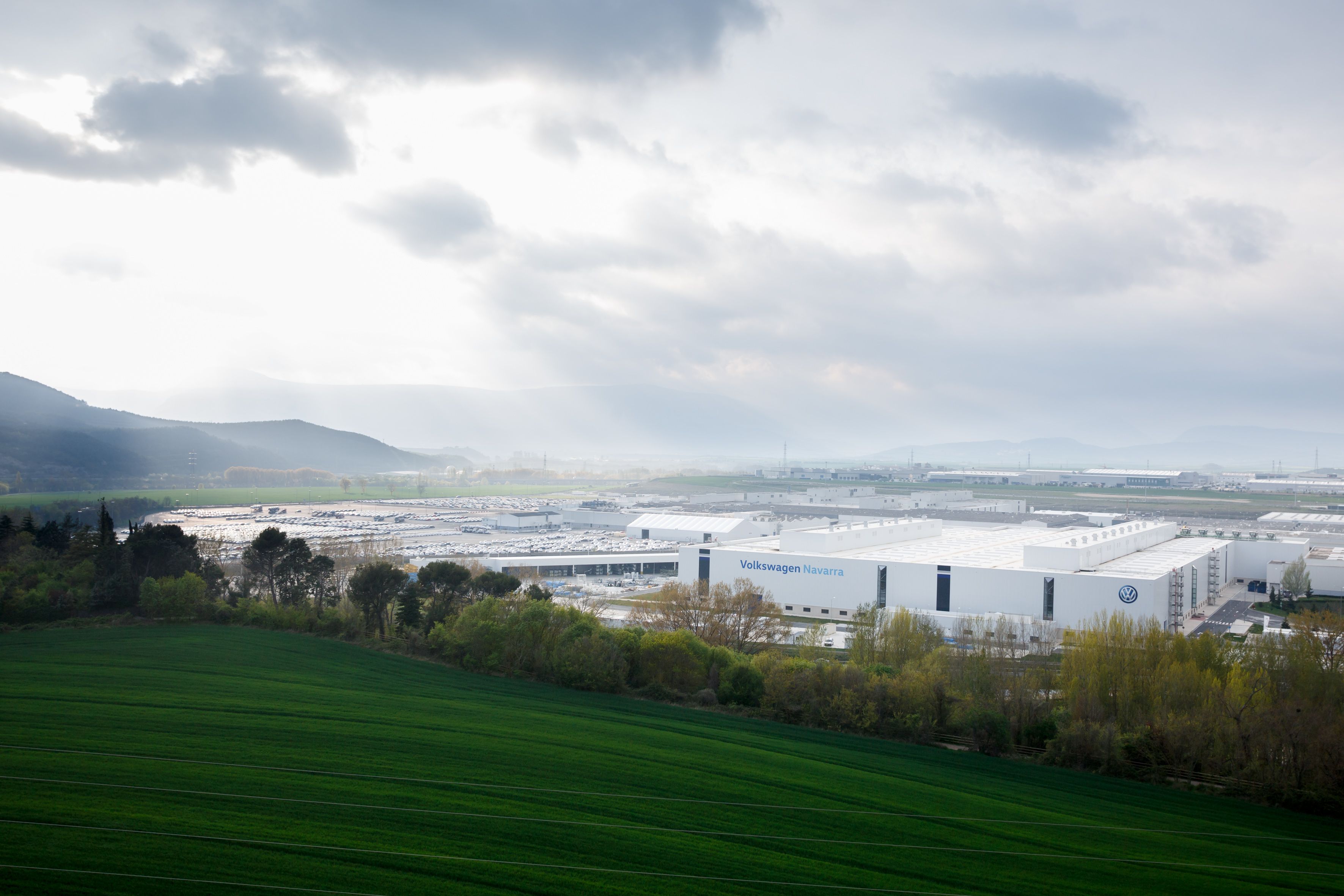
The reasons for demand exist. Martorell and Landaben, the Seat-Cupra and Volkswagen Navarra factories, are sister plants of the same group and manufacture the same family of urban electric cars: the Cupra Raval and the ID. Polo in Catalonia, the Skoda Epiq and the ID. Cross in Pamplona. Their teams have worked in a coordinated manner and have accumulated more than 560,000 hours of training for the transition to electric. The University of Navarra, for its part, has the IESE campus, its business school, in Barcelona. In addition to this, a large part of the international goods that enter and leave Navarra do so via the port of Barcelona, which owns 40% of TIN, the Intermodal Terminal of Navarra, a logistics center visible from the airport runways.
Two territories with industry and university that already collaborate were left without a direct flight between them in 2023. Tomorrow, at 9:15, the first CRJ1000 will take off from El Prat bound for Noáin. Whether it fills up, and whether more frequencies come, will depend on the travelers.
Add The New Barcelona Post as your preferred Google source for free
Stay informed with the latest news.