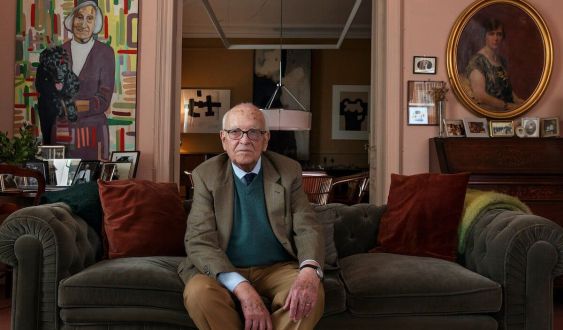
Miguel Milá (Barcelona, 1931) began collaborating in the office of architects Alfonso Milá, his brother, and Federico Correa in 1950 while studying Architecture, which he abandoned shortly after to dedicate himself to interior design. He declares to the four winds that he didn't realize he liked design until he left Architecture: "Federico Correa told me, if you don't like it, why don't you leave it, and I felt like the freest man in the world."
[subscribe_newsletter_esp]
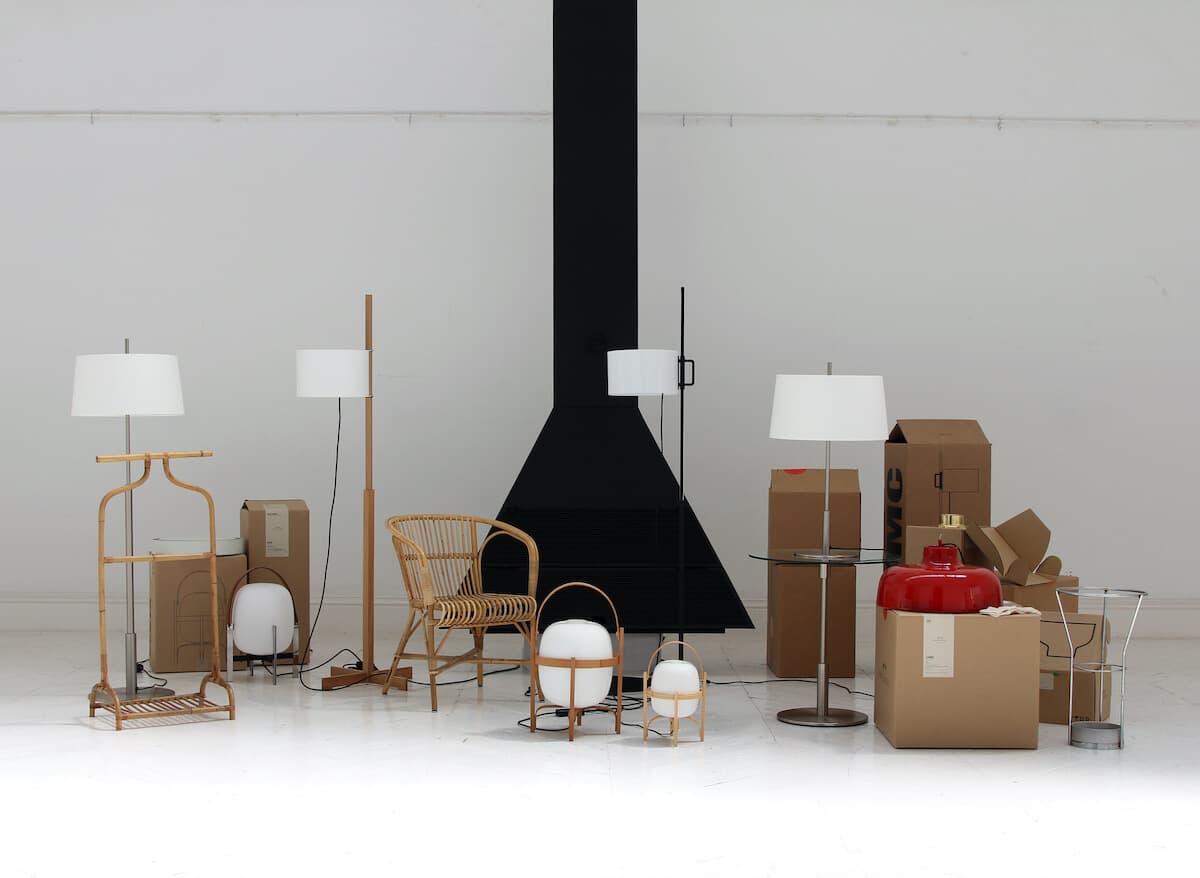
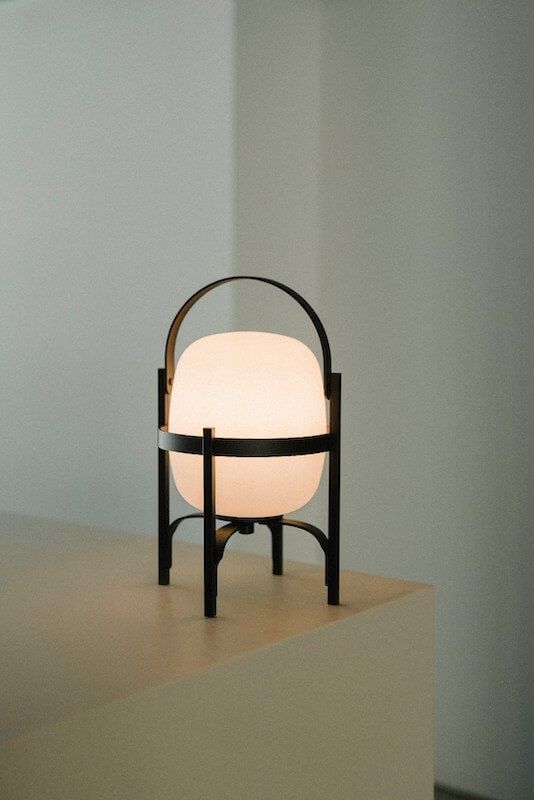
He became an interior designer but soon realized that he didn't like the furniture being made at the time and began designing furniture and lamps to decorate homes. "The first thing I did was lamps, I even opened a store called Tramo in a space lent to me by María Vidal-Quadras and, through this first business, I came into contact with the owners of Gres who were interested in my lamps and proposed I join Gres," he explains. He vividly remembers his first job as an interior designer: "My first interior design was a house in Sant Feliu de Codines by Coderch. Coderch himself commissioned it when I was barely twenty-something... I continued working in the Milá-Correa office, but I was gradually becoming independent, although physically I remained in the same office."
His friend Federico Correa said goodbye a few weeks ago to this earthly world. What can you say about him? "He is a man who helped me a lot in my professional life. He has considered me greatly; he has considered me more than I have him," he points out. And about Barcelona, what can or do you want to tell us about your city? "I am an enthusiast of the city of Barcelona; I love it, I have lived it intensely. I was born in Plaça Sant Jaume number 2, next to the City Hall. The neighborhood has been degrading a lot; it's no longer what it was. When we lived there, we were in an apartment that belonged to my grandfather. Back then, apartments weren't bought, they were rented. I spent a lot of time in Plaça Sant Jaume; that neighborhood was my home. What is now a restaurant was a blacksmith I used to visit a lot, and Sant Just i Pastor was a church where my father, who was a great enthusiast of its restoration, participated a lot," he recalls.
Awards and considerations
Reviewing the book Miguel Milá. Lo esencial from Lumen publishing house, which was published last year and is already close to its second edition, we see photos of him collecting awards such as the Gold Medal for Merit in Fine Arts from the Kings in 2016. "Awards. They have filled me with awards and considerations and this has been very good for me, and much of it is due to the help I received from Federico and also Coderch believed in me, to whom I owe many of my recognitions."
Milá was a professor at Elisava School and Eina, both design schools: "I entered Elisava to replace Federico but teaching was not what I liked to do most. At first, giving classes gave me a lot of energy but then I got tired because people didn't respond. My thing is design and in a special way."
Would he recommend studying design to his grandson? "It is very difficult to recommend to young people what they should study. Times have advanced so much that they overwhelm me. I find myself overwhelmed by the advances that exist. I cannot recommend ways of working, the only thing I tell them is that whatever they do in life, they do it with true vocation and that they enjoy what they do. I believe that to enjoy life you have to have a sense of humor and a sense of love."
Milá designs are a symbol of excellence, but we cannot overlook the Ikea phenomenon. What does he think of the great Swedish hurricane? "I think Ikea is one of the most difficult places to go shopping, but I appreciate the work they do because they offer good designs at a low price and are helping the culture of design," he maintains.
La Pedrera and his uncle Pedro Milá
The NeoRomántico Liviano (2000) bench produced by Santa&Cole floods the sidewalks, like those of Paseo de Gracia. What does he do when he finds one of his benches on the street? "I feel great, great satisfaction!" he exclaims. Precisely, on this grand avenue is La Pedrera or Casa Milá. "I am enthusiastic about Casa Milá because I have this surname and because it is Gaudí's most complete design. I hold the theory that the person who commissions a house has a lot to do with the final result. I would like to write a book titled Pedrera also comes from Pedro, who was my uncle Pedro Milá and had a lot to do with the final result. It's not that La Pedrera is Gaudí's best design, but it is luminous, contrary to those who criticized it and said it was a cave. It has light in all its spaces. I have never seen a kitchen from that era more cheerful than that of Casa Milá."
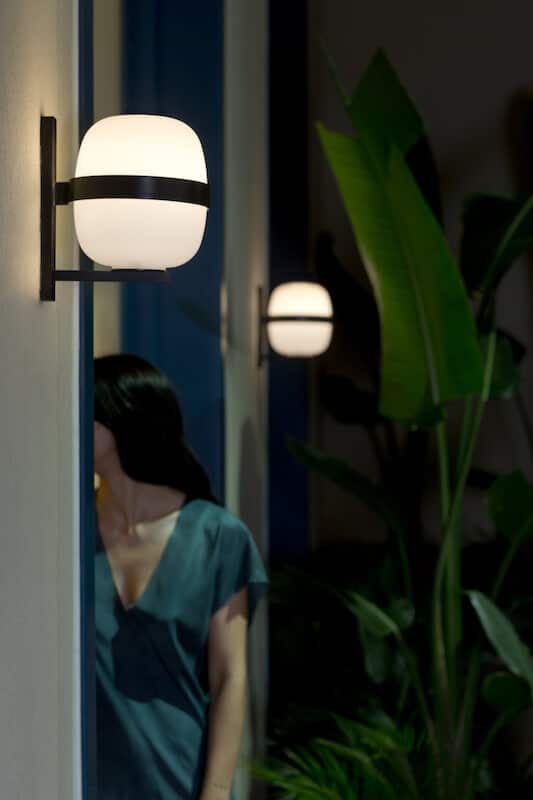
His designs have been expanding around the world for years, does he control the expansion? "My products are sold abroad. For example, in Italy, many of my lamps have been sold. I have found the Estadio lamp, which Alfonso and Federico commissioned from me, in many house lobbies in Milan. For me, that Italians value my designs is a triumph because I am a great admirer of Italian and Nordic design," he explains.
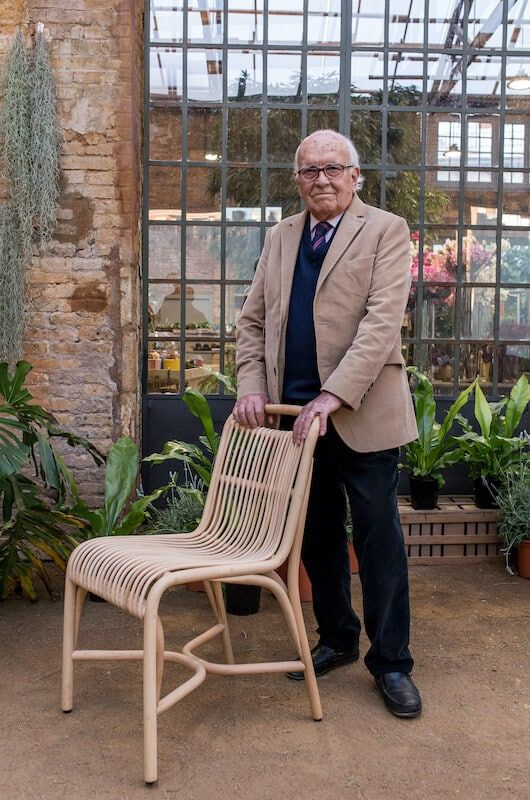
The designer's imagination does not stop. "Now, what I do on some occasions is collaborate with my son Gonzalo, who is an excellent designer. The latest thing we have done is a series of garden furniture and we are about to launch a series of benches and chairs, also for outdoor use." And as a fun note, he tells us that he has been called to professionalize his fly swatter: "My wife complained about flies and years ago I made an invention with a stick and a piece of leather; now a company specializing in leather has contacted me and they are going to commercialize it; I have named it Espantamoscas (Fly-scarer)."
Add The New Barcelona Post as your preferred Google source for free
Stay informed with the latest news.