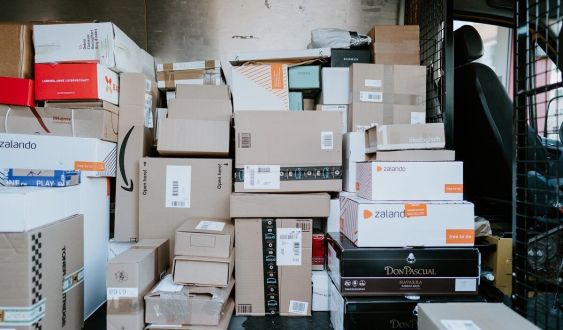
If before the pandemic e-commerce was already invading the streets with vans, the lockdown exaggerated the growth that online shopping was registering. When restrictions to prevent contagions began to relax, with comings and goings, the trend has continued. Beyond the impact that large platforms like Amazon have on local commerce, online shopping has a very clear impact on mobility in cities. Faced with this new reality, several approaches are emerging that aim to reduce the negative consequences of this activity, not only on congestion but also on pollution.
One of the proposed solutions consists of the creation of micro-logistic platforms, which allow decentralizing deliveries from various points in the city, delivering packages at night and preventing vans from making deliveries during the day, replacing them with electric and smaller vehicles, such as scooters, bicycles, or tricycles. In Barcelona, there is one at Estación de França, managed by Vanapedal. With electric tricycles, the delivery drivers of this company can distribute packages in their area of influence. In this case, it makes more sense, considering that the streets in the center of the Catalan capital are narrow and winding, and these tricycles can circulate more easily than larger vehicles.
In operation for almost ten years, this micro-platform needs to be replicated in other parts of Barcelona. The Mobility Councilor of the Barcelona City Council, Rosa Alarcón, indicates that they plan to install one per district before 2024. One of the ways to achieve this is to promote new goods distribution centers managed by private agents. To do this, the city council has just opened a subsidy line of 250,000 euros. Right now, several proposals have already been submitted. It is estimated that, at a minimum, five platforms will be created with these aids.
Despite the benefits they generate, these platforms are not well known by the city's economic fabric, according to a Racc study. Specifically, 98% of Barcelona's merchants do not know them. Once explained what they consist of, 61% believe it is a more sustainable system than the current one. Beyond the extension of micro-platforms, the City Council is promoting the use of more sustainable vehicles, whether electric or bicycles, and controlling delivery times, preventing them from being during peak hours and shifting a part of the journeys to the night.
Parking lots as distribution hubs
A space from which the City Council also wants e-commerce deliveries to be centralized is through parking lots. A company that has been developing this delivery model for some time is Geever. Created in 2018, this Barcelona-based company proposes a last-mile delivery model from proximity. Specifically, its operation begins at its facilities in the Zona Franca, where it classifies packages from 10:00 p.m. Once this phase is completed, the packages enter the city and arrive at the parking lots, before 5:00 a.m., to avoid coinciding with peak hours. When the packages are already in the parking lots, Geever's delivery drivers travel on foot or in small electric vehicles through their area of influence, which has a radius of about 750 meters.
This model allows a 90% reduction in the kilometers traveled by vans ---they only go from the Zona Franca to the parking lots---, and a 75% reduction in emissions. Its proximity also means a 10% reduction in failed deliveries.
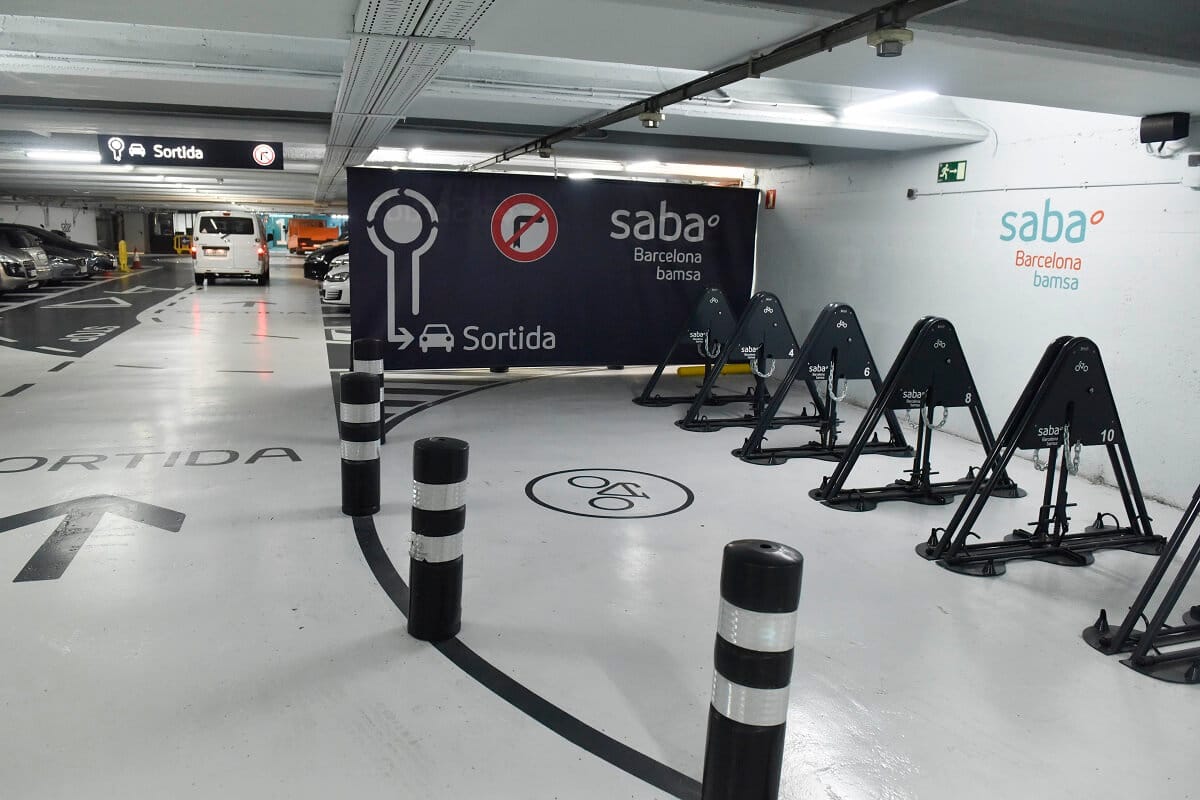
Companies like Geever want to distribute the last mile from parking lots, an option that the City Council also wants to promoteSince its creation, Geever collaborates with Saba to convert its parking lots into small hubsurban from where to distribute the last mile.Recently, Saba has entered Geever's capital, now controlling 51%.The operation will allow the expansion of this delivery model, with the forecast of doubling this 2021 the number of deliveries registered last year, which stood at more than 250,000 deliveries. On the other hand, Geever's presence in Barcelona will be strengthened. Currently, its network of distribution points consists of 17 Saba, Bimsa and B:SM car parks, and 22 storage rooms. Its goal is to reach 60 points and for all of them to be car parks.
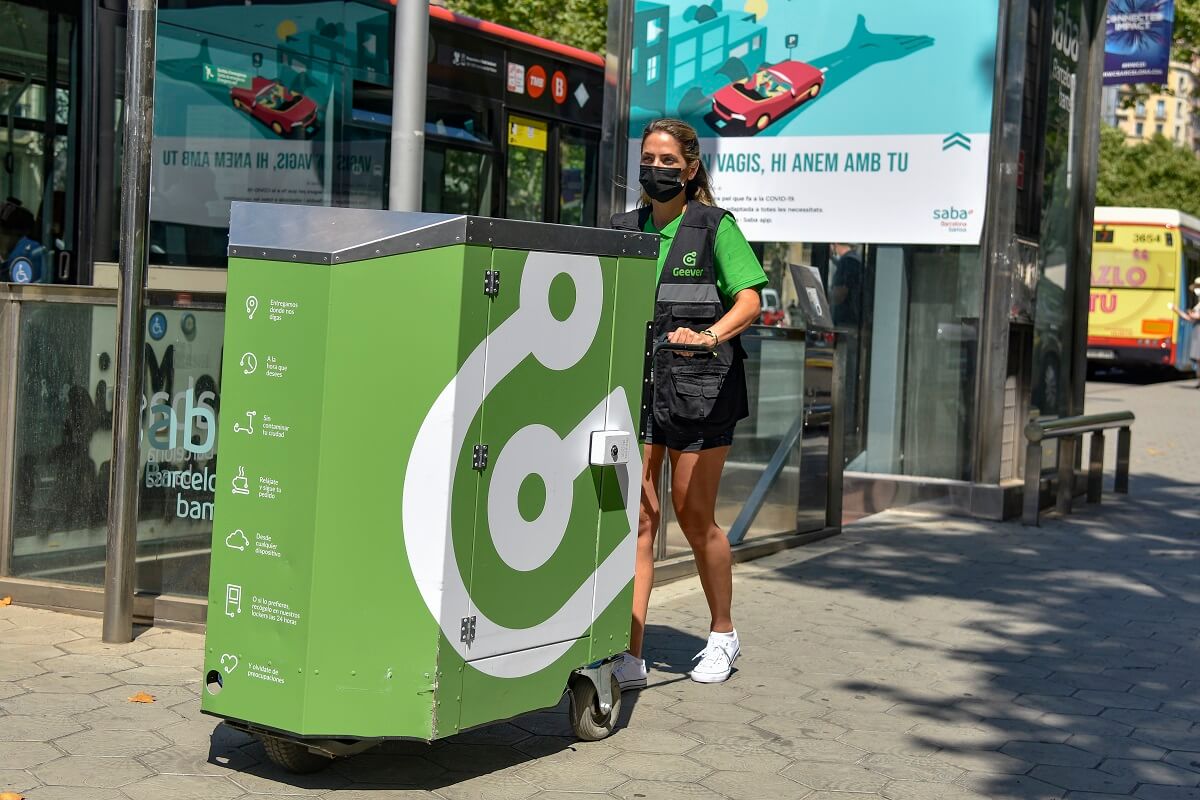
Package collection in lockers
This commitment by Saba to Geever is part of its strategy to make car parks, its main asset, evolve in the same way that mobility is doing. For Saba's Mobility Director, Joan Viaplana, car parks must become service hubs: they should not only be a space where cars are left, but also serve to distribute the last mile, park bicycles, charge electric cars, pick up a rental car, motorcycle or scooter, or collect Amazon orders in lockers. Currently, these new uses only occupy the first floor of Saba's car parks, but Viaplana is sure that they will gain more ground in the medium term, just as new modalities will be incorporated, such as the distribution of fresh products for local supermarkets.
Currently, these new uses only occupy the first floor of Saba's car parks, but Viaplana is sure that they will gain more groundThe use of lockers for package collection is not exclusive to car parks. They have also been placed in Rodalies and Ferrocarrils de la Generalitat (FGC) stations.lockersto go pick up packages from Correos or Amazon. Like micro-distribution platforms, this mechanism allows avoiding a delivery driver going around in a van until they find the recipient at home, reducing congestion, pollution, and failed deliveries. In these lockers, delivery drivers leave packages and buyers pick them up when it suits them, without having to stay home waiting for the doorbell to ring.
Add The New Barcelona Post as your preferred Google source for free
Stay informed with the latest news.
