
The Metro has closed. I found out by chance because, a few days ago, an internet user passing by Sepúlveda street noticed that a real estate portal had placed a FOR RENT sign at the entrance of this mythical gay club. I find this doubly sad news. First, because a reference venue for the nights of Gayxample has disappeared, and second, because it has done so without practically anyone noticing.
If the Metro had to close, because the business was no longer working, it would have been good if it could have done so with a memorable party, one of those that make history, and not in such a miserable and sad way. Look how evil this pandemic is that it doesn't even allow us to say goodbye to its victims properly. For this reason, this week I have decided to write this obituary, to say goodbye to the Metro in a slightly more dignified way.
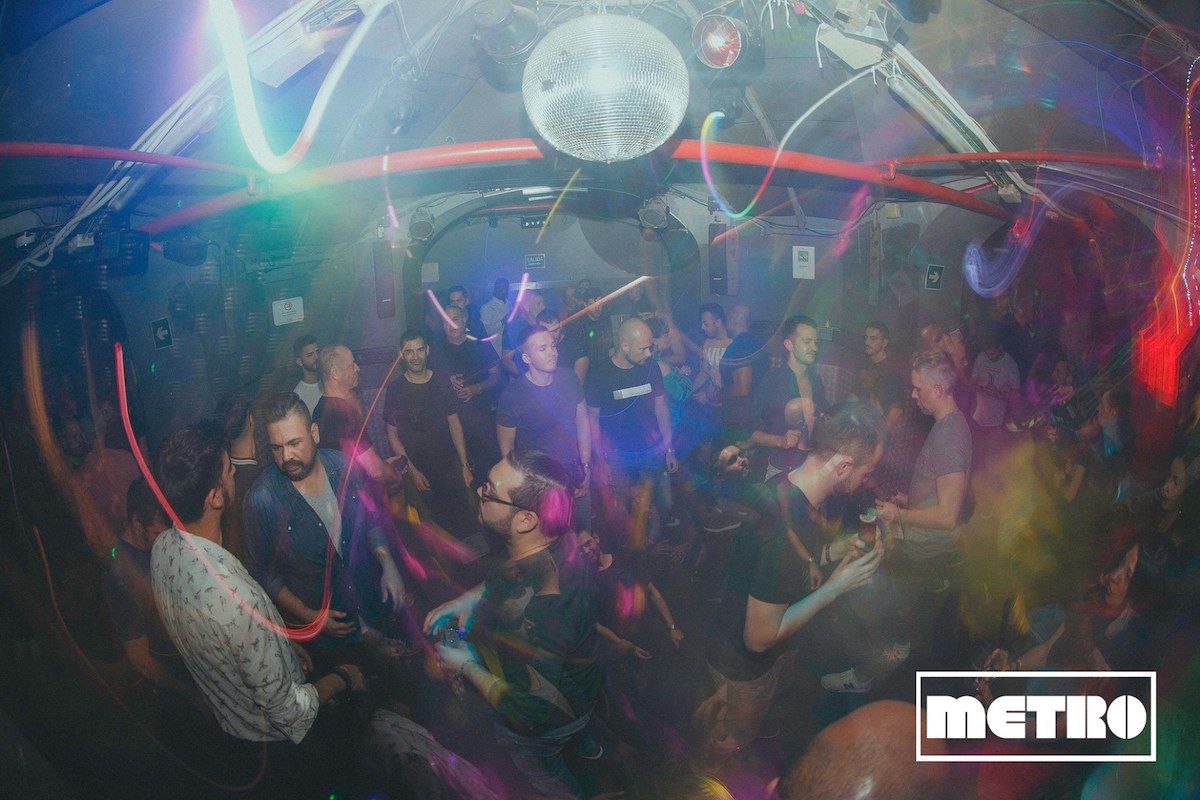
Metro Disco or la Metro, as everyone called it, opened its doors in 1989 at Sepúlveda street 185, becoming one of the first gay venues in the Eixample, since, until then, most nightlife businesses aimed at the LGBT community were concentrated in Ciutat Vella and in the streets of Gràcia.
The Metro was quite large. According to what I have read on the real estate portal that offers the premises, it had 240 square meters that are now rented for 1,800 euros a month. Its motto was Underground is heaven and, indeed, you had to go down a few stairs to access the venue. Whether you ended up finding heaven or hell depended on how your night went and also on what your standards were, I suppose.
Like many discotheques, the Metro had two rooms. One with "petarda" music ---pop music, commercial hits of today and yesterday--- and another where only house and dance played, and where if you wanted to talk to someone you had to shout into their ear. It also had a busy dark room where more than one person got lost for a while with the excuse of going to pee or to order a beer at the bar.
La Metro opened every day of the week. That is, it was the typical club where you could end a silly night, one of those where you went out to dinner with a few friends and things dragged on. It was also ideal if on a bleak winter Monday a friend from abroad landed at your house eager to party and it pained you to tell him that, at night, Barcelona during the week is an excessively European city, not to mention very dead. You could always take him to La Metro where, in addition, there were daily shows. It was a bit like an on-call disco; if you had an emergency, you knew you would always find its doors open.
If La Metro had to close, because the business was no longer working, it would have been good if it could have done so with a big party, one of those that make history, and not in such a miserable and sad way.La Metro is not the first nor the last mythical nightclub forced to close because the landlord has raised the rent or simply because the public has grown tired of it and the numbers no longer add up. This decline, obviously, comes from long before the pandemic. In fact, if I think back a bit, most of the places I used to go out to less than twenty years ago have already disappeared. I spoke of this phenomenon, weeks ago, in an article titled The environment and the LGTBI collective after the pandemic.
Honestly, I don't know who should do what, but it would be a shame if Barcelona kept losing venues that have made its nights legendary. For Metro, it's already too late, but there are a few venues that haven't closed their doors yet.
Add The New Barcelona Post as your preferred Google source for free
Stay informed with the latest news.