An apparition to King Jaume I, a locust plague and, almost eight centuries later, a major festival capable of attracting more than a million people and turning Barcelona into an open-air cultural macro-festival. La Mercè, the patron saint of Barcelona, has come a long way – and a rather singular one – since, according to legend, the Virgin Mary appeared simultaneously to Jaume I, Saint Peter Nolasco and Saint Ramon de Penyafort on the night of September 24, 1218. After becoming the patron saint of Barcelona following the locust plague of 1687 and consolidating itself as the city's main festival many years later – in the 19th century – today it is a festivity that takes over the city's streets and squares for five days, with 109 concerts, 55 popular culture proposals and 180 street arts shows. We begin the countdown to Mercè 2026 by putting numbers and dimension to one of the great events of the year in Barcelona.
Before Barcelona filled streets and squares with concerts, parades and fire, the festival had to find its place in the city's calendar. In 1868, Pope Pius IX declared the Virgin of La Mercè patron saint of Barcelona and set September 24 as the day of celebration. Three years later, in 1871, the City Council officially organized the first Mercè Festival, promoted by Deputy Mayor Francesc de Paula Rius i Taulet. And that first edition already hinted at what Mercè would become: a parade of giants and dwarfs, popular dances and games, sardanas, castellers, horse races, decorated streets, pyrotechnics and even a maritime festival with fireworks in the port.
But that first Mercè did not have an easy continuity. The festival was celebrated irregularly during the following decades, conditioned by the Carlist wars, cholera epidemics and political instability. In fact, civic-popular celebrations gradually lost strength and their celebration had a very irregular continuity. Some years, it was not even celebrated and, for a time, Mercè was reduced mainly to its religious dimension.
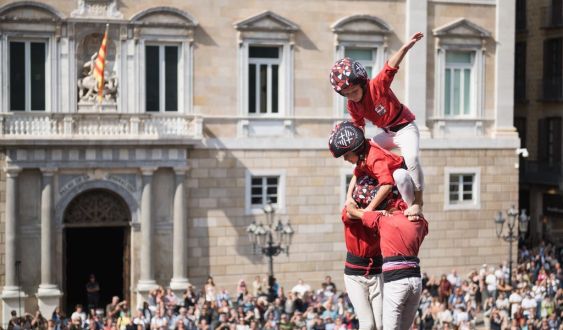
Its second life arrived in 1902, when Francesc Cambó, with the complicity of Josep Puig i Cadafalch and other councilors, promoted a profound renovation with the aim of turning La Mercè into Barcelona's great main festival and, at the same time, into a showcase of popular Catalan culture. Giants, castellers, sardanes, bestiary, traditional dances, and decorated streets took center stage and gave the festival a model that would leave its mark for decades.
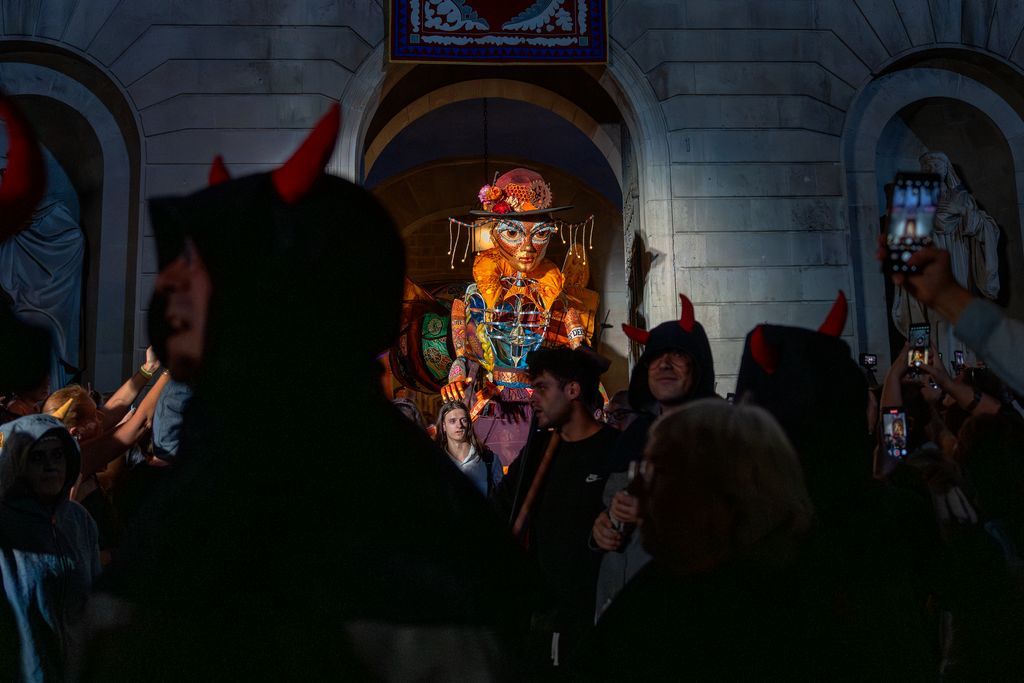
But that new stage would not be definitive either. Tensions between the religious character and the civic component of the festival, the Civil War and, later, Francoism gradually weakened its popular dimension, to the point that in 1971 La Mercè was not even celebrated.
"With the arrival of democracy and the first municipal elections, Barcelona recovered La Mercè"
“Let's reclaim the street”. With this slogan, in 1979, with the arrival of democracy and the first municipal elections, Barcelona also recovered its festival. The City Council opened it up to entities, neighborhood movements, and cultural activists, and La Mercè began to acquire the popular and participatory character that defines it today. That year also saw the birth of a tradition that is now part of the festival's DNA: the correfoc.
32 spaces, 10 districts, and five days of celebration
Thus, the recovery of La Mercè as a popular festival gradually incorporated new rituals over the years. One of them arrived in 1993: the Toc d’Inici, which since then symbolically marks the start of Barcelona's Main Festival. As is customary, this year it will be celebrated on Wednesday, September 23, at 8 p.m., in Plaça de Sant Jaume, after the inaugural procession arrives there from the Palau de la Virreina, where it will have departed an hour earlier.
In the square, the main figures of Barcelona's festive culture —from the Àliga, the Lleó, and the Mulassa to the giants, the Falcons, and the Ball de Bastons— will perform their dances to the sound of the Ministrils del Camí Ral, a group of 40 musicians gathered expressly for the occasion. And this year there will also be a new element: Shanghai, guest city of La Mercè 2026, will participate in the Toc d’Inici with the Traditional Chinese Rolling Lantern Performance, a traditional dance with lanterns.

And from here, Barcelona will get going. For five days, La Mercè will occupy 32 spaces spread across the city's ten districts, with artists from some thirty countries, with a program that totals 109 concerts, 55 popular culture proposals, and 180 street arts shows, a dimension that turns the festival into a true macro-festival made up of diverse festivals that bear witness to the cultural richness of the Catalan capital: from the Mercè Arts de Carrer festival, to popular culture exhibitions, passing through the BAM and Música Mercè festivals. This year alone, the MAC will bring together 68 companies, offering 180 performances in seven city spaces.
And the festival will also take on another stage: the sky. For the fourth consecutive year, drones will once again illuminate Barcelona's horizon, but this year they will do so on a record scale: 750 devices, 250 more than last year. Since this proposal was incorporated into La Mercè in 2023, the deployment has gone from the initial 200 drones to 300 in 2024, 500 in 2025, and 750 this year. The common thread of this edition will be The Red Thread. From Barcelona to Shanghai, a show that, from the Espigó del Gas, will put the link between the two cities in the sky.
A budget of 4.5 million euros
Behind all this deployment is a budget of 4.5 million euros, of which 15% comes from agreements with third parties and the rest from the municipal pocket. Last year, La Mercè required an effective expenditure of 5.26 million euros, a bill that includes, in addition to the artistic program, the production and assembly of spaces, technical services, security, communication, cleaning, and logistics. For example, the 2025 Piromusical alone cost 151,250 euros, while the communication campaign contract exceeded 78,700 euros.
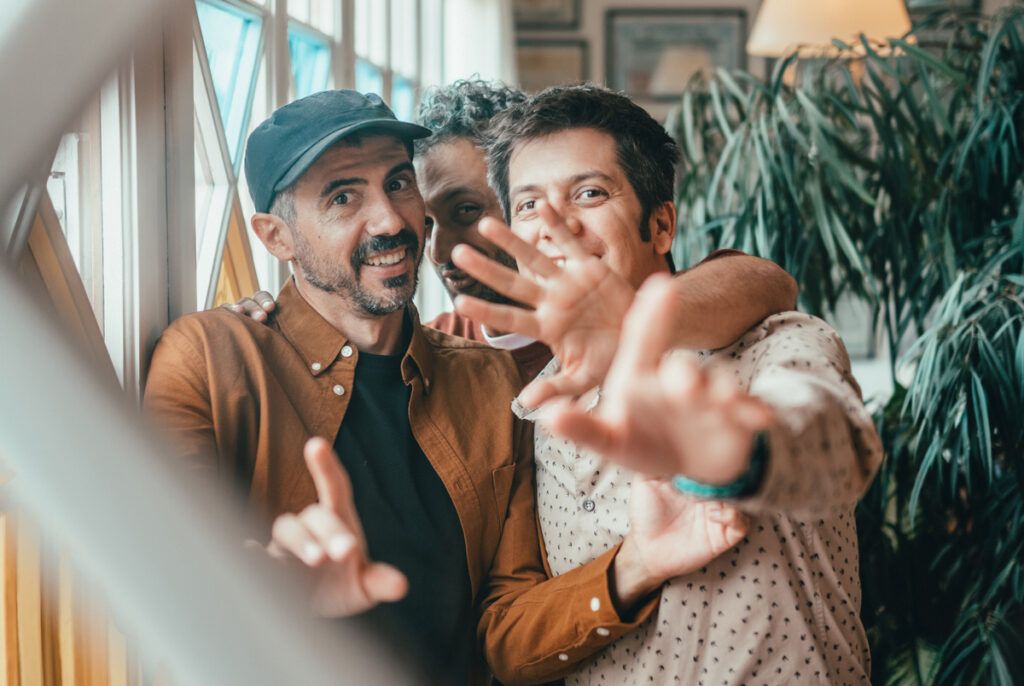
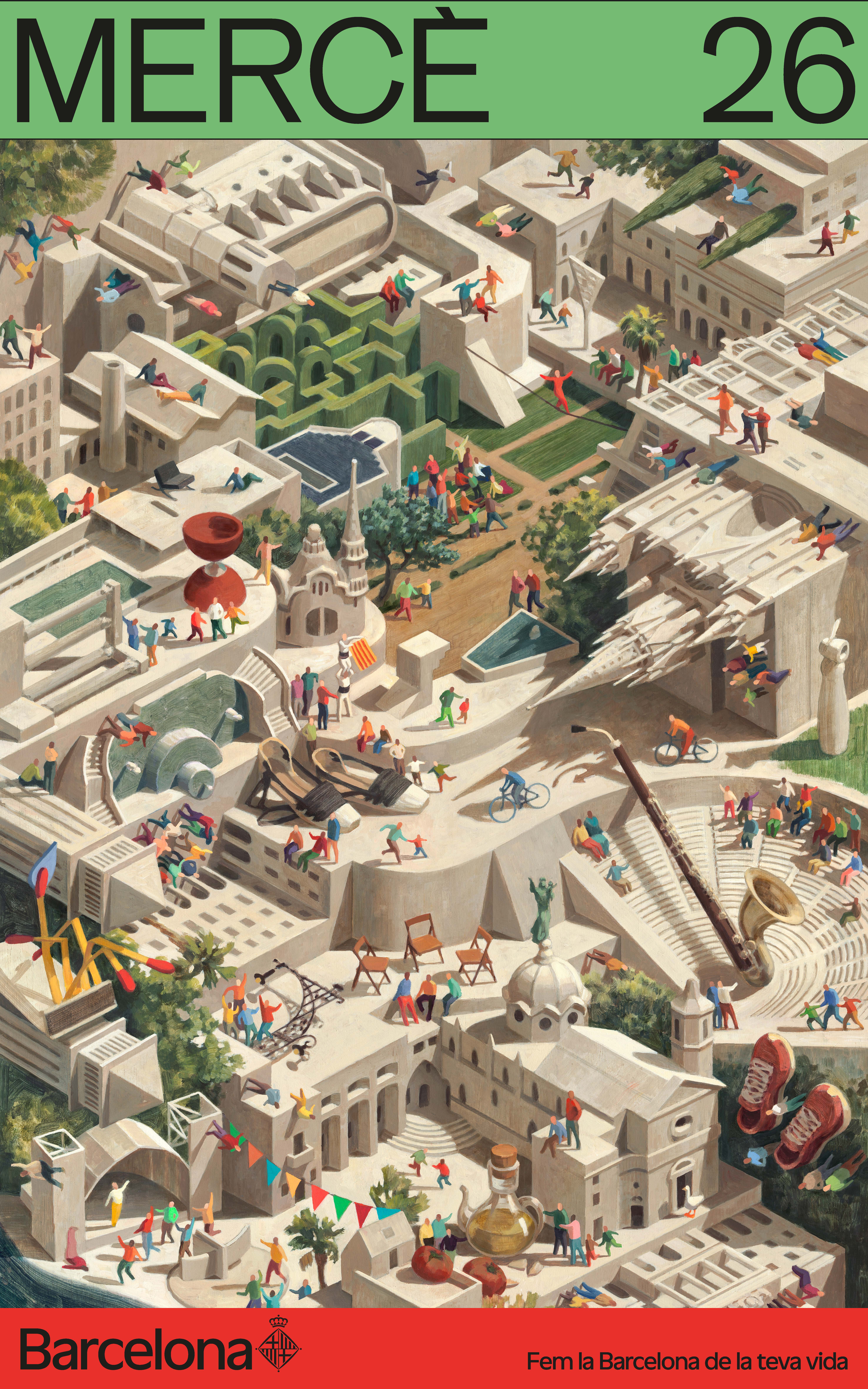
A budget that, moreover, does not translate into an entrance price for the public. The vast majority of Mercè activities are free and invite citizens to make public space their own, walk through Barcelona, and discover it from new perspectives. This is also the idea conveyed by the official poster for this year, by illustrator Cinta Vidal, which represents a city unfolded, open, and full of possible routes. And this is how, almost eight centuries after its foundational legend, La Mercè continues to make Barcelona the stage for one of the great festivals of the year.
Add The New Barcelona Post as your preferred Google source for free
Stay informed with the latest news.