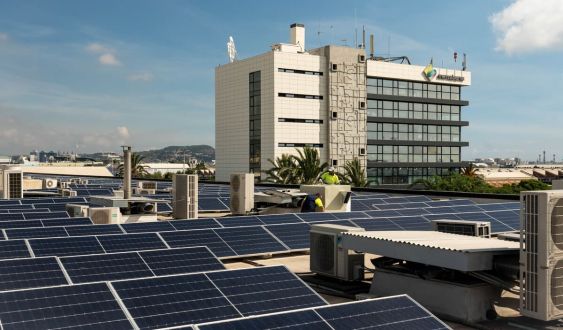
Mercabarna already has the project on track to install solar panels on all the roofs of the food complex. The objective is that by the end of 2025 the market will have an installed capacity of 18MWp ---the equivalent of the consumption of 18,000 families over a year--- and a solar capture area of 360,000 square meters, becoming the largest photovoltaic park in the Iberian Peninsula built on building roofs and intended for self-consumption.
In total, the project, called RePowerMercabarna-Energía, will require an investment of 12 million euros and will allow Mercabarna to generate 25% of all its annual electricity consumption. The challenge is to reduce the energy costs of the wholesale companies operating in the market, since this self-generated renewable energy, in principle, will be cheaper than what they can freely buy in the electricity market.
As The New Barcelona Post explained last January, to channel this project Mercabarna has launched a public tender to select a private operator who will be responsible for the installation of the photovoltaic panels and also for the management and operation of the plant for a period of 25 years. In total, the market has received six offers, which the contracting board is now analyzing with the aim of being able to award the project at the beginning of November.
The six companies vying for the solar megaproject are the French group Engie; the Catalan construction company ACSA (a subsidiary of Grupo Sorigué); the Girona-based company Construcciones Rubau; the Barcelona-based company Acelera Energía, the Lleida-based Atlas Energia, and the Galician company EiDF (Energía, Innovación y Desarrollo Fotovoltaico). None of the major Spanish energy groups have submitted a bid.
To execute the project, the winning company of the tender must establish a newly created company, an SPV or special purpose vehicle in Anglo-Saxon commercial jargon, in which it will control 51% of the capital. The remaining 49% of the shareholding will be in the hands of Mercabarna itself and the Barcelona City Council, according to Jordi Valls, general director of the food hub.
Specifically, the council will acquire 25% of the SPV's capital through the MES Barcelona fund, the mechanism created by the municipal corporation to accelerate the energy transition in the city and in which private companies also participate. Finally, Mercabarna will own the other 24% of the SPV, although half of this stake, i.e., 12% of the shares, could be transferred to market companies, either through the Guild of Wholesalers of the Central Fruit and Vegetable Market or the Association of Mercabarna Wholesalers (Assocome).
Mercabarna will also have a preferential acquisition right over the 25% of MES Barcelona, which it can exercise when this vehicle decides to divest from the company. The Barcelona City Council plans to contribute 50 million euros to MES Barcelona, an amount that will allow raising another 116 million from private investors, which will be used to finance different sustainable energy projects in the city. About fifteen companies interested in participating in this public-private collaboration instrument have already been approved.
The SPV will have to pay rent to Mercabarna for the use of the roofs of public buildings and will have the capacity to incur debt, with a cap of 70% of the necessary resources. Also, it is planned to apply for European funds from the Next Generation program. Once constituted, this mixed-capital company will sign two contracts with the Barcelona central market: one for construction, i.e., installation and commissioning of the solar panels, and one for maintenance, management, and operation of the plant for 25 years. The SPV will adopt a governance model based on decision-making with reinforced majorities, so that the private operator will not be able to unilaterally impose its criteria.
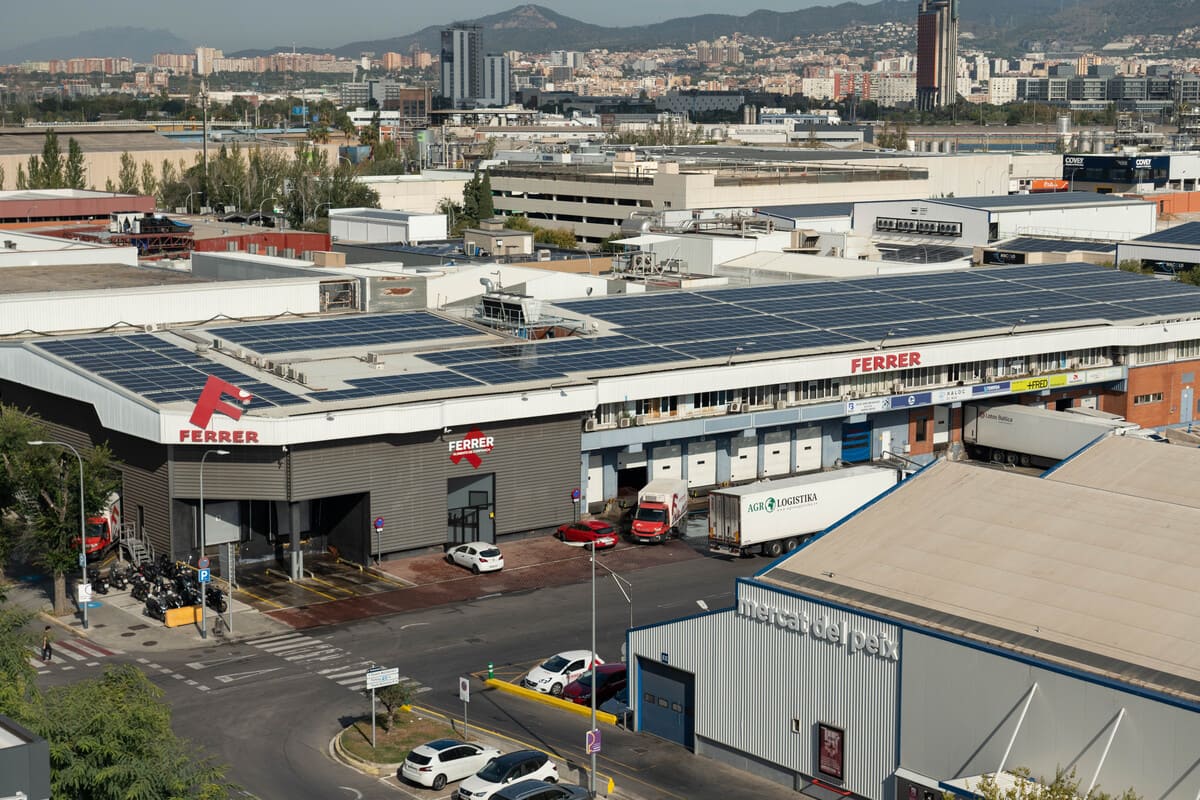
It must be taken into account that the SPV will focus exclusively on installing solar roofs on buildings owned by Mercabarna, mainly the large warehouses that house the central fruit, fish, and flower markets, with a total area of 125,000 square meters. The three partners of the SPV must invest between 4 million and 5 million euros in this first phase of the project, which will start at the end of 2022 and will generate 6.8 GWh of energy per year. All the energy generated will be sold to the stallholders of the central markets, who will have an alternative and more economical source of electricity supply.
In parallel, 100% of Mercabarna's wholesale companies have also committed to installing photovoltaic panels on their buildings, which occupy public plots, but which, unlike the central markets, are properties they own. Thus, in this so-called phase 2, which will extend until the end of 2025, an additional 235,000 square meters of solar panels will be promoted, with a generation capacity of 16 GWh per year. The estimated investment in this phase will exceed eight million euros. In this case, this budget will not be assumed by the SPV, but by each of the wholesalers. However, the mixed-capital company, taking advantage of its experience with the public sector, will be able to offer its services as an installation company, but each Mercabarna operator will be free to choose which installation company to contract in the market.
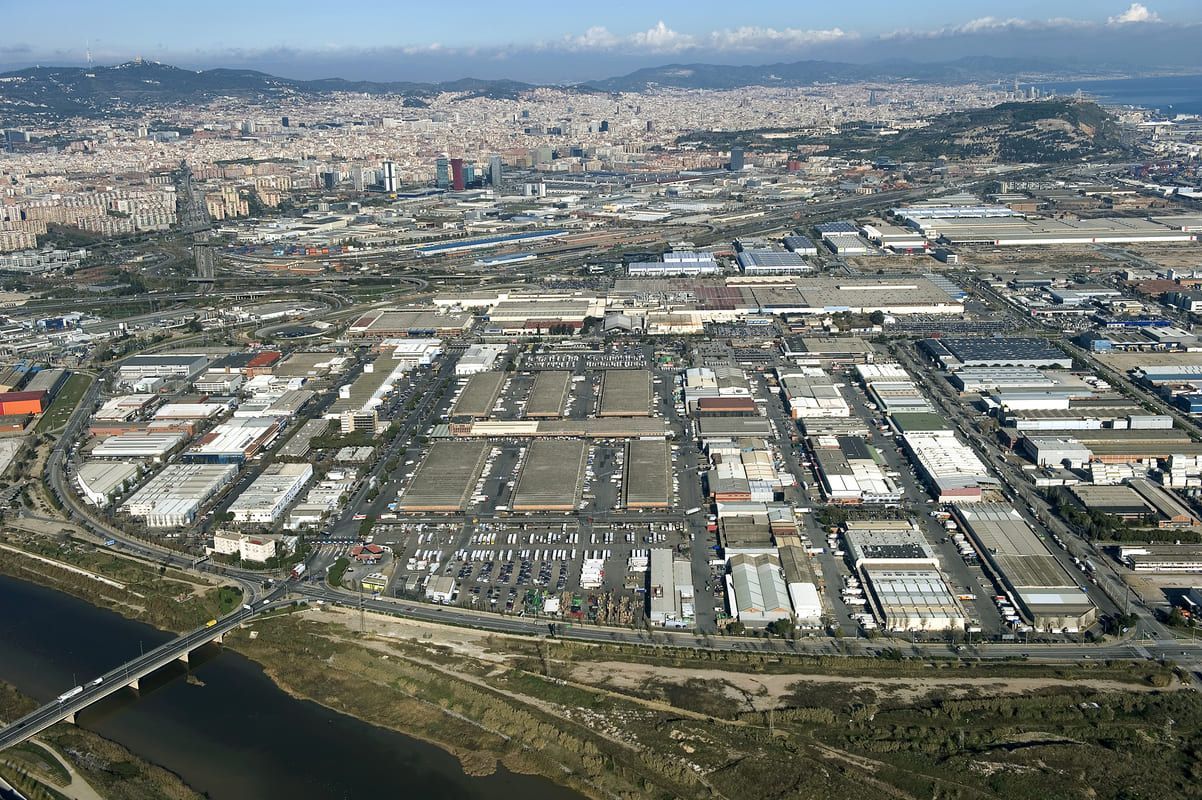
Currently, Mercabarna already has several properties with photovoltaic energy, with an installed capacity totaling 5 MWp and 32,000 m². With the project now announced, the capacity will increase to 18 MWp, with 360,000 m² of solar energy capture surface, which will reduce CO₂ emissions by 6,000 tons. Mercabarna's sustainability and energy transition plan also foresees launching, later on, an energy community, so that when all the panels are installed, an internal market can be established, allowing energy trading between the different wholesale companies.
Bonus Plan
Mercabarna will reward wholesalers who adhere to the RePoweMercabarna-Energía green energy plan by applying a reduced CPI to their lease agreements for the 2022 and 2023 fiscal years. However, the biggest incentive for operators of the food complex will be to reduce their energy bill thanks to the commitment to renewable self-consumption. It should be noted that Mercabarna has 800,000 m³ of refrigerated warehouses, which represents one of the main concentrations of industrial refrigeration in Spain.
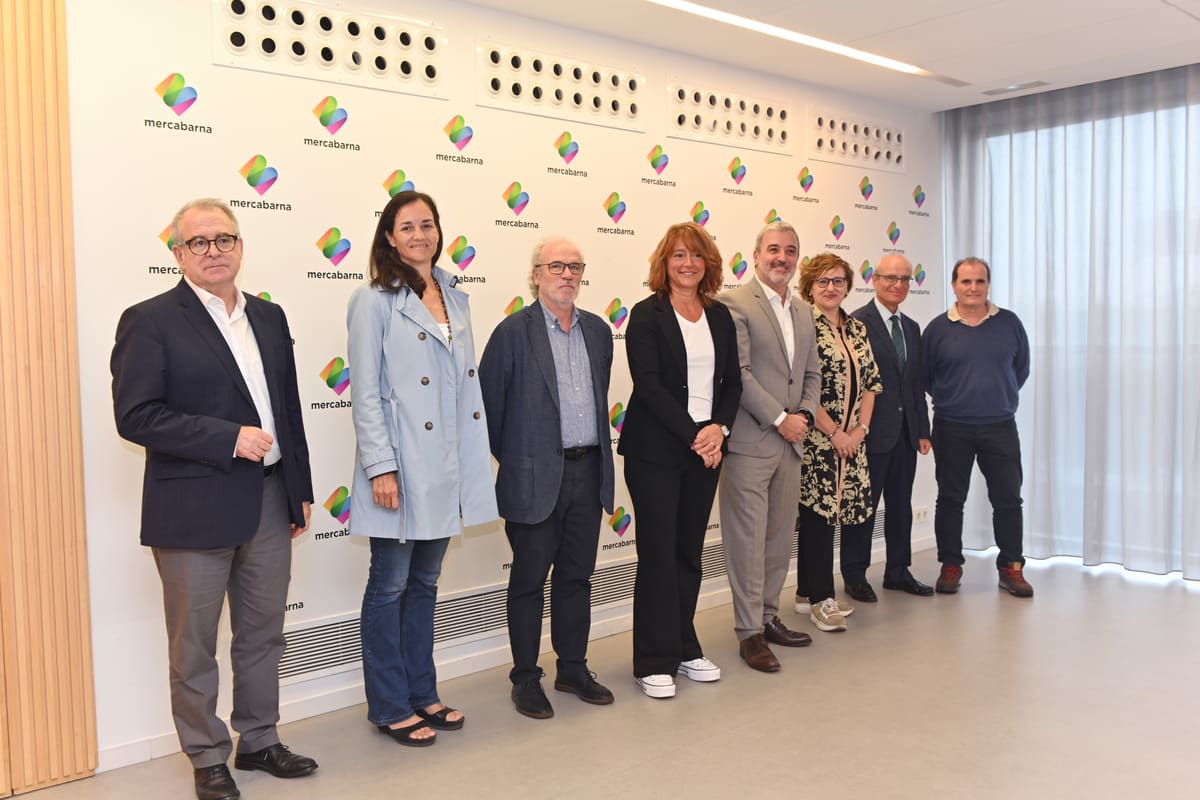
During the presentation this Friday of the agreement reached with the wholesalers, the first deputy mayor of Barcelona, Jaume Collboni, explained that Mercabarna's solar megaproject will be equivalent "to installing one hundred photovoltaic panels like the one at the Forum" and that it will produce the energy consumed throughout a year by a neighborhood like Roquetes. "With this initiative, we are taking a very important leap in scale to boost the energy transition in Barcelona," stressed Collboni, who also highlighted that the commitment to renewable self-consumption will help prevent food prices from rising due to increased energy costs.
For her part, the third deputy mayor, Laia Bonet, believes that the alliance between MES Barcelona and RePoweMercabarna "is one of the best news" that could be expected to accelerate the decarbonization process and to "combat the climate, social, and economic emergency with greater force." "It's a win-win project where everyone wins," concluded Mercabarna's president, Montserrat Ballarín.
Add The New Barcelona Post as your preferred Google source for free
Stay informed with the latest news.
