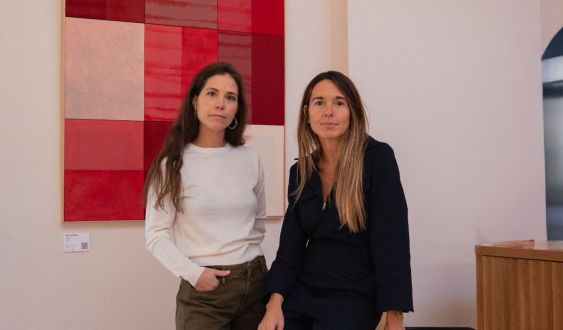
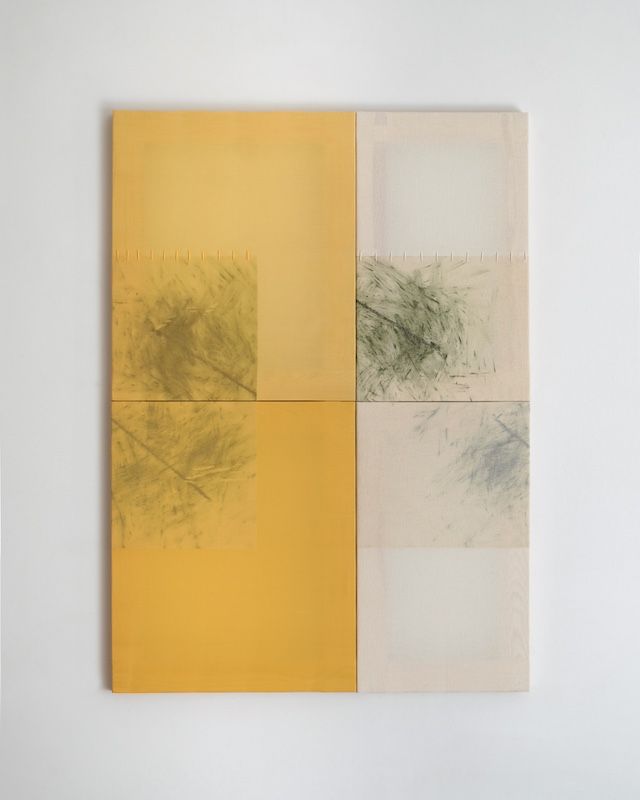
The veil that blurs memories acquires a new dimension with the canvases of Blanca Nieto, which mix fabric, colors, and memory. With the superposition of gauze fabrics on the canvas, mending, and the combination of colors that re-stitch memories and oblivion, Nieto reflects a present in which the sharpness of the moment contrasts with a past that becomes blurry. Her work is exhibited for the first time in Barcelona by Juno House and its project Beyond Art, promoted to give visibility to female artists.
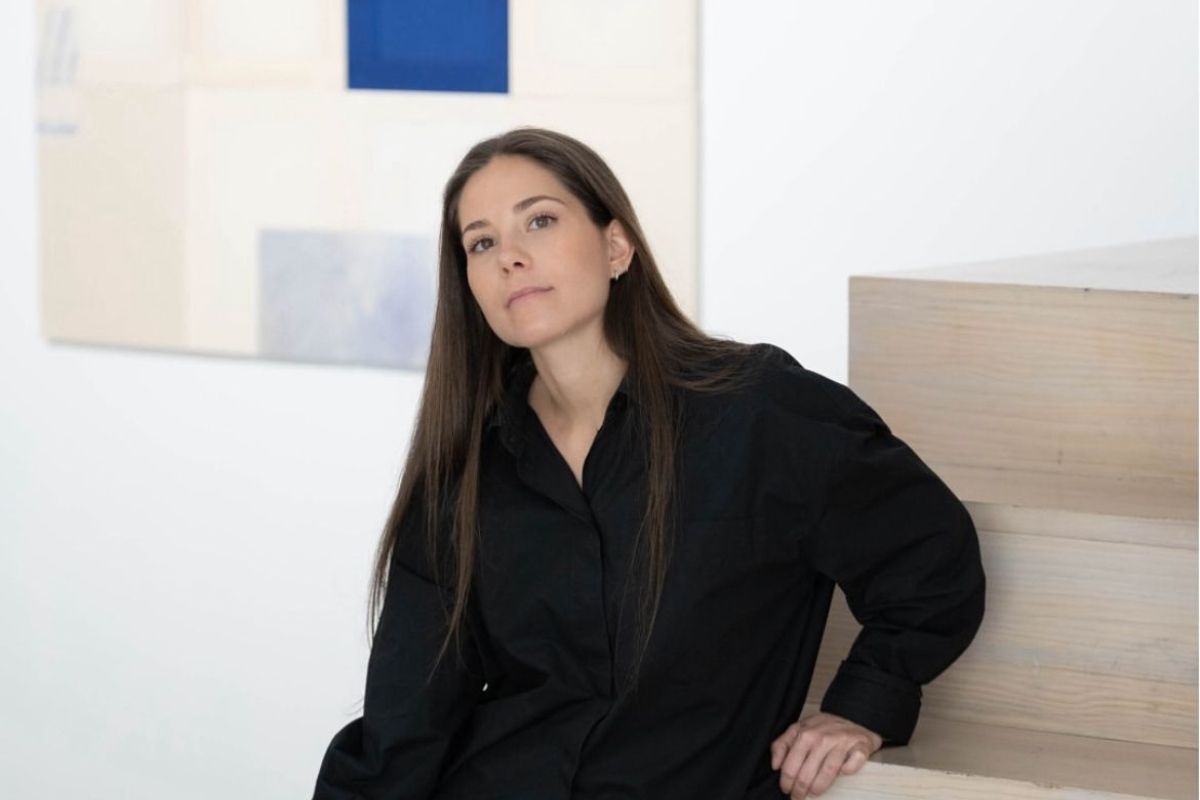
"Memory builds people's identity; we are what we have lived," defends Nieto, with the artistic name of Blannim. "Without your memories, you stop being who you are, and my mends express the bond we have with our memories; that scar that what we have lived leaves us and that shapes us as people," highlights the artist, who has focused on the representation of memories precisely because of her poor memory capacity.
Nieto's work, which is also part of the Kave Gallery initiative by Kave Home, arrives in Barcelona after its author has passed through several cities. The artist studied Fine Arts in her native Salamanca, and then moved to Valencia to pursue a master's degree in graphic design and illustration, a facet with which she debuted in the professional world in a multinational in Mallorca. In search of scenarios with more space for creativity, she later joined an advertising agency in Madrid, until the pandemic arrived and, with it, an ERTE. "I then had time to reconnect with painting," Nieto recalls. And, when it was time to return to the office, she chose to change course and fully immerse herself in the world of art.
Now, her translucent memory made canvas lands until December at Juno House, within a Beyond Art that aims to give visibility to female artistic talent, focusing now on emerging artists, as explained by Beatriz de Vicente, promoter of the initiative and CEO of Juno House. All with one goal: to add to reverse the figure that only 30% of solo exhibitions in Spanish museums and galleries are by women.
With this purpose, Juno House plans to give continuity to the initiative, which started with Joana Santamans and through which five artists have passed. The club also bets on launching exhibitions that extend over time. "We want to make sure that the impact does not remain in a single act, but rather translates into long exhibitions during which Juno House is open for whoever wants to visit them," emphasizes De Vicente, in favor of the visibility of the artists and their work.
In addition to highlighting this visibility, Nieto praises the initiative for the way art relates to space. "While in some galleries they are white walls, Juno House is more like a home, and better approaches how works coexist in these places," giving context and embracing a work that weaves the sphere of memories from memory and oblivion.
Add The New Barcelona Post as your preferred Google source for free
Stay informed with the latest news.
