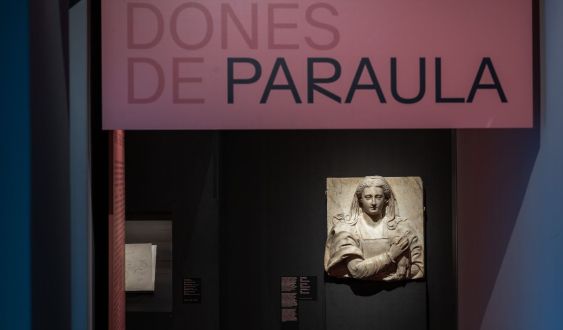
In the temporary exhibition hall of the Frederic Marès Museum, the exhibition Dones de Paraula (Women of the Word), curated by Dr. Maria Garganté, art historian and professor, is presented until May. A select and profound exhibition on the control of the word, a seemingly masculine control throughout the centuries, but by no means alien to the female figure. This exhibition, which spans from humanism to contemporaneity, does not give women the word (which they had already taken, moreover), but rather shows, through artistic representations of all kinds (religious or not) and illustrative objects, the strength of the female word during the years in which it was sought to simulate that it did not exist. Knowing, perfectly well, that it did exist. And in what way.
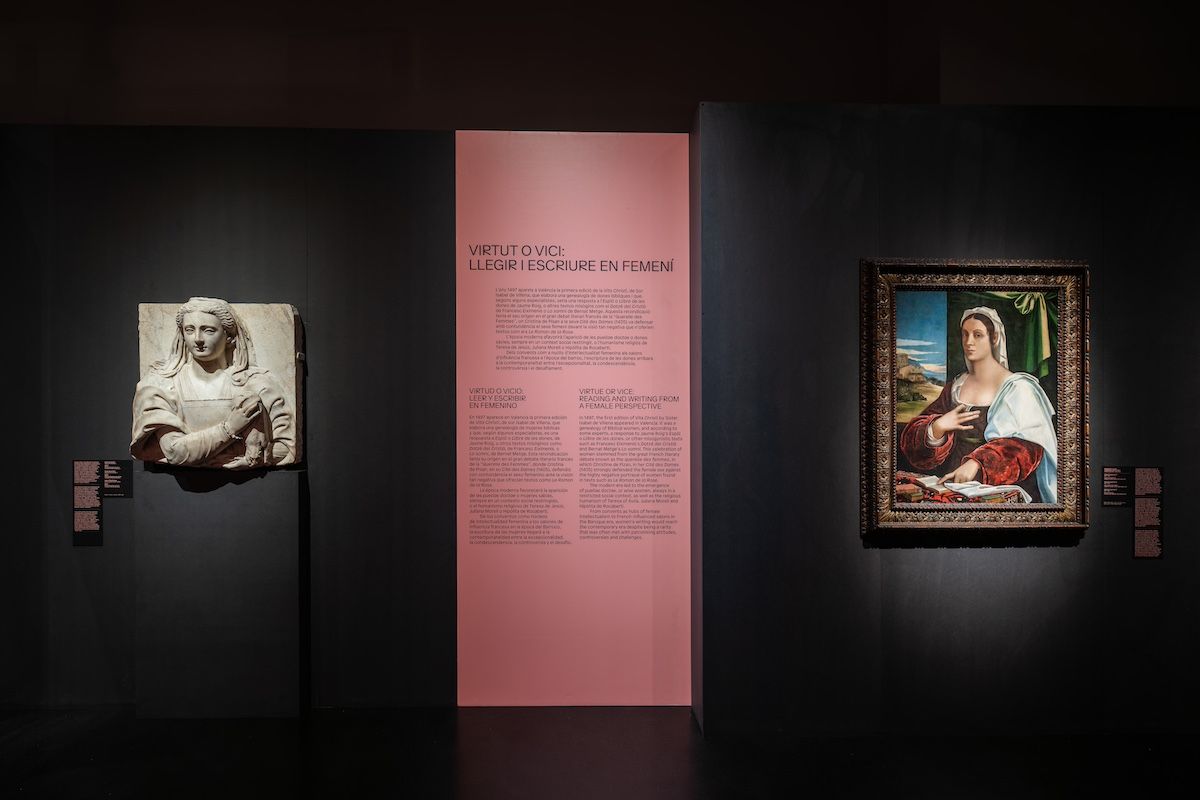
The exhibition manages to generate a dialogue with contemporaneity and with a gender perspectiveFirst of all, the exhibition design is extremely elegant. Good chromatics, good relationship with the walls and light, a perfect use of the (limited) space reserved by the museum. We are greeted by a Lady with an Erminesculpted in relief and of Italian origin, although from a Barcelona collection (Miquel Mai, ambassador of Charles V). It is still debated whether it is Giulia Gonzaga (the aristocrat close to Hispanic Protestantism), but historians have tended to deny it:is a general allegory of virtue and knowledge, with the ermine as a symbol of purity(there is also aLady with an Ermineof Leonardo), and what it transmits to us is the message of a humanism in feminine that will be the common thread of the entire journey.
The Baroque or Renaissance pieces in the exhibition generally come from the museum itself. But an attempt has been made (and achieved) to generate a dialogue with contemporaneity and with a gender perspective. Let's not forget, we come from the previous exhibition, Emocions. Imatges i gestos del passat i del present, that is, the museum explicitly tries to give life and animation to pieces that are far from having a display case vocation.
The word as an element of communication, but also of power: from the Cambó collection, we are presented with a portrait made by Sebastiano del Pombo in the 16th century, showing a woman who could also have perfectly been Giulia de Gonzaga, but also Vittoria Colonna (a great woman of the Renaissance, poetess, friend and confidante of Michelangelo), with a castle in the background that (Garganté, a passionate and true tifosa of southern Italy, assures) could be the Aragonese castle on the island of Ischia. The woman makes a gesture that also summarizes the message of the entire exhibition: with one finger she points to the reading of a book and, with another, she seems to slightly open her neckline and point to her chest. The self. The she.
We are also reminded of La Querelle des Femmes, the text by Christine de Pizan (the first professional female writer in French) who defended the female sex against derogatory texts of the time, and with its Catalan version: the Vita Christi, by Isabel de Villena, who made a genealogy of biblical women and who was, in turn, a complete response to Jaume Roig's L'Espill or Bernat Metge's Lo somni.
The religiosity of a good part of the pieces leads us to its crown jewel, with Saint Teresa of Jesus in her cell, from the Marès collection (18th-century polychrome carving), which shows Teresa much more as a writer than a saint (the little angels can already be blowing on the clouds), closely accompanied by an unpublished relic: a minuscule autograph by Teresa herself, framed in a reliquary pendant.
Next to him, Caterina Albert in the form of a self-portrait. In the form, if I may be allowed the license, of a Catalan Victoria and a multifaceted woman who looked in the mirror, drew herself, and recognized herself as a woman of her word. Exhibiting her facet as a painter is also a way of reclaiming the many other things she had to say ("in this land where it is more dishonorable for a woman to write than to do other foolish things", she wrote to Joan Maragall).
The word could already be masculine, but its transmission was feminine. For some reason, we speak of mother tongue, after all. That is why the scene of Saint Anne teaching Mary (a scene derived from the apocryphal gospels and little admitted among theologians, who affirmed that Mary's teachings rather came from the Holy Spirit) is shown to us not only with a polychrome carving from the 17th century, but also with sketches in a Picasso notebook.
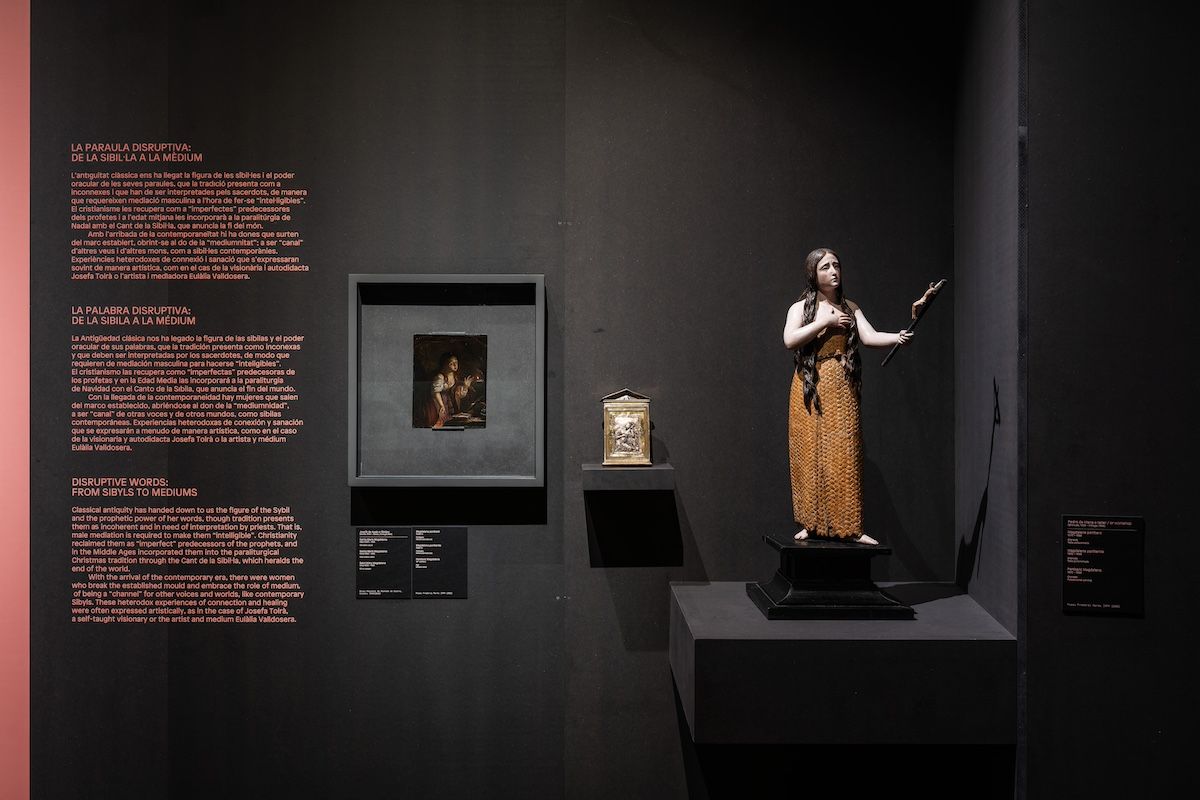
And so we continue with scenes such as those of the Immaculate Conception (Mary alone, pregnant, and even exhibited as the patron saint of the University of Cervera in a copy of its Constitutions). The reference to Mary Magdalene is also inevitable, about whom the gospels actually said little despite having reached us as a repentant prostitute, and who in any case, according to the apocrypha, was undoubtedly an advanced disciple of Jesus.
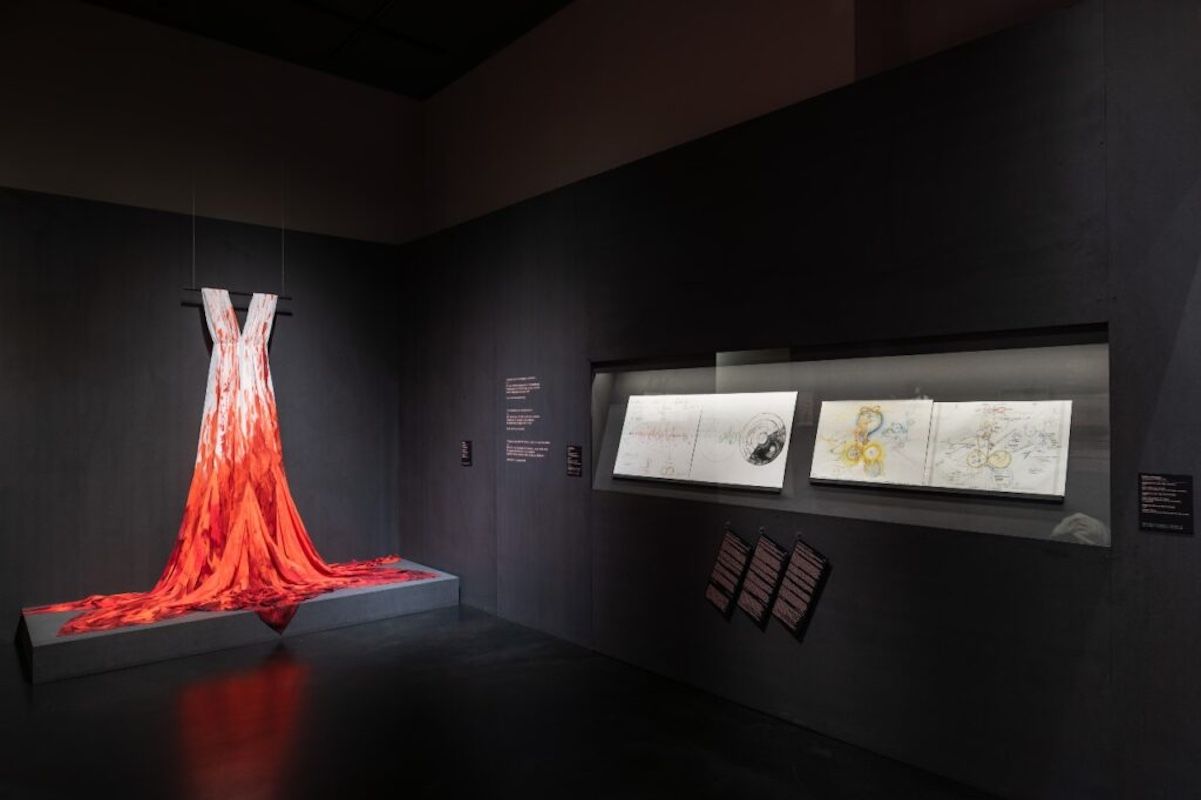
More pagan, the myth of Cassandra: a woman with the gift of prophecy but who, because she does not want to bow to Apollo, he punishes her with the condemnation of not being believed by anyone. The spectacular Cassandra Tunic by Kima Guitart, stained with blood and hung like a rain of dignity, rivets the contemporary band of the exhibition and coexists with the dialogues of the medium and artist Eulàlia Valldosera (whose drawings also self-signal, like Vittoria Colonna).
Almost as a farewell, the intuitions of the also medium Josefa Tolrà, an illiterate woman who, after losing her two children in the Civil War, obeyed the doctor who advised her to draw what the voices told her (attracting the attention of Joan Brossa, from whose foundation her written and drawn intuitions come).
It is not surprising, then, that the prophetic Sibyl bids us farewell with a relief by Antoni Solà i Llansas (Aeneas and the Cumaean Sibyl visit the Styx) where she, again, acts as a mediator. As a medium, between us and the underworld. I don't know why, but, in saying goodbye to Maria Garganté, I feel that some personality with words has subtly mediated between my hells and the hidden truth.
Add The New Barcelona Post as your preferred Google source for free
Stay informed with the latest news.
