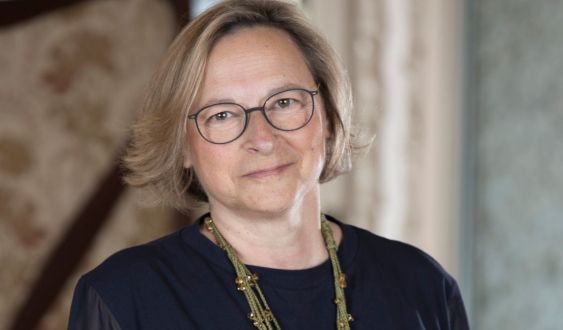
The director of the Catalunya-La Pedrera Foundation is exactly that: the director of the Catalunya-La Pedrera Foundation, not the director of any piece of our architectural heritage. She has had the virtue of managing to direct the funds received from the promotion of Gaudí's unique building towards foundational activities that are the soul of the space, that give it meaning, that make it a true quarry of talents and initiatives.
Dalí thought of it as the headquarters of the Commissariat of Public Imagination, but Marta Lacambra has transformed La Pedrera into the headquarters of the Commissariat of Public Sensitivity. And it is that, who says that social services must always be directed or managed by the administration? Who says that all care for the elderly, or for forests, or for diet and diseases, must solely be a responsibility that we derive via taxes? What if, when we visit Sean Scully's magnificent exhibition at Casa Milà, we are paying a part of social sensitivity towards problems that affect us (or will affect us sooner or later) all?
--- Working here must be a luxury.
--- It is. But perhaps you say it because of the building.
--- I say it because of the building, but you are more than a building.
--- Not everyone realizes this.
--- Let's go. What do you do?
--- We are a foundation. We are dedicated to the five major themes contemplated in our statutes. A very important one: trying to help society when a problem like Alzheimer's is diagnosed. We saw that, in the initial phase of diagnosis, there is no one. Now we already have 2,000 daily users who attend memory workshops in our spaces. We have 22 and are about to open two more in Gràcia, and one in the Eixample. And we are very excited, because we have the feeling that in Barcelona we are still very unknown as the Catalunya-La Pedrera Foundation, and now we will be in the hub of the Alzheimer's table with the Pasqual Maragall Foundation and the ACE Foundation. We have the feeling that triangulating the collaboration of the three foundations can be definitive for families. We deal with different phases, so we are very compatible, and we are very excited that they have accepted us.
--- What else?
--- The second topic is related to health and nutrition, in collaboration with the Alícia Foundation (which is ours). A long time ago, Toni Massanés spoke about the importance of positioning oneself in culinary medicine, which means everything that cooking can help with when a person has any type of diagnosis such as diabetes, hypertension, or cancer. In fact, what we are most proud of is the Oncoalicia website, which is in four languages, and which is made in a very pedagogical way so that, if you have difficulty swallowing, or have a metallic taste in your mouth, or nausea or constipation, it accompanies you according to the type of cancer you may have been diagnosed with, so that you can adapt your diet to what makes your life easiest.
--- Third.
The third topic, very current especially after what happened in California, is how droughts, climate change, and the abandonment of forests have led to an exceptional circumstance that means the same thing that happened in Los Angeles could happen to us in Collserola at any moment. If forests are not cleaned and, furthermore, they are crowded with homes, often without water availability for irrigation and, moreover, cleaning these forests does not have an economic return, they end up being abandoned. We are very excited to start a project with L'Olivera consisting of cleaning the Collserola area starting with Can Calopa (which is theirs), obviously in collaboration with the natural park and the Diputación, to bring out the existing olive trees that were covered with weeds, and thus see if we can recover the agricultural grid. I was very pleased to see that there were people in both Rubí and Molins de Rei willing to collaborate, which means we are not alone. People have detected the importance of cleaning and recovering the landscape to prevent fires.
--- And, scientific vocations? And, inclusive employment?
--- Exactly. We have several awards for the promotion of scientific vocations, especially among girls. And finally, generating employment for those people who have no or have had no opportunity in life.
--- Aren't all these services that the public administration should provide?
--- They could be.
"We dedicate ourselves to what has been left undone"--- Or are they already public services, but provided privately?
--- What is certain is that everything we do could be declared of public utility, and I have never hidden from being a person with a clear vocation for public service. Whether it is done through a private company or through the administration is the least important thing: what I am clear about is that we do not collide. We dedicate ourselves to what has been left pending. And we believe that we can be a very important support, deriving all the income from La Pedrera and now also from Món Sant Benet to finance programs that generate employment, that care for the elderly... I believe it is a model that is more than public-private cooperation: in reality, what we do is understand the problem, make a proposal and promote it with the authorization and knowledge of the protectorate and the board of trustees.
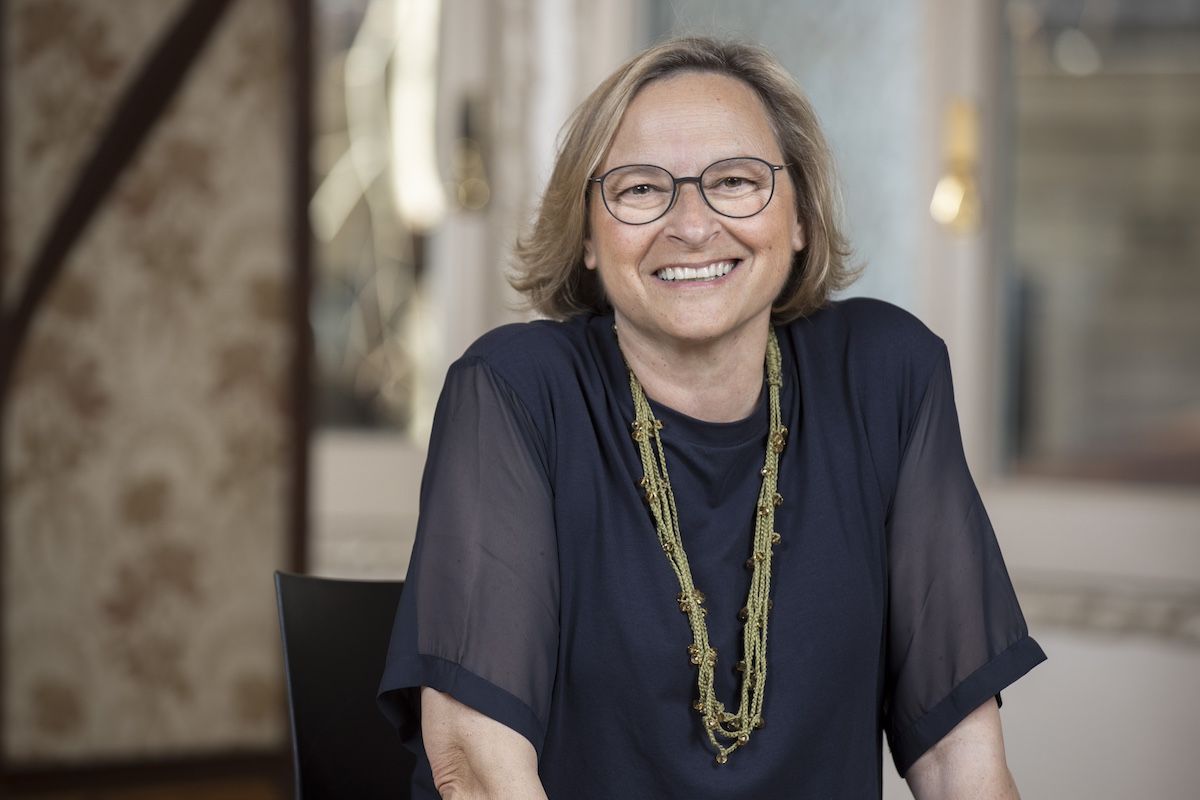
--- When you go around the world presenting the foundation, do you mention the building more or the work it does?
--- The work. What's more: for twelve years I've only talked about the work we do and they still call me the director of La Pedrera.
--- Wow.
--- Yes, yes. And now every time we present the events, we always say: "Welcome to the headquarters of the Catalunya-La Pedrera Foundation, welcome to La Pedrera." Not because we like to be redundant, but because La Pedrera is a building, and who is receiving you is a foundation. Things are done by people, not by buildings, however important they may be.
--- It's hard to exist.
--- They often think we are just modernism and some exhibitions. Or that perhaps we are given the National Research Award. But we are a foundation! Perhaps not with the most sexy name in the world, but when we were founded, the name of Catalunya and the name of La Pedrera could not be lost.
"Barcelona is a city of talent and culture, yes, but there is too much inequality"--- We were saying that you fill a socially necessary hole.
--- And I must say that local corporations like Mollerussa, Puigcerdà, Salt, Reus or Tarragona, when they see that we do memory workshops, help us a lot. It is clear that all help is little. But something wonderful happens, and that is that 50% of our users with Alzheimer's come prescribed by CAPs and hospitals: therefore, not being a pharmacological treatment, it is a human treatment, of love, of patience, of caring for family members and of reinforcing the memories of those who have just been diagnosed.
--- But few foundations dedicated to it have a world heritage site like this building.
--- When international foundation meetings are held, and many of them may have had important foundational endowments or a philanthropist who has promoted them, I would tell you that they find it very amusing that we have managed to ensure that all the profits from the promotion of a unique building like this (which will always want to be visited, and at no small price) are directed to our activities and social projects. This model is indeed unique.
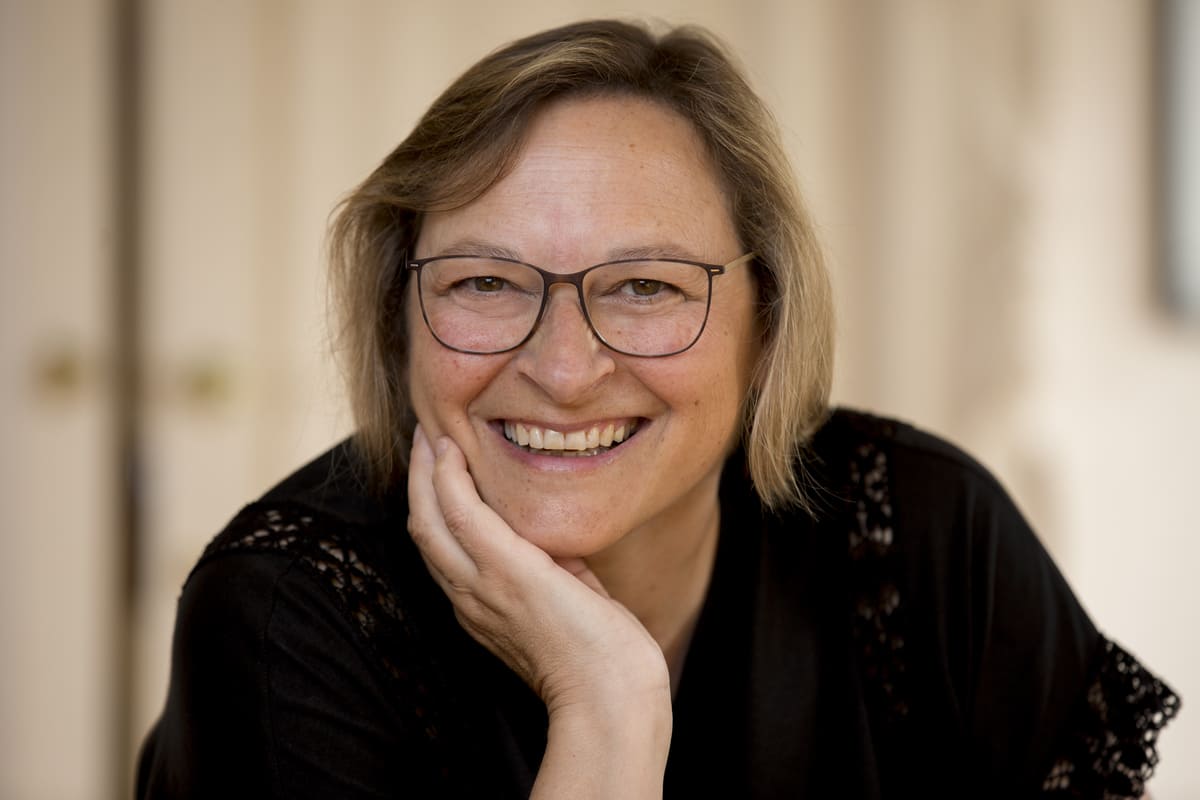
--- That means you bring in a lot of tourists. Is something serious happening with tourism in Barcelona?
--- The other day I was scolded because I had been very forceful in saying that part of the complaint against tourism came from the services linked to it: one thing is to confuse having success in this sector and another thing is not to have enough inspections on compliance with labor agreements. In addition, we have the problem of capacity and occupation of public spaces. If I had the magic wand to solve these problems, I would first start by making sure that labor agreements are complied with. We do it. And I understand that there are many people without a building like La Pedrera who say that at least the rules should work for everyone: agreements, capacity and occupation of public spaces. It is not questionable.
--- "We have a Barcelona of culture and talent, but also a Barcelona of inequalities to keep in mind." Marta Lacambra.
--- That's right.
"There is too much inequality, Barcelona is not the glamorous city we sometimes like to think it is"--- Can discomfort with tourism increase because Barcelona residents are forced to leave the city? That is, a very beautiful Barcelona but where it is too expensive to live?
--- You say it exactly as I think. Now then: it's also that Barcelona is not beautiful. Look, the other day I went to see the Carmel bunkers and I understood everything: agglomeration of tourism, saturation of transport, and the feeling that those who lived there were like puppets. I understood the problems because I went, and they have reasons. There are parts of Ciutat Vella where graffiti has surpassed everything surpassable, it gives the feeling of a degraded neighborhood. It's very strange that so many phone cases can be sold! There are more phone cases than there are phones in the world!
--- True.
--- The feeling is that there is an artifice and that those things we like (La Rambla, Plaça Reial, the seafront...) are as if they had an overlay that is hard to understand. There is too much inequality, it is not the glamorous city that we sometimes like to think it is. It is the city of talent and culture, yes, but there is too much inequality. The City Council would need to commit to inviting all of us to collaborate on a cleaner and more polished image of Barcelona. I know perfectly well what it costs me to have them painted when we bring Plensa's statue: it means money, vigilance, and education. It is very complicated, because in the end it may seem that we have a problem with vigilance: and it is true that I had never seen so many Guardia Urbana officers and so many awareness campaigns, but that is not enough.
--- And where does Barcelona shine, now?
--- The first would be the collaboration between Palau de la Música, Liceu, and Auditori, which already excite me when they do things separately. They have directors immensely capable of thrilling their audience. Second, the cultural art institutions: you pick any day and climb the stairs to the MNAC (which doesn't cost that much) and you also see the Miró Foundation, the Ethnological Museum... It gives a joy that makes you fall in love. And add to this the modernism of the Eixample: Casa Vicens, Sagrada Família, Sant Pau, Batlló... Barcelona is brutal, in this sense. Or archaeology! The City History Museum is more beautiful than ever.
"Of the million visitors we have, more than 150,000 are local"--- If the foundation had to consider any new initiative, what would it be?
--- We already made a qualitative leap after the pandemic, when we said that when doing the exhibitions we would not only have the artist in the room (now we have Sean Scully, which is spectacular), but also, it could be contemplated in the Liceu, in the Palau de la Música, in the Mies Van der Rohe, in the Museu d'Arqueologia de Catalunya, in the Biblioteca de Catalunya... we do this delighted with life. And I would say that surely, if we had not made the commitment to Alzheimer's and protecting forests, we would have been encouraged to collaborate on some other strategic project. And I do not rule out that from the Art Season of Turisme de Barcelona, and from the way of collaborating between entities in the city, very powerful projects can appear spontaneously and naturally. The Miró/Matisse tickets from the Miró Foundation and ours from Art en Pedra have been sold jointly; the ticket to the Palau de la Música and La Pedrera is already sold jointly; the Hospital de Sant Pau and us, too. Now, one of the things we would like to consolidate is that, with Antonio López, Plensa, Barceló and Art en Pedra, the number of local visitors to the exhibitions has increased a lot, including school visits, which means that, of the million visitors we have, more than 150,000 are local. It was a pending issue, and we like to be able to increase it so much.
--- Does the initiative of Turismo de Barcelona, betting and taking a photo at La Pedrera to claim a commitment to cultural tourism (or quality tourism), mean that not enough had been done until now?
--- It seems to me that Mateu Hernández has managed to put his passion in front of a strategy that also unites many of us. It is no longer about talking about tourism, but about how the loyalty of the cultural visitor can be achieved. What we would like is for people from outside and from here to pass through La Pedrera so that they know that it is essential to go, and that it is always a guarantee of quality.
Add The New Barcelona Post as your preferred Google source for free
Stay informed with the latest news.
