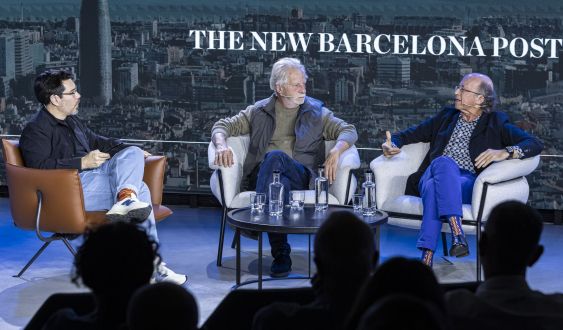
Barcelona has built a good part of its identity around creativity: that of a cultural, restless city always willing to reinvent itself. It is the Barcelona that surprised the world with the Olympic Games and that made culture and design two of its great international calling cards. But the past, however brilliant it may be, cannot become the only horizon of a city. "You cannot continue to live off the rents of the past," warned Javier de las Muelas, businessman and cocktail reference —founder of Dry Martini— during the last session of the Moments Estel·lars cycle.
De las Muelas misses the drive of that Barcelona of a few decades ago, when he began to make his way in the world of cocktails and found a city with initiative and, above all, courage to take risks and launch new projects. "There is a lot of talk about the Madrid movida, but Barcelona's even came earlier. Here there was enthusiasm and a desire to do things," he recalled. An effervescence also experienced by Javier Mariscal, who arrived in Barcelona from Valencia in 1969 and began to develop his career as a designer there. Through different paths, both have been witnesses —and protagonists— of the transformation of that Barcelona.
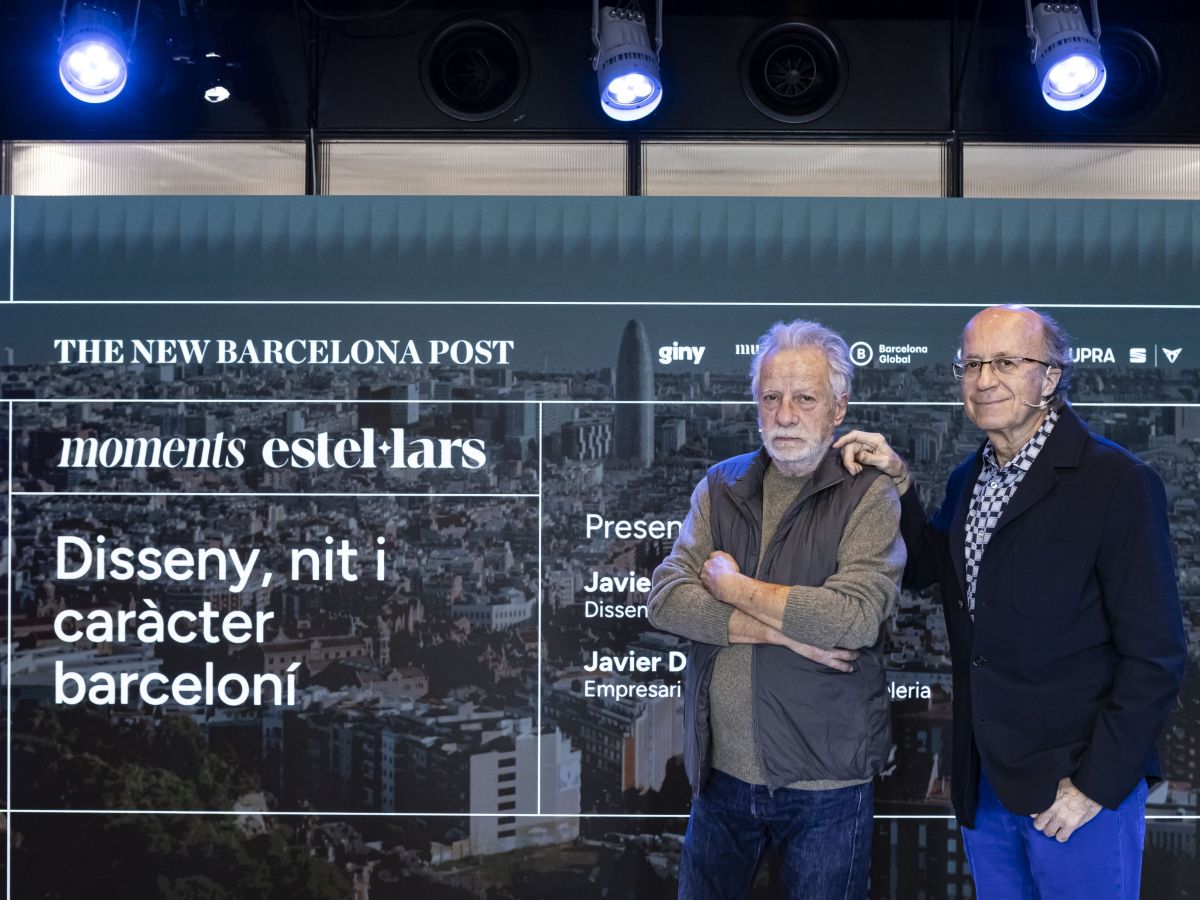
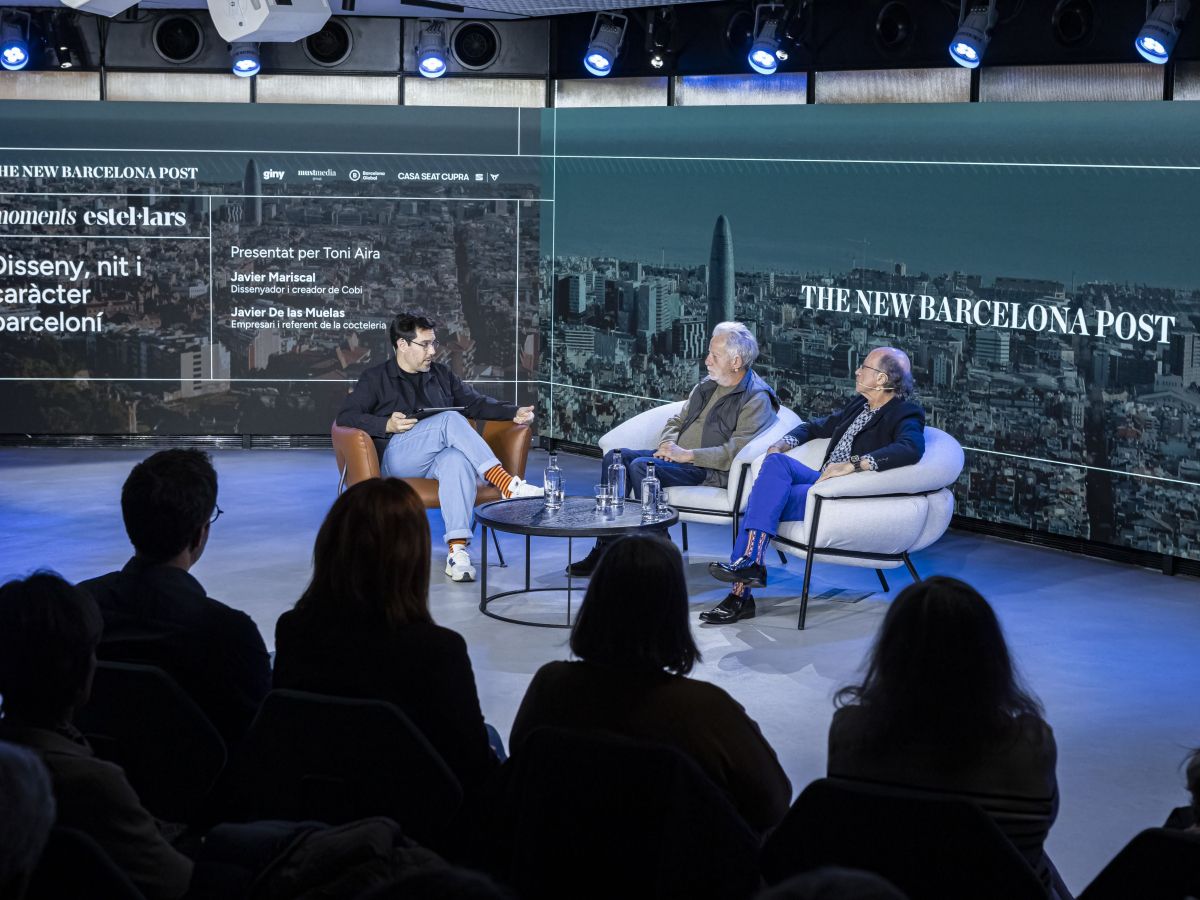
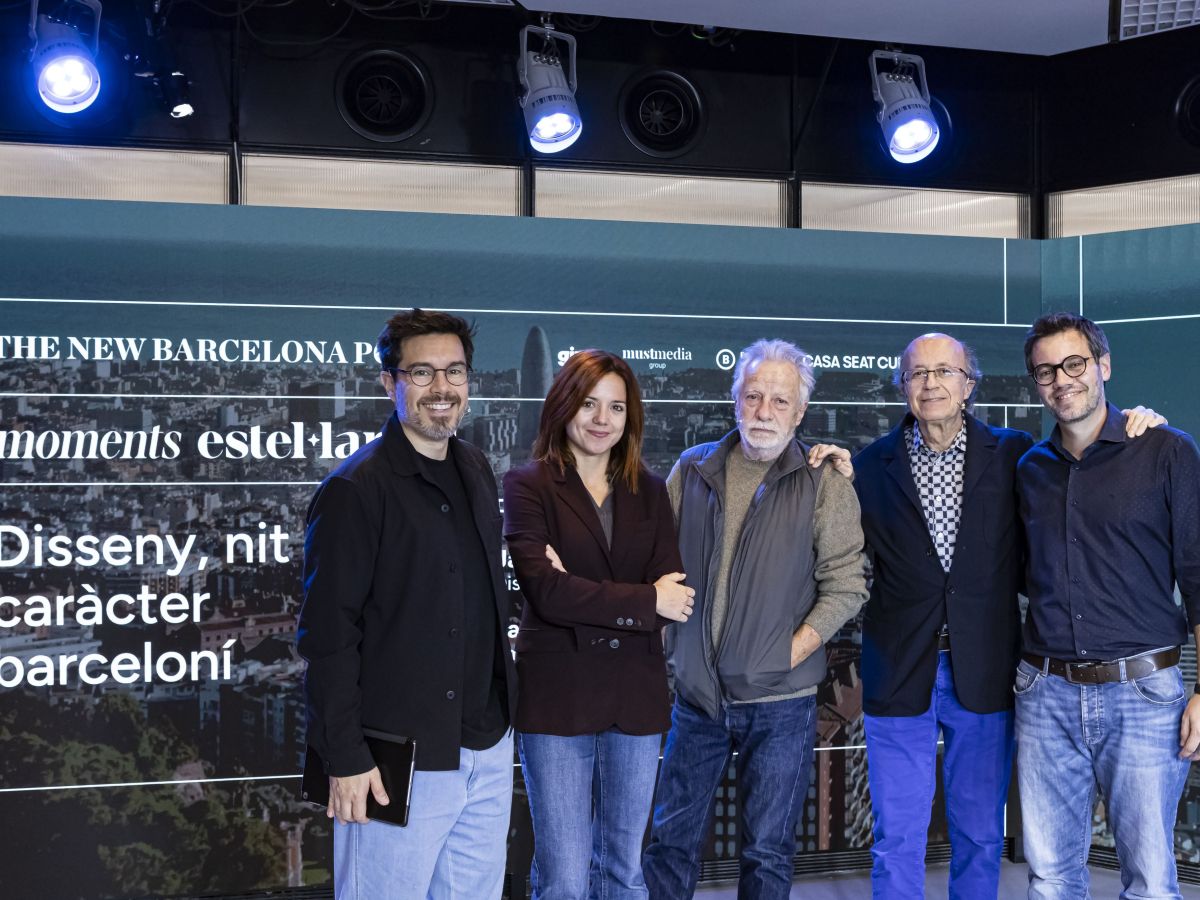
Precisely, the perspective of these creators who have lived this evolution so closely allows us to go beyond nostalgia and focus on the city of today: what remains of that innovative spirit? What has changed and what should be recovered? And, above all, what Barcelona would they like to build for the future? These have been some of the questions that have structured the conversation between Mariscal and De las Muelas, held at Casa SEAT CUPRA within the framework of the Moments Estel·lars cycle, organized by The New Barcelona Post with the collaboration of Must Media Group and Barcelona Global. The session, moderated by Toni Aira —who has dubbed the two protagonists of the debate "the Javis of another era"—, has given rise to two personal, irreverent and often divergent views on the past and present of the city.
The years that transformed Barcelona
And, to understand what has changed and what perhaps should be recovered, both have started by returning to the 70s, 80s, and 90s, a period of creative effervescence that deeply marked Barcelona. The Catalan capital was opening up to the world, preparing to receive visitors from all over, and beginning to gain an international projection that would have its great turning point in the 1992 Olympic Games.
“The Olympics were a commitment to innovation: it was like jumping off a cliff without knowing if there was water below, if it was deep enough, or if you would end up hitting the ground," he stated. A way of doing things that he himself has practiced throughout his career and that, as he humorously admitted, has also cost him more than once: "I, who love to jump into the pool, have ended up with more than one bump.”
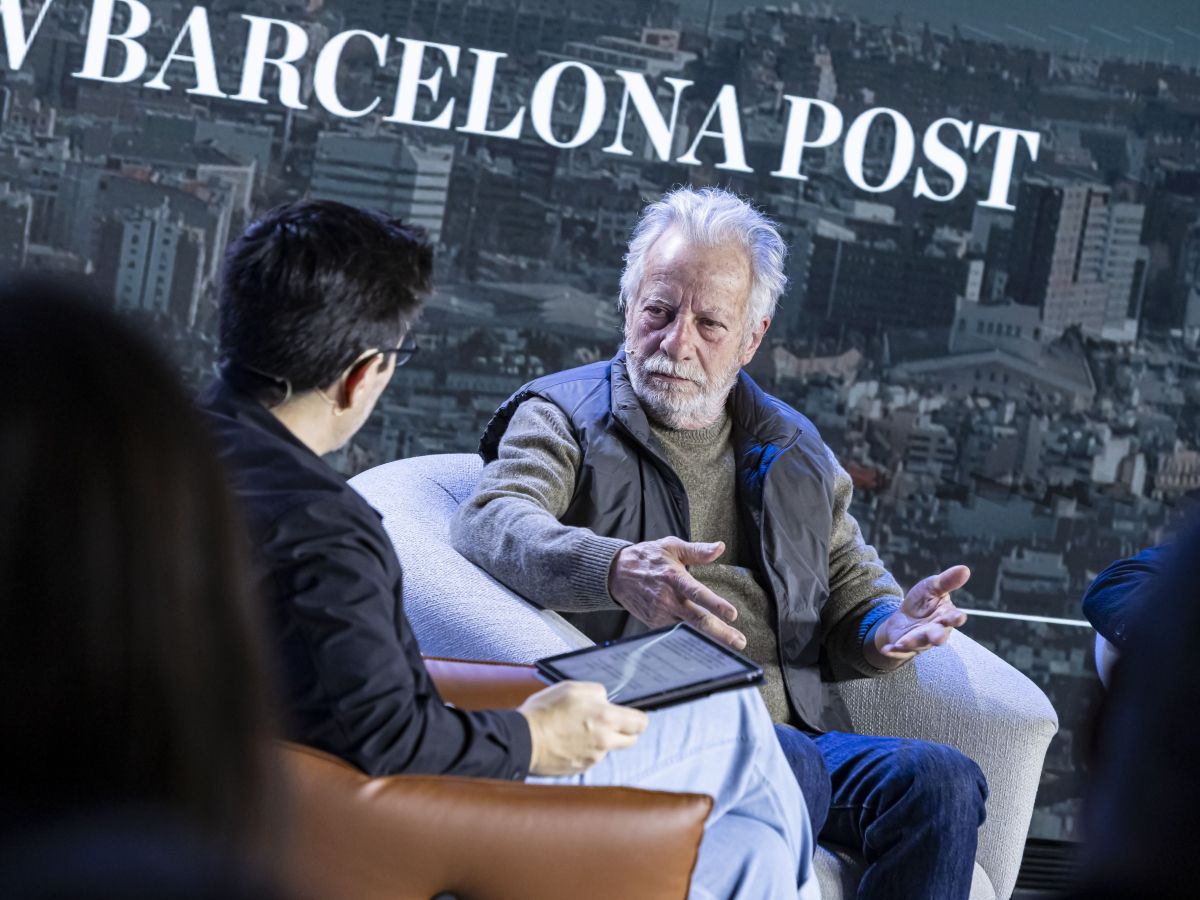
Beyond daring, Mariscal has argued that chaos is an inseparable part of any creative process: "Without chaos there is no life. When you are creating new things, everything is necessarily a bit chaotic." De las Muelas agreed, but added a nuance: "I believe strongly in chaos, but also in the need for it to coexist with order." And it is precisely this coexistence between order and chaos that is one of the images Mariscal retains of Olympic Barcelona.
A Catalan capital that seemed to respond to the definition of the writer Manuel Vázquez Montalbán: "Barcelona is a northern city in a southern country". Mariscal recalled how he was surprised by the almost millimeter precision with which the Olympic event was organized, a discipline of the Barcelonians that had already surprised him when he settled in the city in 1969, and which during the Games coexisted with the festive spirit of a city that also knew how to let loose. "Cobi was the first mascot to drink beer and cava," joked the creator of this mythical figure.
Two opposing (or complementary) views on today's Barcelona
However, when the conversation landed on current Barcelona, two different perspectives emerged. Mariscal continues to see the city as an extraordinary place and has demonstrated this by highlighting those small details that often go unnoticed: from being able to turn on the tap at home and drink the water to having a public health system that works. The optimistic view, however, has not prevented him from pointing out some of the obstacles that people who want to start or carry out new projects face today. Mariscal has pointed to the excess of regulations and bureaucracy, especially when it comes to opening a business or launching an initiative. He is aware that Barcelona has grown a lot since those years when, as he recalled, "we were four cats," and that today more organization is needed. But this, in his opinion, should not become a brake on creativity.
De las Muelas's view, on the other hand, is more critical and acidic, emphasizing two shortcomings that he considers particularly worrying: the limited capacity to welcome and the loss of enthusiasm in an increasingly individualized society. "We lack the will and wisdom to put ourselves in the shoes of the people who visit us, to understand who we have next to us and to know how to embrace people," he stated. He also lamented that the Catalan capital has lost "the illusion, the smile and the color" that characterized it a few decades ago.
De las Muelas believes that this tendency towards individualism has been further accentuated with the arrival of the Internet, which he described as a "Trojan horse." Thus, while acknowledging the possibilities that the network opens up and the access to knowledge it facilitates —as Mariscal also highlighted, who championed its ability to connect with the world—, he warned that algorithms can end up trapping people in their own spaces, instead of fostering contact with others. "Social networks and the Internet end up undoing the ties between neighbors and neighborhood life," he warned.
Craft and culture, the heartbeat of Barcelona
In the face of an increasingly individualized society, De las Muelas has championed "the culture of the bar and the pub" as one of the spaces where relationships are still built and common life is lived. "The bar is an altar, a set where many of the scenes of people's daily lives are represented," he explained. For De las Muelas, this tradition is not limited to sophisticated establishments, such as Dry Martini, but also remains alive in neighborhood taverns, where people meet, get to know each other, and converse daily. "It's a very ours fabric, which characterizes us," he claimed.

This defense of bar culture has also led him to champion the value of the craft. De las Muelas believes that contemporary gastronomy and mixology have focused too much on complex preparations and spectacle, and have relegated the most essential thing to the background: knowing how to serve. "We have forgotten the craft. A craft consists of serving and interpreting the person you have in front of the bar," he stated. Because, beyond mastering techniques or preparing sophisticated combinations, this craft means knowing how to read who you have in front of you, understanding what they need, and making them feel comfortable. A skill that, he lamented, is increasingly difficult to find among professionals in the sector.
Mariscal, who, for his part, did celebrate that there are still people who preserve the craft, brought another element to the table that he considers essential for collective life and that is part of Barcelona's identity, both two decades ago and today: culture. "It is fundamental, because it is what helps us function. Without culture, as a species, we would commit suicide," he affirmed.
And he illustrated it with a personal memory: one August night in Formentera, while contemplating the moon, he felt an emotion he didn't know how to express. It was in the verses of Federico García Lorca that he found the words he lacked and discovered that that intimate sensation had already been experienced by someone else. Culture, then, not only helps us name what we feel, but also allows us to recognize ourselves in the experiences of others. "Culture is like mayonnaise: we need it," said Mariscal, claiming it as an essential part of life.
Because perhaps Barcelona, as De las Muelas has pointed out, has lost part of the drive that made it grow, but it still retains some of the ingredients that have given it personality: creativity, street life, bar-side gatherings and a nightlife culture that is also part of its character. The challenge is to recover that innovative energy and turn it again into a driving force for the future, without settling for living off the rents of the past, as the businessman has warned.
Add The New Barcelona Post as your preferred Google source for free
Stay informed with the latest news.