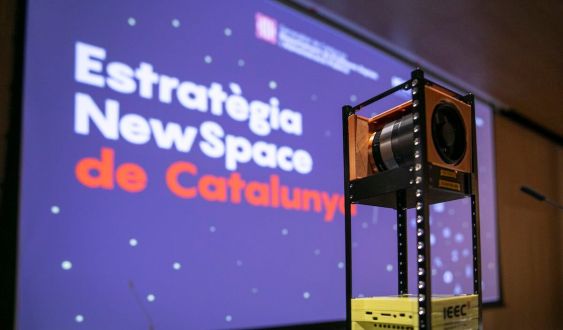
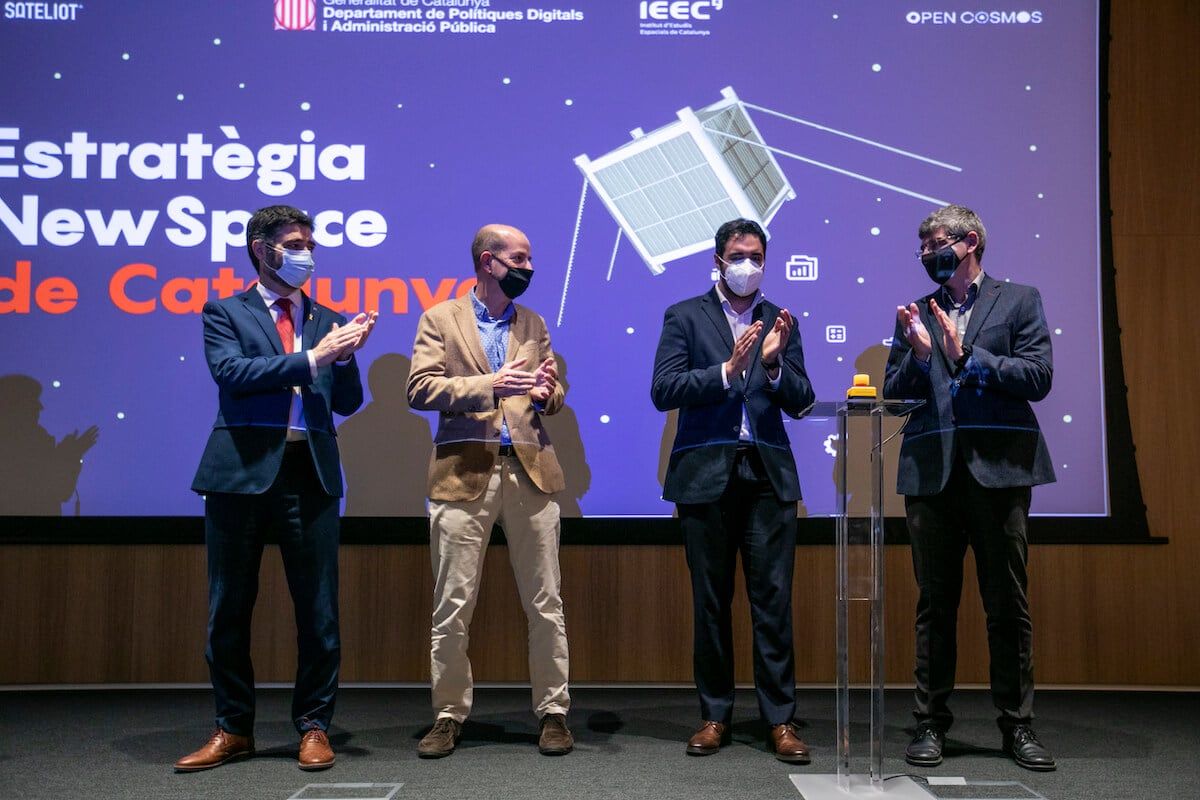
If all goes well, the launch of the first Catalan nanosatellite will take place next March 20 at 07:07 hours from the Baikonur Cosmodrome, in Kazakhstan, the first space base built in the world and currently one of the busiest. This satellite will be developed by Sateliot, one of the Catalan companies that will lead the strategy recently approved by the Government to boost the space economy, which is expected to generate 1,200 new jobs and 280 million in turnover by 2025.
[subscribe_newsletter_esp]
This new industry is based on the use of nanosatellites, which orbit at low altitude ---500 or 700 kilometers from Earth--- and are expected to revolutionize the economy, boosting a new space sector, cheaper and more accessible than that of the large satellites that dominated until now. The so-called new space will allow obtaining more data from the observation of the planet and developing new services based on advanced technologies. It will also provide homogeneous coverage for the Internet of Things (IoT), both in cities and in areas far from urban environments, and complement the capabilities and coverage of mobile operators.
Sateliot's satellite, with a cost of about 575,000 euros, will serve to offer global IoT connectivity services throughout Catalonia, that is, it will allow communication with sensors located throughout the territory to obtain data through them. Some of the uses it can have are the monitoring of river flow and water reserves, the tracking and protection of wild fauna, the reception of meteorological data and the control of terrestrial movements to predict meteorological disasters, and the monitoring of herds and crops to detect diseases. Initially, the data obtained by this Catalan nanosatellite will be exploited by the different departments of the Generalitat, but the will is to offer them to universities, research and technology centers, and companies.

But this will not be the only satellite the Govern will send into space. The second unit will be launched in the middle of next year ---when the strategy was announced, it was expected to be done this 2021--- and OpenCosmos will be the company in charge of its construction, for an amount of 1.7 million euros. This small satellite will allow obtaining images of Catalonia from space, which can be used to analyze crop productivity, prevent and detect forest fires, manage water resources, and control and protect maritime activity. In addition to these first two nanosatellites, the Catalan executive plans to reach a total of 5 or 6 devices in the next three years, all of them designed with the aim of making Catalonia go from being a data consumer to providing them.
The management and control of the nanosatellites will be done from a ground station managed by the Institut d'Estudis Espacials de Catalunya (IEEC) in Sant Esteve de la Sarga, in Pallars Jussà. The Ground Station located at the Montsec Astronomical Observatory will be in charge of supervising the activity of these small satellites and receiving the data they will collect, which will serve to improve the Govern's management of water, nature protection, prevention of natural disasters and fires, and the management of the climate emergency.
Add The New Barcelona Post as your preferred Google source for free
Stay informed with the latest news.
