The life and character of a city is also measured by its commercial landscape. In its most traditional shops, the idiosyncrasy and history of each city can be read in detail, especially in times when globalization has led to increasing standardization of the global consumption ecosystem. The commercial boulevards of any modern city increasingly resemble each other in any metropolis on the planet, with the same brands colonizing the prime areas of the best shopping streets.
For this reason, preserving and protecting the businesses that reflect our past is a way of protecting the cultural and historical heritage of our city. With this objective, the City Council implemented in 2014 a specific plan for the protection and support of the city's emblematic establishments. Establishments with their own unique character, which have been passed down from generation to generation, preserving their original character, were selected. A legacy that must be preserved, although it is not always easy.
The survival of these spaces is subject to many imponderables. When, a few years ago, old rent contracts definitively disappeared and owners were able to apply market prices to renewals, the closures of many historic businesses accelerated, unable to assume a dizzying rise in prices, especially in those locations in prime areas, where operators with great financial muscle could offer prices incompatible with traditional business models.
Behind many of these unique shops lie trades and artisan traditions inherited from ancient guilds generation after generation, and their preservation helps to structure neighborhoods and also forms part of the city's identity.
Municipal protection for emblematic businesses
We must go back to 1994 to find a first municipal action in the direction of protecting this delicate commercial ecosystem. Through the Municipal Institute of Urban Landscape and Quality of Life, the City Council created the campaign Guapos per sempre, which distinguished a first series of emblematic establishments. A book was published in 2003 that included a first selection of businesses more than a century old, to which an addition of more than 50 establishments was added in 2012. More than 100 businesses were distinguished and marked with plaques installed on the sidewalks, in front of each of these businesses.
In 2012, the Directorate of Commerce and Consumption commissioned a study to identify the concept, based on several categories: facade and architecture, history, store concept, unique product, age or notoriety. A sample of 454 establishments located in Ciutat Vella, Eixample, Sant Andreu, Gràcia, Sant Martí, Sarrià, Sants-Montjuïc and part of Les Corts was taken. 118 were classified as emblematic and another 154 were defined as outstanding.
In that census, 92% of the establishments were concentrated in Ciutat Vella and Eixample, where 77% of the outstanding establishments were also located. The most abundant commercial activities were in the restaurant sector, pharmacies, bookstores-stationery stores, bakeries or pastry shops, fashion and food.
31% of all emblematic or outstanding businesses were affected by the expiration of the third transitional provision of the LAU (Law 29/1994)In April 2012, 40% of these establishments were owned by the merchant who managed them. 59% were rented, of which 60% had old rent.Thus, 31% of all emblematic or prominent businesses were going to be affected by the expiration of the third transitional provision of the LAU (Law 29/1994).
This provision stipulated that, in the case of old rent contracts, when the tenant was a natural person, the contract would be extinguished upon the retirement or death of the holder. Subrogation to the surviving spouse or a descendant of the holder was possible, provided that the same activity carried out in the premises continued. The duration of the contract was up to 20 years from the entry into force of the law, that is, until January 1, 2015. And if a transfer had occurred in the ten years prior to the entry into force of the law, the final term was extended until January 1, 2020. Since that date, old rent contracts no longer exist, so free market laws regarding rental prices apply to all commercial premises.
Extend protection to commercial activity
Inevitably, the consequences of the situation would lead to the disappearance or extinction of activity in many of those cases. The rent increase was not always the determining factor. Other reasons have also played an important role: the lack of generational replacement or the decrease in demand for certain products and services due to social changes contributed to many of those premises gradually closing down. And in other cases, the activity has moved to other locations where the burden of the monthly rent is more manageable.
However, many others survive and preserve a very valuable heritage in terms of historical legacy, architectural heritage, and landscape value. The protection granted implies some advantages for the selected establishments, such as exemption from IBI payment, and preserves the protected elements.
Other important reasons for the closure have been the lack of generational replacement or the decrease in demand for certain products and services due to social changesBut the next challenge is for the degree of protection to also include commercial activity, even in the event of alienation of the property. For this, however, it would be necessary to modify the Llei de Patrimoni in the Parliament. Without that legal coverage, we will continue to see how a century-old cash register and exquisite modernist furniture are lost among a swarm of cheap souvenirs and Barça shirts.
The current Municipal Action Plan (PAM) recognizes as a strategic objective the promotion and improvement of quality and competitiveness in the commercial sector, as well as its integration into the city's neighborhoods, and highlights the challenge of consolidating Barcelona as an international shopping city with its own identity, leveraging the power of the Barcelona brand.
Closures are happening one after another
But reality sometimes surpasses good intentions. Between the publication of the first version of the book Guapos per Sempre, in 2003, and the next edition, in 2007, 11 of the 63 related establishments closed. And from the 2007 edition to the study carried out in 2012, another 17 establishments lowered their shutters.
The latest list of emblematic establishments arrived in 2020 and included 120 commercial premises. In the last controlled period, in which the pandemic has added extra pressure to the city's commercial fabric with a radical drop in activity, another thirty emblematic establishments have closed or moved location.
Some of the most recent closures were the home linen store Coses de Casa (which moved to another location, abandoning its traditional space in Plaça del Pi), or the basketry Germanes Garcia, which closed in 2019 after more than 50 years of activity. In many cases, although the furniture, signs, and other protected elements have been preserved, the current activity clashes quite a bit with the original one. This happens, for example, in Casa Beethoven (La Rambla 97), an old instrument and sheet music store that retains its sign but now houses a currency exchange and money remittance service.
Other establishments also considered emblematic by the municipal registry are currently for sale or transfer, and their future is uncertain. The preservation of the spirit and atmosphere that made them icons of the Barcelona commercial landscape will depend on the sensitivity of future owners or managers.
[separator type="thin"]
Some emblematic establishments that are leaving
Cinemes Texas (Bailèn 205)
The closures, restrictions, and capacity limitations due to the pandemic have finally delivered the coup de grâce to these neighborhood cinemas (Bailèn, 205) that maintained the pride of continuing to survive at the hand of their director, filmmaker Ventura Pons. Neighborhood associations have started a signature collection campaign to try to save the cinemas, although their future is uncertain.
Restaurant Sagarra (Xuclà 9)
A few steps from La Rambla, it has also been affected by the pandemic. Traditional Catalan cuisine and the rice dishes and stews they served will give way to another formula yet to be defined. Emblematic establishments with restaurant licenses located in Ciutat Vella, where a severe restriction for this type of license prevails, will continue to dedicate themselves to the same activity in almost all cases, although maintaining the same spirit as always is more difficult to guarantee.
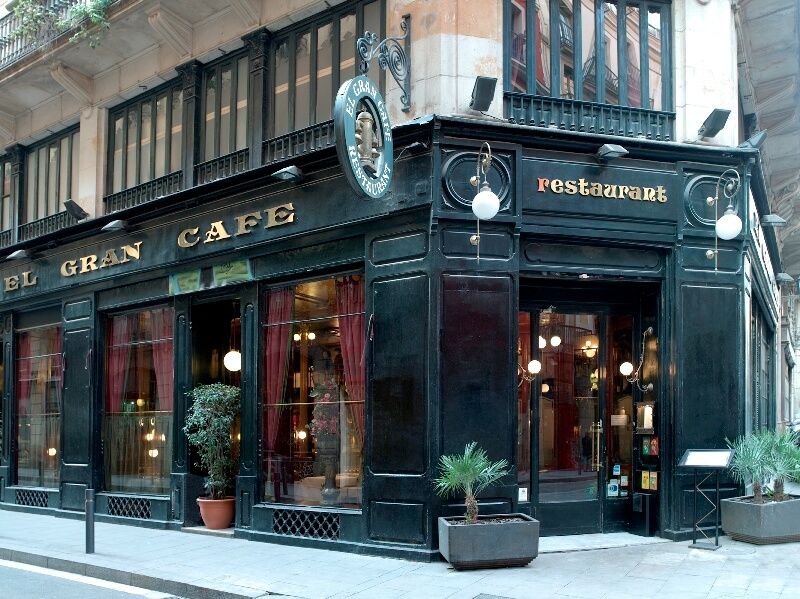
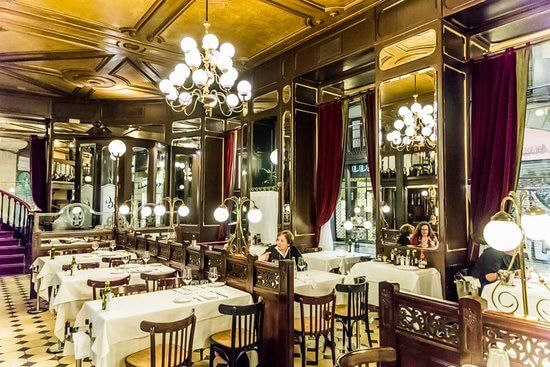
El Gran Café (Avinyó 9)
Despite its apparent old lineage, its history as a restaurant only dates back to 1970. Before, and since 1897, it was a Wertheim sewing machine shop, from which era it preserves the luxurious original decoration. The coronavirus condemned its economic viability and it closed in August 2020 (it had been part of the Grupo Cacheiro since 2000), but given that restaurant licenses are a treasure in Ciutat Vella due to the impossibility of obtaining new ones, sooner or later it will reopen its doors as a restaurant, under that name or another, as soon as some entrepreneur dares to pay the onerous rent of the premises and the transfer of the license. What will be maintained, as it is protected, is what remains of the original decoration.
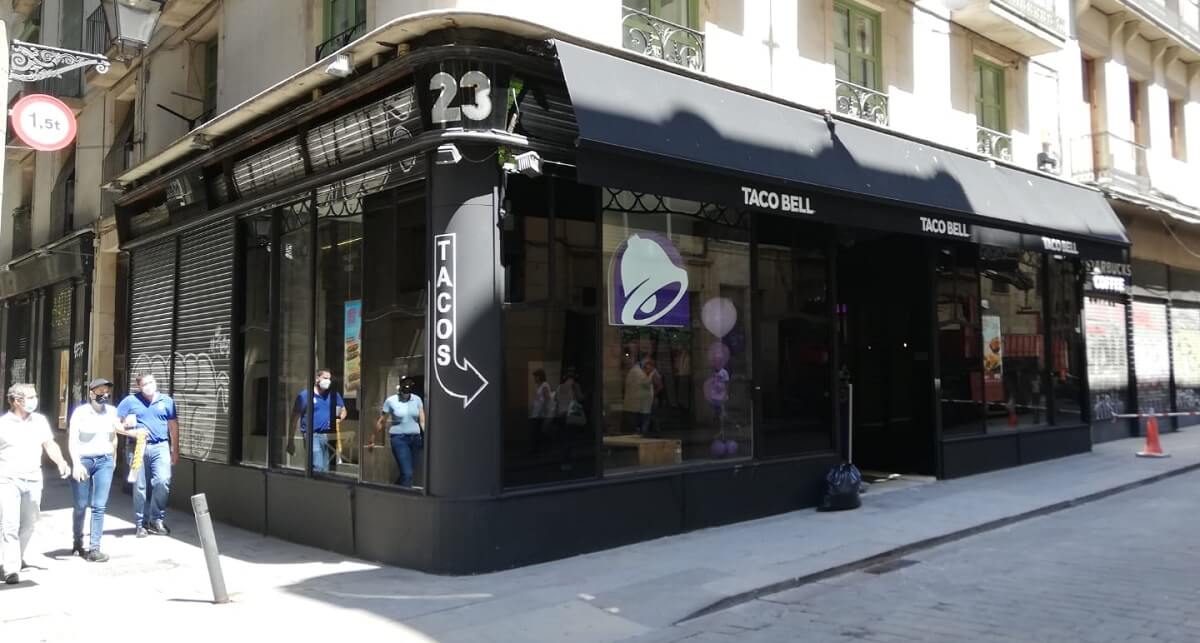
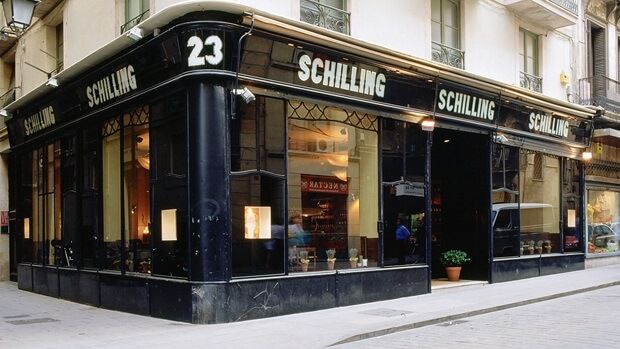
Schilling Café-Bar (Ferran 23)
The gastronomic sector, especially hard hit by pandemic restrictions, also registers notable casualties. The Schilling Cafè-Bar, on Ferran street, also succumbed in the early stages of the pandemic. In a few months, it transformed, by virtue of its location on one of the most frequented tourist routes, into nothing less than a Taco Bell franchise, to the compunction of its lifelong regulars. But even this new incarnation of the historic establishment keeps its doors closed due to the total absence of low cost tourists, the public for whom the new fast food formula was intended. It remains to be seen what will happen to the premises in the future, although at least the emblematic classification guarantees the preservation of some of the protected elements.
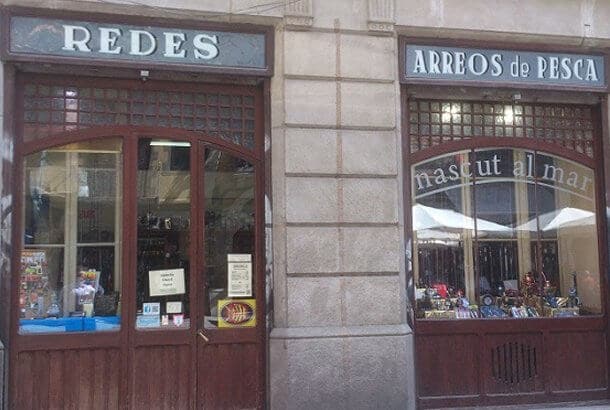
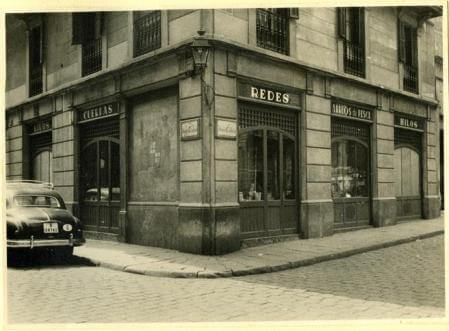
Casa Calicó (Plaça de les Olles 9, today at Àvila 94)
This shop, which sold fishing gear since 1850 in one of the best locations in El Born, right in Plaça de les Olles, closed its doors more than two years ago to move to Poblenou due to the unaffordable rent increase after the expiration of the existing contract. The premises, however, have remained vacant ever since, as the stratospheric initial price did not attract anyone before the pandemic, and after successive reductions, it is still not attractive enough for anyone to rent it.
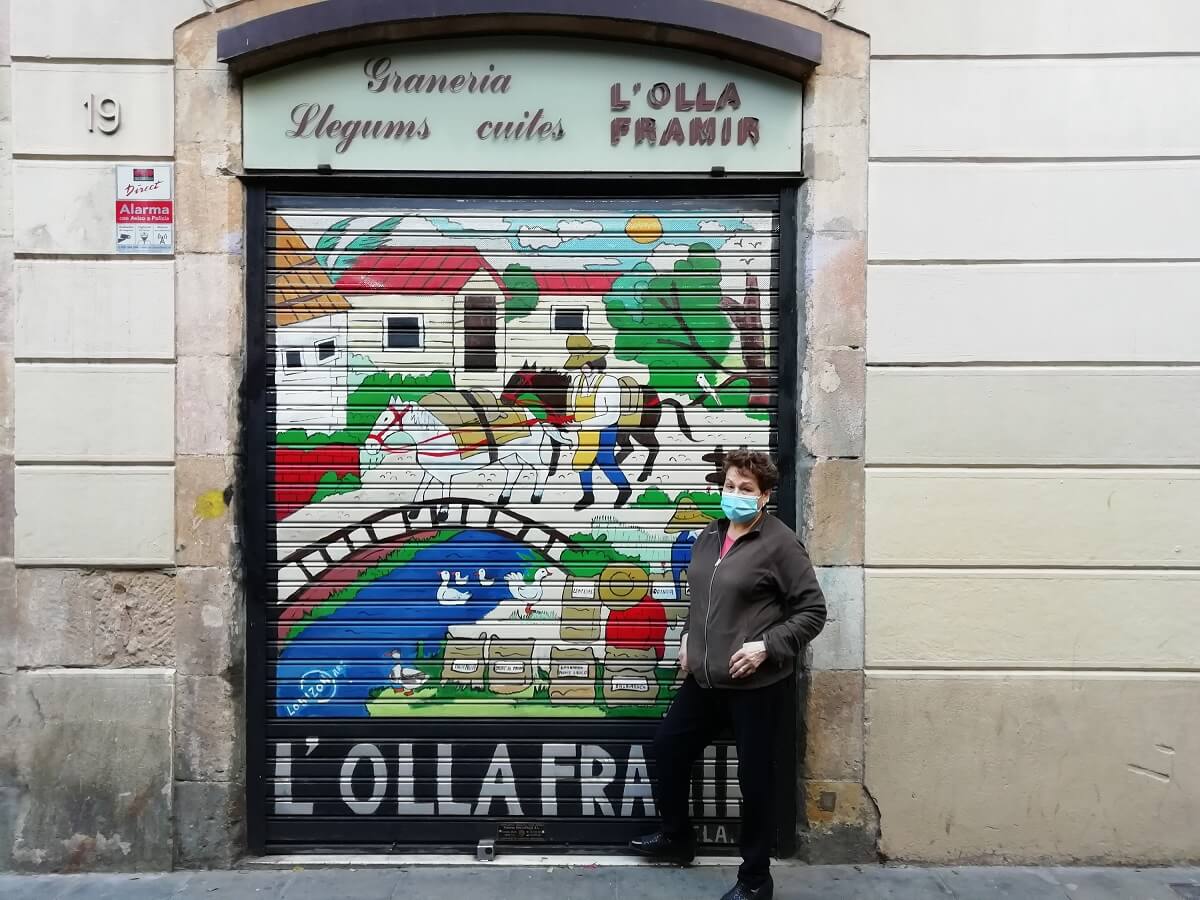
L'Olla Framir
It was in El Raval (Xuclà 19) and was one of the few establishments selling cooked legumes and (truly) homemade ready meals at affordable prices that remained open in Barcelona. It closed its doors after more than half a century of activity just two months ago. The reason, in this case, was the purchase of the building by an investment fund to open tourist apartments and the subsequent refusal to renew the rental contract. The business will continue, but in a location yet to be determined. The councilor for Ciutat Vella himself, Andreu Rabassa, publicly committed to helping the business find a new location, although it is unknown how.
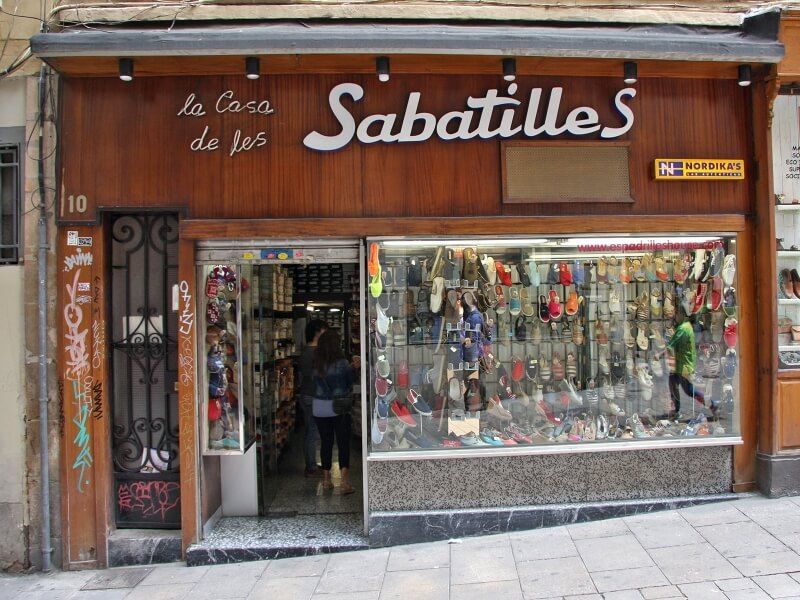
La Casa de les Sabatilles (Baixada de la Llibreteria 10)
In operation since 1950, it is one of the saddest faces of the pandemic's effects on Barcelona's traditional commercial fabric. The current owner of the business, Joan Carles Iglesias, son of the founders, is awaiting an eviction order against which he filed an appeal. Located in Baixada de la Llibreteria, his business survived thanks to a mix of tourists and locals. But since the property was acquired by a company 20 years ago, a long history of real estate mobbing against the tenant began. Although there was a subrogation agreement for the contract between the previous owner and the father of the business owner, justice has determined that the new owner does not have to honor that agreement. The store has 12 square meters (m2) to serve the public, and the owner is requesting a minimum rent of 3,700 euros, while until now he paid 1,080. It seems inevitable that another emblematic establishment will close its doors imminently.
[separator type="thin"]
...And others that remain
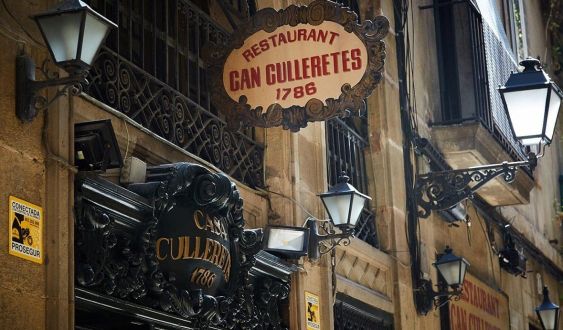
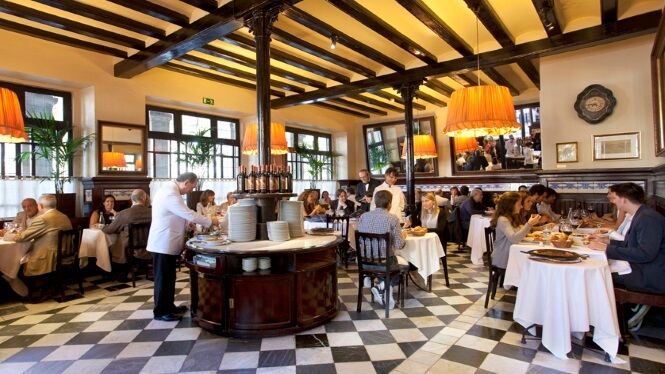
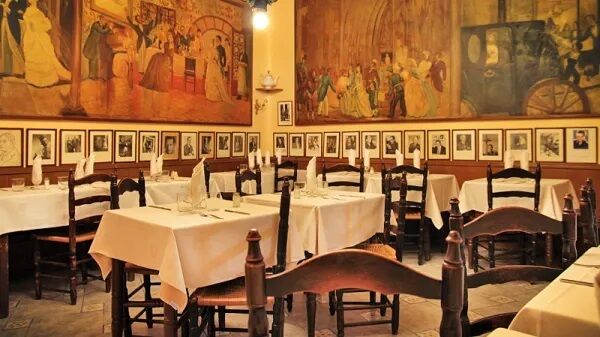
Can Culleretes (Quintana 5)
It is the oldest restaurant in Catalonia, open since 1786. Its halls have seen generations of Barcelonians and more recently tourists nourish themselves from its kitchens. Its current owner, Montse Agut, assures that the pandemic has been a harder ordeal to bear than the Civil War. However, thanks to owning the premises, they have been able to survive, in addition to having opted for home delivery of menus. Of course, they have done it autonomously, creating their own website and without resorting to the platforms that dominate the delivery market.
Los Caracoles (Escudellers 14)
It was originally called Can Bofarull, until the excellence of its snail recipes "a la llauna" motivated the name change. However, the latest generations of Barcelonians associate it with its unmistakable rotisserie chickens rotating in the establishment's outdoor oven. It was the first in the city to cook chickens this way, and before that, they already cooked lamb heads and "capipota" casseroles on an outdoor griddle. Since 1835 and for five generations, the Bofarull family has kept its halls open to the city. Its dining room has hosted names as varied as Robert de Niro, John Wayne, Jimmy Carter, Elsa Pataky, Julio Iglesias, or artists like Dalí, Picasso, Miró, or Santiago Rusiñol. The pandemic has also affected them, but fortunately, their future is assured, thanks to the drive of the recent generations of the founding family.
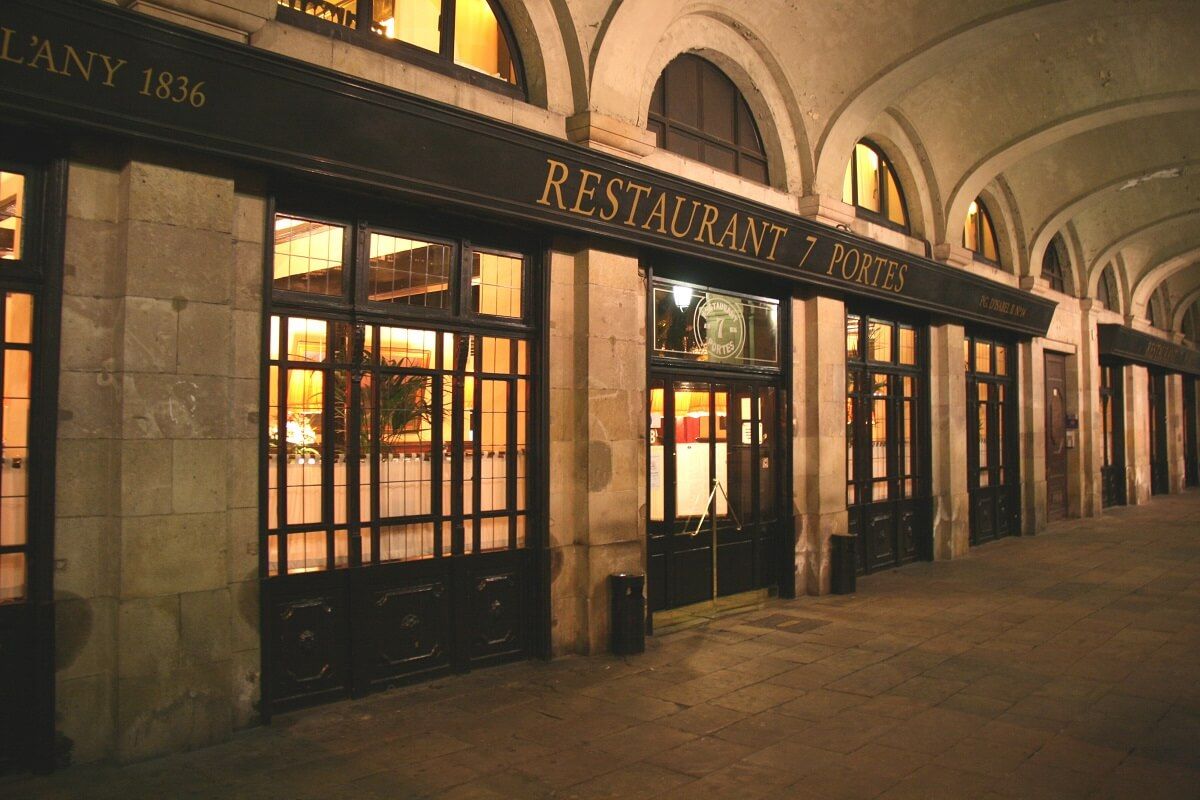
Les 7 Portes (Passeig d'Isabel II 14)
This establishment, located in the Porxos d'en Xifré, is one of the meccas of high class paella in Barcelona. It was inaugurated in 1836 by the merchant Josep Cuyàs. After the closure imposed by last year's lockdown, Les 7 Portes, one of the undisputed emblematic establishments of the Barcelona urban landscape, reopened on June 8. And it did so with a great effort to guarantee the safety of diners in its halls, an especially intense investment given the dimensions of the premises. Measures included everything from antigen test screenings for all staff before their reincorporation to special protocols and the hiring of companies specialized in cleaning and disinfection with the highest standards. They even programmed a series of concerts to liven up dinners on their terrace in an effort to make visiting their facilities more attractive in pandemic times. Their tenacity has led them to guarantee the future of a restaurant that will continue to be attractive and a classic for both visitors and Barcelonians.
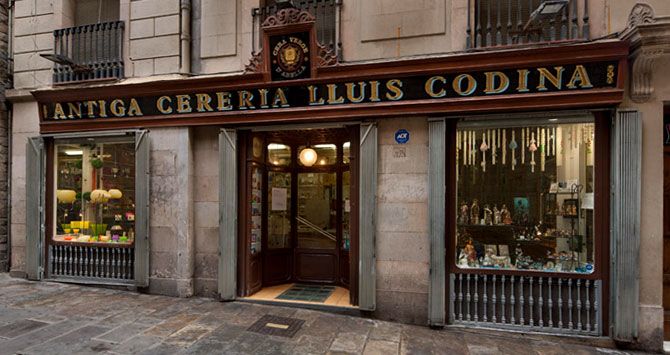
Cerería Lluís Codina (Baixada de la Llibreteria 7)
If just over three years ago the old candle shop Lluís Codina, on Llibreteria street, dating from 1761, was transformed into an espadrille shop, a few months ago it was reconverted again. Its new life is as a Virginias nougat shop, preserving intact, of course, one of the most spectacular and well-preserved interiors in the city. An example of how a change of activity can be compatible with respect for history and landscape values.
Bar Muy Buenas (Carme 63)
An emblematic place that narrowly saved its integrity and could serve as an example of how to preserve our commercial heritage. It opened its doors in 1896 as a codfish shop, at the initiative of Mr. Ràfols, who a few years later, in 1903, transformed it into a winery. In 1928 it was renamed Bar Muy Buenas. Its outstanding modernist decoration at the entrance, as well as the elegant wooden screen with acid-etched glass, are still preserved, but only after overcoming a convoluted history. The previous tenants of the premises, upon abandoning it, cleared out the entire interior, including the protected decoration and even the marble bar that at one time served to sell cod. Only after police investigations and a costly restoration task did the premises recover their past splendor, and since 2017 it has operated as a select cocktail bar and restaurant offering carefully prepared Catalan dishes, run by the La Confitería group, led by Enric Rebordosa and Lito Baldovinos, specialists in managing precisely old historical restaurant premises and giving them a new life. It is worth noting the careful modernist decoration of the exterior portal, as well as the elegant wooden screen with acid-etched glass inside.
Pharmacies with a lot of history
Pharmacies are among the few commercial establishments that have not suffered any existential shock due to the pandemic and have even experienced a rebound in business thanks to the massive demand for masks and hydroalcoholic gels. The stability of the sector, which is otherwise regulated and in many cases in the hands of families who own the premises, has allowed many of them to remain practically intact over generations.
Among those included in the catalog of emblematic establishments, some stand out, such as Farmàcia La Rambla Barcelona (La Rambla 44), open since the late 19th century as Farmacia Colón, which was already advertised in the Diario de Barcelona in 1881. The current owner has managed it since 1975. Farmacia Costa Codina (Gran Via 566) stands out for its interior decoration with refined cabinetry and large ceiling paintings. Farmacia de La Llana (Plaça de la Llana 11) has been documented since 1710. It gained notoriety when Josep Cases —a renowned pharmacist— invented "solución Cases," a tonic for multiple illnesses and pains. The modernist decoration designed in 1910 is preserved.
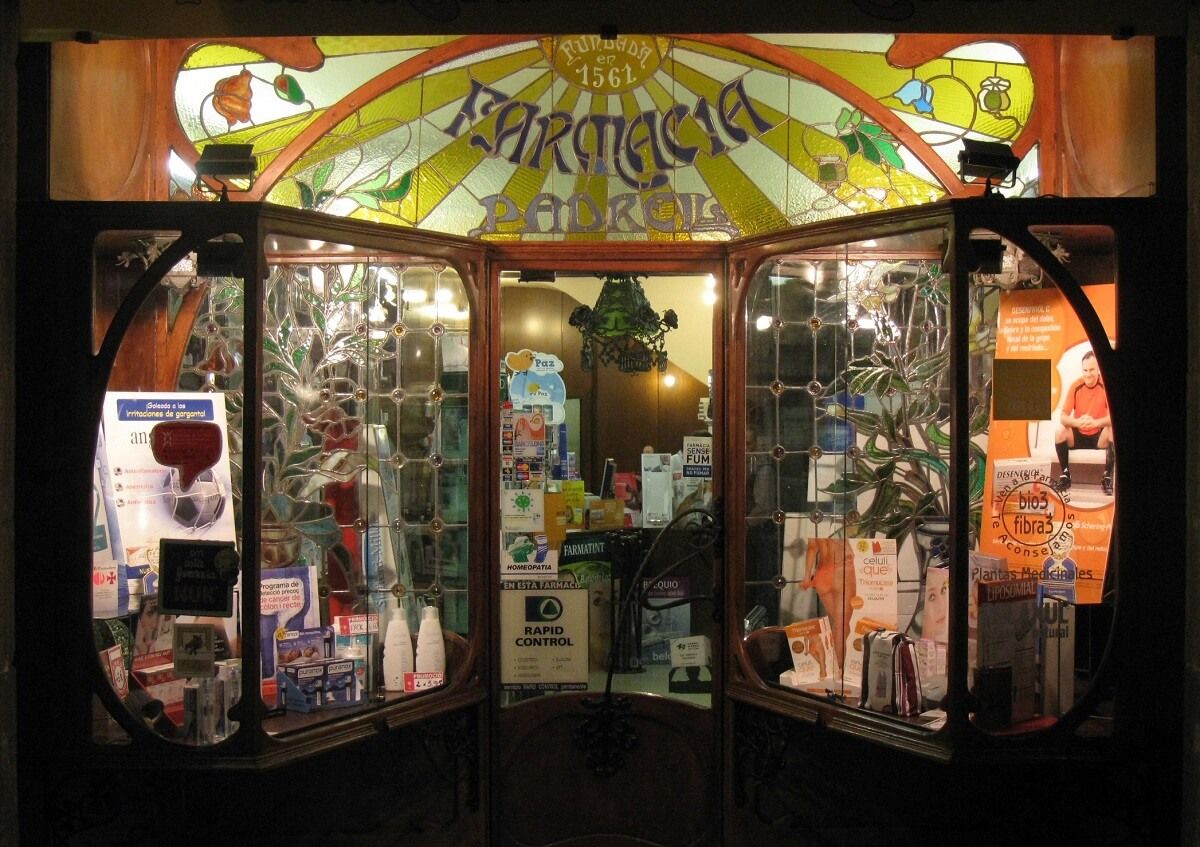
But the oldest in Barcelona, the Farmacia Padrell (today called Fonoll, located at Sant Pere més Baix 52), with an exquisite pre-modernist decoration by master glazier Joan Espinagosa i Farrando dating from 1890, curiously has not deserved any degree of municipal protection, despite the fact that its activity dates back to 1561 ---it was originally in another nearby location, razed by the troops of Philip V in the War of Succession---.
Add The New Barcelona Post as your preferred Google source for free
Stay informed with the latest news.