Literature has an even more powerful passport: one that allows us to cross into territories we will never find on an official street list. In this second half of our route, we leave physical geography behind to delve into the map of imagination and isolation.
I propose five stops in invented corners that no airline will ever be able to sell you, but which are so tangible, claustrophobic, or magnetic that they will make you doubt whether they really don't exist in the physical world.
Prepare another cup of coffee (or a glass of wine), because we are entering the map of the imagined. Shall we continue the journey?
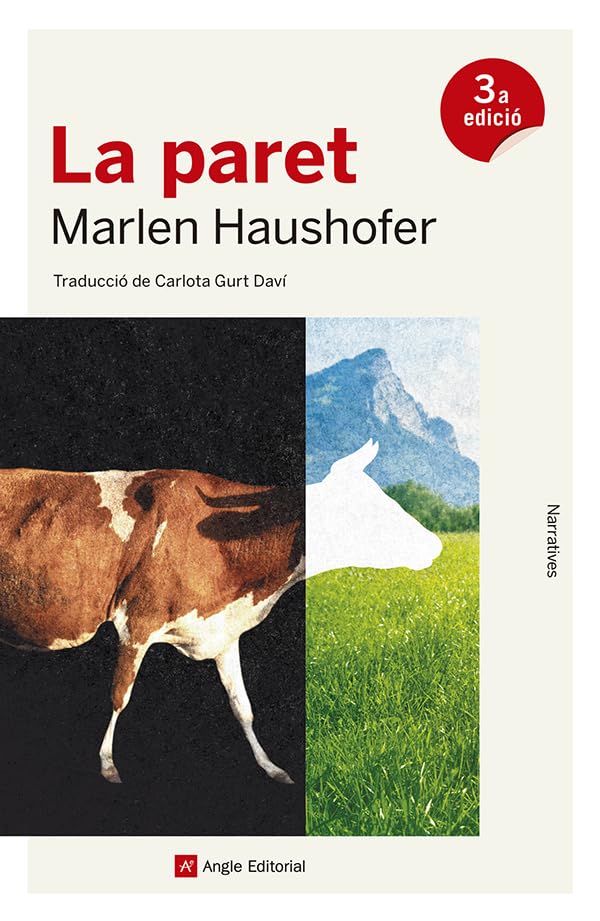
I bought the first title at the 42 Festival, just to treat myself to something, and what a surprise. The Wall by Marlen Haushofer (Angle Editorial) is a dystopian novel about a woman's survival and a poignant fable about solitude. The story is set in an idyllic hunting lodge in the Austrian mountains which, overnight, becomes isolated from the rest of civilization by an invisible and insurmountable wall.
In an environment of thick alpine forests, fresh moss, the crystal-clear course of the stream, and absolute vegetal silence, Haushofer transforms wild nature into a living, tactile, and unsettling presence that envelops the reader in a claustrophobic and poetic survival experience. It is a novel for those who seek a radical immersion in mountain isolation and a return to the wild, without it having a specific name.
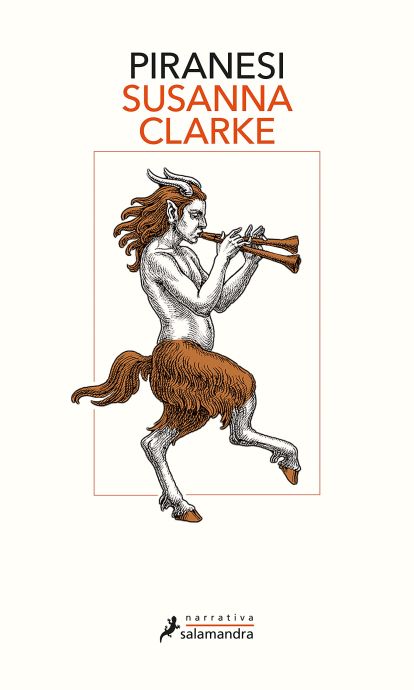
This second title is a mix between dreams that occur in houses with a thousand rooms and the myth of the labyrinth. In Piranesi by Susanna Clarke (Ed. Àmsterdam) the protagonist is "The House," an oversized architectural structure of colossal corridors, thousands of marble statues, and its own ocean inhabiting the lower floors.
It is a fantastic and hypnotic novel in whose universe only two characters exist, Piranesi and the Other, and evidence of the existence of a third person. The work stands out for its deeply lyrical and sensory atmosphere, and for the gaze of Piranesi, who inhabits this infinite labyrinth not with fear, but with an unforgettable devotion and innocence. It will be the perfect destination if you need to completely break with reality and get lost in a vast and monumental universe.
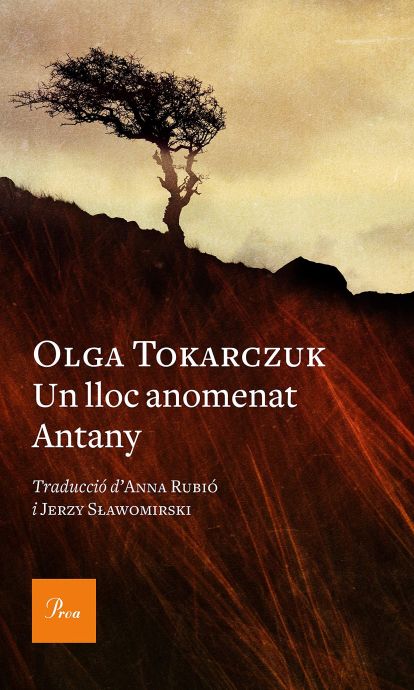
If, when I'm looking for a recommendation, someone tells me "this book is like a cross between One Hundred Years of Solitude and a Chagall painting," I dive in headfirst. Because who wouldn't want to revisit Macondo like the first time? Well, Olga Tokarczuk's A Place Called Ancient Times (Ed. Proa), is a dazzling magical realism fable set in Ancient Times (Prawiek), a mythical village located in the center of Poland, delimited by two rivers and guarded at its four cardinal points by four archangels.
The story follows the lives of several generations of its inhabitants as historical events such as the Great War, World War II, and Soviet domination break into their small universe. The novel is a work of profound beauty laden with aromas of pine resin, firewood, and tilled earth, which meditates on the circular rhythm of time, human fragility, and the footprint we leave on the landscape we inhabit, where Tokarczuk constructs a microcosm in which the everyday naturally intertwines with the divine and folklore.
Furthermore, this work consecrated the author and earned her the Man Booker International and the Nobel Prize in Literature. A true journey for lovers of peasant traditions and mythical geographies.
Karina Sainz Borgo's The Third Country (Ed. Lumen), is an epic and visceral tragedy set in Mezquite, an inhospitable and lawless border strip suspended between two unnamed nations. The story begins with Angustias Romero, a woman fleeing the plague and misery of her land, carrying her newborn twin babies, who die during the crossing. Devastated by grief, Angustias arrives in Mezquite seeking only a patch of land where she can give them a dignified burial. Here she meets Visitación Salazar, an indomitable and mythical woman who has illegally built a cemetery in the barren land to bury the wandering dead, migrants, and forgotten victims no one claims.
Angustias decides to stay by her side and become her assistant to keep this sanctuary of memory standing. A mix of thriller, western, and classical tragedy, it is a poignant portrait of grief, motherhood, and female resilience. A work imbued with dust, scorching sun, and fierce realism where burying the dead becomes the last act of human dignity. It is a heartbreaking and epic journey through a border landscape as harsh as it is indelible, which perhaps exists despite not being drawn on maps.

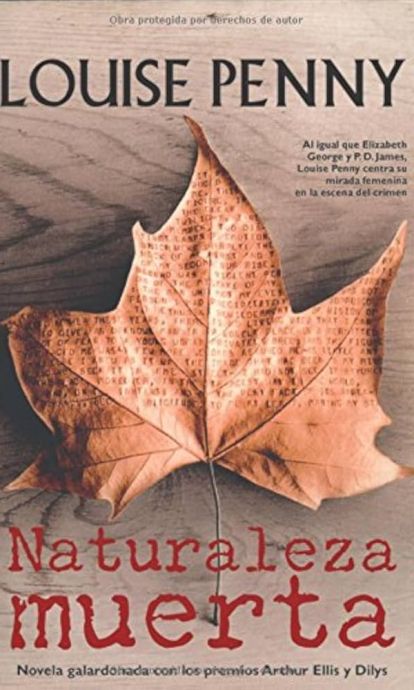
And I close my list of recommendations with a saga that was also adapted for the small screen. Still Life by Louise Penny (Ed. Salamandra) kicks off the Three Pines series, an idyllic mountain village hidden in the forests of Quebec, so far removed from the world that it doesn't even appear on maps or receive phone signal. Chief Inspector Armand Gamache will have to settle in the village and immerse himself in the lives of its unique neighbors, discovering that behind the community's amiable facade lie envies, secrets from the past, and dark artistic rivalries.
Under the paradigm of rural comfort, this saga of novels stands out for its warm and comforting atmosphere —full of lit fireplaces, hot tea, reddish maples, and homemade food in the village bistro— in perfect contrast with a lucid inquiry into the darkest folds of the human soul. It is the ultimate refuge if you seek warmth, calm, and a hot cup sheltered by Canadian nature.
There is no routine, tight budget, or broken heart that can resist the power of a great story.
In the end, the planes will have taken off without us and the burning asphalt will still be there, on the other side of the window. However, the true miracle of these paper passports is not just saving us the terminal queue or the search for an affordable ticket; it is reminding us that there is no routine, tight budget, or broken heart that can resist the power of a great story. Something will have changed in our personal geography after this route.
And traveling, after all, has never been a matter of physical distance, but of the depth with which we decide to look elsewhere.
Add The New Barcelona Post as your preferred Google source for free
Stay informed with the latest news.