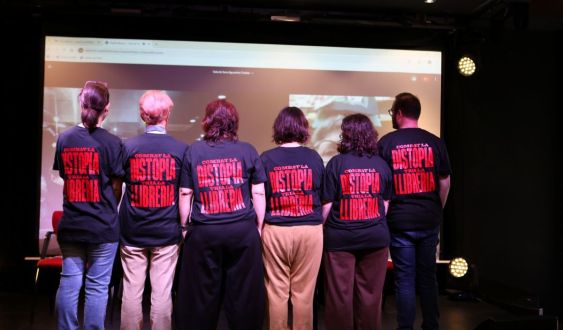
The Gremi de Llibreters de Catalunya launches an awareness and denunciation campaign to protect the profession against bad practices that precarious the sector. More than 300 establishments unite under a clear message: the survival of the local cultural model depends on how we buy books.
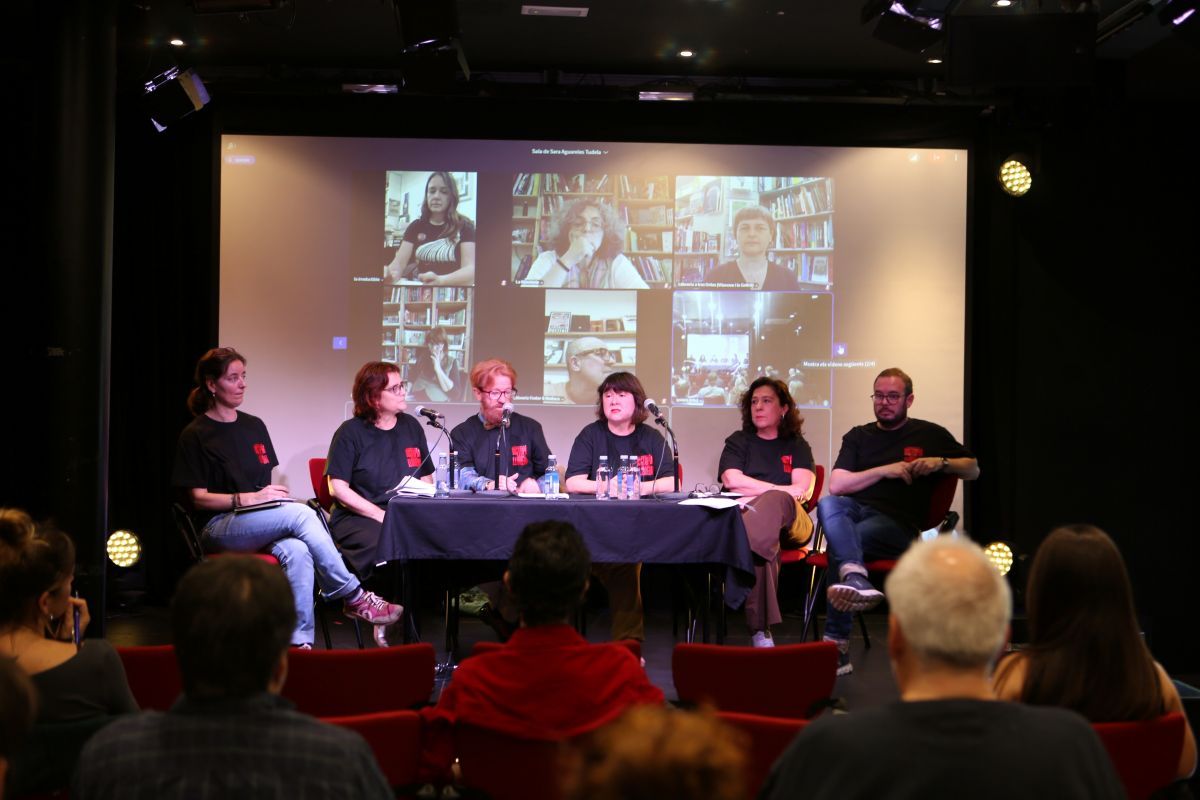
"We are in time to avoid this future without bookstores." This is how forceful Eric del Arco has been during the presentation of the campaign "Combat dystopia, choose the bookstore." The meeting served to put an uncomfortable reality on the table: although Sant Jordi's figures have been positive, the daily life of local bookstores is threatened by a sum of commercial practices that erode, dismantle, and precarious the sector.
The campaign has its roots in the National Book and Reading Plan (2022/2023) promoted by the Generalitat. "We come from afar and we want to go far. It is a collective commitment," stressed Maite Cusó, in charge of reading a manifesto that can now be consulted at Trialallibreria.cat. The text raises serious phenomena such as market concentration and the "Amazonization" of culture, and warns that buying books outside traditional channels endangers the entire ecosystem.
Schools, libraries and tenders, the critical points
The Gremi has clearly explained what the red lines are. On the one hand, there are practices that directly violate the Book Law, such as certain discounts. On the other, maneuvers that, although strictly legal, pursue an immediate individual benefit that ends up weakening a strongly interdependent sector.
Gemma Barrufet has pointed out the bad practices of some large publishers that supply schools. These companies apply illegal discounts on textbooks as a lure to bypass booksellers and also keep the direct sale of compulsory reading books.
Likewise, the current public tender system prevents libraries from buying directly from bookstores in their neighborhood or municipality. This opens the door for large investment funds to take over contracts, turning culture into what Aitor Martos has defined as "book supermarkets". As a consequence, libraries lose autonomy: they no longer buy the collection they would really want for their readers, but rather what the awarded company offers them from its warehouse. "We want libraries to be as diverse and plural as possible," Martos recalled.
On this last point, Eric del Arco lamented that the Guild has been holding conversations with public administrations for five to six years to reverse a bidding model that excludes booksellers as cultural agents and key prescribers.

What is at stake? A fight against the algorithm
More than 300 bookstores have joined the initiative to recall a basic premise: how books are bought and sold matters. According to the Gremi de Llibreters de Catalunya, when a reader chooses a neighborhood bookstore instead of a large digital platform, they are defending five fundamental pillars:
- Plurality of voices and diversity: The concentration of power of large platforms dictates what is published, what is made visible, and what is promoted. Independent bookstores are the only ones that sustain small, critical, and independent catalogs, as well as minority translations, local authors, and experimental literature.
- Human prescription: A bookseller's recommendation comes from knowledge and a vocation for service. In the neighborhood bookstore, the proposal is never conditioned by commercial criteria or algorithms.
- Non-utilitarian reading: The bookstore protects the book as a tool for thought and pause, and not as a mere commodity.
- Community fabric and neighborhood life: A bookstore acts as a vibrant cultural meeting point —reading clubs, presentations, and debates—. When a shutter closes forever, what disappears is not just a business, but also a community space that connects culture, territory, and neighbors.
- Local commerce and sustainability: Buying in bookstores protects jobs and sustains a business model that redistributes value directly and fairly within the territory itself, instead of diverting profits to international funds.
"Without bookstores, critical and independent reading is unprotected," insisted Maite Cusó.
Add The New Barcelona Post as your preferred Google source for free
Stay informed with the latest news.