I have taken a long time to see Tardes de soledad; in fact, I watched it when it was about to disappear from movie theaters, because I knew for a fact that I would like it very much. The halfway point of life is like that; you quickly get rid of or ignore everything superfluous and, however paradoxical it may seem in this world of continuous enjoyment, you wait for what you intuit to be delightful to delirious limits, as if you were one of those masters ---Tibetan, Hindu, I don't know--- who can retain orgasms for days or one of those boomers who kept a bottle of Cristal in the pantry to celebrate something transcendent after Franco's death (it was a bad deal, because the champagne always ended up spoiling). But enough of literary figures, which are terribly corny, and today I am here to disguise myself as a critic (ugh), a false film lover and also, it pains me to say, a decadent bullfighting enthusiast.
Many critics have said that Albert Serra's latest film can be read beyond the bullfighting festival. It could be, because ---deep down--- our dear filmmaker is interested in the atavistic love relationship between two beings (bullfighter and beast) who imitate an ancient ritual of seduction and love with an outcome that must necessarily be fatal. It is in this sense that most of the film is configured by extreme close-ups of the Peruvian bullfighter Andrés Roca Rey digesting the charges of different horned sharks, with a technique and a risk of approaching the beast that is terrifying. But the film is unequivocally bullfighting in the sense that this is perhaps the last ritual where we can find such a raw form of love that must necessarily lead to the annihilation of one of the two members of the couple. Deconstructed men and women, abstain, because here we come to explain that there is no feeling without a prick.
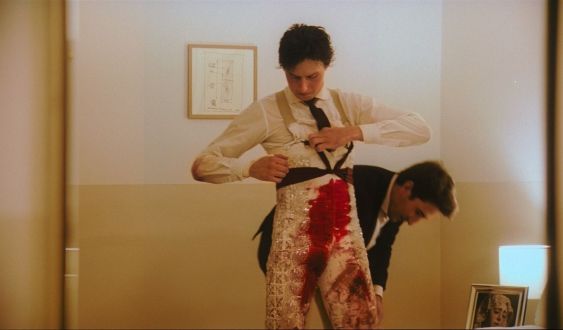
The grace of this marvelous film lies, of course, in the existential typology of its protagonist, a bullfighting master with a notoriously autistic air and visibly androgynous characterization (like that wonderful being in Pacifiction who brought together all the secrets of French Polynesia). Serra enjoys watching him dizzy the beast, but also entertains himself by getting excited before the bullfight, while the wonderful ephebe laboriously puts on his stockings on each leg and the vest well embedded in his body, an unnatural armor; also while he adjusts his bow tie and asks his assistants for the montera, so as not to lose his composure before that animal overflowing with pain and fury. In a beautiful image from the film, we see the bullfighter only with his stockings on and we admire his wonderful ass centering all the camera's attention, leaning like Nureyev to stretch his bones and showing that art requires balls but also a lot of anal energy.
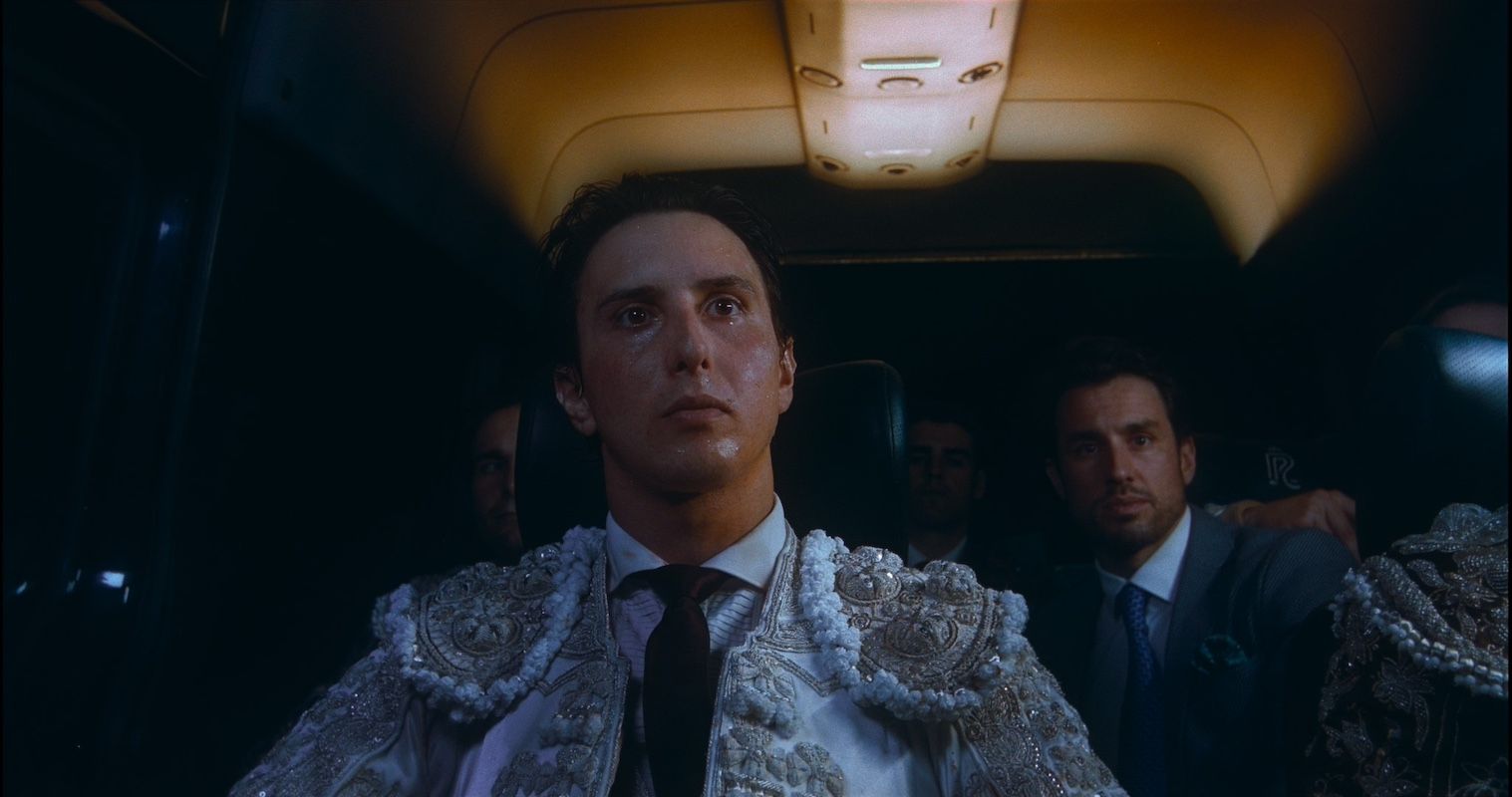
We are before a new masterpiece that, in turn, is a tribute to cinema and tragedyLike all great matadors, Roca Rey lives far from the noise of the world, he has an idiocy that manifests itself perfectly in the van trips to the bullring, which Serra portrays with such skill. The maestro does not spend lonely afternoons, but lives in strict isolation, a state broken only by his chorus of banderilleros, picadores, and adláteresThis is the only community space where the bullfighter relates to the world (Serra voluntarily hides any image of the public, here destined only as sound decoration for the relationship between man and animal). We use the word chorus in a Greco-Roman sense, since while the hero practically doesn't know where he is, or what has happened during the bullfight, it is his brothers who narrate the ritual to him, with a continuous appeal to his balls and his mastery through a southern vocabulary that is a true delight: "Cumbre, ole tus hueves, qué arte, joputa era el toro" and so on.
We are, and it is no longer news no matter how extraordinary it may be, before a new masterpiece that ---in turn--- is a tribute to cinema and tragedy, an incomprehensible love story between two powers that mark one of the most exciting rituals in the history of art; cruel, often indefensible, but unique in the world. Albert has given his version of solitude, and it was worth waiting for it in an excessive and stupid way, as I have done, to suffer not only the pleasure of viewing, but also a certain guilt for arriving there so late.
Add The New Barcelona Post as your preferred Google source for free
Stay informed with the latest news.
