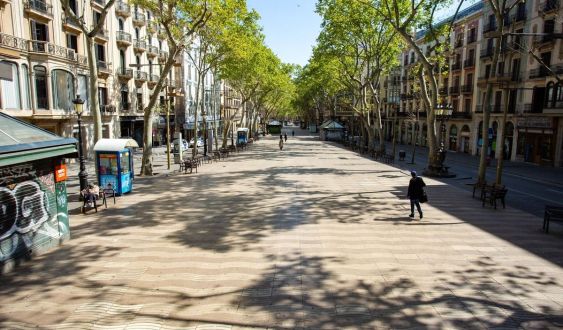
La Rambla is one of those places that many Barcelona residents love and at the same time eye askance, as if they had somehow already assumed deep in their souls that this promenade no longer concerns them. They have their reasons if it is admitted that for a long time now, tourist (and not local) designs have set the pace for this world-famous thoroughfare. The City Council seeks to make it attractive again for residents with a timid cultural program at street level and wants to remove the old bird sellers' stalls as soon as possible, but it leaves the long urban reform for later, even though the project is already finished. Some voices do not understand why the Consistory does not take advantage to start it now that activity has been so reduced by the pandemic, while others warn that merely touching the stone is not enough and that it is necessary to diversify the city's economy.
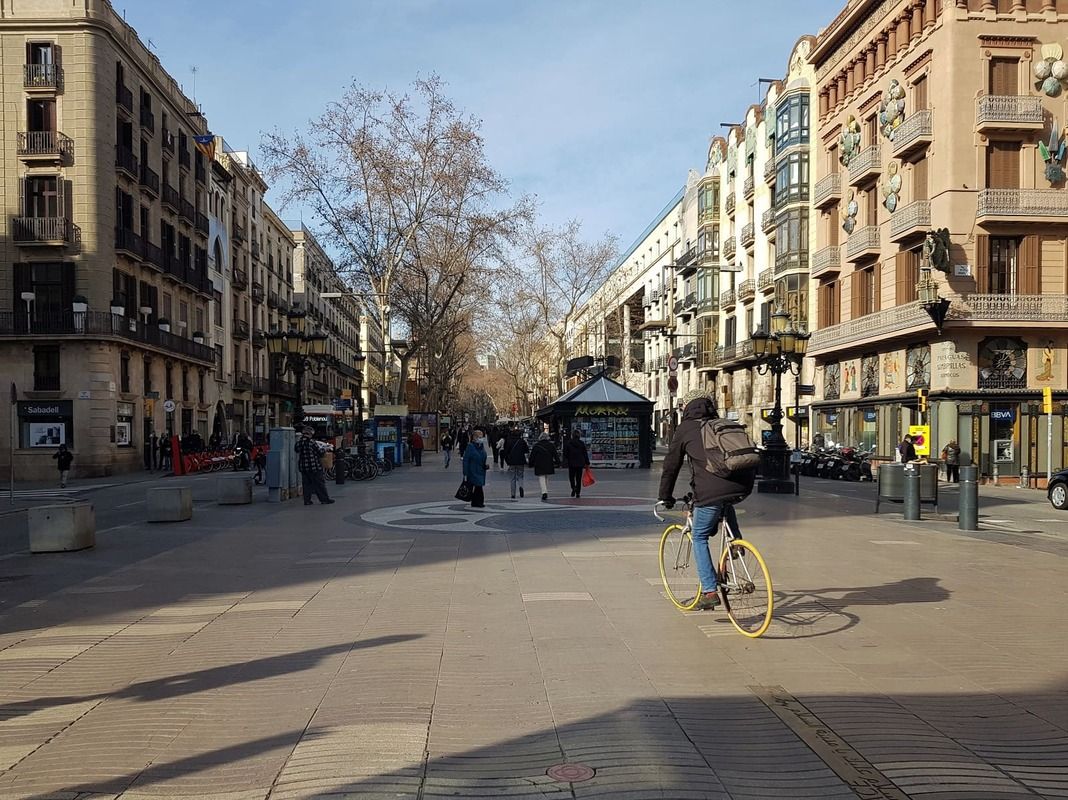
The disconnection of residents from La Rambla that was forged with the rise of tourism, and which seemed to have no end since the 1992 Olympic Games, has come to a screeching halt with the irruption of the coronavirus. Now La Rambla spends its days struggling as best it can with the aim of surviving. There are few strollers and many shutters are down, because some may not find it worthwhile to open due to the lack of visitors from outside, but also due to restrictions to stop the virus. It thus remains waiting for better times and an ambitious urban reform that the City Council has already announced will not begin this 2021 because, it argues, this year there is no money to launch it. The argument does not convince some of the voices most linked to the promenade, given that the cost of the first phase would be about 10 million euros, an amount they do not consider unmanageable even in a pandemic, and even more so considering that the future of Barcelona's promenade is at stake.
The argument for not launching the reform this year does not convince some of the voices most linked to the promenade, given that the cost of the first phase would be only about 10 million eurosThe councilor for Ciutat Vella, Jordi Rabassa, remember that in the past mandate a participatory process was carried out on the future of the promenade "which involved it being more local and less touristy." According to Rabassa, "this reflection was valid and remains valid, and this is the objective" with the already planned interventions. This 2021 we are working with a triple objective:to launch this very February Ràdio Rambles, which will broadcast from a disused flower stall, and during the year other cultural activities (subject to pandemic restrictions); approve the executive project for the urban reform also this February, and thewithdrawal of the 11 stalls of the former bird sellers who sell souvenirs and ice cream, something the councilor sees as a priority. "They don't add any value and we believe that during this year they can start to be removed," assures Rabassa. This matter is in the courts and the City Council shields itself with one of the sentences to carry out the withdrawal, and with which the agreement for the reconversion of the bird sellers as souvenir stalls was declared null and void.
A longed-for reform
Of all these initiatives, the most significant is the urban reform. It is a work divided into five phases of 18 months each, so, if executed without overlapping, it will be at least seven and a half years of work. Among the main characteristics of this transformation is the creation of several squares along La Rambla to facilitate that Raval and Gòtic shake hands and residents make life there (it is expected to be achieved by raising the asphalt level of the car lanes), the widening of the central sidewalk (the downhill traffic direction towards the sea will lose a lane, and in the Colón area La Rambla will be extended) and it has unique and innovative elements, such as in the environmental aspect (with tree drainage, among others). It is planned to start with the section closest to Colón, in La Rambla de Santa Mònica, but municipal plans do not include starting works this year. "Right now, budgetary availability does not allow it," says Rabassa, although he guarantees that "La Rambla is a priority and as soon as possible it will be done," but he does not specify when it will be.
Rabassa's arguments do not convince Amics de la Rambla, which has wanted a reform for years, nor the urban planner and architect Itziar González, one of the main people responsible for the Rambla transformation project (through the kmZERO team) and who was a councilor for Ciutat Vella between 2007 and 2010 with the socialist Jordi Hereu as mayor. It had usually been said that the reform would involve an investment of about 35 million euros. At this point, the City Council does not reveal if this will be the final amount despite the questions that this media has asked, but, according to the latest calculations linked to the executive project to which The New Barcelona Post has had access, it would amount to 44.4 million: the first, second and fourth phases would be around 10 million (10, 10.5 and 10.2 million, respectively), while the third would remain at 5.4 million and the fifth at 8.3 million. To get an idea regarding a project that is indeed intended to start this year: the urbanization works of the tram along Diagonal between Glòries and Verdaguer are expected to cost the City Council 56 million and will be executed in two years.
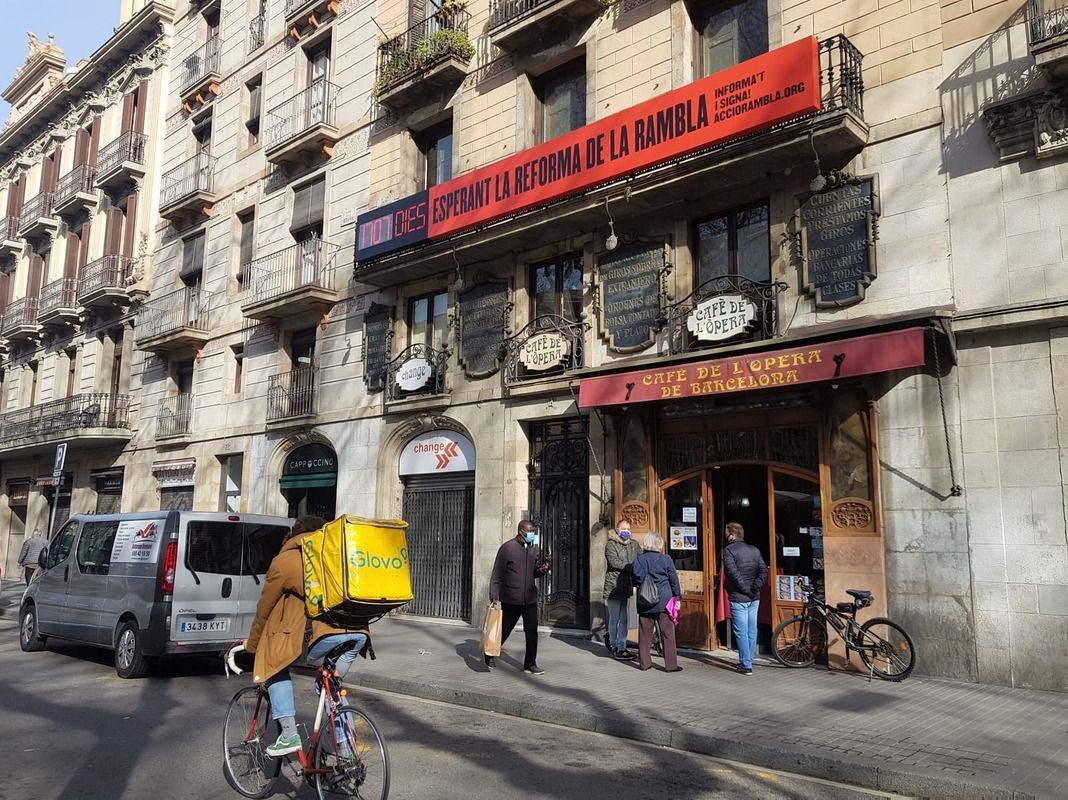
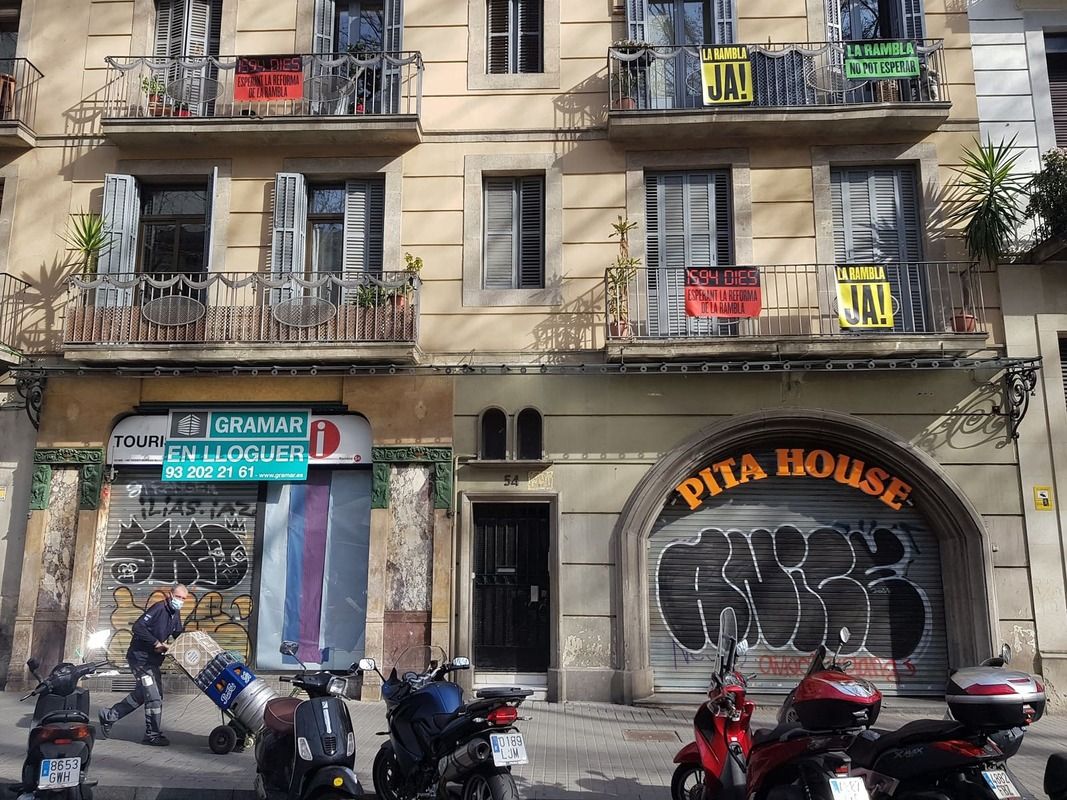
So, on the Rambla, how is it that the City Council does not move forward with at least a first phase of 10 million? Several of the consulted sources suggest some hypotheses, such as that the municipal government of BComú and the PSC headed by Ada Colau does not feel the reform is theirs, that it is an ambitious project that is daunting to carry out, or even argue that there is some element that escapes them that is putting a stop to it. Meanwhile, in front of the Liceu, above the Cafè de l'Òpera, hangs a large luminous counter that is updated with the days that have passed since the start of the urban reform of the Rambla was expected, ever since the special plan for the ordering of the promenade was approved in 2016. More than 1,700 days have accumulated since then, to the displeasure of Amics de la Rambla, which brings together merchants and some residents of the promenade.
The president of the entity, Fermín Villar, regrets that "the City Council has no intention of carrying out the reform," and exemplifies this with the fact that the municipal budget, "the most expansive in history," does not include an item for La Rambla. "There is some kind of intention that they are not explaining to us for not putting it into motion," he maintains. Meanwhile, the entity has promoted a campaign for Barcelonans to go down to La Rambla, although it has been marred by pandemic restrictions and is awaiting their easing to relaunch it. As the days pass, Amics de la Rambla asks to concentrate phases, and go from five in seven and a half years to a maximum of three in five years "at most," Villar demands. This is not on the table. "We are not considering it because it is a complex work," Rabassa details.
Amics de la Rambla has promoted a campaign for Barcelonans to go down to La Rambla, although it has been marred by pandemic restrictionsItziar González, who knows it in depth, began thinking about the reform when she was a councilor in 2007. González also does not believe there is a budgetary reason behind not starting the reform yet. Especially considering that the project has been favorably reported by all departments of the City Council and that the halt in activity motivated by the pandemic could be an opportunity to start the works. "I don't understand why they don't do it and, if it's for budgetary reasons, we deserve more explanations," she emphasizes, that is, to be informed of what investments or expenses force La Rambla to be postponed. Likewisesees a special municipal interest in transforming the Eixample to the detriment of Ciutat Vella, where she reproaches that other relevant projects remain on the shelf, such as the reform of Via Laietana. The former councilor celebrates that, despite everything, progress has been made in the transformation of La Rambla, but she is not very optimistic about what remains of the mandate, which expires in 2023. "I fear that if they don't do it this year, they won't do it in this mandate," she admits.
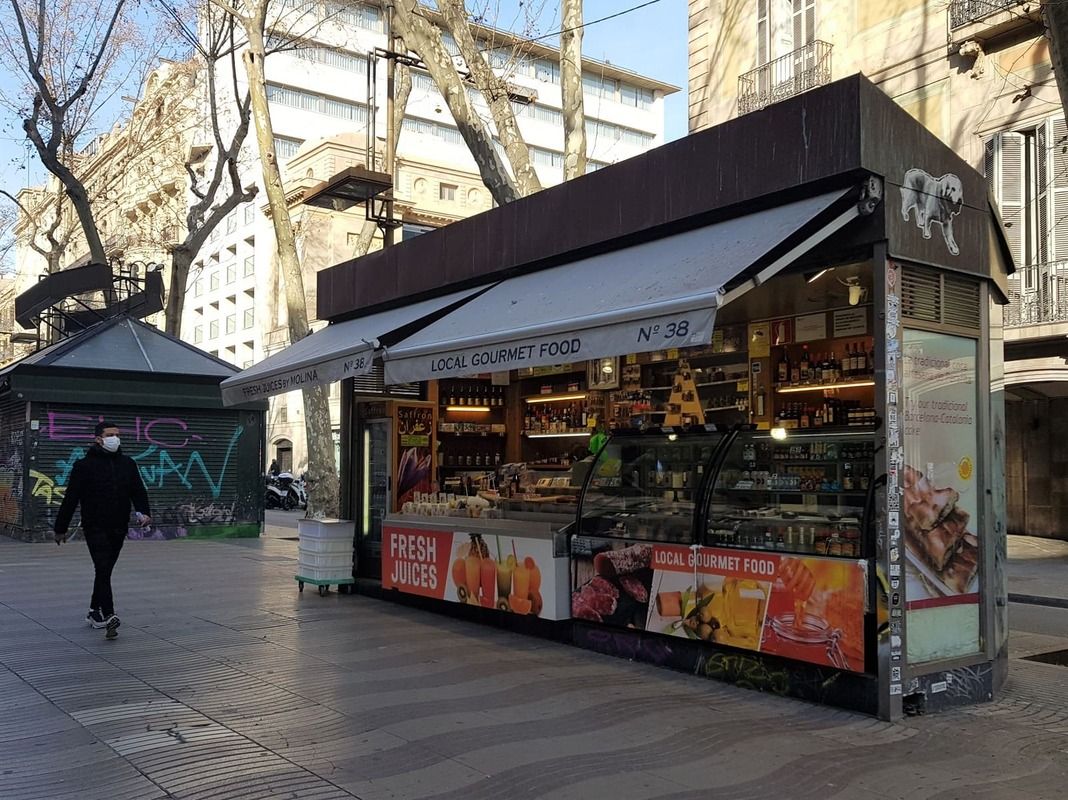
So the major action on La Rambla in the short term may be limited to the removal of the stalls of the former bird sellers, who are willing to negotiate with the City Council, but not to leave at any price, according to Mònica Trias, who for years has been one of the visible faces of the collective of former bird sellers. "If I have to go to Europe, I will," she warns, when asked if they will take legal action. She assures that deep down they are not being removed to gain walking space, but to put up bar terraces. "It seems very legitimate to me that they want to grow, but not at the cost of harming those who were there before," she warns, and considers that removing the former bird sellers "is nothing more than a commercial war." The removal of their stalls had already been planned for some time and, regarding whether their owners should be compensated, Rabassa says that it is being studied by the municipal Legal Services and assures that, "if they must be compensated, it will be done." However, the amount is another matter: it is not the same to do it to force the cessation of the original activity (sale of live animals) which is not permitted by law, as it is for the current sale of souvenirs, ice cream, nougat, and tickets.
In any case, activist Daniel Pardo, who is a member of the Assemblea de Barris per al Decreixement Turístic (ABDT) and the Associació de Veïnes y Veïns del Barri Gòtic, warns that "to pretend to reform La Rambla by only touching La Rambla or its surroundings is not realistic." He insists that to "reverse negative dynamics" on the promenade, a strategy is needed that involves "detouristifying the city and its economy," diversifying the economy and reducing tourist pressure. He exemplifies this by creating squares on the promenade. "Surely the flow will be broken, but tourists will still come to La Rambla," he argues, and reminds that "La Rambla has been built and sold as a symbol, and La Boqueria is one of the points everyone will go to see," he maintains. In the emblematic market, activity is slow, even more so when pandemic restrictions intensify, and some doubt that now is the time to start the reform. "Quite the opposite. If we start construction, who will come? We hope they wait to do it until the economy recovers," says Nuria, from the Diego i Nuri vegetable and juice stand.
Go for a stroll on La Rambla
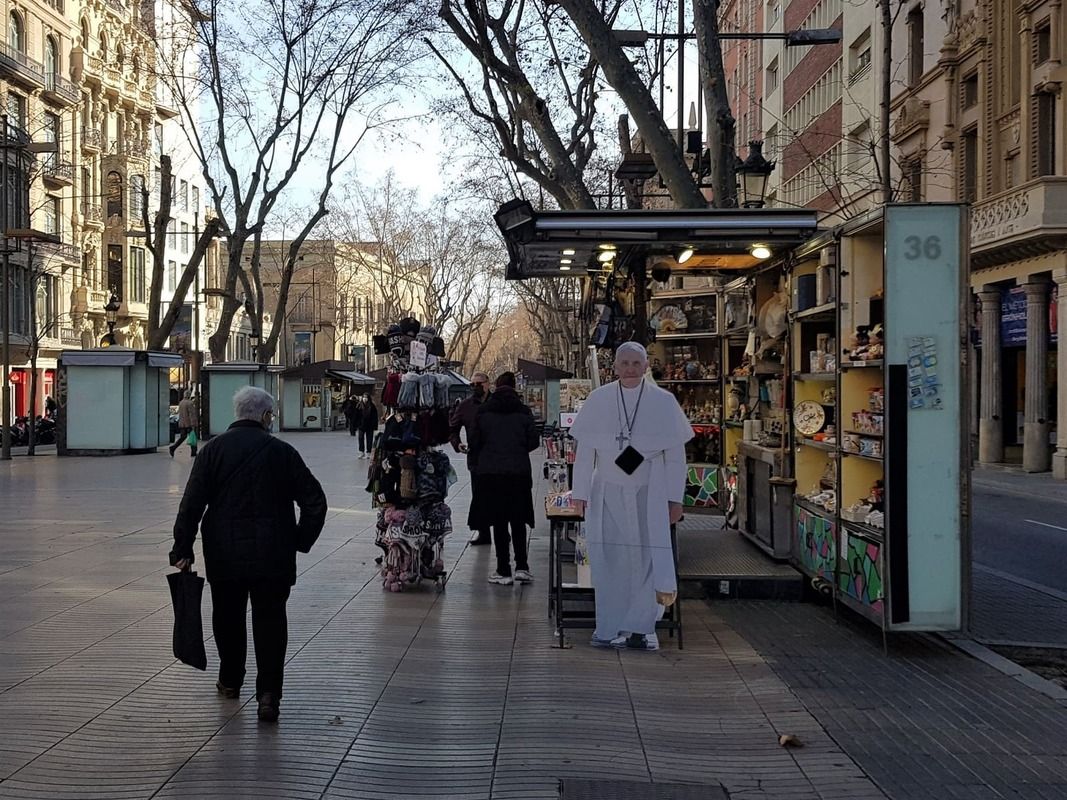
While waiting for something to happen on La Rambla, don't miss the opportunity to go there. If you are from Barcelona and haven't done so yet, go down to La Rambla and enjoy it by walking and observing, something that the municipal perimeter confinement to curb the pandemic does not prevent. There are people, but just enough so that neighbors can walk their dogs or visitors from other neighborhoods can walk or cross it running, by bicycle or scooter. The numerous riders who deliver food at home and circulate on the asphalt also attract attention. The floods of tourists made it difficult for residents to walk along La Rambla, or at least to realize they were doing so, and that was less than a year ago. "Now more Barcelonans have come. Before we didn't see them, or maybe we didn't know," muses a worker at a newsstand, who shares some reflections on the past, present, and future of La Rambla, but asks not to be identified because the owner usually deals with journalists.
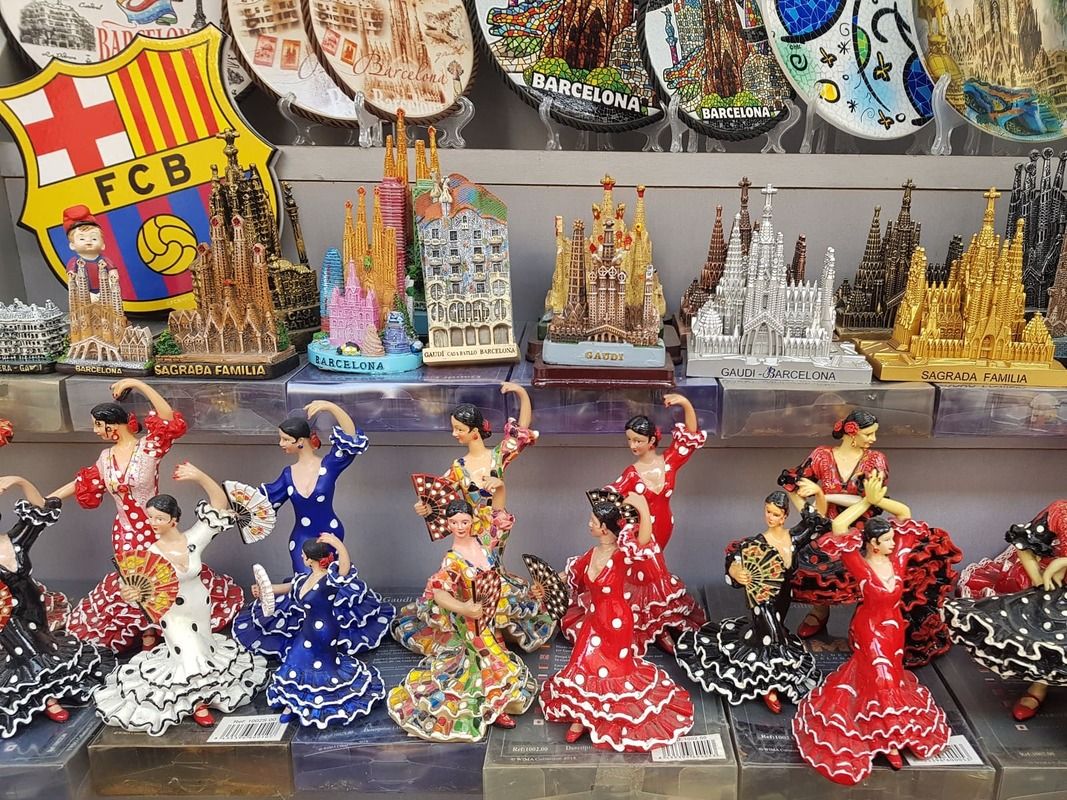
If you are from Barcelona and haven't done so yet, go down to La Rambla and enjoy it by walking and observing"With tourism, we didn't realize many things," the newsagent continues. Yes, the people of Barcelona have returned, and with them, the kiosk's displays have been significantly modified.The figurines and plates with the Holy Family, the bulls as if they were a Gaudí mosaic, or the Sevillian figures remain motionless in the display cases.Not even Barça's memories are for sale. Now souvenirs have lost prominence, and part of the space they occupied is to offer something "for the people here": toys that children like, some of the great forgotten amidst the tourist frenzy that prevented them from playing on the Rambla. Despite the return of local visitors, everything is very complicated.In this kiosk, four of the five workers have been fireds(they are no longer even on ERTE), and business has dropped between 90% and 95%.
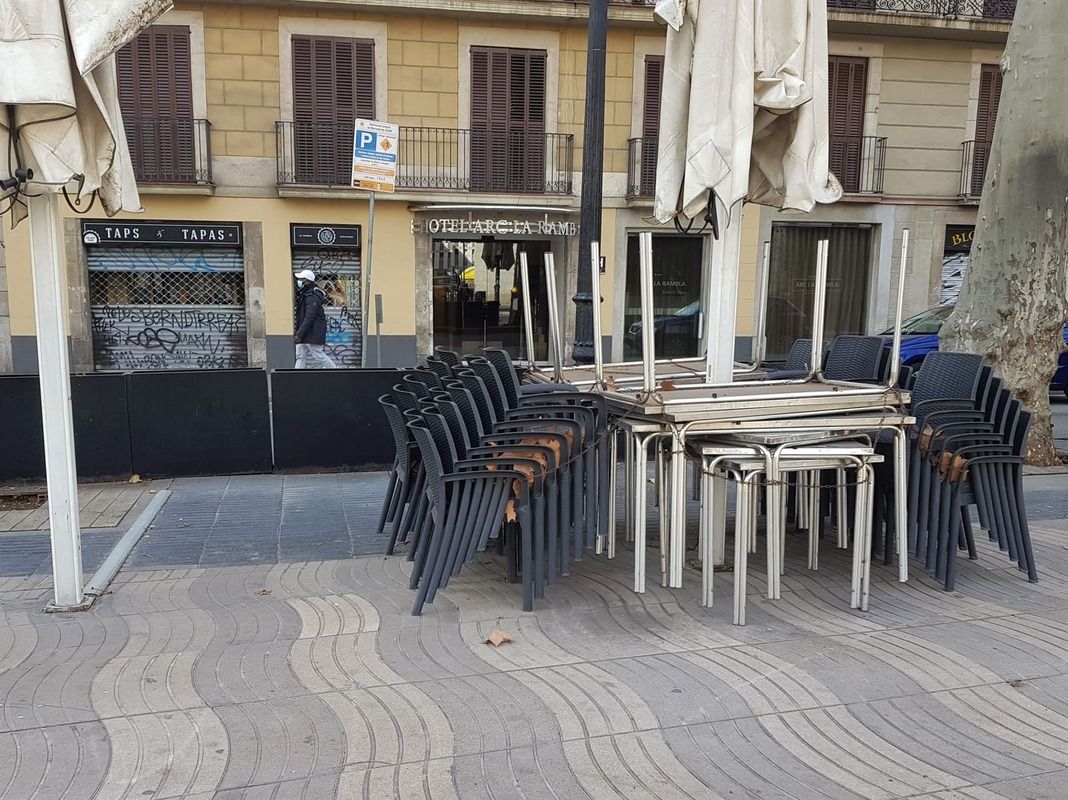
The remaining worker in this newsstand has 35 years of experience on the promenade ---he arrived in the times when drugs proliferated in the area--- and he calculates: if there are 10 newsstands on La Rambla, perhaps fifty families, or more, are being seriously affected. And this is only regarding the newsstands. With the restrictions against the pandemic, which are now in force for restaurants or on weekends for shops, La Rambla has become basically a walking area. Except for pharmacies, banks, currency exchange houses, some restaurants that mainly prepare food for takeout or delivery, some souvenir shops, and little else remains open on the sides. For now, the only outdoor places where you can sit and have a drink during the permitted midday hours are on the terrace of the Cafè de l'Òpera and Núria, or you can venture into La Boqueria market, where you can buy fresh produce or sit in bars like the mythical Pinotxo, where tranquility now reigns during the week.
The resistance of La Rambla
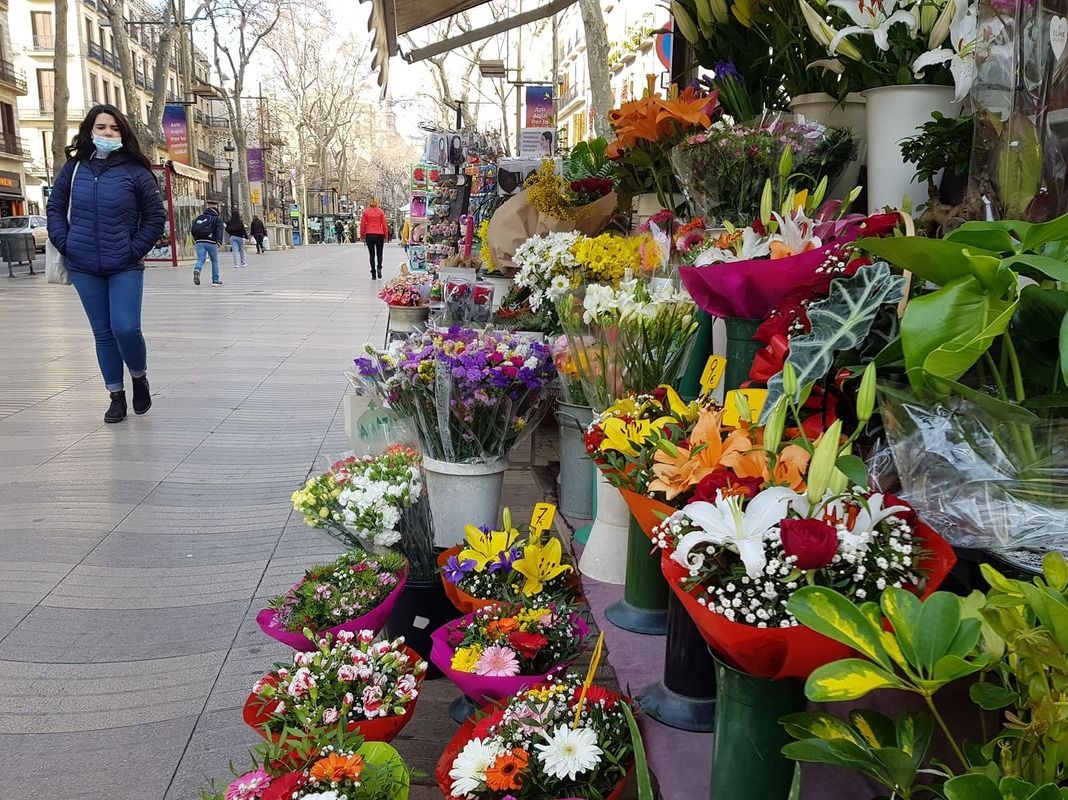
In the central section, activity continues. In addition to the newsstands, the florists are open, as are the stalls of the former bird sellers, and there are a few painters and human statues. They represent the resistance of what La Rambla once was, but they do not hide a mix of feelings between discouragement and the hope that the arrival of spring and the vaccine will improve everything. The painters are one of the groups that express their discontent with the current situation, but also with the treatment they have received since their presence on the promenade was further restricted a decade ago, and they do so with actions: they say they are not allowed to be on La Rambla due to sanitary measures, but some still set up. "We need to eat," express a male and female painter, who, like the newsstand owner, are also not very keen on revealing their identity.
They reproach that for a decade the City Council has focused part of its efforts on La Rambla on creating obstacles. "They are looking for reasons to eliminate us," they lament. He especially misses the Rambla of the 80s and 90s, when it "was fun" with the painters, street musicians, and human statues, but since then all these groups have been reduced or have disappeared, while businesses dedicated to tourists (such as souvenir shops) have proliferated at the expense of traditional ones. "Did they want to make a Roca Village here? What does another Zara contribute to Barcelona?" she asks, referring to the large chain clothing stores that have also landed on the promenade in recent years. There isn't a Zara, but there is an H&M and a Mango in places that were once emblematic shops, like the mythical Canuda bookstore.
Towards the end of La Rambla, next to Colom, is the space where human statues have been relegated. Nowadays, you can barely see a couple, like Aníbal Bedoya, who transforms into The Dragon of La Rambla. Before the conversation, and after having taken a photo with a child, he asks to take a look at how much money he has made today. Through the tiny hole of the large jar where it is deposited, two 50-cent coins and a few more cents in total are glimpsed. He assures that now he only makes about 5 euros in five hours (20 or 30 euros at Christmas when things livened up a bit), far from what he could make in Barcelona, which was dedicated to tourism. He has been a statue since 2008, has had a license for a decade, and now, after years of having been one of the images of La Rambla, he wonders whether to quit.
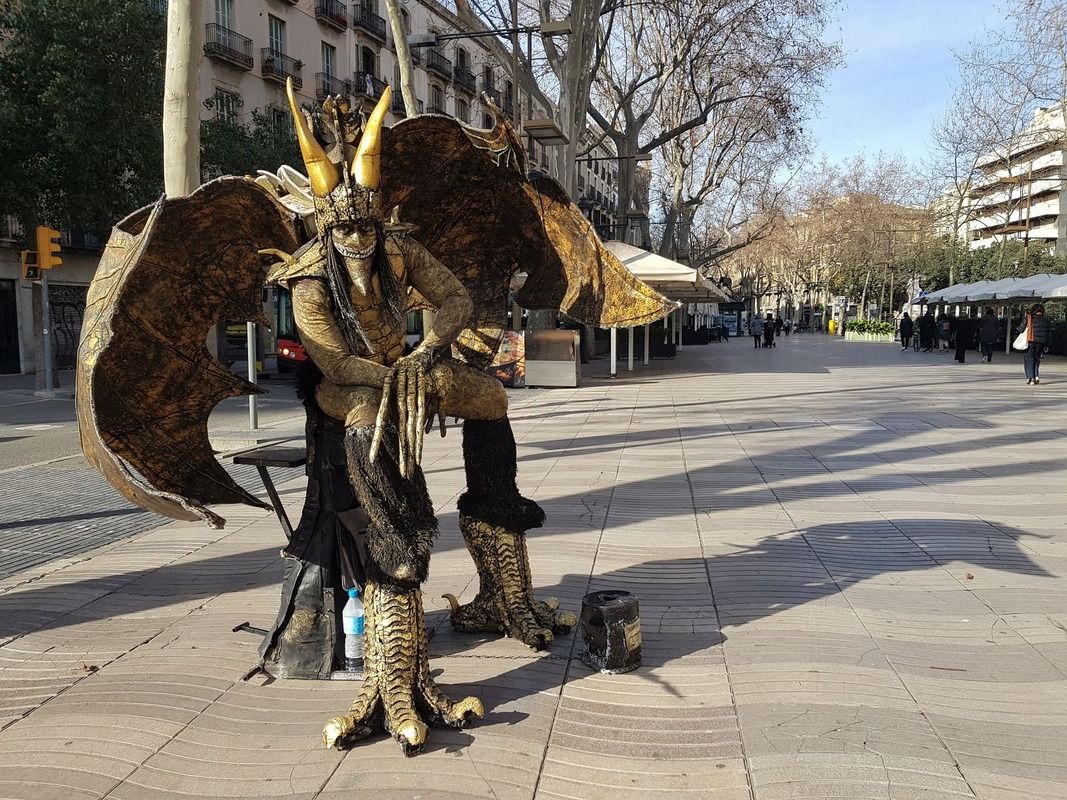
As happens to so many people, no one has asked him if he needed anything and he is living off his savings. "I feel like I've been left alone," he confesses, and he entertains himself with some thoughts about the future. "Today before you arrived I was thinking about what to do," he admits, but he still goes for a walk. "I do it so as not to stay at home, but I think this won't change," he predicts. He hopes that by summer it will pick up, but he's not entirely sure. Among the florists, more of the same, although with the aggravating factor that before they didn't benefit much from tourism. "We were already bad, but since the pandemic we are worse," confesses florist Raquel Martí. "We don't live off tourism flowers," she recalls, and Barcelonans "stopped coming to stroll along La Rambla and shop there a long time ago". Now they do walk, but they pass by.
It will be reborn
To explain the divorce of Barcelonans with La Rambla, everyone attributes the same reason: embracing tourism excessively. The origins date back to the Olympic era. Since then, visitors began to increase exponentially and the attraction of the promenade for Barcelonans decreased, who lost the desire to go shopping at La Boqueria. This, together with the replacement of a representative part of the neighborhood of La Rambla and adjacent areas (especially the Gothic Quarter) and the proliferation of tourist accommodations (such as apartments, legal and illegal) meant that those who used to buy the newspaper or flowers on the promenade also progressively stopped doing so. The jihadist attack of 17-A marked a brief uncertain period, but it has not been until the pandemic that everyone has truly realized what direction the promenade had taken. From Amics de la Rambla, its president has already said it publicly and ratifies it for The New Barcelona Post: "We overshot the mark."
"We had sold our soul, we see it now", admits Villar, but asks everyone to be self-critical, and vindicates the role of Amics de la Rambla in pushing for urban reform or the maintenance of flower stalls. Villar believes that it is time to "greatly improve the offer", especially by making it attractive for the people of Barcelona, and "reinvent" tourist activity, but not cut it off at the root. "La Rambla will be La Rambla again. Now what we do now will depend on what visitor we will have," he reflects. That is, if nothing is done, he warns that street vending of beer, cannabis establishments, or prostitution on the street will proliferate again... "La Rambla in a few years will be full of people again as in the last 300 years", he predicts, although it is always a reflection of social tensions and is now "in a coma", he admits. For her part, Mònica Trias, from the collective of former bird sellers, emphasizes that this promenade always resurfaces. "La Rambla is like the phoenix, it always rises again, and it deserves it", she stresses. "With all the good and bad it has, I will always defend the rogue Rambla, it always comes back, always, it is one of the wonders of this street. I suppose it is thanks to the people who make it up. And La Boqueria, as much as they criticize it, is one of the best markets. What a shame it is demonized in this way when it is a marvel", she concludes.
PAST ATTEMPTS
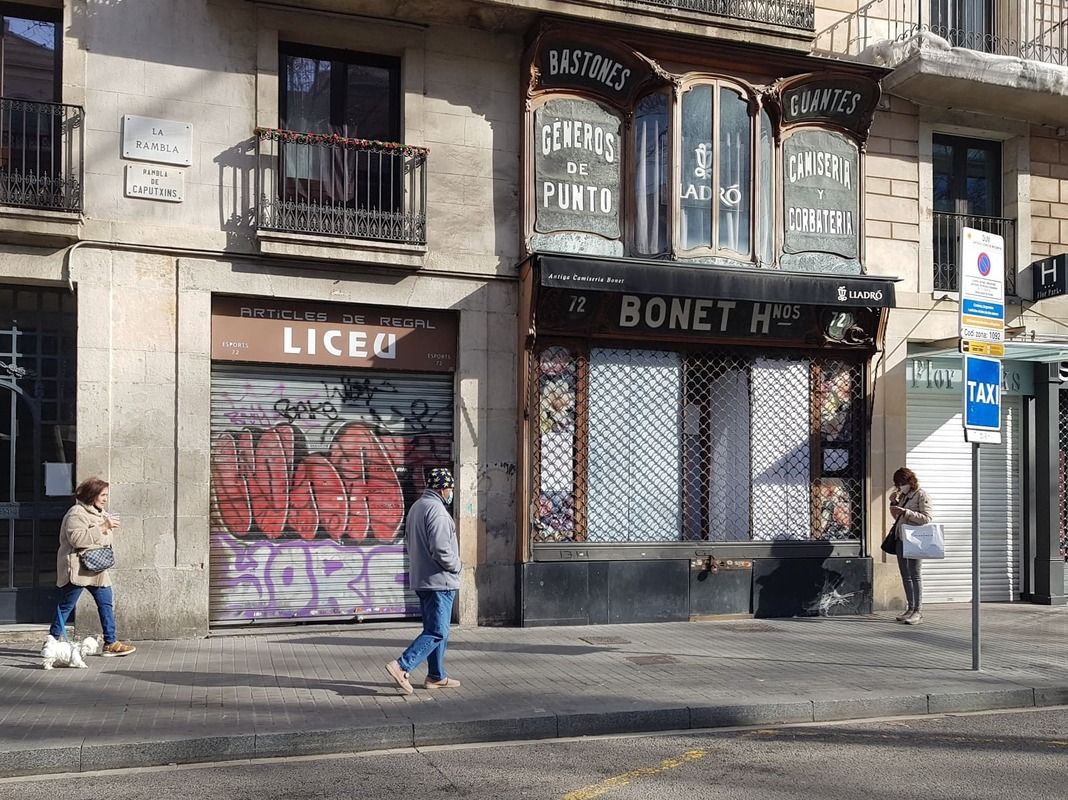
In recent years, there had been no shortage of ideas to make the promenade attractive again for Barcelona residents, either municipal initiatives or from other areas: limiting tourist flats, curbing souvenir shops, or gaining space at the expense of some activities (human statues, as proposed by Barcelona chronicler Lluís Permanyer, who believes that "the essence of La Rambla is to ramble" and that anything blocking the way must be removed; the stalls of the former bird sellers or traffic). Beyond whether or not these are the right measures, some have had mixed success, if they have ever been implemented. Souvenirs are a good example: years ago, the City Council limited the proliferation of souvenir shops, but the feeling remained that the measure did not bear much fruit. As examples, the former bird sellers, who started selling souvenirs with municipal endorsement, or the old Bonet shirt shop, which has a unique facade in the Viennese Art Nouveau style, transformed into a Lladró figurine shop, but also came to sell souvenirs and football shirts. They were textile, but they have nothing to do with what was offered in the shirt shop.
Add The New Barcelona Post as your preferred Google source for free
Stay informed with the latest news.