
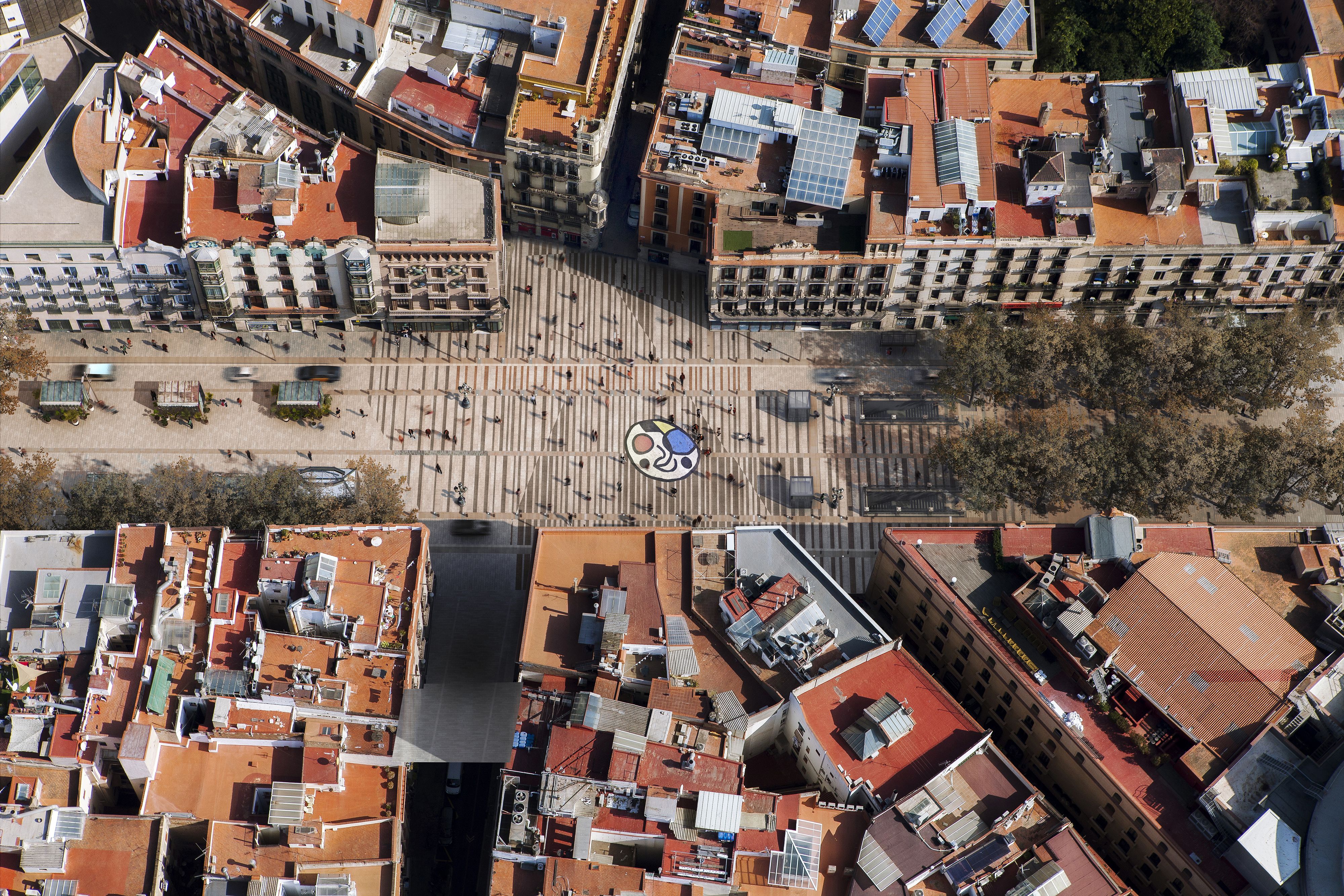
After two years of works, the first phase of remodeling of Barcelona's most emblematic avenue has come to an end. The Rambla closest to the sea has taken down its fences, and the stretch between the Colón monument and Portal de Santa Madrona street already boasts its new look.
This first reform has served to bring the promenade closer to the sea, modifying the layout of Drassanes avenue. With this action, a new square has been created that aspires to be a meeting place and a stage for social uses. A hundred trees are yet to be planted, which will break the chromatic monotony of the reformed area, with 53 new ones and low vegetation zones.
The new reformed space, which totals 23,000 square meters, already features the new pavement that is called to become a distinctive element of La Rambla, made up of pieces of different formats of natural stone —granite and porphyry, to be exact. The investment in this section has been 11.4 million euros, within an avenue reform that has a budget of 55.6 million.
This has been the first step in the long road to reform the most universal avenue of the Catalan capital. The City Council's forecast is to finish the works in 2017, after it decided to step on the gas and cut the deadline in half of what was initially planned.
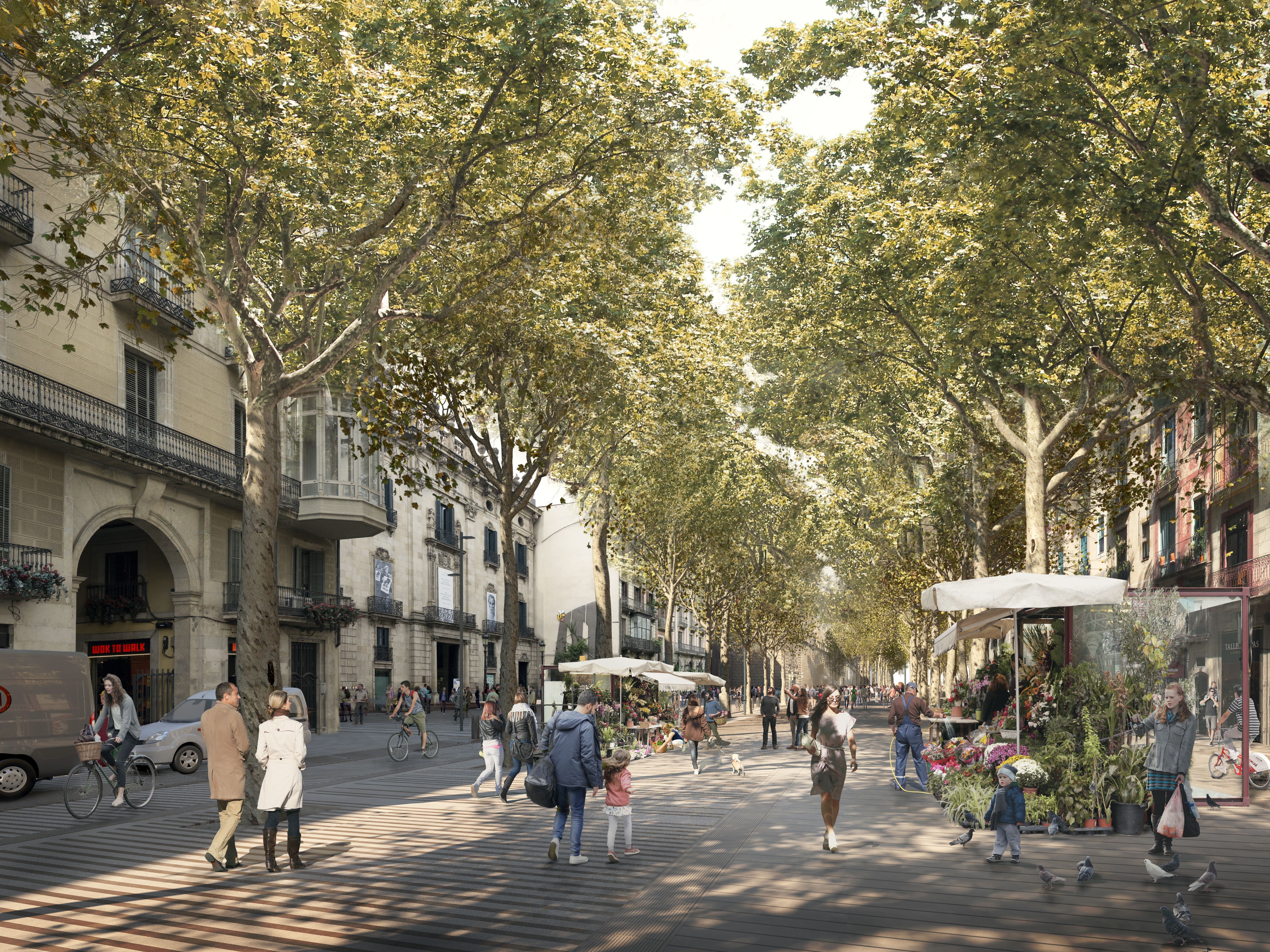
The global action will provide La Rambla with more space for pedestrians both on the central promenade and on the side sidewalks, which will always have a minimum width of three meters. With the new configuration, the avenue will have a single traffic lane of 3.5 meters per direction, which will be limited to residents, services, goods, and parking.
The works that will finish transforming the image of the 1.2 kilometers of the iconic promenade will be carried out in phases: first, the Gòtic sidewalk will be tackled; then, it will be the Raval's turn, and finally, the central section will come. To reduce the impact on residents and visitors, the works will be carried out in sections of no more than about 50 meters.
Due to the works, provisional vehicle crossings have been enabled on La Rambla since June 17 to allow crossing it and make possible the access of residents and emergency and goods vehicles. Now, the roadway next to the Raval is uphill from Colón to Plaça Catalunya. This scheme will be maintained during the first months of the remodeling, and then it will be adapted according to the progress of the works.
In addition to widening the sidewalks to gain more space for pedestrians, the renovation of La Rambla will create three new spaces conceived as squares. They will be located between Palau Moja and the Església de Betlem, gaining a new unique space at the height of Portaferrissa and Carrer del Carme. Another of these new squares will emerge, as it could not be otherwise, in front of La Boqueria, Barcelona's most symbolic market and recognized as the best in the world. The third will reconfigure the Pla del Teatre, from which the sea can already be glimpsed between the tops of the characteristic plane trees and from which a Colón begins to emerge, already standing on a first finished section.
Add The New Barcelona Post as your preferred Google source for free
Stay informed with the latest news.
