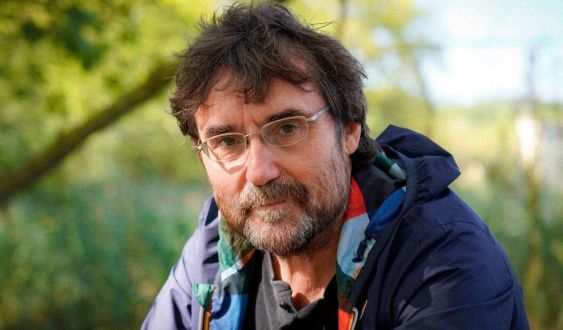
Julià Guillamon (Barcelona, 1962) begins by saying that he has always been like Dr. Jekyll and Mr. Hyde. Without macabre connotations, the writer and journalist fits his duality into a shared residence between his hometown and Arbúcies. "My family was from Poblenou and my grandfather was a professional waiter from Viladrau. They hired him at an inn, Hostal Castell, in the late 50s. I had a double life. In winter, I was in Poblenou and, at Easter, I spent three weeks up there because the inn opened to start getting customers. Then, we opened in June and stayed until October. From that relationship, I've always gone," he specifies. For two years now, he has returned to Arbúcies to live, although, when he speaks, it seems as if he has been there his whole life, without intermittence.
At the inn where his family worked, Guillamon found his passion for narrating. "There was a pleasant atmosphere. People spent two months, ate and dined, went for a walk, talked among themselves in the afternoon... When I was young, it served as an observation point because you saw many people and each one had their story. There I learned many things that I later wrote about, observing how each one moved, what they did... At that moment, I wasn't aware. Later, I've been remembering it, it was quite magical. It helped me to start seeing people, the differences between them."
Among the clients, there was the one who explained that he had invented the tape recorder, but there were also the stories of the service people, "they came from farmhouses," a world that also seemed completely different and fascinating to him. "Since we lived together for months, you ended up knowing many things. When September arrived, work slowed down and they took you to the forest, you went mushroom hunting, they told you where the good places were," he recalls, "the lady who washed dishes at the hostel was one of the first people I went to the forest with and I saw that she knew it. She would say: "Now we'll go through here and there will be some hazelnut trees where chanterelles grow." You went there, an inhospitable place, found the hazelnut trees and there were some wonderful chanterelles. You understood that she knew it because she had grown up on a farm."
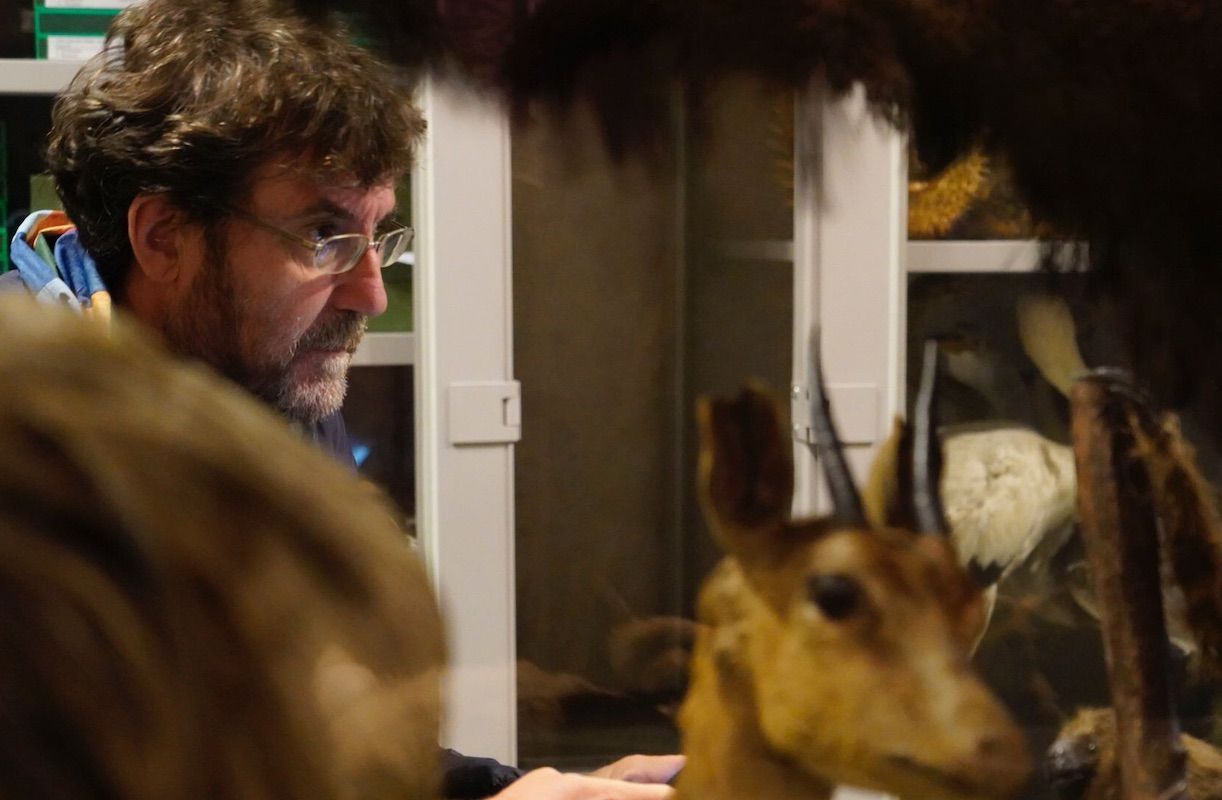
That world de pagès that captivated him as a young man is reflected in his latest book, Les hores noves (Anagrama), which continues Travessar la riera (Comanegra) and Les Cuques (Anagrama) with a portrait of the natural and human daily life in Arbúcies, collecting the changes that occur during a year. He does this by updating the rural universe with references such as Twin Peaks, Desperate Housewives, or Sunset Boulevard, making it easier to understand with jokes or anecdotes, giving it immediacy with Whatsapps or apps that tell you the name of plants.
"I had always wanted to write this book. When you are very familiar with the forest, you start to see the small changes that occur. I thought this hadn't been done and I wanted to do it," he says. He was lucky that it was a rainy year, being able to reflect the evolution of colors and textures that occur as the days go by. "I caught it perfectly. If it had been a dry year, it would have been a less exuberant, more tortured book," he reasons.
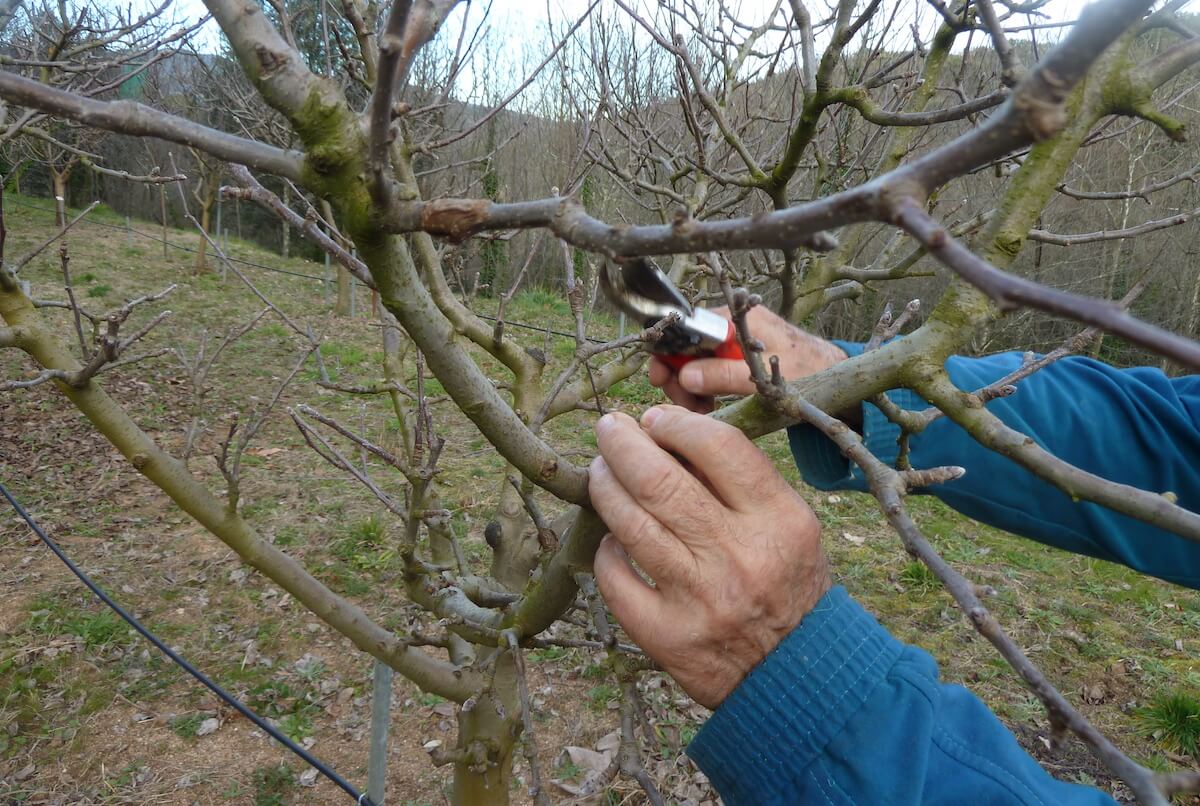
Reading Les hores noves reveals a plant world so rich that it's hard to believe it's so close and yet so alien. Aware of this, Guillamon accompanies himself with clean descriptions, without taking anything for granted, in addition to adding photographs of the mushrooms and plants that might sound Martian to those who read their name for the first time. And without sophisticated constructions and overly elevated theories about nature, limiting himself to describing popular knowledge that is usually undervalued and is being lost, like the one that has allowed the recovery of more than fifty varieties of apples in Arbúcies. "I wanted to do something that was serious, dense, had human quality and thought, but that, at the same time, everyone could read and enjoy," he reflects. Now known in Arbúcies as "the town's writer," neighbors approach him to tell him that what he writes is also theirs: "I have the feeling that you connect with something that is still alive."
But there are not only polypodies, geckos, Jerusalem artichokes, king's eggs, false saffron milk caps, icicles or heathers, there is also the gaze of the people who live in Arbúcies, mixed with the personal experience of the writer and his constant reflections on everything he sees, touches, steps on and remembers, halfway between the narrator, the journalist, the observer, the hiker and, even, or above all, the anthropologist.
Julià Guillamon positions himself halfway between the narrator, the journalist, the observer, the hiker and, even, or above all, the anthropologist"I try for nature not to be the center, human experience is, that's what moves me most. If you don't know there's a mushroom called carlet, nothing happens. The thing is to create music with these words and for people to get into it. If you make a book just about thinking about what flowers are like and describing them, there comes a point when you don't know what else to say. And, besides, I don't have that ability. The point was for the flowers to be a pretext to talk about other things like memory, the passage of time, changes in customs, and the different ways of relating to the natural world," he explains. Like his reference,The hoursof Josep Pla, whom he recurrently quotes while describing and dignifying, without nostalgia, a rural point of view that has become disconnected and is aware that it has been fading for a long time.
The new face of nature writing, reinforced in this position by his neighbors, is on narrative vacation. "It had been a long time since that happened to me," he admits. He recently finished a new book, where the Arbúcies inn also appears, but it moves away from the quiet mountain life and focuses on Barcelona in the 80s. He had started writing it a few years ago, but he put it aside when his wife got sick. This summer he has reconnected with the thread to portray "that postmodern, happy world, that was coming out of the economic crisis of '79, until the Olympic Games were proclaimed and everything went to hell." While waiting for it to be published, he enjoys "the pleasant feeling of not having to do anything."
Add The New Barcelona Post as your preferred Google source for free
Stay informed with the latest news.
